Bathroom Organization Ideas for Small, Shared Spaces
Practical small bathroom organization ideas for tight, shared spaces: zones by person, under-sink fixes, vertical storage, and easy upkeep.

· 6 min read
A small bathroom asks a lot of you. It is where the day starts, where it ends, and often where two or three people are competing for the same square of counter at the same time. When space is tight and shared, clutter builds faster than anywhere else in the home. The fix is rarely a bigger room; it is a smarter one. This guide walks through simple, repeatable ways to make a cramped, busy bathroom feel calmer and work harder, without a renovation or a shopping spree.
Take Stock of What You Actually Use
Before you buy a single basket, take everything out. Every bottle, every sample, every hotel soap you have been saving. Group items into three piles: things you use daily, things you use sometimes, and things you have not touched in months. Be honest about that last pile.
Good small bathroom organization begins with less stuff, not more storage. A drawer holding six half-empty shampoos is not a storage problem, it is a decision you have been avoiding. Toss the expired sunscreen, the crusty mascara, the lotion you never liked. What remains is what you plan around.
The mistake here is buying containers first. People come home with a cart of matching bins, then try to cram everything back in. Sort first, measure second, buy last. If you want a gentle structure for this step, the approach in the 15-minute declutter method works well for a bathroom you can clear in one short sitting.
Give each person a zone
In a shared bathroom, most friction is not about space, it is about ownership. When everyone shares one shelf, nobody keeps it tidy. Assign each person a defined zone: a drawer, a shelf, a bin, or a labeled pouch. Small and clearly theirs beats large and communal.
This matters because responsibility follows boundaries. When your things live in your spot, you notice when it overflows, and you are the one who deals with it. Shared piles have no owner, so they grow.
Give each person a single container they control completely. If it is full, that is their signal to edit, not to spill onto the shared counter.
The same logic that makes kitchen zones organized by how you cook so effective applies here. Assign by routine and person, and the room starts to run itself.
Rescue the under-sink cabinet
The cabinet under the sink is usually chaos: a dark cave with pipes running through it and products falling over every time you open the door. It is also your biggest storage opportunity in a small bathroom.
Work with the pipes, not against them. Use stackable bins or a small two-tier shelf that fits around the plumbing. Pull-out drawers turn that awkward depth into something you can actually reach. Keep like with like so you are not excavating.
A few things that belong in under sink storage:
- Backup supplies: extra toothpaste, soap, and toilet paper
- Cleaning products, kept together in one caddy you can lift out
- Bulk or refill bottles you do not need on the counter
- Hair tools with cords wrapped, standing upright in a bin
The common mistake is treating the cabinet as a dumping ground. If you cannot see what is in there, you will rebuy things you already own. Front-facing bins and a quick label fix that instantly.
Go vertical
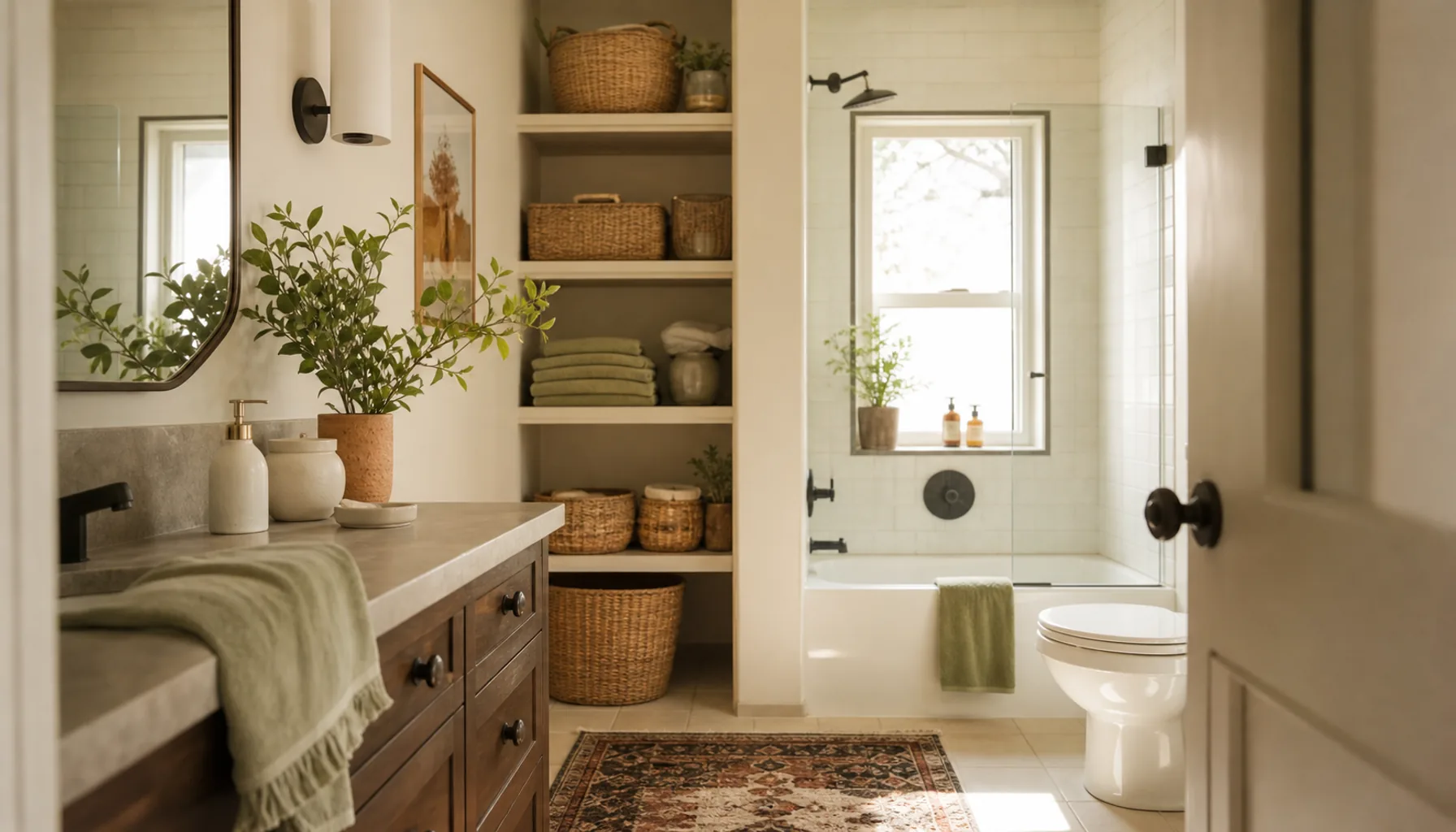
Floor space is fixed, but wall space is almost always underused. Look up. The area above the toilet, the wall beside the mirror, the back of the door, and the inside of the cabinet door are all storage waiting to happen.
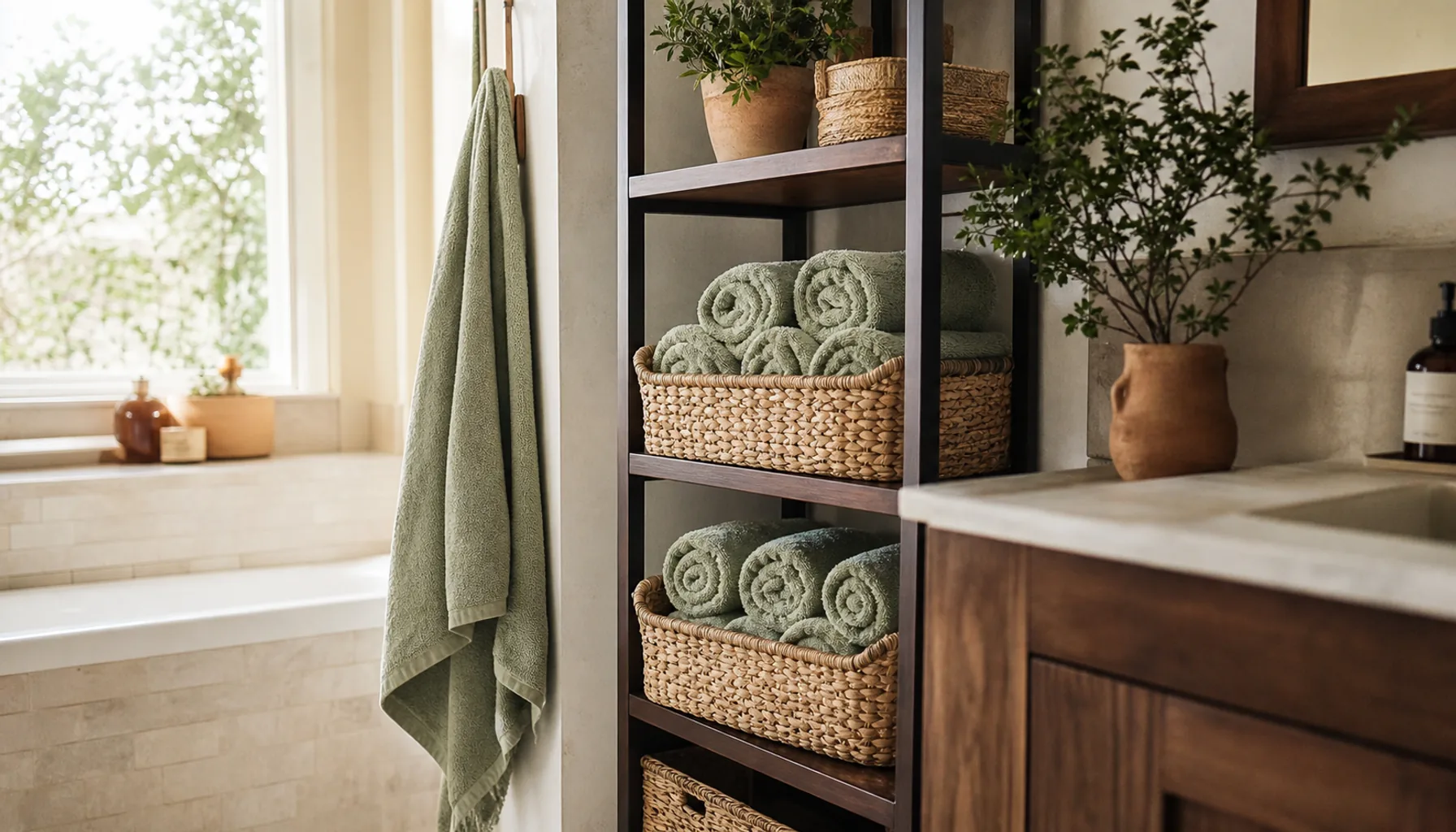
Vertical storage keeps the counter clear, which is what makes a room feel bigger. Try an over-the-toilet shelf, a narrow ladder shelf, adhesive hooks for towels and robes, or a tension rod inside the shower for bottles. Even a simple set of stacked shelves changes how much a wall can hold.
Why it works: your eye reads a clear surface as calm and a cluttered one as stressful, regardless of the room's actual size. Pull items off the counter and onto the wall, and the whole space breathes.
Avoid overloading one wall while ignoring the rest. Spread storage around so no single spot feels crammed. These vertical tricks pair naturally with the ideas in small apartment storage ideas that actually work, especially if your bathroom is part of a rental you cannot renovate.
Keep daily-use items within arm's reach
Everything you touch every morning should be reachable without moving anything else. Toothbrush, face wash, the one moisturizer you actually use, a razor. These earn a spot at the front, at eye level, in the easiest drawer.
This is the core of good bathroom storage ideas: match placement to frequency. Daily items go front and center. Weekly items go one layer back. Rarely used items go up high or under the sink. When access matches habit, tidying takes seconds instead of minutes.
For example, a small tray by the sink can hold each person's daily three or four items, ready to lift and wipe under. A shower caddy sorted by person does the same inside the shower.
The mistake is letting backups live with daily items. Three spare deodorants next to the one you use turns a simple reach into a rummage. Keep backups elsewhere and the front stays fast.
Contain the counter
The counter is the hardest surface to keep clear because it is the easiest to set things down on. Fight entropy with a small number of defined landing spots.
A shallow tray, a slim caddy, or a single cup for toothbrushes gives loose items a home. The rule is simple: if it does not fit in its container, it does not live on the counter. A magnetic strip inside a cabinet door can hold metal grooming tools and clear even more space.
Handle the towel problem
Wet towels are the quiet clutter of shared bathrooms. Give each person one clearly assigned hook, not a shared bar where towels pile and stay damp. Hooks are faster than bars, and faster habits actually get kept.
Build a two-minute upkeep habit
Organization is not a one-time event, it is maintenance. The best system fails if nothing resets it. Build a tiny habit instead: a two-minute wipe and reset, ideally tied to something you already do, like the last person out in the morning giving the counter a quick clear.
Once a season, do a slightly deeper pass. Check expiry dates, refill backups, and re-home anything that has drifted from its zone. This keeps small problems small. The same durable-habit thinking behind a closet organization system that lasts applies here: the goal is a setup that survives a busy week, not a perfect shelf that lasts a day.
The mistake is waiting for a big cleanup when things get bad. By then, resetting feels like a chore. Small, frequent resets keep the room from ever reaching that point.
Bringing it together
A small, shared bathroom works when it is honest about space: fewer things, clear zones per person, storage that climbs the walls and fills the cabinet, daily items within reach, and a quick habit that keeps it all in place. None of it requires more room, only better decisions about the room you have.
If you want your bathroom to feel like part of a calm, cohesive home rather than a problem to solve, start by understanding your own style. Try the Room Style Finder to shape choices that fit the way you actually live.
One useful home email a month
Real ideas to make your home work better. No spam, easy unsubscribe.