Closet Organization: A Simple System That Actually Lasts
A calm, realistic closet organization system you can keep up with: declutter, set zones, choose storage that fits, and maintain it in minutes.

· 5 min read
Most closets don't fall apart because you're messy. They fall apart because the system asked too much of you. You buy matching hangers, do a big weekend overhaul, and three weeks later it looks exactly like before. The fix isn't more willpower. It's a lighter system that fits how you actually get dressed. Below is a set of closet organization ideas built to survive real mornings, laundry piles, and the occasional lazy week.
First, see everything you actually own
Before you sort, empty. Pull everything out and lay it where you can see it, ideally on the bed so you can't quit halfway. This feels dramatic, but it's the only way to break the "I forgot I owned that" cycle that keeps a closet overstuffed.
As you handle each piece, ask one question: *have I worn this in the last year?* Not "could I," not "someday." Sort into three piles: keep, donate, and repair-or-decide. That third pile is where good intentions go to hide, so give yourself a hard limit of ten items and be honest about the rest.
One trap to sidestep: trying to declutter and reorganize in the same motion. Deciding what stays is a different kind of thinking than deciding where it goes. Do the decisions first, with everything visible, then move on.
Group like with like
Once your keep pile is set, sort by category before anything touches a hanger: shirts with shirts, trousers with trousers, dresses together. This does two things. You instantly see duplicates (five nearly identical black tops), and you get a real sense of volume, which tells you how much hanging versus folding space you truly need.
Grouping by type is also what makes a closet feel calm. Your eye reads a block of similar shapes as order, even before you've done anything fancy. If you want a gentler on-ramp than a full teardown, the 15-minute declutter method is a good way to keep momentum without burning a whole day.
Build zones around your daily routine
Here's the idea that makes closet organization last: arrange by how often you reach for something, not by color or by season alone.
- Prime real estate (eye level, front and center) goes to your everyday clothes, the pieces you wear weekly.
- Middle zones hold work clothes, weekend outfits, and anything seasonal-but-current.
- The edges and high shelves hold occasion wear, off-season items, and the sentimental keeps you're not ready to release.
Why this matters: you're going to put things back in the easiest spot, always. If the easiest spot holds your daily clothes, the closet stays organized on autopilot. If your everyday jeans live on a top shelf behind a suitcase, chaos is guaranteed.
Example: if you reach for the same five outfits each week, those pieces deserve the center rod at arm's height. Let the bridesmaid dress take the far corner.
Choose storage that fits the space you have
Storage should follow your zones, not the other way around. Walk the closet and match a solution to each problem rather than buying a kit and forcing your life into it.
A few reliable moves:
- Slim, uniform hangers free up several inches of rod and stop shoulders from slipping off.
- Shelf dividers keep folded stacks from toppling into each other.
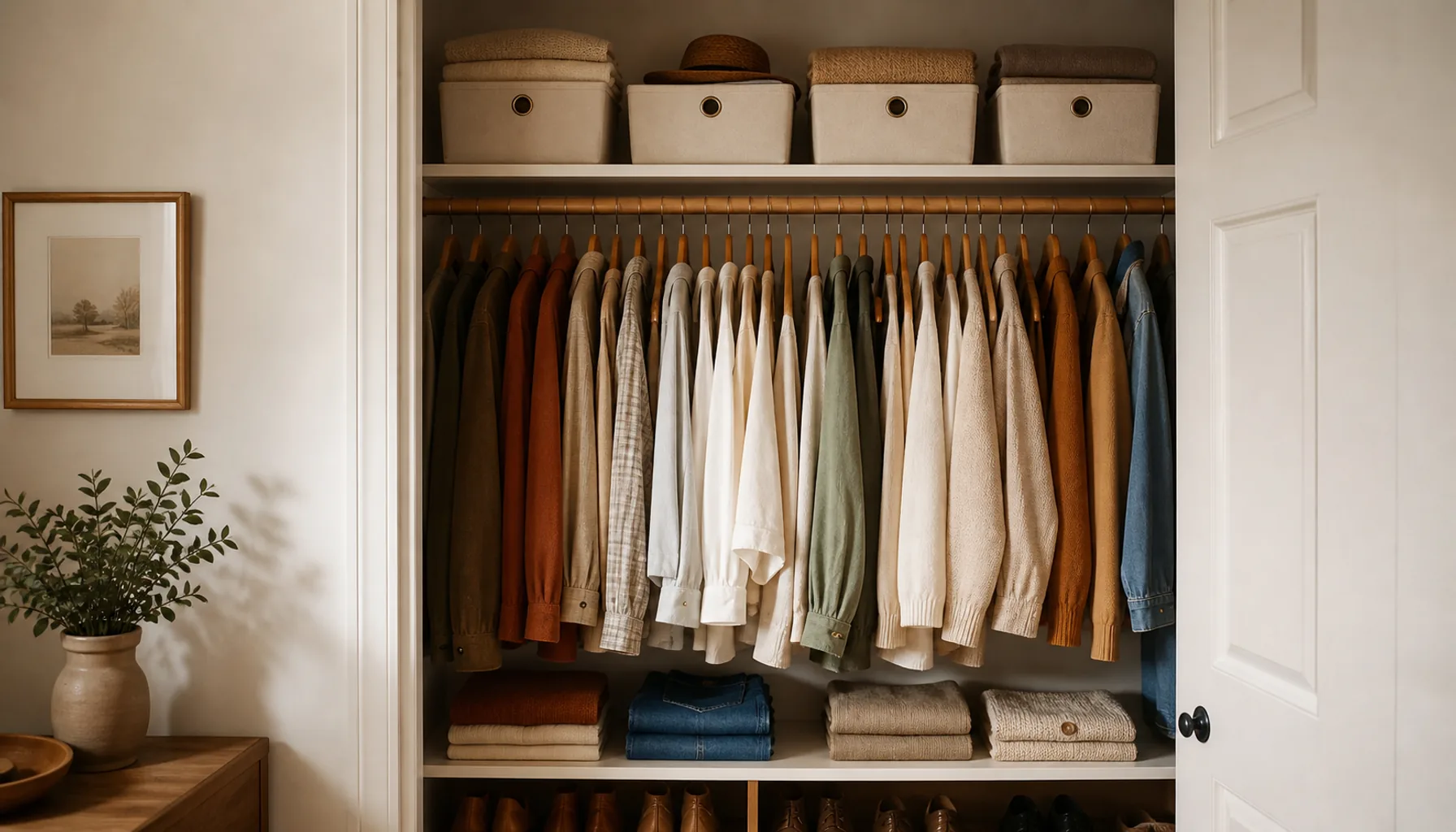
- Clear bins or labeled boxes for the high shelf make off-season storage visible without a step stool guessing game.
- A low shelf or rack for shoes keeps them off the floor, where they otherwise breed clutter.
A quick tip: shop your home before the store. Shoeboxes, baskets from other rooms, and drawer organizers you already own often solve the problem for free.
Small closet? Go vertical
If your closet is tight, the ceiling is your friend. Add a second rod under short-hanging items to double your hanging space, use the back of the door for shoes or accessories, and store rarely-used items up high. These same principles scale to a whole home; if space is genuinely tight everywhere, these small-space storage ideas go beyond the closet.
Easy to get wrong: overbuying containers before you've decluttered. Bins bought too early just give clutter a new place to live.
Make putting-away effortless
A system only lasts if the "return" is as easy as the "grab." When something has an obvious home, you'll put it back without thinking. When it doesn't, it lands on the chair.
So build in a landing spot for the in-between clothes, the worn-once-but-not-dirty pile that ruins most closets. A single hook or a small basket labeled "wear again" gives those items a place that isn't the floor or your one clean chair.
Also, keep a small donate bag or box living in the closet year-round. The moment something doesn't fit or you realize you never reach for it, it goes straight in. No decision fatigue, no pile-up.
Keep it going with tiny resets
The real secret to lasting closet organization isn't the setup. It's the upkeep, and upkeep should be almost invisible.
- The 60-second nightly tidy: rehang or toss the day's clothes before bed. That's it.
- The monthly five-minute scan: pull out anything you clearly won't wear and drop it in the donate bag.
- The seasonal swap: twice a year, rotate off-season items to the high shelf and bring the current season forward.
That seasonal swap is the natural moment to reassess everything, and it pairs well with a broader seasonal home reset so your whole space gets a refresh at once.
What not to do: waiting for the closet to become a disaster before acting. Ten small touches beat one exhausting overhaul, every time.
Let the system spread
Once your closet works, the same logic, declutter, zone by frequency, and storage that fits, transfers anywhere clutter collects. It's especially useful in cramped, high-traffic rooms, which is why the approach in this guide to organizing a small shared bathroom will feel familiar. Learn the pattern once and you can calm almost any space in your home.
Bringing it together
A closet that lasts isn't about perfection or a shopping spree. It's a handful of honest decisions, zones built around your real habits, storage that fits what you own, and tiny resets that keep it humming. Start with one shelf if the whole thing feels like too much. Momentum does the rest.
Want your newly tidy closet to match the mood of the room around it? Take a few minutes with the Room Style Finder to pin down a look that feels like home.
One useful home email a month
Real ideas to make your home work better. No spam, easy unsubscribe.