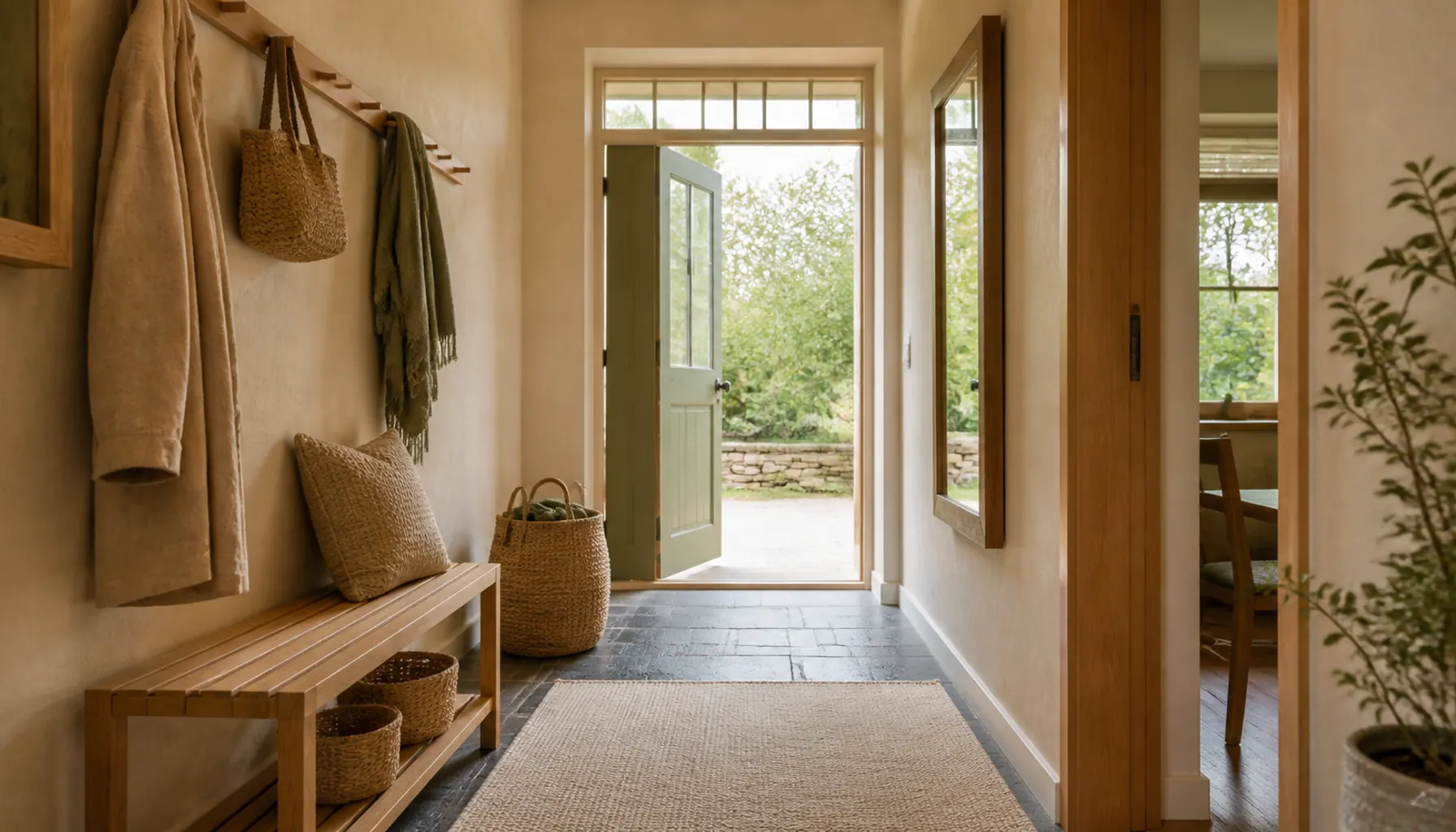
In this article
- Choose the Right Spot First
- Create a True Drop Zone for the Chaos
- Solve the Key Problem Once and for All
- Tame the Paper Flow with a Simple Mail System
- Make the Family Calendar Visible
- Add Quick-Reference Info Within Reach
- Build the Habits That Keep It Running
- Refresh the System with the Seasons
- Bringing It All Together
Build a Family Command Center for Mail, Keys & Schedules
Set up a family command center that tames mail, keys, and schedules so your whole household knows where everything is and what happens next.

· 7 min read
If your keys go missing every morning, the school forms live in a mystery pile, and nobody agrees on who has practice tonight, you don't need more willpower. You need one spot that holds the moving parts of family life. A family command center is that spot: a small, dedicated zone where mail, keys, calendars, and paperwork all have a home. This guide walks you through building one that actually gets used, room by room and habit by habit.
Choose the Right Spot First
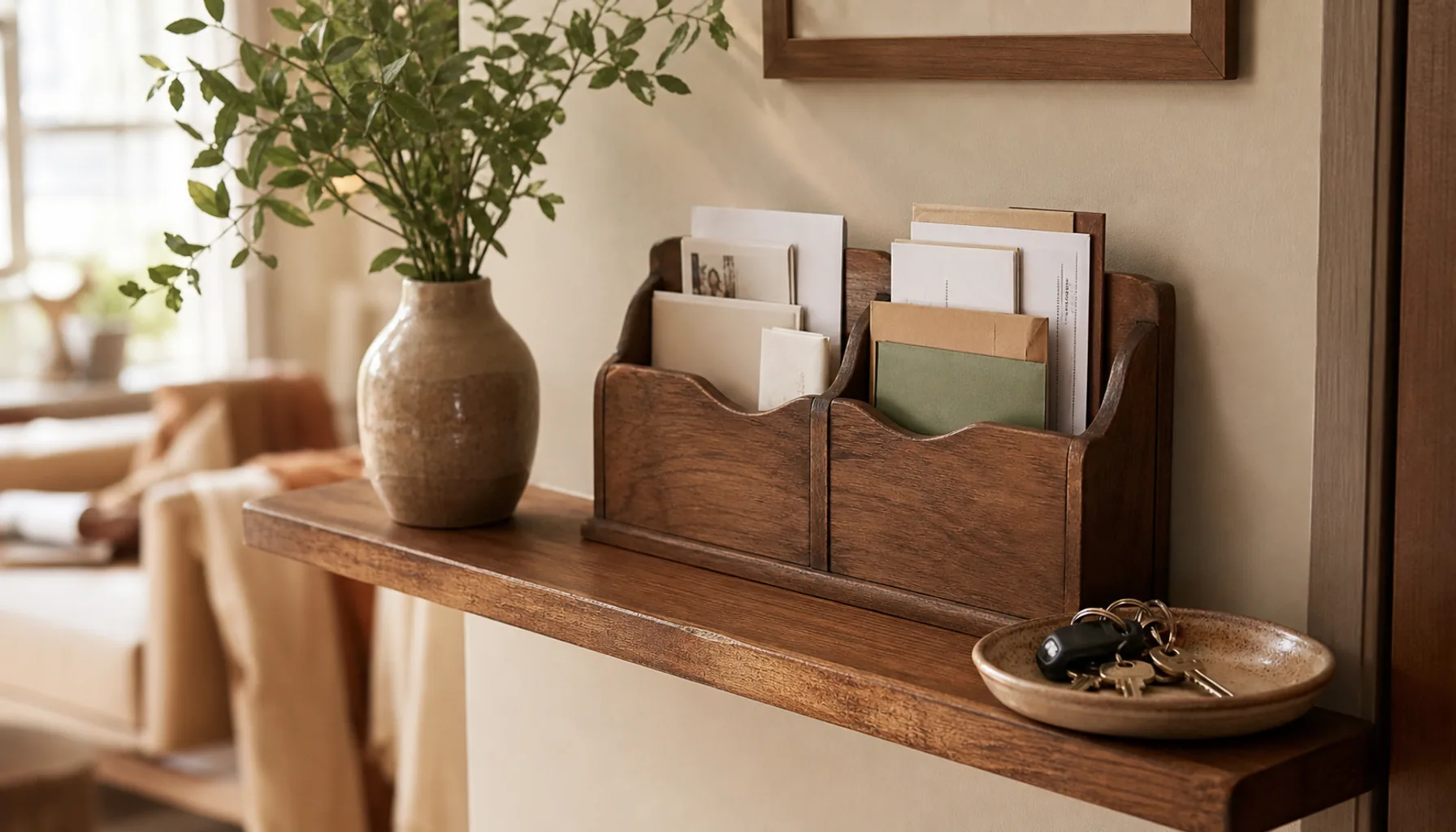
The best location isn't the prettiest wall in your home. It's the wall you already walk past a dozen times a day. Think about the path your family takes from the door to the kitchen, and put your command center somewhere along that route.
Here is the logic: a system only works if it sits where decisions happen. If you have to make a special trip to file the mail or check the calendar, you won't. Choose a spot near the door, in a hallway, or at the edge of the kitchen where everyone naturally passes.
For example, a narrow strip of wall between the garage entry and the fridge is often ideal. It catches people the moment they come in, hands full, ready to dump whatever they're carrying.
The trap here: hiding the center inside a closet or a spare room "to keep it tidy." Out of sight means out of use. A little visible clutter that gets handled beats a hidden system that gets ignored.
Create a True Drop Zone for the Chaos
The heart of any command center is the drop zone, the surface that absorbs everything people carry in. Keys, sunglasses, mail, receipts, the random cord from the car. Give each of these a landing spot so they stop landing on the counter.
Keep it simple with a few basics:
- A tray or bowl for keys and small items so they never migrate
- A shallow shelf or ledge for phones and sunglasses
- A single inbox tray where all incoming mail and papers go first
- Hooks at both adult and child height for bags and lanyards
The payoff is real: most morning stress comes from hunting for things that were never given a home. When every object has one, your brain stops tracking it.
If you want to extend this thinking all the way to the front door, our guide on an entryway setup for busy mornings pairs perfectly with the drop zone approach.
Watch out for making the drop zone too big. A huge surface invites a huge pile. Keep it modest so it forces quick decisions instead of endless stacking.
Solve the Key Problem Once and for All
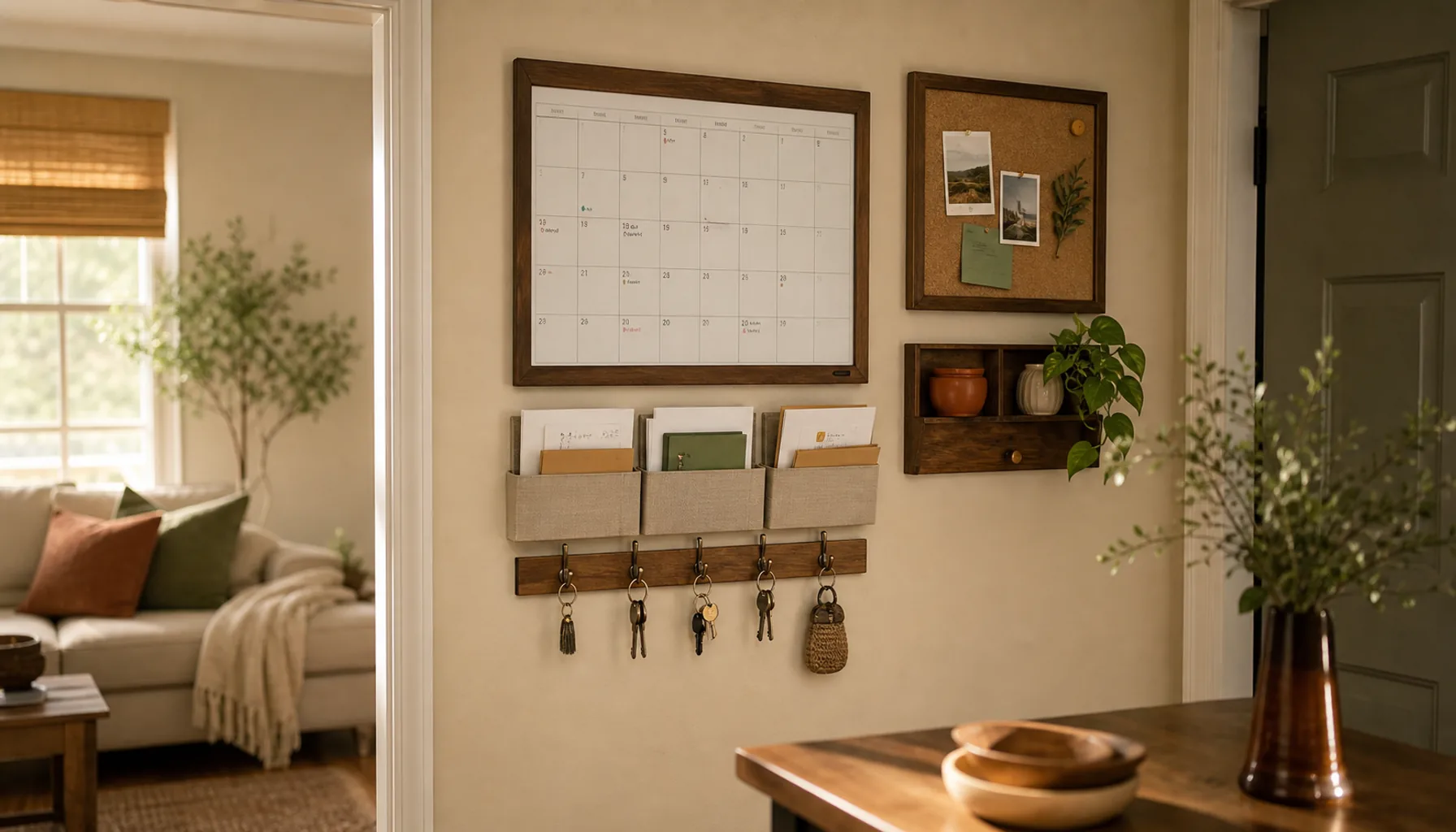
Keys deserve their own attention because they're the item most likely to derail a morning. Pick one method and commit to it: a row of labeled hooks, a small dish by the door, or a wall-mounted rack with a slot per person.
Give every set of keys a named home. When the spot is labeled with a person's name, even kids return keys without being asked twice.
The reasoning: keys are shared, urgent, and easy to lose. A single designated spot removes the daily search and the finger-pointing that comes with it.
For example, mount hooks just inside the door and add a small tag under each one. Spare keys, car keys, and the shed key each get their own labeled hook so guests and family alike know where to look.
One common misstep: putting the key hooks somewhere you have to reach around a door or dig behind coats. If it's awkward, people will drop keys on the nearest flat surface instead.
Tame the Paper Flow with a Simple Mail System
Mail is where command centers quietly fail. A stack forms, grows, and becomes untouchable. The fix is a mail sorting routine with just three destinations, handled the moment mail comes in.
Set up three labeled slots or folders:
- Action for anything that needs a reply, a payment, or a signature
- File for documents you must keep, like statements and records
- Recycle for the flyers and envelopes that leave your hand within seconds
The key insight: paper clutter isn't a storage problem, it's a decision problem. Sorting once, at the door, prevents the pile that costs you an hour later.
Where it quietly breaks down: creating a "deal with it later" pile with no deadline. Later never comes. Instead, empty the Action slot on a set day each week so nothing overdue hides in the stack.
Keep Kid Paperwork Separate
School forms, permission slips, and party invitations move fast and expire faster. Give them their own labeled folder or clip so they never get buried under bills. A dedicated clipboard for "this week's forms" keeps time-sensitive items visible right up until they're done.
Make the Family Calendar Visible
A shared calendar is what turns a drop zone into a true command center. Whether you choose a large wall calendar, a whiteboard, or a chalkboard, the point is that everyone can see the week at a glance without opening a phone.
Here is why it helps: schedules cause conflict when they live in separate heads. A single visible calendar means practice, work trips, and appointments are shared knowledge, not surprises announced at breakfast.
For example, color-code each family member and add one column for shared events like dinners or trips. A quick Sunday review keeps everyone aligned for the week ahead.
The thing to steer clear of: keeping two calendars, one digital and one on the wall, that don't match. Pick the one you'll actually update and let it be the single source of truth.
Add Quick-Reference Info Within Reach
Beyond mail and schedules, a command center is the natural home for the little bits of information families need on repeat. A short list of emergency numbers, the wifi password, takeout menus, and a running grocery notepad all belong here.
The benefit: when reference info lives in one predictable place, you stop asking each other where things are. Guests, sitters, and older kids can find what they need on their own.
Easy to get wrong: overloading the wall with so many papers that nothing stands out. Keep only what you reference regularly, and clear the rest during your weekly reset.
Build the Habits That Keep It Running
A command center is a set of habits as much as a set of hooks. The design does half the work; a few small routines do the other half. Spend two minutes each evening returning keys, sorting the day's mail, and glancing at tomorrow.
The reason: any system drifts without maintenance. Tiny, daily upkeep prevents the slow slide back into piles and lost keys.
If clutter has already crept in, a focused burst helps you reset fast, and the 15-minute declutter method is a reliable way to clear the surface without losing a whole afternoon.
Do not treat setup as a one-time project. The center that worked in September may not fit December. Adjust the slots and hooks as your family's needs shift.
Refresh the System with the Seasons
Families change through the year, and so should the command center. Summer brings camp forms and travel documents; fall brings school calendars and sports schedules. Every few months, empty the trays, recycle what's expired, and reset the labels.
Why bother: a seasonal check keeps the center relevant instead of becoming an archive of last year's paperwork. It also catches the slow buildup you stop noticing day to day.
Fold this into a broader routine with our seasonal home reset checklist, which makes it easy to refresh the whole home alongside the command center.
The pitfall: letting the "File" folder become a permanent black hole. Move keepers to real long-term storage during each reset so the daily system stays light.
Bringing It All Together
A family command center works because it gathers scattered decisions into one calm, visible place. Choose a spot on your daily path, build a modest drop zone, solve the key problem, sort mail on arrival, and keep a shared calendar everyone can see. Add a light routine to maintain it, and refresh it with the seasons. None of it requires a big budget or a full renovation, just intention and a wall you already walk past.
When you're ready to make that corner look as good as it works, try the Room Style Finder to match your command center to the rest of your home.
One useful home email a month
Real ideas to make your home work better. No spam, easy unsubscribe.