Entryway Setup for Busy Mornings
How to build an entryway that handles keys, shoes, bags, and last-minute exits.
· 4 min read
The first and last few feet of your home carry more weight than their size suggests. A good entryway smooths out the start of your day, while a cluttered one sets a stressed tone before you reach the sidewalk. The goal is a small stretch of space that quietly does its job every morning.
The entryway is a system, not a style moment
It needs to catch what comes in and support what goes out. Start with behaviour before decor.
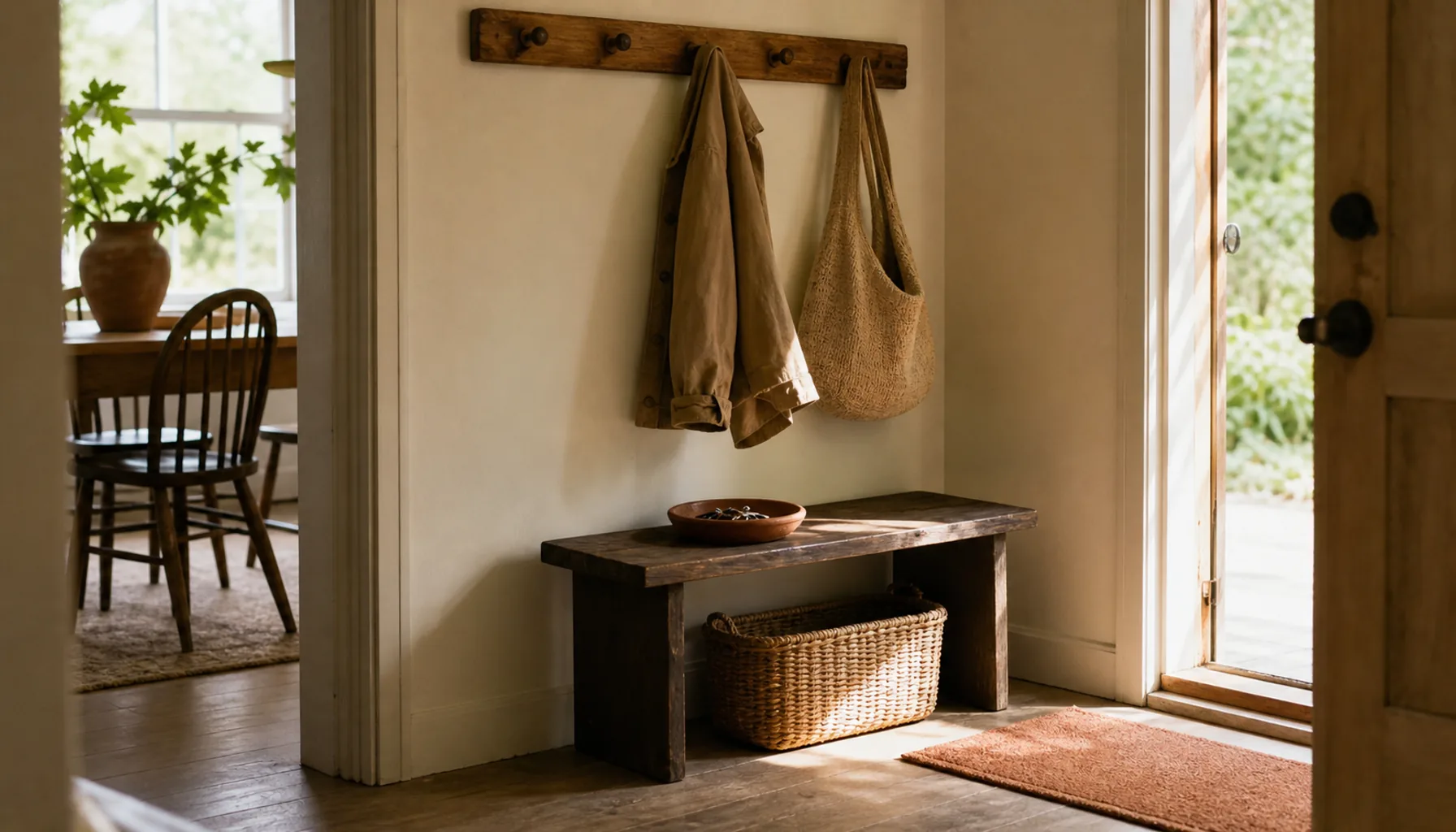
Watch how everyone actually moves through the door for a few days. Where do keys land? Where do bags get dropped? Where do shoes pile up? Those spots are telling you the truth about how the space is used. Instead of fighting those habits, build around them. If everyone abandons their bags on the third stair, a hook near the stairs beats a beautiful rack on the far wall that nobody walks past.
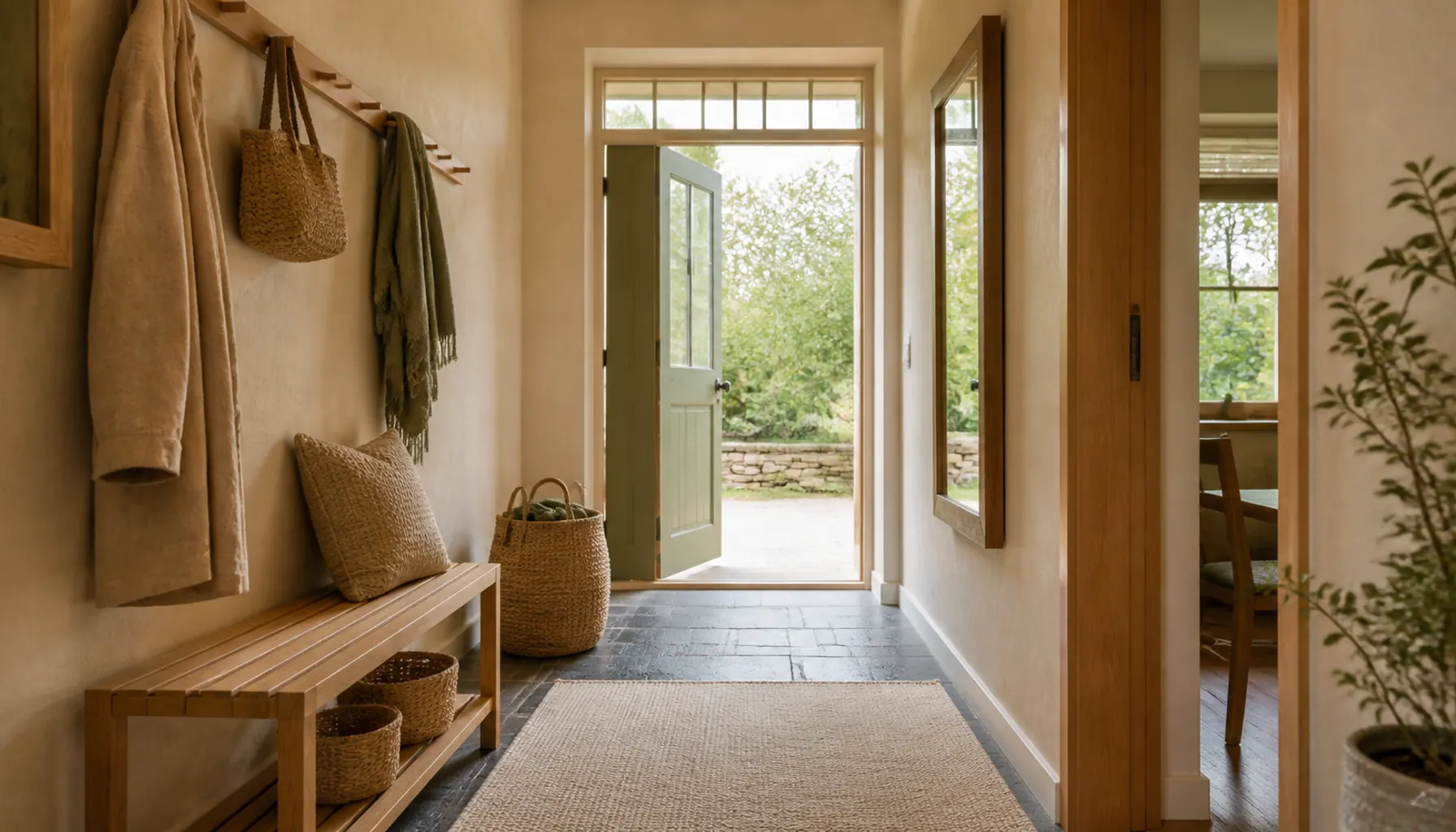
Think about it in two directions. The incoming flow needs a place to set down keys, mail, bags, and coats. The outgoing flow needs to make it obvious what to grab on your way out. When both are handled, the space stops collecting the random daily clutter that piles up otherwise.
Give keys one obvious home
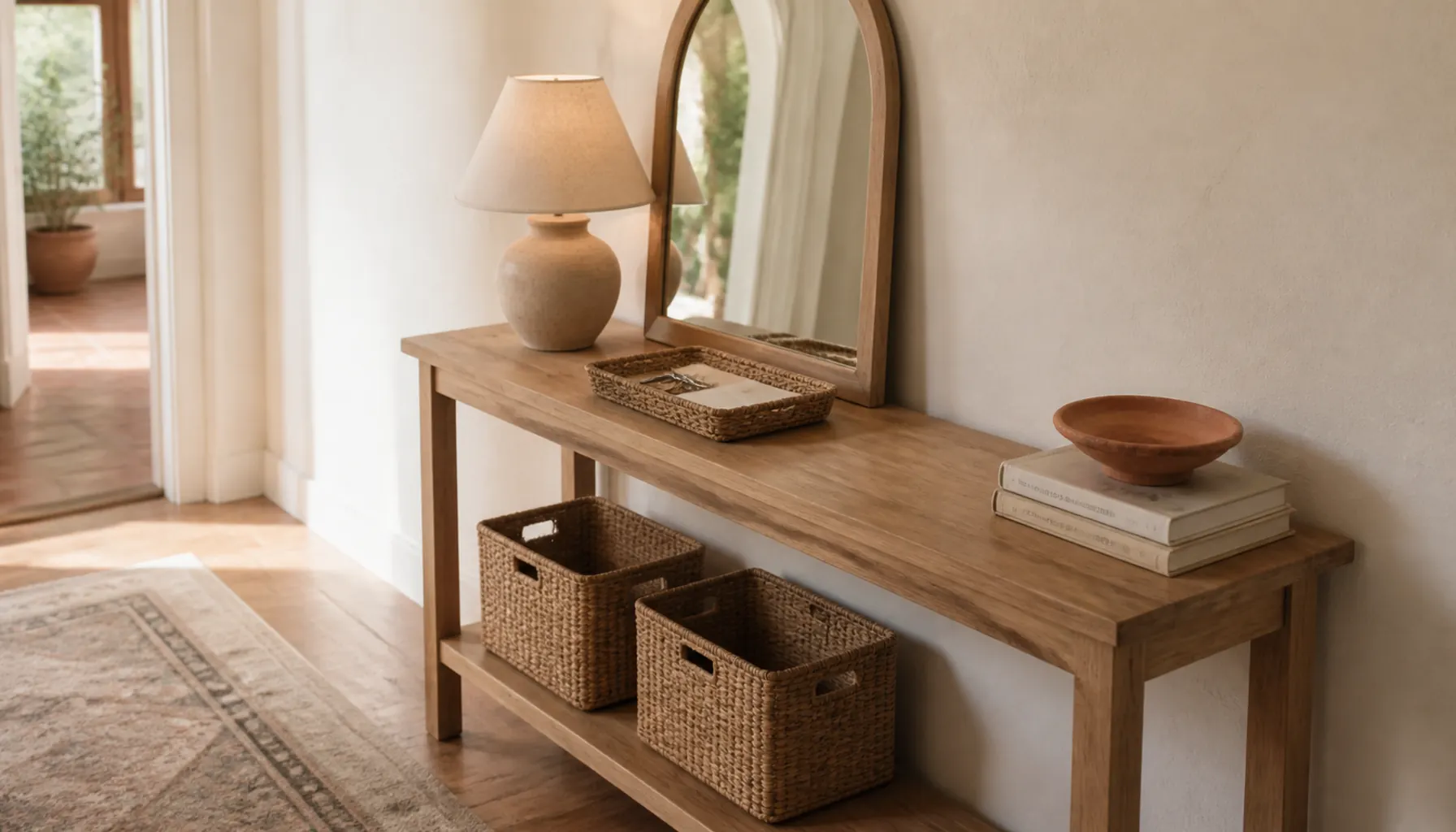
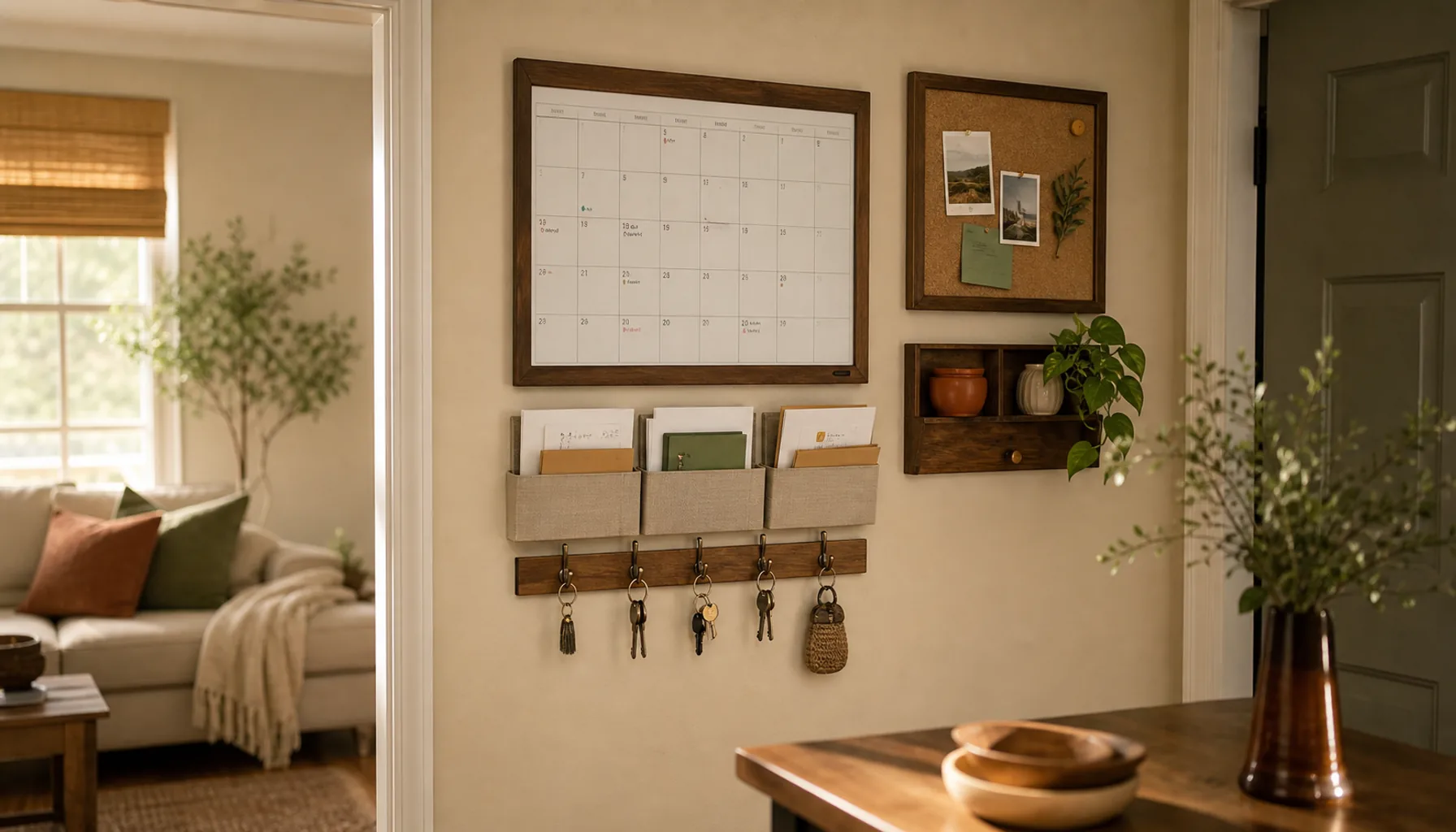
A hook, bowl, or small shelf near the door prevents morning searching. Make it visible and easy enough to use with one hand.
Lost keys are one of the most common morning delays, and the fix costs almost nothing. The trick is consistency. One spot, always the same, close enough to the door that dropping the keys there feels automatic. If you have to walk into another room or open a drawer, the habit will not stick.
Reach matters more than it seems. A hook you can catch with a full hand, a coat over one shoulder, and a phone in the other will get used. A dish tucked behind a plant will not. If more than one person comes through the door, give each a hook so nobody's set gets buried. The same spot can hold a wallet or sunglasses, so your most-forgotten items live together.
Limit visible shoes
Keep daily shoes accessible and move the rest elsewhere. Too many shoes at the door make the whole home feel messier.
Shoes multiply faster than any other item near the door. Keeping the visible pile small is both practical and emotional. A smaller pile means you can find the pair you want, and a tidy floor at the entrance sets the tone for the home, since it is the first thing you see when you walk in.
A simple rule: keep only the shoes each person wears this week within reach. Everything else goes to storage that actually works in a small space: a closet, under a bed, or a bin somewhere less prominent. A low tray or mat gives shoes a defined border, and once there is a clear edge, stray pairs look out of place and are easier to gather up.
- Daily pairs stay at the door.
- Seasonal and occasional pairs move to storage.
- A tray or mat marks where shoes belong.
Add a small reset basket
Use one basket for things that need to leave: returns, library books, borrowed items, dry cleaning. Empty it once a week.
Some things are not staying in your home, but they are not leaving today either. Without a home of their own, these items drift onto counters and slowly become clutter. A single reset basket gives them a temporary address. When you find a shirt to return or a book to give back, it goes straight in, and you stop carrying that mental note around.
The key is emptying it on a regular rhythm, so it does not quietly become permanent storage. Pick a day that anchors your week, the same one you might use for a regular home reset routine, and clear the basket then. Keep it to one basket. Add a second and the system loses its simplicity, and you are back to guessing where things live.
Build a short morning launch routine
Even a good layout works better with a small habit attached. The night before, set out what tomorrow-you will need: the bag by the door, the keys on their hook, the shoes lined up. It turns the morning from a search into a simple pickup.
Two minutes in the evening buys you a calmer exit, because you decide things while unhurried instead of already late. Over time, the routine fades into the background and the door just works.
Finish with one warm detail
A lamp, mirror, small print, or plant makes the entryway feel welcoming without getting in the way.
Once the space works, one thoughtful touch makes it feel like part of your home rather than a drop zone. A mirror lets you check yourself on the way out and bounces light into an often-dim area. A small lamp softens dark mornings and late arrivals. A plant or a single framed print adds a bit of life. Choose one detail, keep it out of the traffic path, and let function stay in charge. A working entryway that also feels warm is what carries you calmly through your busiest mornings.