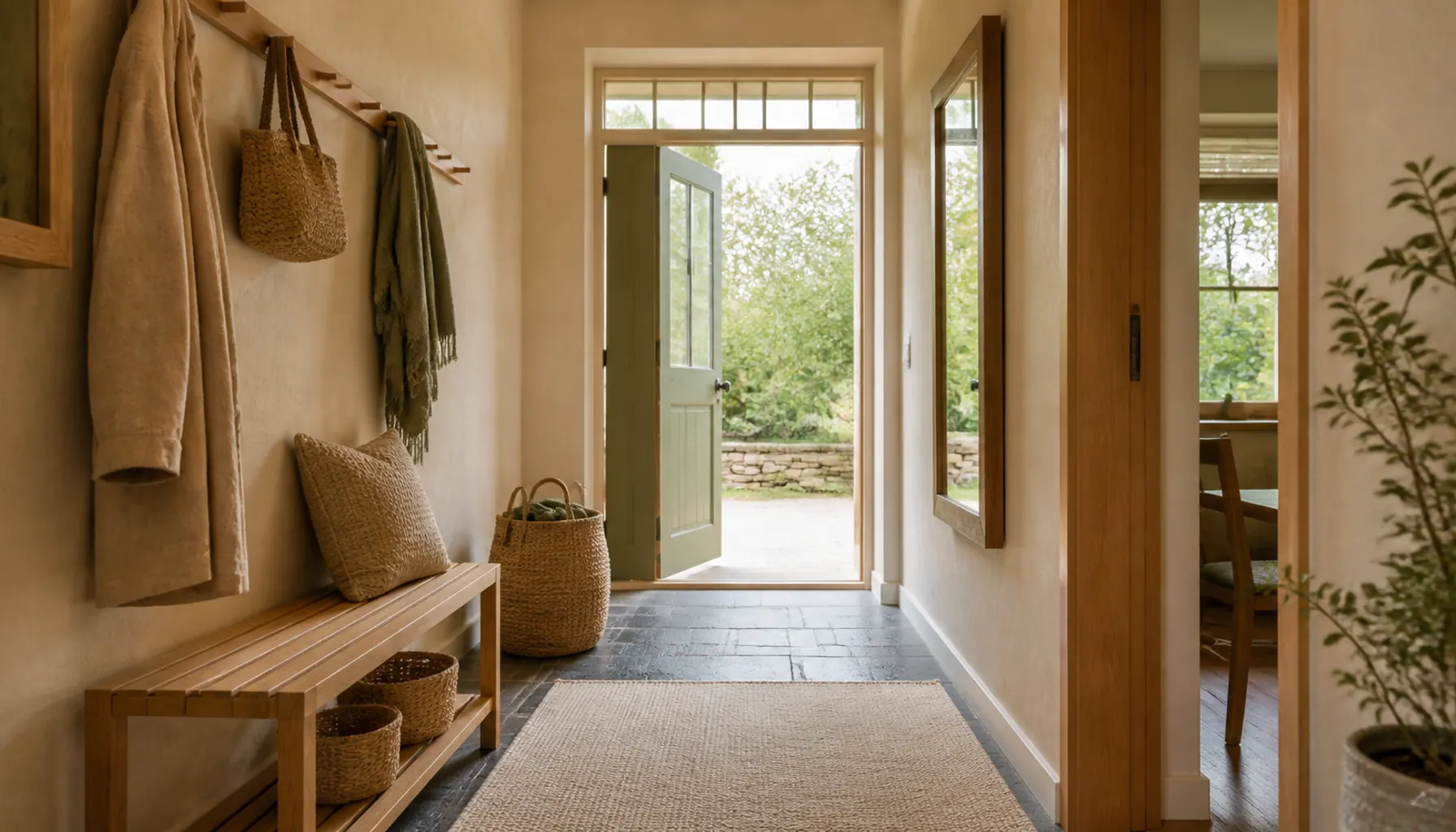
12 Console Table Decor Ideas That Actually Hold Stuff
Console table decor ideas that look composed and still absorb keys, mail, and chargers. Trays, drawers, baskets, lamp groupings, and the weekly reset.

· 13 min read
A console table is the hardest surface in the house to keep nice, because it sits exactly where people put things down. Style it like a photo shoot and it lasts until someone walks in with mail. Leave it bare and it becomes a shelf for receipts, sunglasses, and a phone charger with no home. The ideas below treat both jobs as one problem: the console has to read as composed and still swallow the daily pile. Most of them work whether yours sits by the front door, behind a floated sofa, or in a hallway too narrow for real furniture. Nearly all can be done with what you already own.
Key Takeaways
- A tray is the whole system, not a decoration. It gives loose objects an edge to stay inside.
- Sort storage by how often you touch something: daily on top, weekly in a drawer, rarely underneath.
- Asymmetry survives daily use. A perfectly centered arrangement looks broken the moment one item moves.
- Size art and mirrors to the table width, not to the wall.
- Reserve real empty surface as a drop pad, or the styled zone becomes the drop pad.
- A per-person landing spot stops one shared pile from forming.
- Rotate decor instead of adding it, or the console fills up over a year without anyone deciding to fill it.
12 Console Table Decor Ideas Worth Trying
Idea 1: Start With a Tray, Not an Object
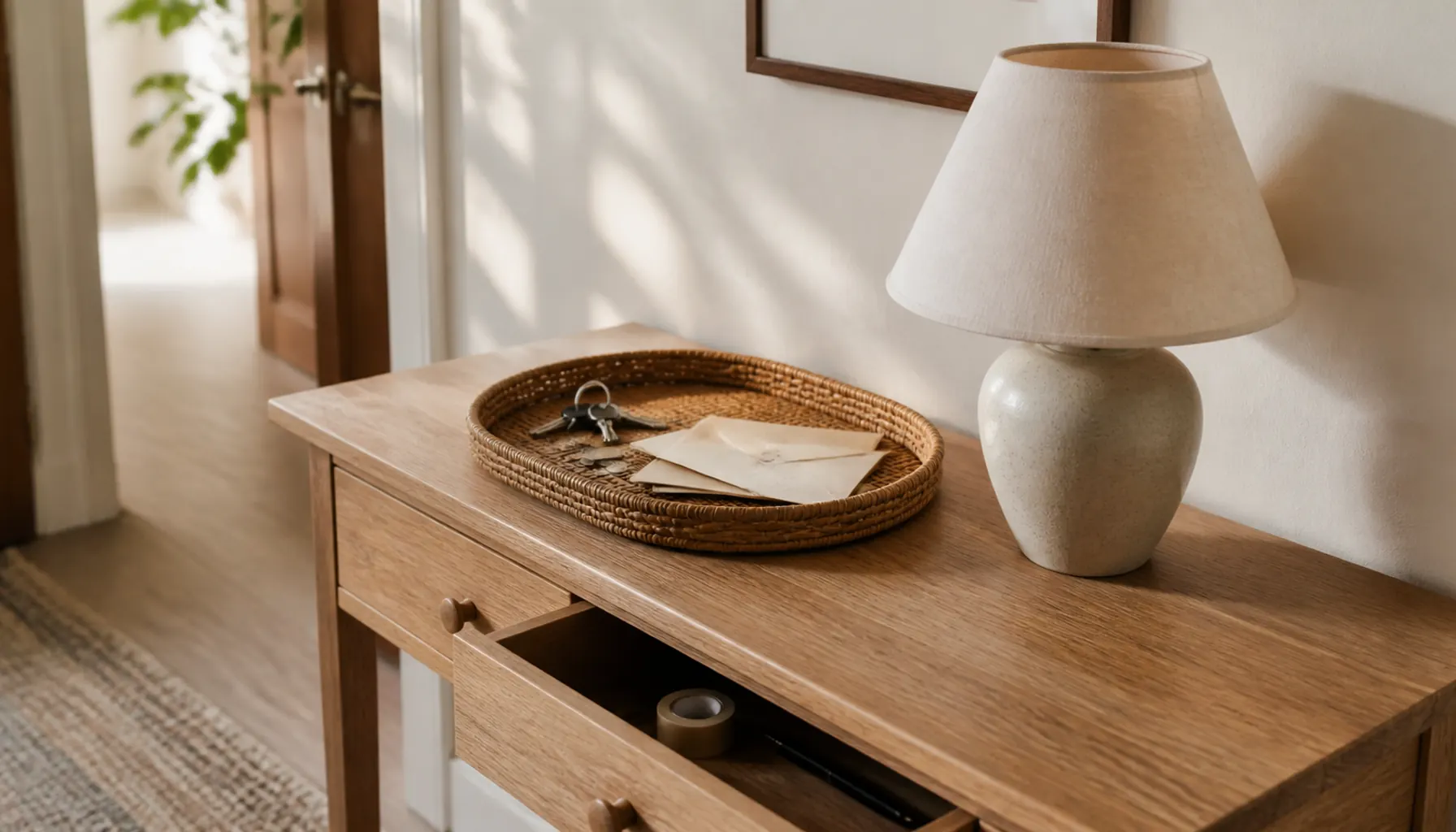
Before anything decorative goes on the console, put down one shallow tray. It does the same work a curb does: it gives keys, sunglasses, and loose change a boundary, so a handful of small items reads as one shape rather than eight pieces of clutter.
Size it to about a third of the table length and set it on the end nearest the door. A rattan or leather tray with a raised lip holds more than a flat wooden board, and it can be lifted off in one motion when you dust or need the surface.
The mistake is buying a tray that's too pretty to use. If it holds one candle and a folded cloth, the keys still land beside it. Empty trays earn their spot fastest.
Idea 2: Sort by How Often You Touch It
Every console has three storage layers, and confusing them is why they stop working. Things you touch daily belong on top in the open, because you will not open a drawer for keys twice a day. Weekly items (spare batteries, tape, pens, dog treats) belong in the drawer. Bulky or rare items live underneath.
Assign each layer before you shop for containers. A drawer full of things you need every morning turns into a junk drawer within a month, and a surface holding things you need twice a year turns into a display of clutter.
If the console has no drawer, a lidded box on the lower shelf plays the same role. The same triage logic you would use on a kitchen drawer applies here, just at a much smaller scale.
Idea 3: Give Baskets Underneath One Job Each
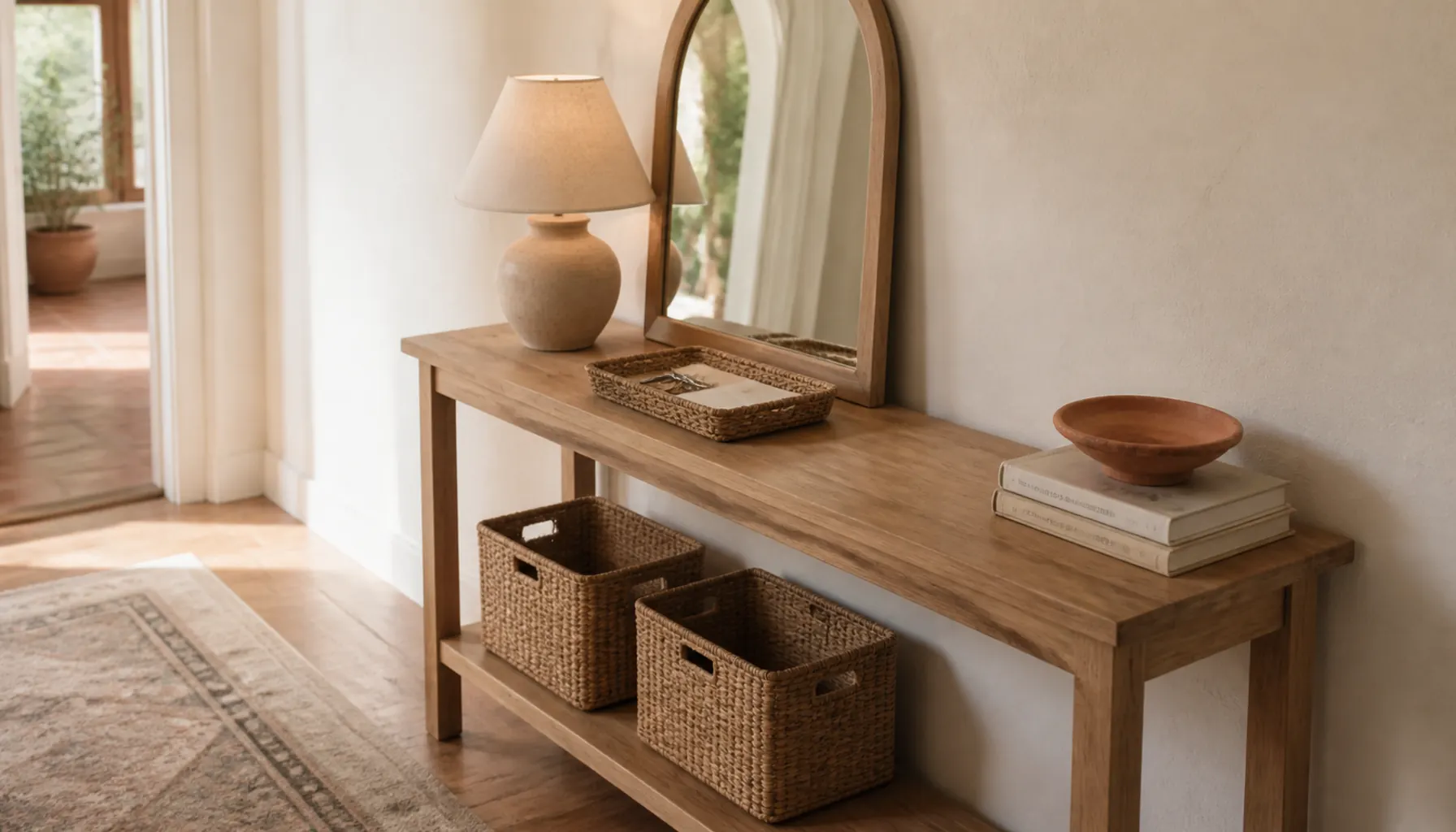
The space under a console is the most wasted storage in most homes. Two baskets sitting side by side on the floor or lower shelf absorb the awkward objects that never fit anywhere: shoes by the door, dog leashes, gloves, a folded tote.
Give each basket a single category and keep it to two. Three or more and you start hunting through all of them, which means you stop putting things back. Open woven baskets suit items you grab daily; lidded ones suit things you would rather not look at.
Choose baskets that clear the floor if you vacuum often, or ones with a flat base if they slide out. And leave a gap between them, since two baskets crammed wall to wall make a narrow console look like a blocked cabinet.
Idea 4: Build the Grouping Off Center
Put the lamp at one end, art or a mirror behind it, then a low group of two or three objects toward the other end. That off-center arrangement is not a style preference, it's what makes the console durable: the eye reads the tall lamp as the anchor, so the rest of the surface can shift without the whole thing looking wrong.
Symmetry does the opposite. Two matching lamps with a bowl dead center is a beautiful arrangement that fails the first time someone sets a bag on the left side.
Vary heights within the group so it doesn't flatten out: something tall, something mid-height with a different shape, something low. Odd numbers help. The approach to small groupings in open shelf styling works the same way on a horizontal surface.
Idea 5: Size Art to the Table, Not the Wall
A mirror or piece of art above a console should relate to the furniture below it, roughly somewhere between half and three quarters of the table width. Go much narrower and the art floats like a stamp. Go wider than the table and the console looks undersized.
Hang it lower than feels right. There should be a modest gap between the tabletop and the frame, close enough that the two read as one unit. A lamp will overlap the bottom corner of the frame, and that overlap is what stops the pair from looking like two separate decisions.
A mirror is usually the better choice near a door, since it bounces daylight into a dim hallway and gives you a place to check yourself on the way out. For a multi-frame version above a longer console, our gallery wall method covers spacing without the guesswork.
Idea 6: Leave a Real Landing Pad
Decide which part of the surface stays permanently empty, and defend it. Not empty for looks, empty for use: a clear stretch wide enough for a bag of groceries, a laptop, or a stack of library books.
This is the single move that keeps a styled console from being destroyed daily. When there's nowhere obvious to set a heavy thing down, people put it on top of the styled group, and then the candle and the small bowl get pushed into a corner.
Keep the empty zone at the end nearest the door or the walking path, and cluster everything decorative at the far end. A visible bare patch also nags at you, which is useful: an empty surface with one stray envelope on it looks wrong, so you deal with the envelope.
Idea 7: One Landing Spot Per Person
Shared surfaces fail because everything merges into a single pile that nobody owns. Split the console by person instead of by object type: one hook, one small basket, or one section of a divided drawer each.
The benefit is accountability. A pile of mixed belongings is nobody's job to clear, while a basket with your name on it is obviously yours. Kids handle this better than adults do, especially when the spot sits at their height rather than at adult eye level.
Keep the containers identical so the row still looks composed, and label them discreetly (a small tag, a marked clip) rather than with big lettering. This is the console-sized version of the setup in a family command center for mail, keys, and schedules, useful when there's no wall to spare.
Idea 8: Make It the Charging Station, Properly
Phones charge wherever the cable is, so decide where that is instead of letting three cables sprawl across the top. Run one short power strip behind or under the console, drill or use the existing cable notch, and bring up one or two cords only.
Then hide the slack. A shallow lidded box on the surface with a cord slot lets a phone sit inside while charging, so the tangle stays out of sight. A fabric sleeve gathers the run down to the outlet.
Short cables beat long ones here, since a long cord always leaves a loop on the floor, and that loop is what makes an otherwise tidy console look messy. More options for tucking the practical stuff away are in these small apartment storage ideas.
Worth Avoiding: A power strip resting on the console surface. It reads as a workbench no matter how nicely everything around it is styled, and the cables never stay flat.
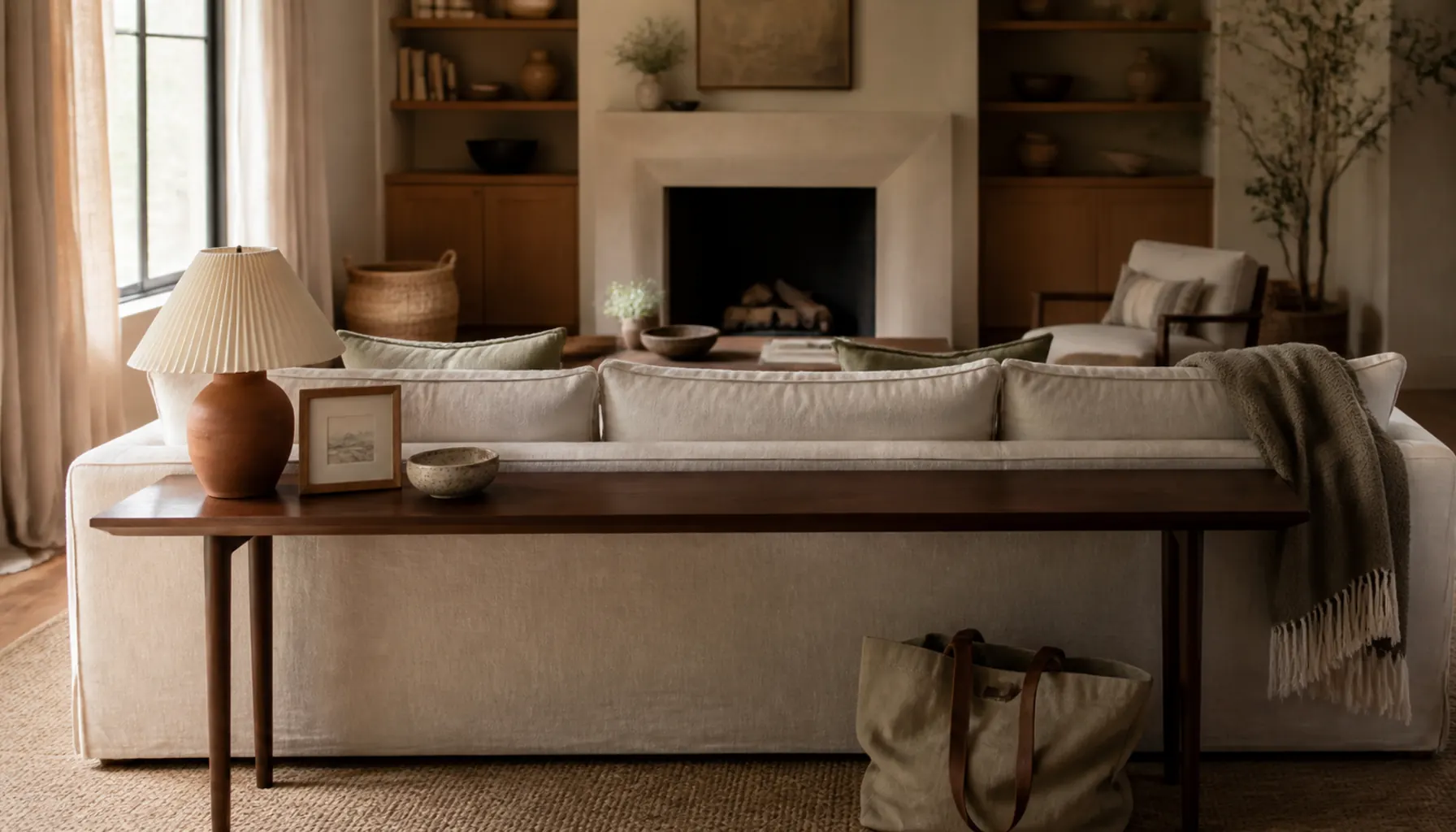
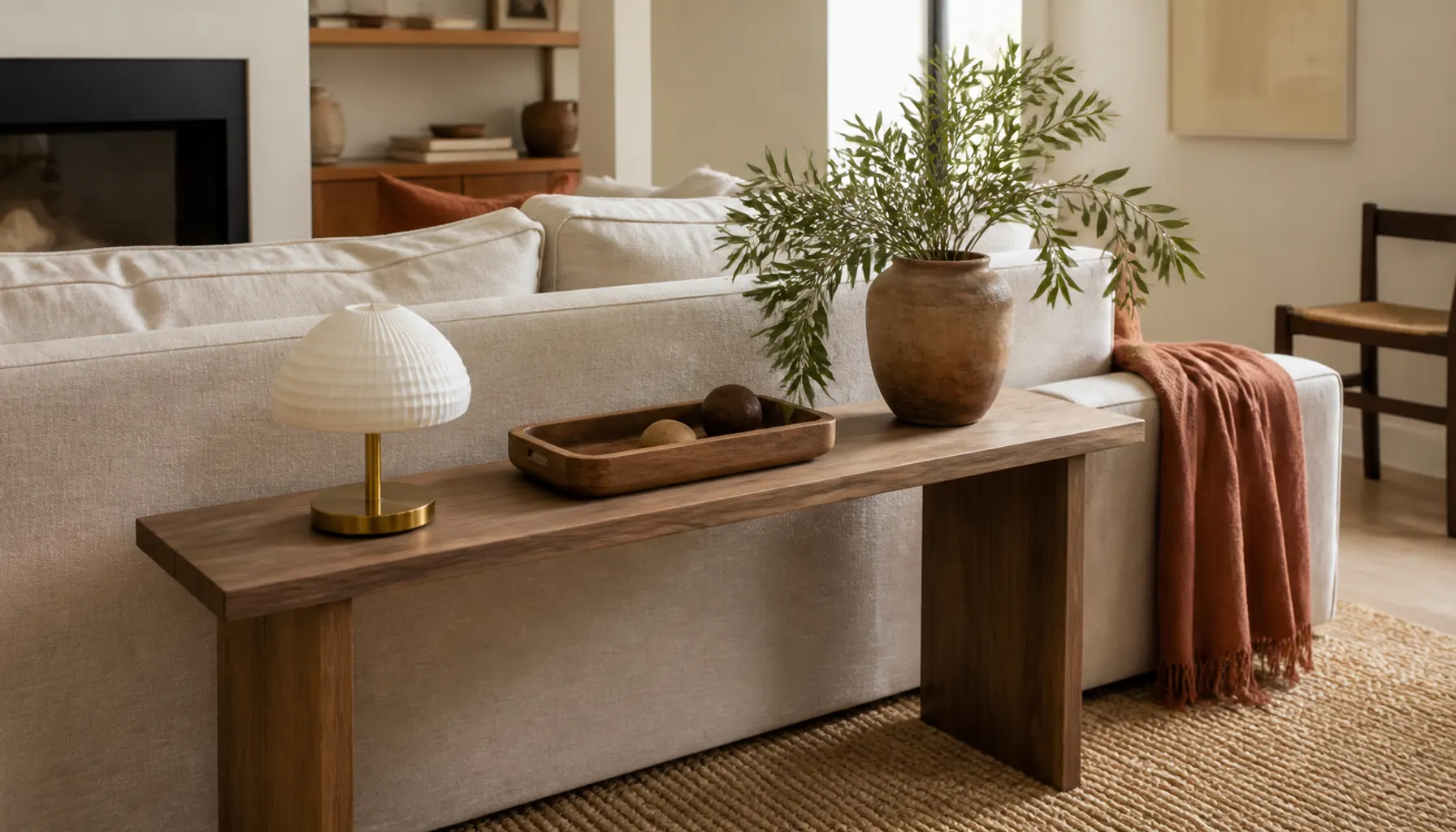
Idea 9: Match the Height to the Sofa Back
When a console floats behind a sofa, its top should sit at or just below the top of the sofa back. Level or slightly under, and the two pieces read as one built-in unit from across the room. Taller, and the console looks like it wandered in from another room.
That height decides what you can put on it. A lamp behind a sofa needs to clear the seated head, so measure with someone sitting down before you buy the shade. Low objects work better than tall ones on this console, since anything above the sofa back is visible from every seat.
Keep the depth modest so the walkway behind the sofa still works. A shallow console with a drawer hides remotes and cables while giving the seating area a defined back edge.
Idea 10: Trade Depth for Length in a Tight Hallway
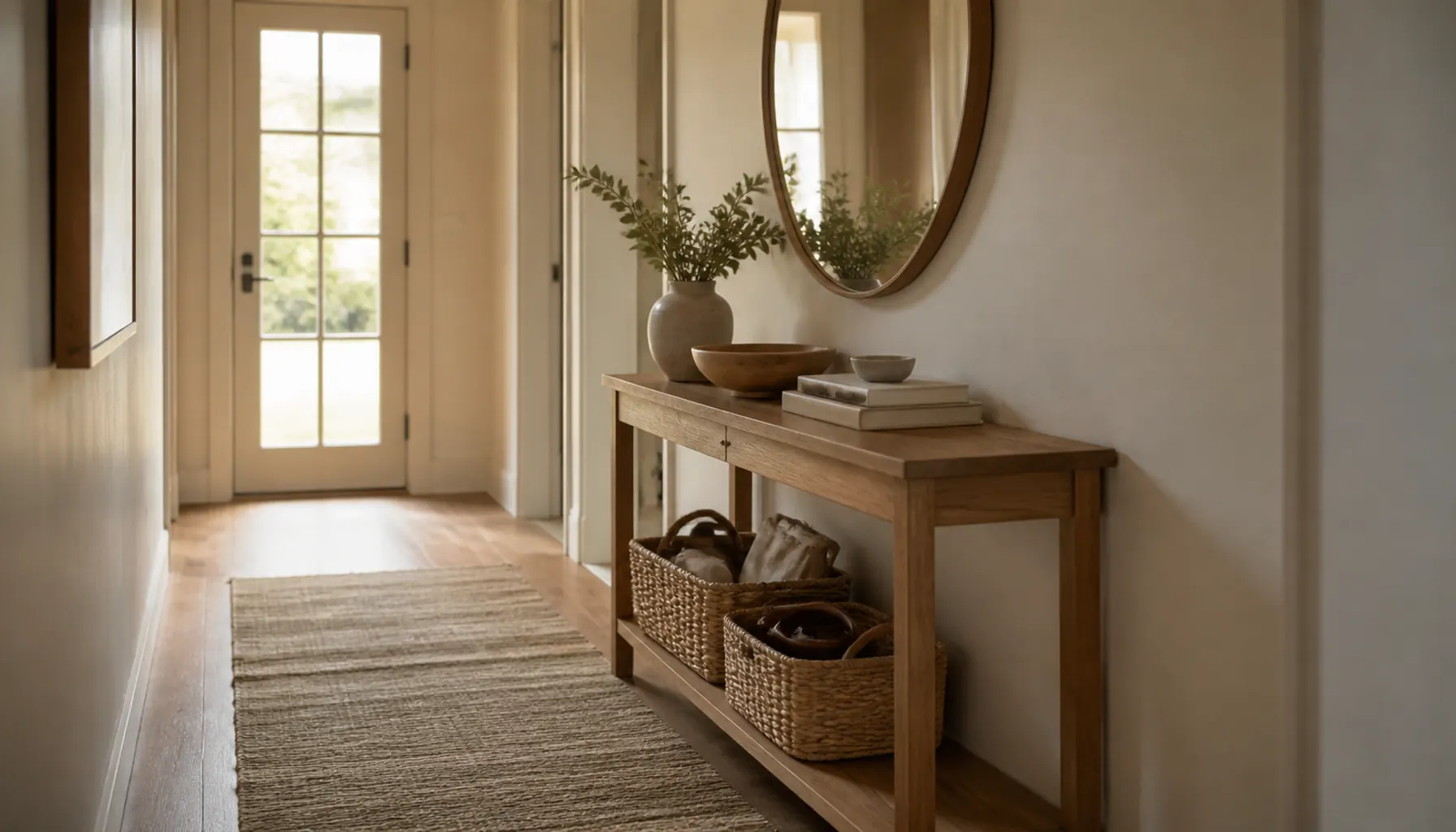
In a corridor, depth is the enemy and length is free. A very shallow console that reads more like a shelf on legs will hold a tray and a lamp without narrowing the path, while a standard-depth table turns a passage into a squeeze.
Push the storage sideways instead of forward. A long, narrow piece gives you room for a tray at one end, a small lamp at the other, and a couple of slim baskets below, all within a footprint you can still walk past carrying a laundry basket.
Keep everything on top low, too. A hallway is seen at an angle rather than head on, so tall objects block the view down the corridor. The same clearance thinking runs through an entryway setup built for busy mornings.
Idea 11: Anchor It With a Runner or Small Rug
A console standing alone on bare floor looks temporary, especially in a hallway. A runner underneath, or a small rug pulled slightly forward of the table, ties the piece to the floor and marks the zone as a room rather than a leftover strip.
There's a practical payoff too. A rug in front of the console catches grit from shoes, muffles the sound of a hard corridor, and stops the space from echoing every time a door closes. Choose a flat weave you can shake out over something plush, since this is a high-traffic patch.
Let the rug run wider than the table on both sides. A runner exactly the table's width looks like a mat. For sizing and placement in general, our guide to choosing and sizing a rug is worth a read first.
Idea 12: Rotate Decor, Don't Add It
Consoles fill up slowly, and nobody notices. A gourd arrives in October, a small wreath in December, a candle in spring, and by the following summer the surface holds fourteen objects that were each meant to be temporary.
Fix it with a swap box. Keep one small bin of seasonal pieces, and whenever something goes onto the console, something comes off and goes into the bin. The object count stays flat while the look changes three or four times a year.
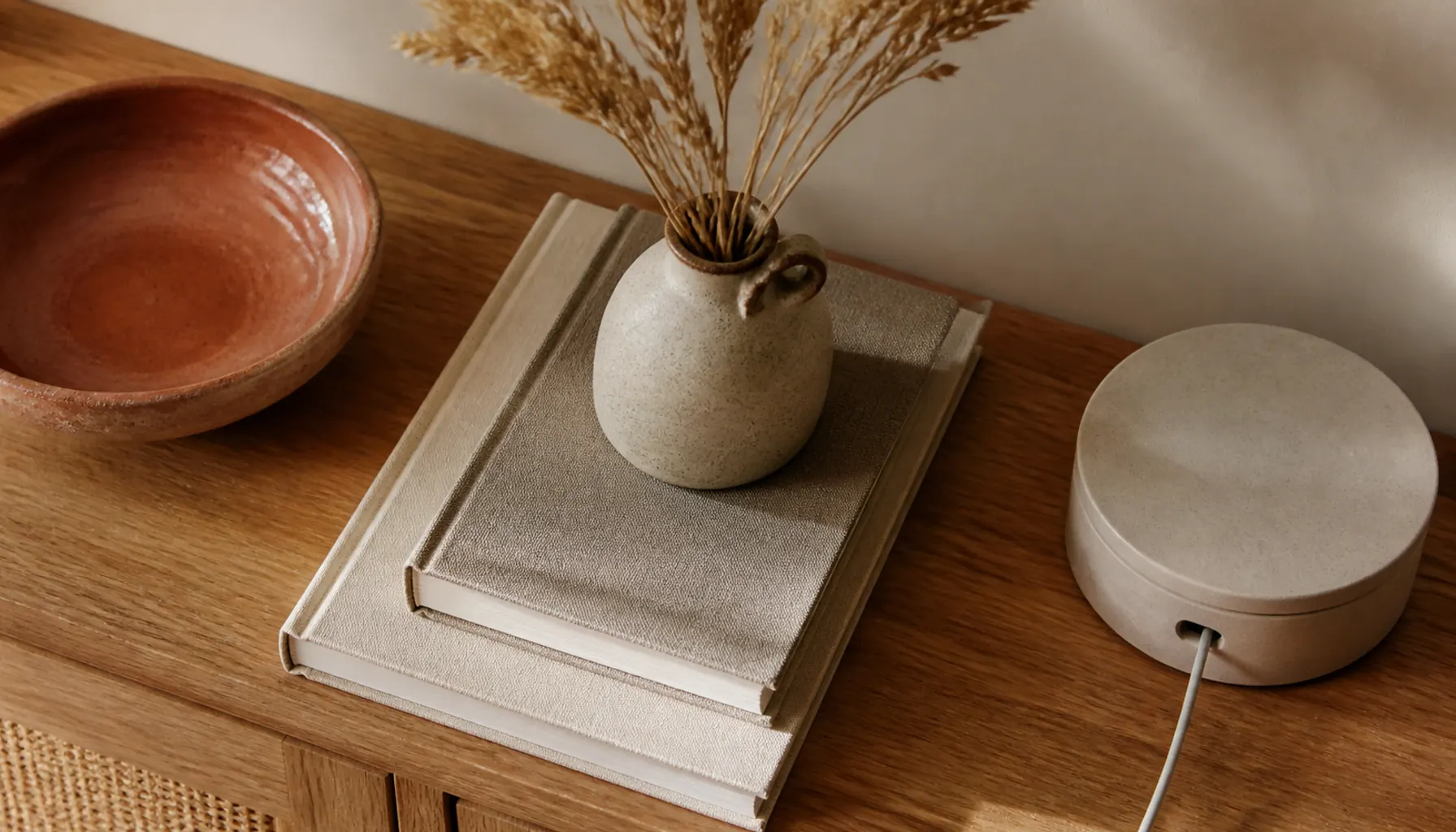
Two swaps do most of the work: change the color of the low group, and change the material. A glazed terracotta bowl in autumn, a pale ceramic one in spring. Fold the swap into a broader routine like the seasonal home reset checklist so it happens on a schedule instead of by mood.
Frequently Asked Questions
How do I stop my console table becoming a dumping ground?
Give the most common objects a container and reserve real empty surface for everything else. Keys and mail need a tray and a slot; bags and shoes need a basket underneath. Then clear the surface once a week rather than waiting for it to look bad. A console fails when there is nowhere obvious to put the thing in your hand.
What should go in a console table drawer?
Things you need weekly, not daily. Pens, tape, spare batteries, a small notepad, chargers you use occasionally, dog treats. Daily items belong on top in a tray, since nobody opens a drawer for keys on the way out. Add a shallow divider or two small boxes inside, or the drawer becomes a junk drawer within a month.
Should a console table match the sofa or the walls?
Neither, exactly. Pick a wood tone or finish that repeats somewhere else in the room, like the frame of a chair or a nearby shelf, so it looks intentional rather than matched. Contrast in material usually works better than a match: a warm oak console against a cream wall, or a dark wood piece breaking up a pale room.
How many objects should I put on a console table?
Fewer than feel right at first. One lamp, one piece of art or a mirror, one tray, and a group of two or three small objects is plenty for a normal-length table. Everything past that competes for attention and leaves no room to set anything down. Mixed materials keep a small group from feeling sparse, which mixing textures covers in more depth.
Do I need a lamp on my console table?
Not always, but it helps more than most decorative objects. A small table lamp gives you low, warm light at hip height, which is far kinder in an evening hallway than an overhead fixture, and it doubles as the tall anchor in your arrangement. If your hallway or entry feels harsh at night, the problems in 5 lighting mistakes that make rooms feel cold are usually the cause.
Where to Start
Do it in one order. Clear the console completely, put down a tray, decide which stretch of the surface stays empty, then add the lamp and one small group at the opposite end. Only after that should you deal with drawers and baskets, because you need to know what the surface can absorb before you decide what goes below it.
Then give it two minutes on a set day each week: empty the tray, sort the mail, put the strays back where they live. That reset is what separates a console that keeps working from one that looked good for a fortnight. If the pile has already won, the 15-minute declutter method will clear it faster than a full reorganization.
One useful home email a month
Real ideas to make your home work better. No spam, easy unsubscribe.