Seasonal Home Reset Checklist
A simple seasonal reset to make the house feel ready without deep-cleaning every corner.

· 5 min read
A seasonal reset is not a deep clean. It is a light pass through the rooms you already live in, meant to shake off the mood of the last few months and get the house ready for the next stretch. You are not trying to make everything perfect. You are trying to make the space feel current again, with a few small changes that carry more weight than the effort they take.
Work through the sections below at your own pace. You can do the whole thing in an afternoon, or spread it across a week and tick off one part at a time. Either way, the goal is the same: less friction, a little more calm.
Start with textiles
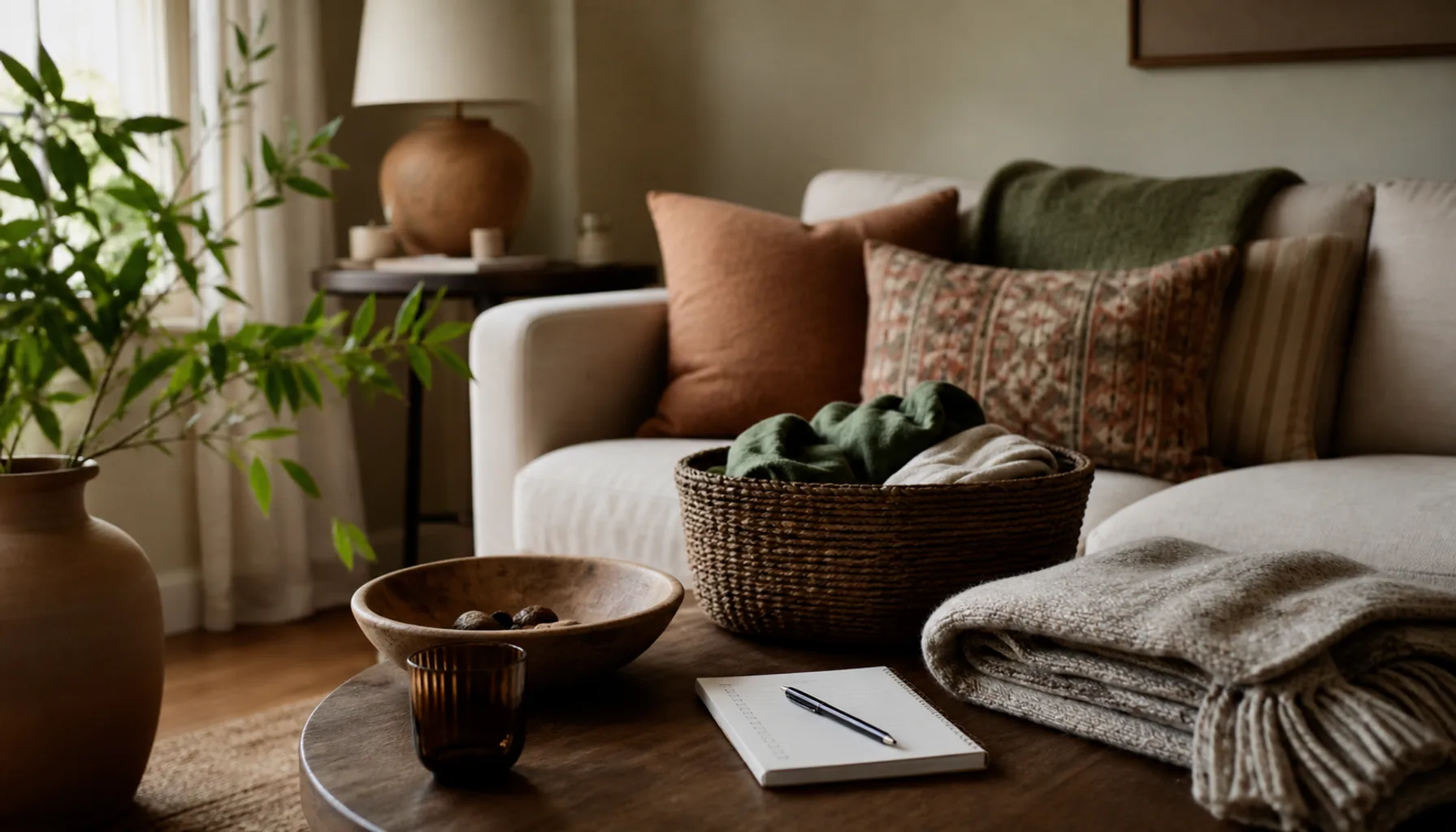
Wash throws, rotate cushion covers, and check curtains for dust. Textiles hold the feeling of the last season longer than we notice. A blanket that felt cozy in cold weather can make a warm room feel heavy, and a cushion cover that has been on the sofa for months quietly collects the smell of everyday life.
Start here because fabric is where change registers fastest. Swapping a couple of covers or folding away the heaviest blankets shifts how a room reads in minutes, without moving any furniture. While you are at it, run a hand along the top edge of curtains and the back of cushions, the spots that gather dust out of sight. If something is worn thin or permanently stained, this is a natural moment to let it go rather than fold it back into the cupboard.
Clear expired and forgotten items
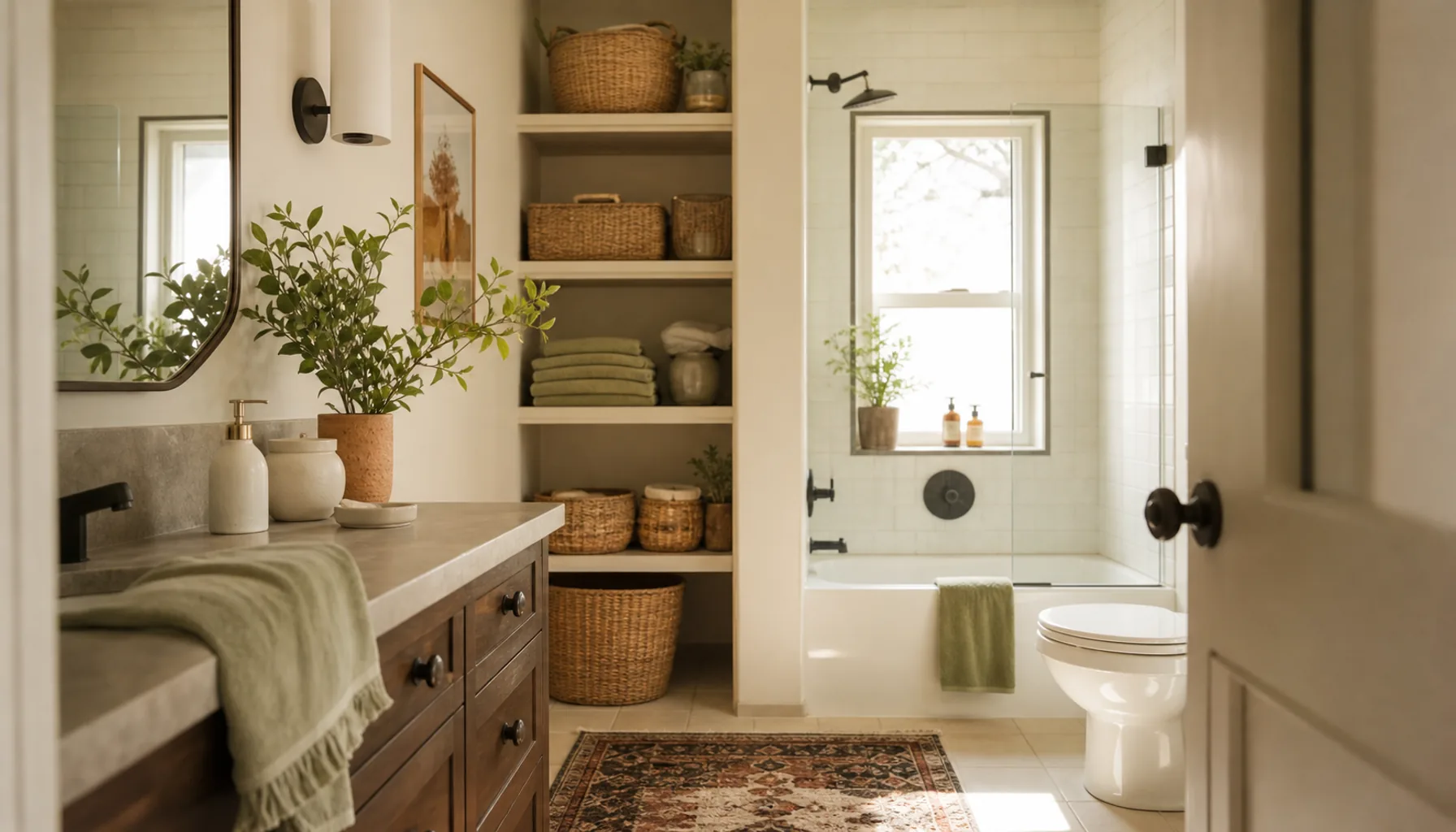
Check pantry shelves, bathroom cabinets, and cleaning supplies. Remove anything expired, empty, or clearly not being used. These are the corners that fill up slowly, one half-used bottle at a time, until you are storing things you would never actually reach for.
Clearing them out does two things. It frees up space you can see and use, and it makes the honest state of your supplies obvious, so you stop rebuying what you already have three of. Go shelf by shelf rather than trying to empty a whole cabinet at once, treating each one as a quick, focused decluttering pass:
- Pantry: toss anything past date, and pull forward what you will use soon.
- Bathroom: bin dried-out or nearly empty products, and group what is left by how often you use it.
- Cleaning supplies: combine duplicate bottles and recycle the empties.
Refresh the entry point
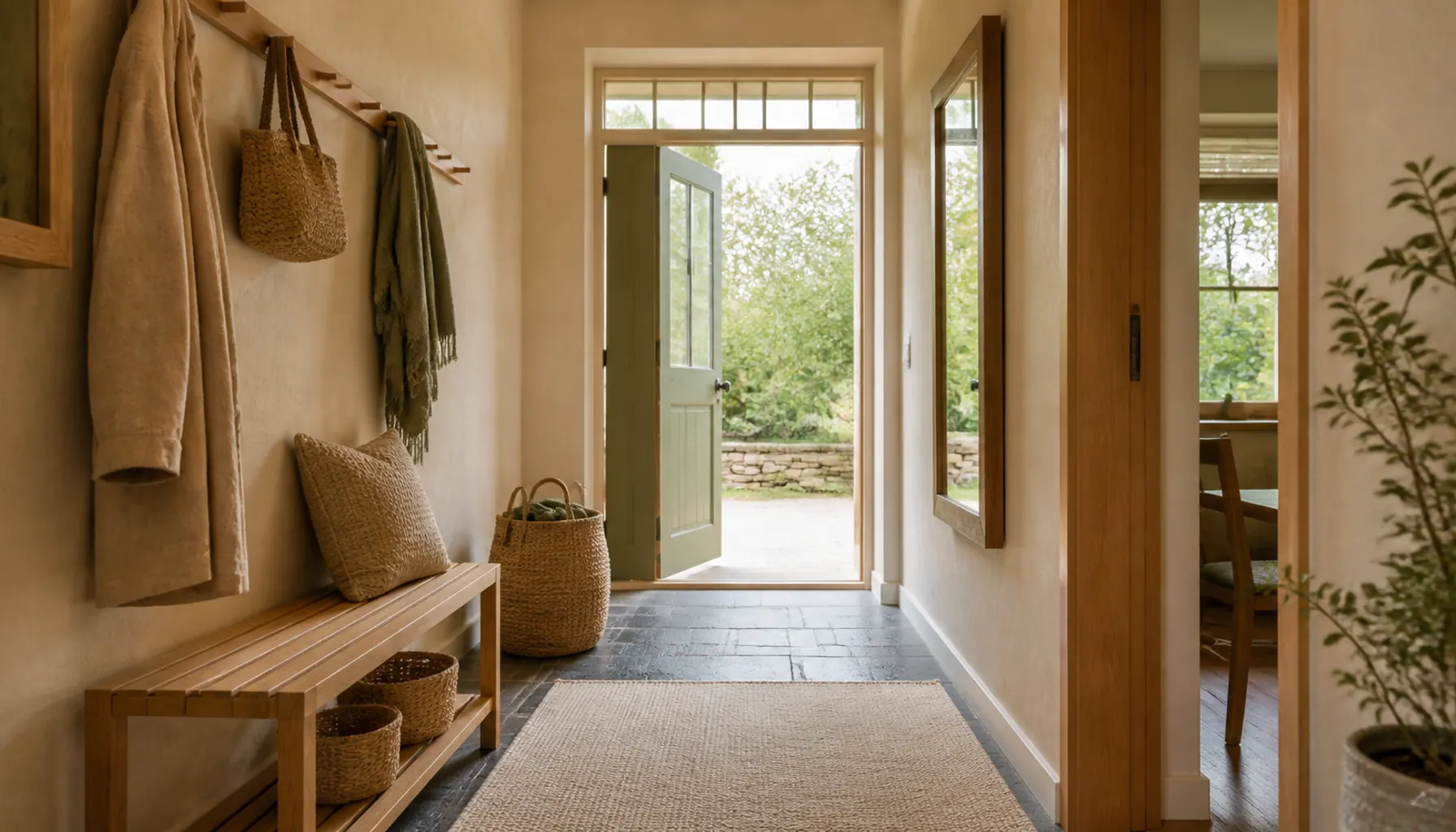
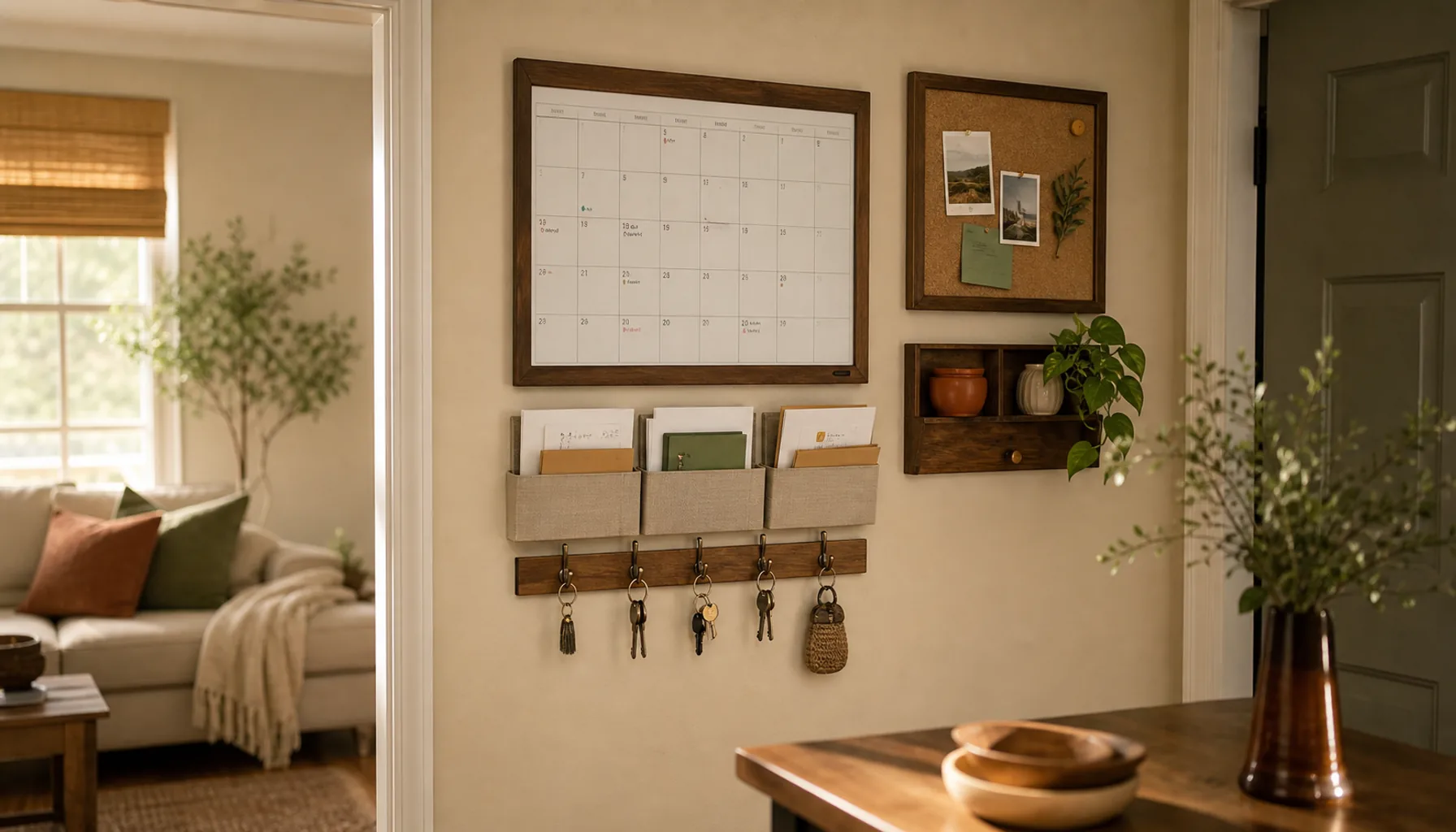
Clean the doormat, wipe the door, empty the shoe area, and make sure keys and bags have a home. The entry is the first thing you see coming in and the last thing you pass leaving, so it sets the tone for the whole house even though it gets the least attention.
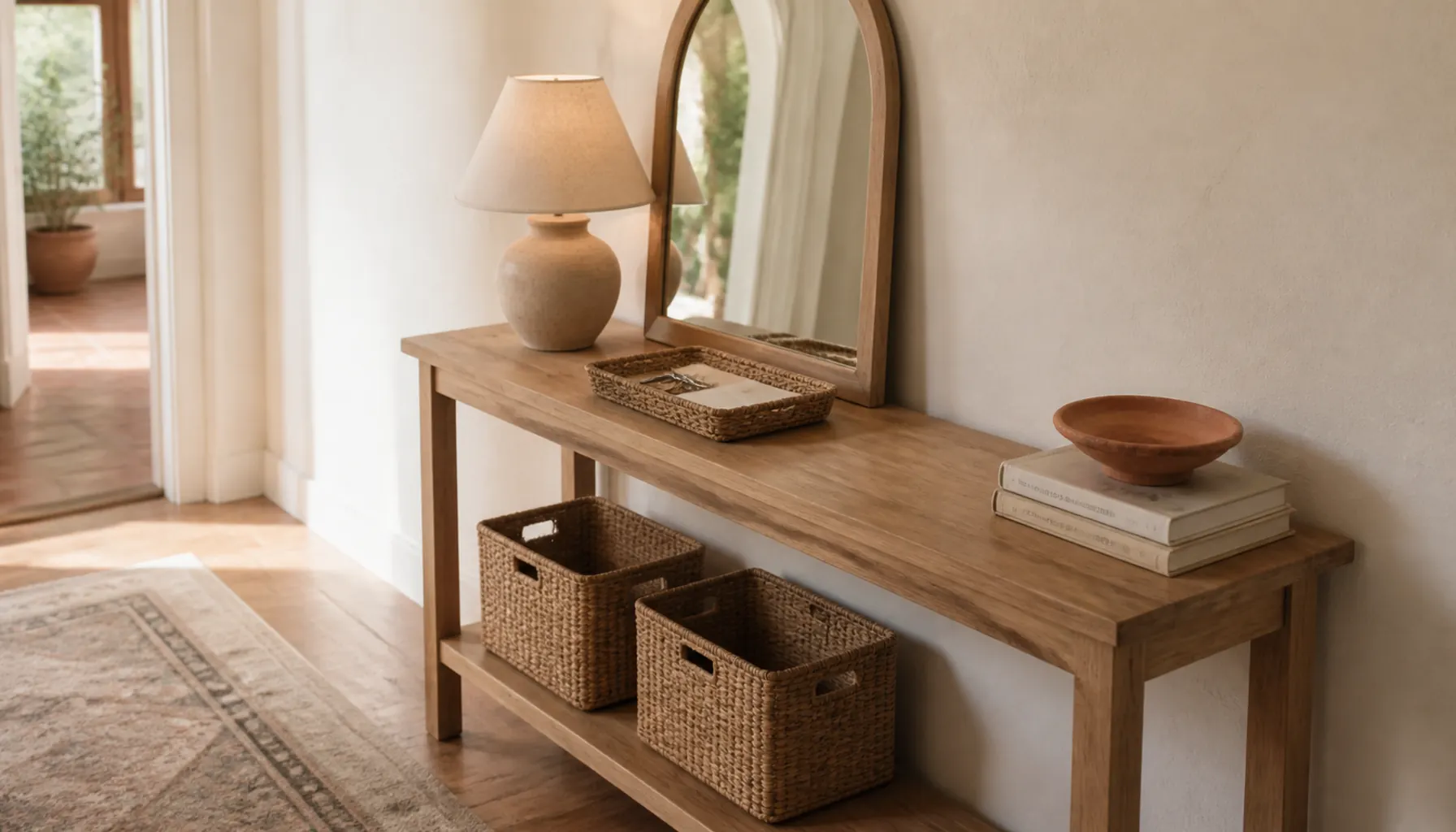
A clear entry also removes small daily friction, especially once you set the entryway up for busy mornings. When keys have a spot and shoes are not piled by the door, arriving and leaving stop being a scramble. Shake out the mat, wipe down the handle and the area around it where hands leave marks, and pare the shoe collection back to what you actually wear this season. If you do not already have a bowl, hook, or small tray for keys, this is the first thing worth adding.
Adjust lighting
As days change, lamp timing and bulb warmth matter. Move lamps before buying new decor. Light shapes how a room feels more than almost anything else, and it is easy to overlook because it changes gradually with the seasons.
When evenings come earlier, a single overhead light can feel flat and cold. Try moving a lamp to a darker corner, or shifting one you already own to the side of the room you now use most. Warmer bulbs make a space feel softer and more restful in the evening, while cooler light suits a work surface where you need to see clearly. Small adjustments like these often do the job you were tempted to solve with new furniture.
Reset the surfaces you use most
Flat surfaces collect whatever has no home: mail, chargers, odd receipts, things you meant to put away. Pick the two or three surfaces you look at every day, such as the kitchen counter, a desk, or the table by the sofa, and clear them fully. In the kitchen especially, it helps to think about resetting the counters around how you actually cook. Wipe them down, then return only what belongs there.
The point is not to keep them empty forever. It is to reset them to a baseline you can maintain, so that clutter has somewhere obvious to be dealt with instead of quietly spreading.
Let a little air and light in
Open the windows for a while, even briefly, in the rooms that stay shut. Air that has sat through a whole season feels stale in a way you stop noticing until it moves. A short airing, along with clean textiles and clear surfaces, does more for how fresh a home feels than any single product.
Choose one small improvement
Pick one thing that would make the next season easier: a basket, a hook, better bedding, or a clearer work surface. Just one. A reset can tempt you into a long list of upgrades, but a single, well-chosen change is easier to follow through on and easier to judge.
Choose it by looking back at whatever annoyed you most last season. If the hallway was always cluttered, add a basket. If mornings were cold, better bedding earns its place. Solve the real irritation, and the next reset starts from a calmer, more settled home.