In this article
- Key Takeaways
- The True Night-One List
- Why Living With Empty Rooms Beats Filling Them Fast
- Measure Before You Buy Anything Large
- New, Secondhand, or Inherited
- Where to Spend First
- Lighting Is the Highest-Impact Cheap Purchase
- Window Coverings Are a Real Night-One Need
- Storage Comes After the Clutter Shows Itself
- What Almost Everyone Buys Too Soon
- Step-by-Step: A Realistic First Month
- Common Mistakes When Furnishing a New Home
- Expert Tips
- Frequently Asked Questions
- Furnish It Slowly and You Will Furnish It Once
First Things to Buy When You Move Into a New Home, in Order
A priority order for what to buy when you move into a new home: the true night-one list, what can wait a month, and the purchases people regret buying early.

· 12 min read
The first things to buy when you move into a new home are the few items that let you sleep, wash, eat, and see after dark. That is a far shorter list than every furniture ad wants you to believe. The sofa, the dining table, and the rug you already have a Pinterest board for all work better as week-three decisions than moving-day panic buys.
What follows is a priority order, not a shopping list. The value is the sequence and the restraint.
Key Takeaways
- Night one needs about a dozen things: bed and bedding, towels, a shower curtain, toilet paper, one lamp, a cleaning kit, one pan, two plates, a box cutter.
- Empty rooms produce better decisions. A few weeks in the space shows where you sit, walk, and drop things.
- Measure the room, then the route. A sofa that fits the wall but not the stairwell is a return fee.
- Spend first on the mattress, the daily seat, and lighting; buy the rug after the sofa and decor last.
- Window coverings are a real night-one need in bedrooms and any room the street sees into.
- A full dining set and a matching bedroom suite are the purchases people regret most.
The True Night-One List
You need enough to sleep, wash, and stop the day. Buy it in one trip, then stop.
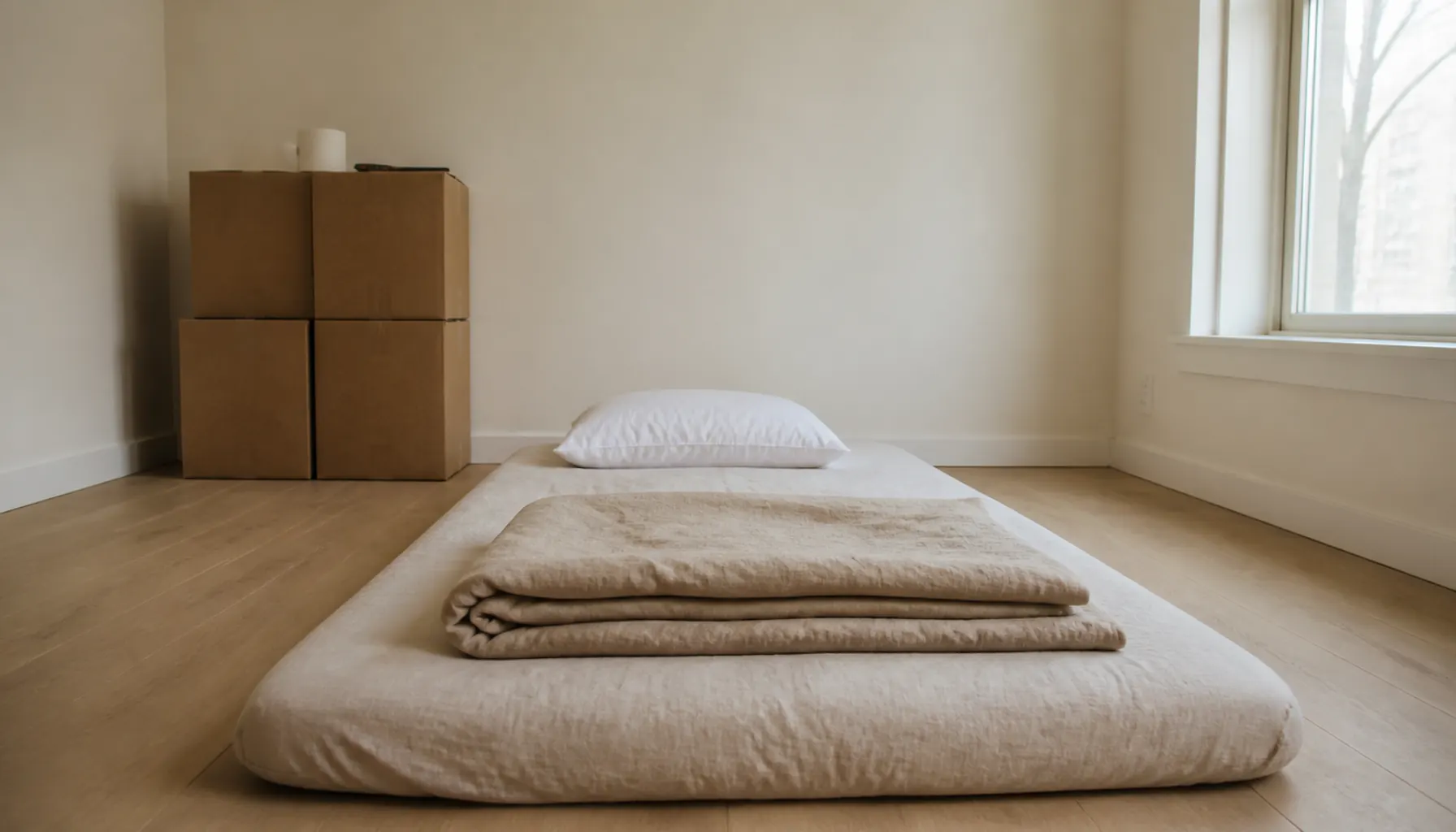
- A bed and bedding. A mattress on the floor is fine for a week. A pillow, a fitted sheet, and a blanket are not optional.
- Toilet paper, hand soap, and a shower curtain. Most bathrooms come without one, and you find out at 11pm.
- One lamp with a warm bulb, for wherever the fixture is missing or the bulb is dead.
- A cleaning kit: spray, paper towels, a sponge, trash bags.
- One pan, one pot, two plates, two forks, two mugs, a knife. Toast and pasta is fine.
- A box cutter, scissors, and a screwdriver, since the box holding the rest of the tools needs opening too.
Keep one marked box in your car rather than the truck: bedding, towels, toilet paper, cleaning kit, chargers, box cutter. That box turns moving night into a shower and a bed to sleep in.
Why Living With Empty Rooms Beats Filling Them Fast
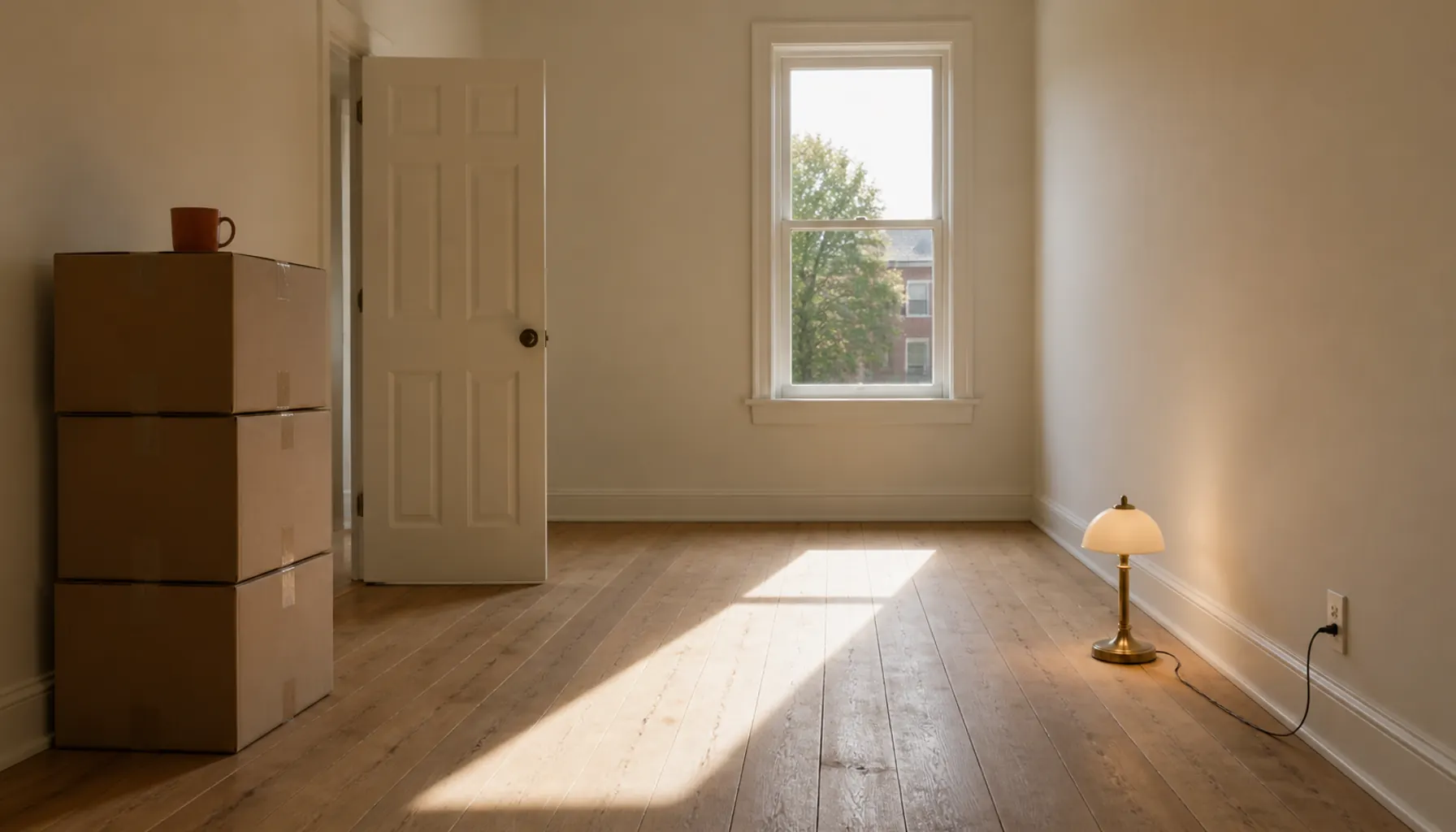
Empty rooms are information. Every week in an unfurnished house tells you something a floor plan cannot: where the light lands at breakfast and where it dies by four, which corner you actually sit in, that the dining room is where bags get dropped, and that the planned office gets no sun. Furniture bought in week one is bought against a guess; furniture bought in week four is bought against evidence.
Painting is also easier in an empty room, so settle the wall color before furniture lands. A whole-house color plan is simpler to judge against bare walls. Give yourself a deadline, though; three or four weeks is plenty.
Measure Before You Buy Anything Large
Measure the space, then measure the route to the space. Skipping the second step turns a good sofa into an expensive lesson.
Write down four numbers before you shop: the wall length the piece sits against, the depth you can lose before it blocks a walkway, the ceiling height if anything goes tall, and the path width you want kept clear. Around 30 to 36 inches feels comfortable; below roughly 24 inches you start turning sideways to cross the room.
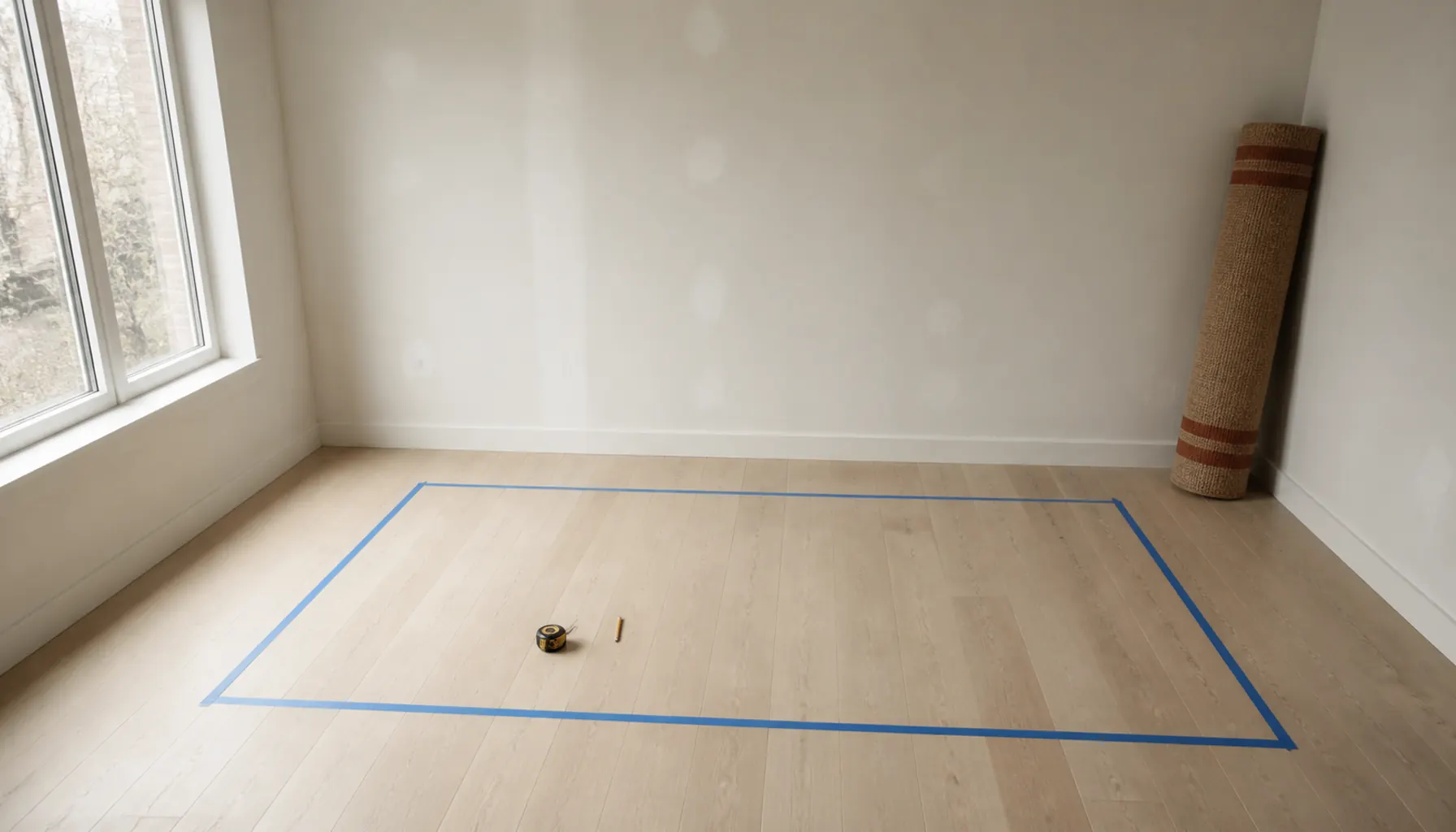
Then tape it out. Painter's tape on the floor in the shape of the sofa, left there two days, tells the truth about scale.
The Doorway and Stair Problem
Big furniture usually fails on the way in, not the room. Check every choke point before ordering.
- Front door width and height, including the thickness of the open door, which steals an inch or two.
- The tightest turn, normally a stairwell foot or hallway corner; a sofa has to pivot, so the diagonal matters more than the width.
- Stair headroom and the handrail, often the real culprit. A handrail can sometimes come off for an hour, and that hour decides it.
- Elevator depth and door height, plus any booking or insurance paperwork the building wants.
Ask about the return policy in the same breath as the price, since restocking and return shipping eat a real share of what you paid. Sofas that arrive in sections solve most access problems.
New, Secondhand, or Inherited
Match the source to the item, not your budget mood.
- Buy new: the mattress, upholstery you cannot inspect, and anything carrying weight or electricity.
- Buy secondhand: solid wood dressers, tables, desks, bookcases, and chairs with sound joints. Older often means better made, and our guide to spotting secondhand furniture worth flipping covers what to check.
- Accept a hand-me-down only if you would have chosen it. Free furniture that suits nothing costs you the space it fills.
Where to Spend First
Put the money where your body goes.
The mattress. You spend a third of your life on it and feel a bad one every morning. Stretch here, never buy used; if money is tight, put a good mattress on a cheap frame.
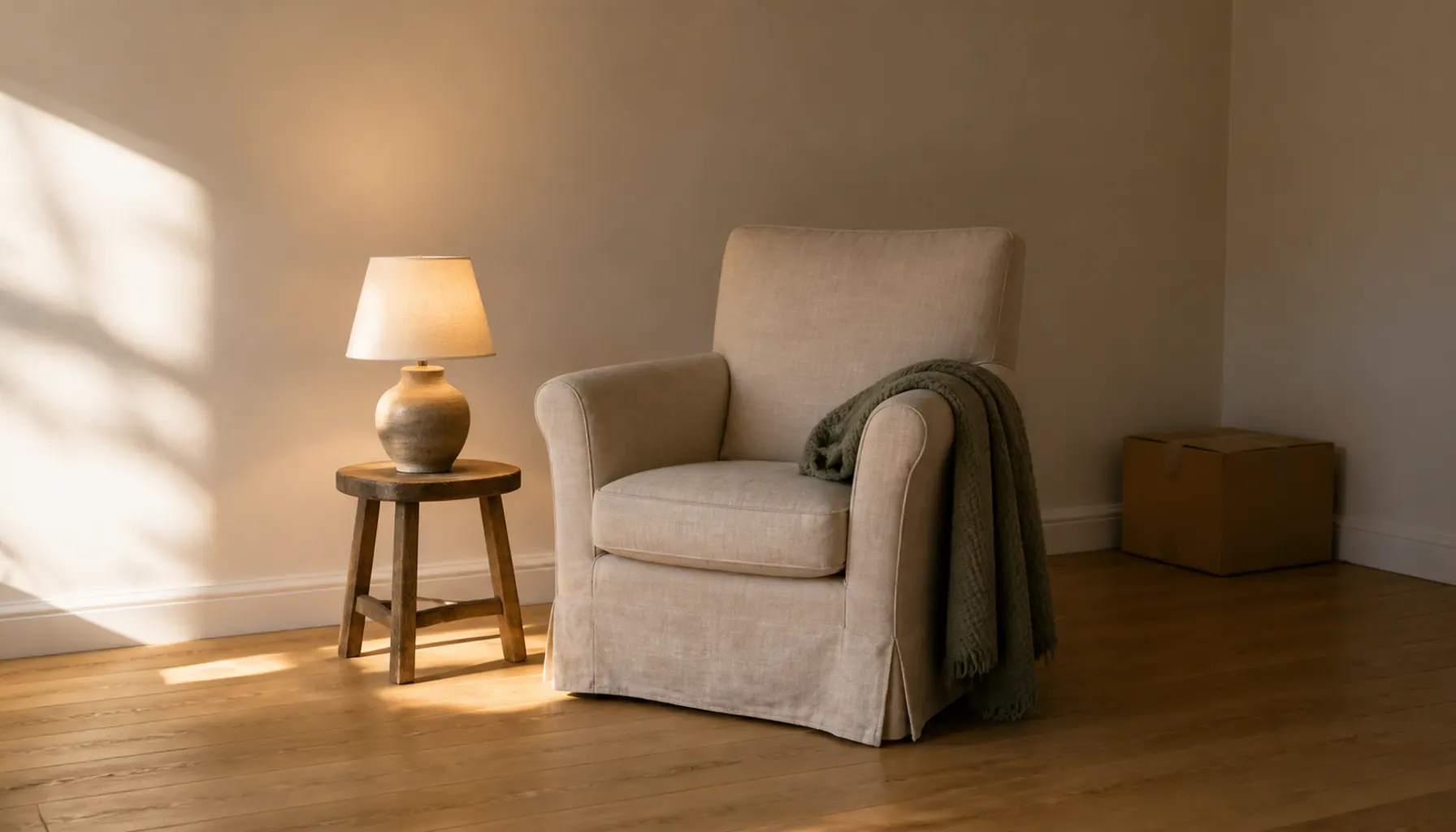
The seat you use every day. Usually one end of the sofa, sometimes a desk chair. Sit in it ten minutes in the store and check the frame and cushion fill, since cheap foam flattens into a dip within a year.
Lighting, cheaper than furniture and it changes more, which is why it gets its own section below.
Everything else can be modest, temporary, or used, the split covered in our room refresh on a real budget.
Lighting Is the Highest-Impact Cheap Purchase
A few lamps change a new home more than any furniture at the same price. Bare overhead bulbs flatten a room and read like a rental viewing.
- Two or three light sources per room instead of one ceiling fixture doing all the work.
- Match bulb color temperature. Warm white near 2700K reads cozy; mixing warm with cool is one of the lighting mistakes that make rooms feel cold.
- A plug-in floor lamp for any room with no ceiling fixture, no wiring or landlord conversation needed.
- Dimmable bulbs, even before you own a dimmer.
Lamps also move with you. Unlike a sofa sized to one wall, a good lamp works in the next home too.
Window Coverings Are a Real Night-One Need
In some rooms, window coverings are privacy, not decor, and belong on the first shopping trip. Check three things on your first evening: which windows a neighbor can see into, which bedroom faces a street light, and which room gets sun at 6am. Anything that fails needs covering now.
The fix does not have to be permanent. Temporary paper shades stick to the frame, cost very little, and last months; a tension rod and one cheap panel handles a bedroom. Choose real curtains later, once the wall color is settled and you have read up on how to hang curtains and blinds properly.
Storage Comes After the Clutter Shows Itself
Buy storage only once you know where things pile up; storage bought on day one is bought for an imaginary version of your life.
Give it three or four weeks, then walk the house and find the piles: one by the door, one on the counter, one on whatever surface sits nearest the entrance. Each pile marks something with no home.
Now buy for the pile. A tray where the mail already lands, a basket where shoes already come off. That is the logic behind storage that actually works in a small home, the opposite of buying a matching bin set and hunting for things to fill it.
What Almost Everyone Buys Too Soon
These are reasonable purchases later. All of them go wrong in week one.
- A full dining set. Six chairs and a table sized for a room you have not eaten in yet; most people find they eat at the counter, or that four chairs is plenty.
- A matching bedroom suite. Bed, nightstands, and dresser in one finish, which fills the room instantly, then reads flat and hotel-like for years.
- A rug chosen before the sofa. Rug size depends on the layout and rug color on the upholstery, so sort the seating first, then use the sizing rules in how to choose and size a rug.
- Decorative accessories bought to make the place feel finished rarely survive contact with the real room.
- Bulk organizing products, bought before you know the piles, where the 15-minute declutter approach serves you better than any container.
Bare is a stage, not a problem, and the only clear look you get at a room's proportions.
Step-by-Step: A Realistic First Month
Keep the order even if the timing shifts.
Step 1: Buy the Night-One Box Before You Move
Assemble that list ahead and keep it in your car; it is the only shopping that has to happen before you have keys.
Step 2: Cover the Windows That Need Covering
First evening, walk each room after dark with the lights on and see what the street sees; temporary shades on anything that fails.
Step 3: Clean and Fix While It Is Still Empty
Deep clean, then handle repairs miserable with furniture in the way: a sticking door, a missing outlet cover, a dead fixture. Painting belongs here too.
Step 4: Live In It for Two Weeks
Sleep, cook, work, and do nothing in the space. Photograph each room in morning light and at night, since photos catch what your eye stops noticing.
Step 5: Measure, Tape, and Buy the Big Three
Measure the rooms and delivery route, tape the footprints, then buy in order: mattress, daily seat, lighting. Order seating early, since upholstery runs weeks.
Step 6: Add Light Layers and Soft Textiles
While the big pieces are on order, buy lamps and bulbs, then a throw, cushions, and a bath mat: cheapest week of the month, and the warmest.
Step 7: Storage for the Piles, Then the Rug, Then Decor
One storage item per pile. Choose the rug once seating is in place. Art, plants, and accessories come last, chosen for a room you now know.
Common Mistakes When Furnishing a New Home
Buying everything in the first week. Empty rooms feel urgent and momentum feels like productivity. Fix it with a written pause: nothing large before day 21 except the mattress.
Trusting the floor plan instead of the tape measure. Listing dimensions get rounded, and never include the radiator, baseboard, or door swing.
Ignoring the delivery route, the costliest mistake, since an item is often non-returnable after two delivery attempts.
Filling rooms in the wrong order. Rug before sofa, storage before clutter patterns, art before paint. Ask which decision constrains the other; the constrained item waits.
Expert Tips
Buy one seat, not two. One genuinely comfortable chair beats two mediocre pieces in the first month.
Keep two lists on your phone, one for things you reached for and did not have, one for things you want. Only the first is a shopping list.
Ask the lead time before the price. Upholstery is often made to order; if a sofa is twelve weeks out, you need to know in week two, not week ten.
Leave one room genuinely empty for a while, whichever you are least sure about. It often ends up the room used most cleverly.
Frequently Asked Questions
What should I buy first when moving into an empty house?
Buy the sleeping, washing, and eating basics: a bed and bedding, towels, a shower curtain, toilet paper, one lamp, cleaning supplies, one pan, two plates, cutlery, and a box cutter and screwdriver to open and assemble things. Nothing else has to arrive day one.
How long should I wait before buying furniture?
Wait three to four weeks for anything large, with the mattress as the exception. That period shows you where the light is, where you sit, and how you move through the rooms, and buys time to measure and compare prices.
What should I spend the most on in a new home?
The mattress, then the seat you use every day, then lighting. Those three touch your body and mood daily, so quality keeps paying you back. Tables, shelving, and dressers can be modest or secondhand for a year at no real cost to comfort.
Should I buy a rug or a sofa first?
Buy the sofa first, always. Rug size depends on where the seating sits and how far it extends, and color depends on the upholstery. Buying the rug first means returning it or arranging the room around it.
What do people most regret buying when they move in?
A full dining set and a matching bedroom suite come up most often, followed by decorative accessories and a rug chosen too early. All four get bought to make an empty house feel finished fast, and all four work better a month later.
Is it cheaper to buy secondhand furniture for a new home?
Usually yes, and quality is often better for the money on solid wood dressers, tables, desks, and bookcases. Skip used mattresses and upholstery you cannot inspect, and check joints and drawer runners before adding the cost of getting it home.
Furnish It Slowly and You Will Furnish It Once
The first things to buy when you move into a new home are the boring ones, and the best move after that is to wait. Cover the windows that need it, get the light right, and let the empty rooms teach you something before you spend real money.
A house furnished over six months feels like it belongs to someone; furnished in one anxious week, it feels like a showroom nobody chose. Start with the night-one box, put a date three weeks out in your phone, and buy the next thing when the room tells you what it is.
One useful home email a month
Real ideas to make your home work better. No spam, easy unsubscribe.