13 Home Office Organization Ideas for a Small Desk Setup
13 home office organization ideas built for a small desk setup, from pegboard storage to cable management, so work gear stays contained in a shared room.

· 13 min read
A small desk doesn't need a spare room to work well. Most home offices start as a corner of a bedroom, a nook off the kitchen, or one end of a console table, and the real problem is rarely square footage. It's that paper, cables, and the day's work gear have nowhere defined to live. These home office organization ideas are built around that constraint: one desk, limited wall space, and the need for the whole setup to disappear at the end of the day. Each idea solves a specific clutter problem instead of just adding more storage. Some take a weekend project. Others take twenty minutes with a drill. Together, they turn a cramped desk into a workspace that still looks usable on a Friday, not just the Monday you set it up.
Key Takeaways
- Vertical storage beats floor storage in a small office. Wall-mounted shelves and pegboards free up the desk and the floor space a rolling cart or bookcase would otherwise claim.
- Cables are the first thing to fix, not the last. A desk with visible cords reads as cluttered even when everything else is put away.
- Mobile storage only earns its keep if it actually tucks away. A cart parked in the open just becomes a visible pile with wheels.
- An unused closet can solve a no-spare-room problem better than squeezing a desk into the middle of a shared living space.
- A zone divider matters more in shared rooms than in a dedicated office. It tells your brain, and anyone else in the room, where work starts and stops.
- A five-minute daily reset beats bigger furniture. Clearing the desk every evening does more for a small office than a drawer full of dividers nobody uses.
- Match organizers to what you actually own. A generic desk-accessory set rarely fits the specific mix of cords, pens, and paperwork sitting on your desk right now.
13 Home Office Organization Ideas Worth Trying
Idea 1: Put the Desk Where the Light Actually Works
Before buying anything, look at where the desk sits relative to the windows. A desk pushed against the one wall without natural light forces you to run a task lamp all day, and that lamp then needs its own outlet, cord, and spot on the desk. Placing the desk perpendicular to a window, rather than directly facing it or with your back to it, cuts screen glare while still using the daylight. In a bedroom or living room corner, this often means turning the desk 90 degrees from the obvious spot against the back wall. It's a free change, and it reduces how much equipment the desk needs to hold in the first place. Small apartments benefit most from this, since every lamp, charger, and power strip you avoid buying is also clutter you don't have to manage later.
Idea 2: Floating Shelves Instead of a Bulky Bookcase
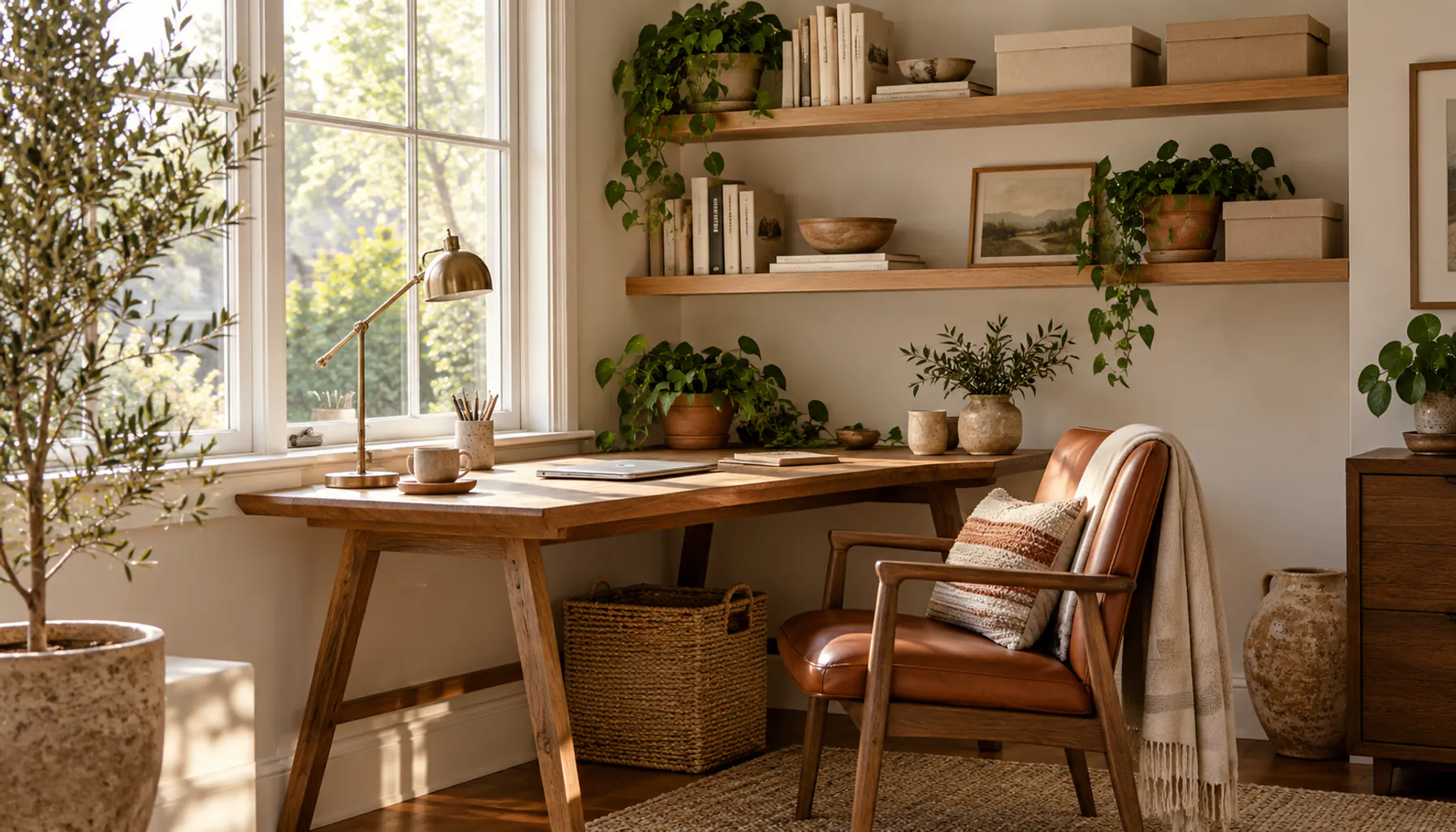
Skip the bookcase. Next to a small desk, it eats floor space the desk itself can't spare. Two or three floating shelves mounted above the desk hold the same books, binders, and reference materials without the footprint. Keep the bottom shelf at a height you can reach without standing, and reserve it for things used daily. Higher shelves can hold reference binders or supplies you grab less often. Open shelving means everything on it stays visible, so this works best paired with a few matching boxes or a short run of magazine files instead of loose stacks of paper. Look for shelving that mounts with a French cleat, which needs only two or three anchor points instead of a bracket under every shelf, a detail worth checking before committing to drilling into a rental wall.
Idea 3: A Pegboard or Grid Panel for the Things You Grab Daily
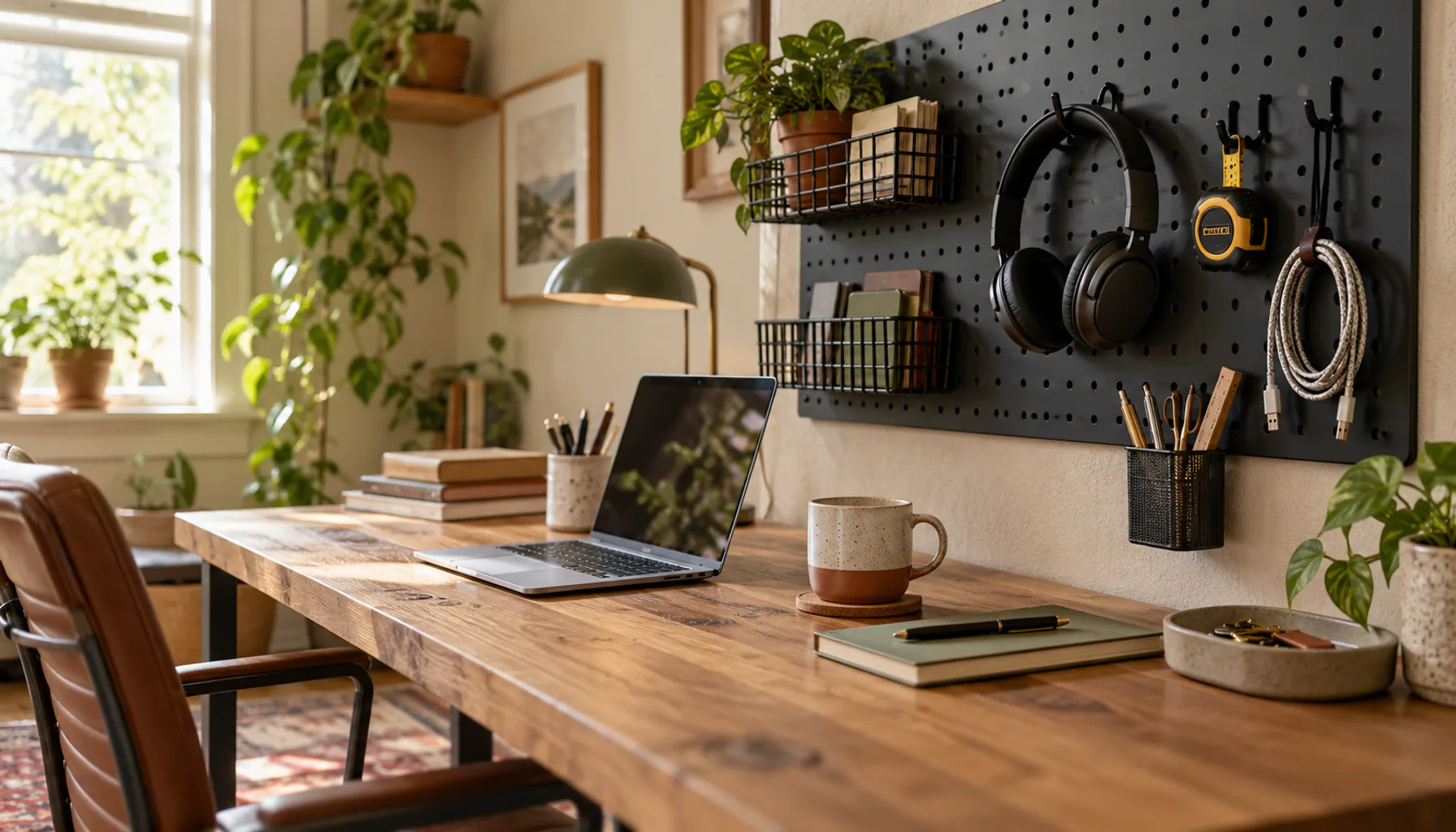
Mount a pegboard beside or above the desk and dead wall space turns into storage for the small objects that usually end up loose on the desktop: headphones, scissors, a charging cable, a tape measure. Hooks and small bins clip into the holes wherever you need them, so the layout can change as your tools change, unlike a fixed shelf. Keep the board stocked with only what you reach for several times a week. A pegboard that holds everything you own just becomes a second junk drawer mounted vertically. Pick one tone, black, white, or natural wood, so the hardware reads as a design choice rather than a garage leftover hung in a living space.
Idea 4: An Under-Desk Rolling Cart That Actually Tucks Away
A narrow rolling cart gives you drawers for files and supplies without a dedicated cabinet, but only if it fits completely under the desk when not in use. Measure the clearance under your desktop before buying one. A cart that sticks out past the desk's edge turns into a visible obstacle instead of hidden storage, and you'll end up stepping around it daily. Three stacked drawers are usually enough: one for active paperwork, one for supplies, one for anything you're not ready to file yet. Wheels matter here, since the cart needs to roll out for access and back in for storage without effort. If you're setting up this corner after a move, check what's worth buying first before investing in a cart you may not actually need yet.
Idea 5: Swap the Flat Stacking Tray for a Vertical File Sorter
Papers disappear into a flat stacking tray, buried and forgotten at the bottom. A vertical file sorter keeps every folder's edge visible, so you can see what's waiting without digging. Label four or five slots by action rather than by category: to pay, to file, to read, to sign. Action-based labels get used; a folder labeled "miscellaneous" rarely does. Keep the sorter itself small. Four to six slots is plenty for a single desk, since a sorter with twenty just invites folders you'll never revisit.
Idea 6: Route the Cables Before They Take Over the Desk
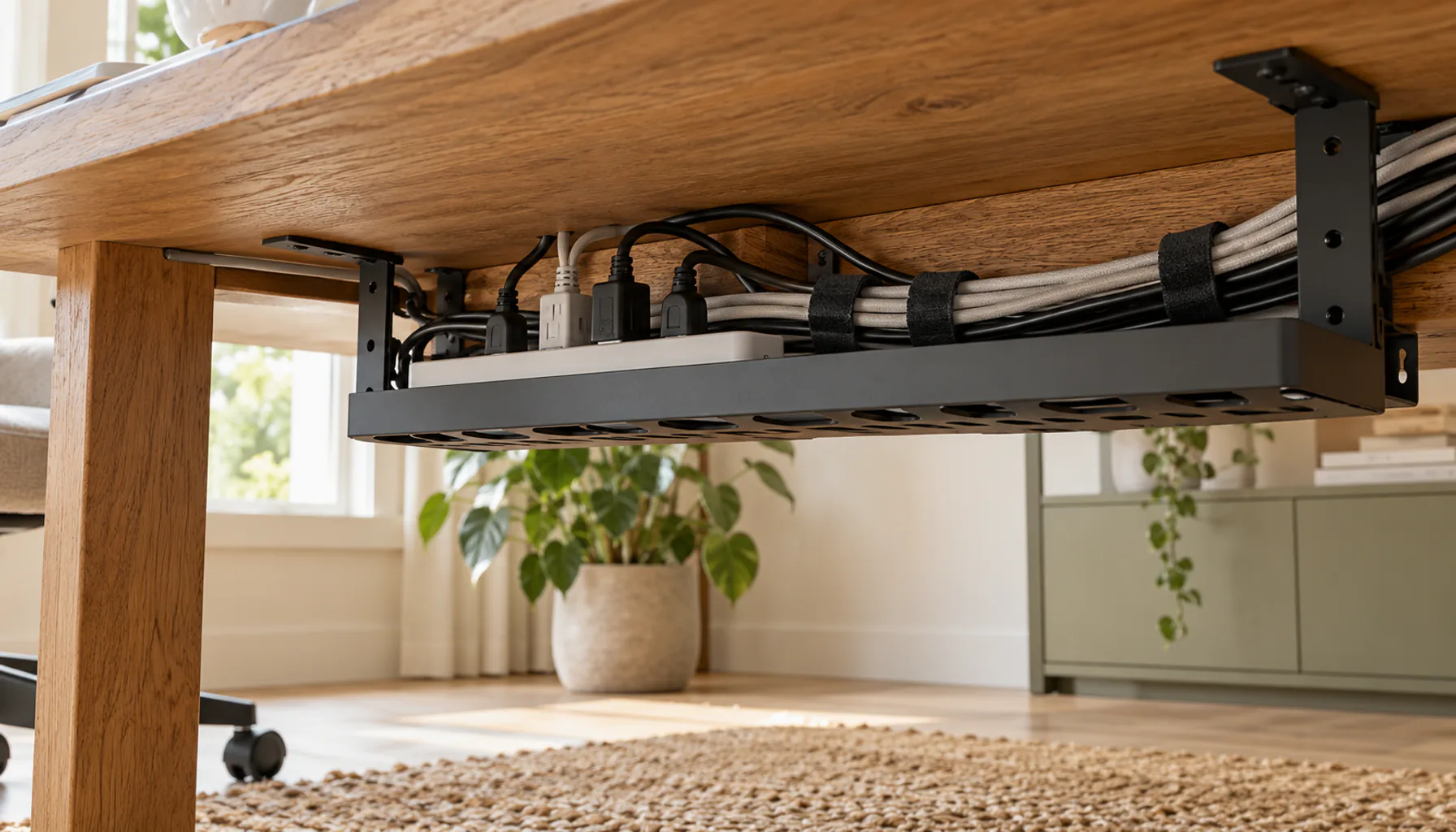
Cable clutter is the fastest way to make an otherwise organized desk look like a mess. A cable tray or sleeve mounted to the underside of the desktop gets the power strip, charger bricks, and cord lengths off the floor and out of sight, while keeping them within reach. Group cords by device with velcro ties rather than letting them tangle into one mass. It makes tracing a single cord later much faster. For anyone dealing with a visible run of cord down to an outlet, a few inexpensive cord covers handle the stretch between desk and baseboard without a full rewiring project. Do this step before adding any other organizer. Clean cables make every other system on the desk easier to see and use.
Idea 7: Closed-Door Storage for the End-of-Day Mess
Open shelving and pegboards work well for frequently used items, but some things, old statements, cords you're not ready to toss, a half-finished project, need to disappear completely at the end of the workday. A small cabinet, or a repurposed dresser drawer, gives the desk a place to hide its mess without requiring everything to be filed perfectly first. This matters most when the desk sits in a bedroom or living room, where an open pile of papers reads as clutter in a room that's supposed to feel done for the day. Furniture that hides storage in plain sight can double as a side table or credenza when the office isn't in use, which is useful in any room doing double duty.
Idea 8: Desk Trays Sized to What You Own, Not a Generic Set
Store-bought organizer sets rarely match what's on your desk. If you only use two pens, a three-slot pen cup is wasted space holding air. Before buying anything, lay out exactly what lives on the desktop every day: chargers, a notepad, headphones, a water bottle, and size the trays to that specific list. A shallow tray for small items and a slightly deeper one for anything upright usually covers it. Inventorying what you own before you shop, rather than after, avoids the common outcome of three nesting trays that only ever hold each other.
Idea 9: A Monitor Riser With a Drawer Underneath
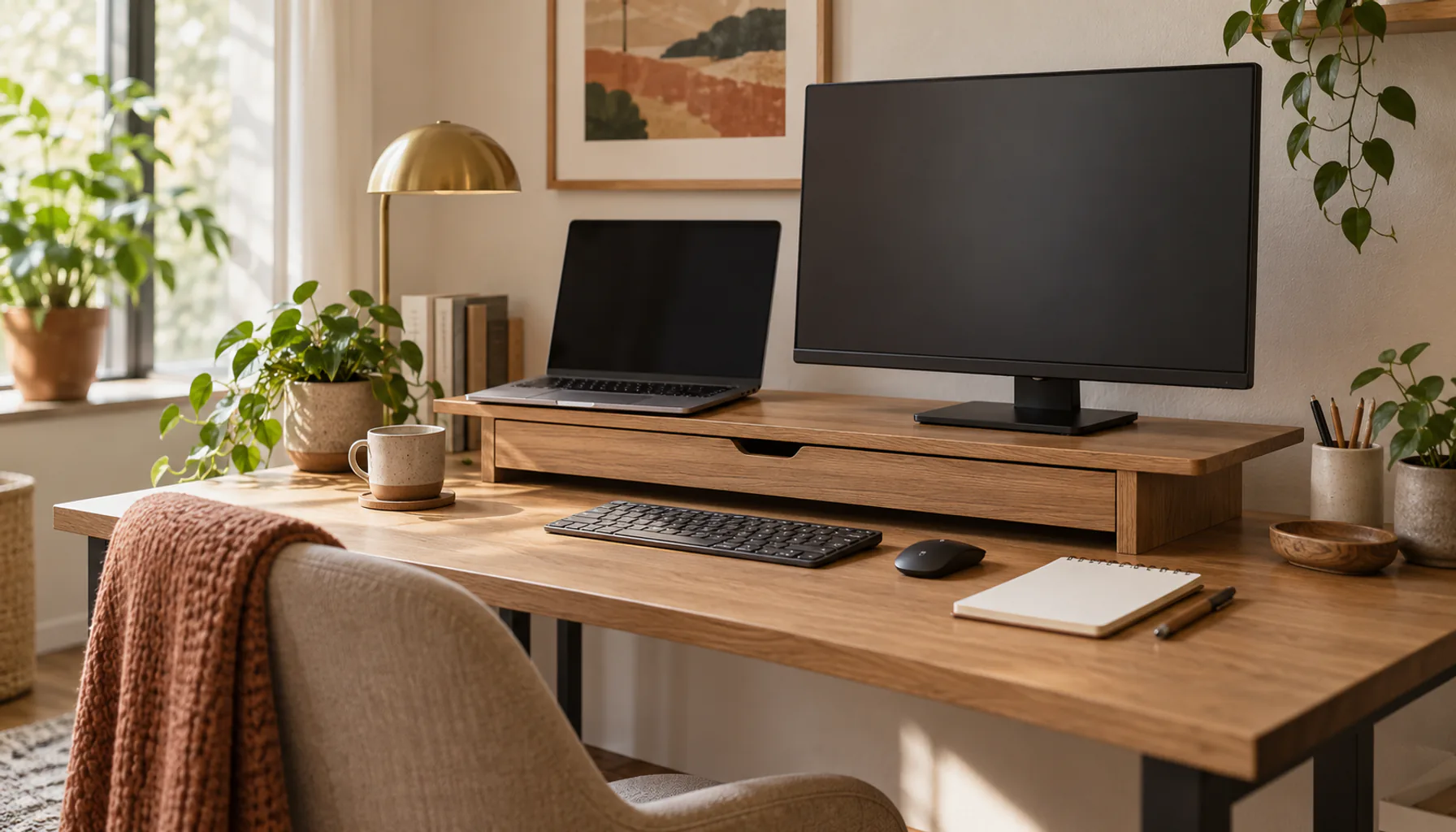
A monitor riser solves two problems in one piece of furniture. Raising the screen to eye level reduces neck strain during long work sessions, and the drawer underneath reclaims space that would otherwise sit empty beneath a floating monitor. Use that drawer for things you need within arm's reach but don't want visible: a notepad, spare cables, a backup drive. Keep the drawer's contents to a single layer. A riser drawer packed two items deep just becomes another spot where things get lost.
Idea 10: Turn an Unused Closet Into a Compact Cloffice
When there's genuinely no spare corner for a desk, a shallow closet can become one. Remove the door, or replace it with a curtain or bifold you can leave open while working, add a slim desktop at standard desk height, around 29 to 30 inches, and mount shelving on the side walls where a closet rod used to hang. This works best for a laptop-based setup rather than a full dual-monitor rig, since closet depth limits how much desk surface you get. The same closet organization habits that make clothing storage work apply here too: vertical dividers, labeled bins, and nothing stored above what you can reach without a step stool.
Idea 11: Define the Work Zone With a Screen, Curtain, or Rug
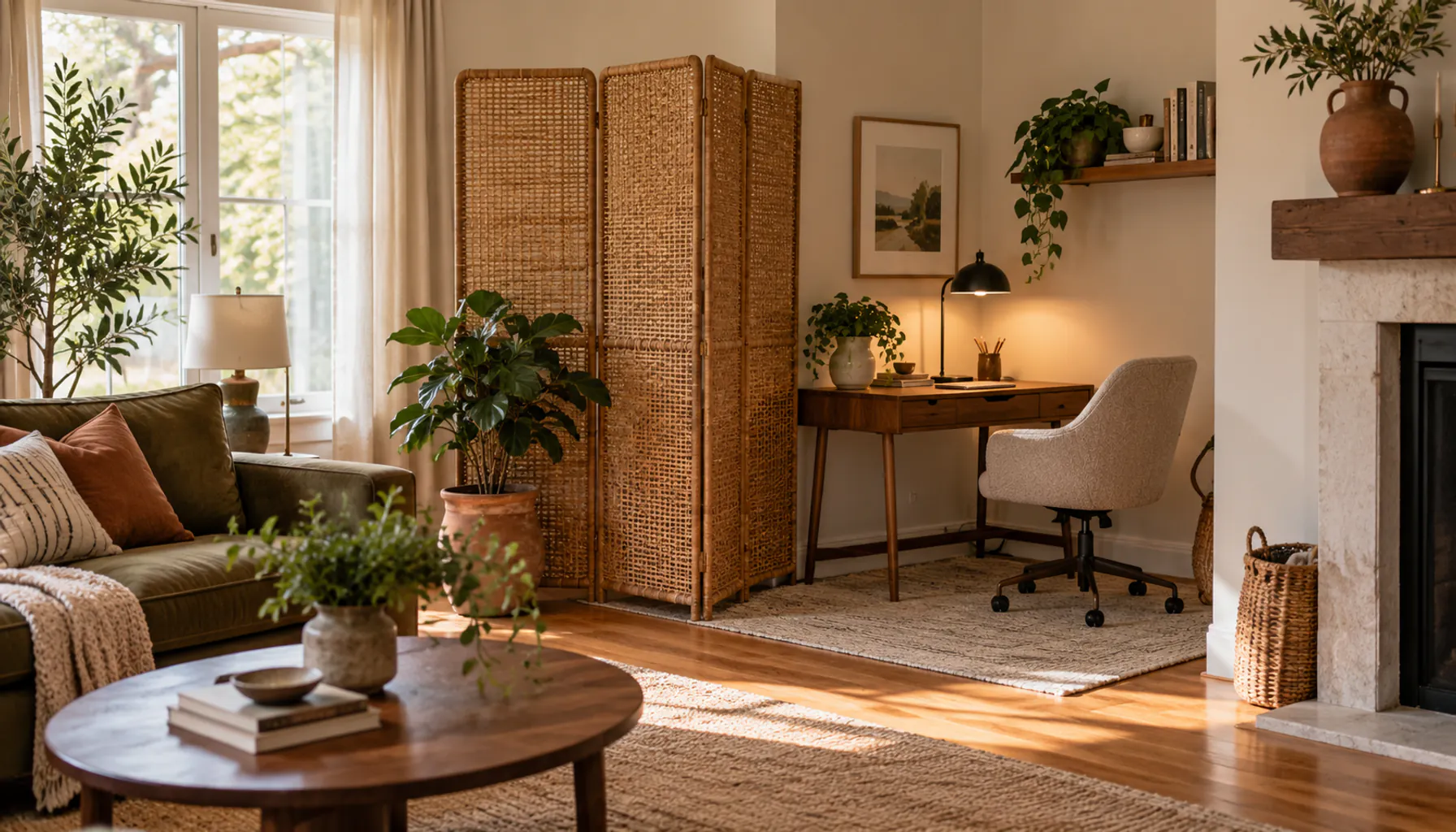
A desk pushed into a corner of a bedroom or living room still needs a visual edge, even without walls. A folding screen, a curtain on a tension rod, or simply a rug placed under just the desk and chair tells your eye, and your brain, where the work zone starts. This matters more than it sounds. Working on a laptop from a corner that visually blends into the rest of the room makes it harder to mentally clock out, since there's no boundary to step away from. A rug is the lowest-commitment option for a rental, since it needs no mounting and can move with you.
Idea 12: Build a Five-Minute Daily Reset Into the Routine
Every system above only holds up if the desk gets cleared at the end of each day. Set a short, repeatable routine: papers go into the vertical sorter by action, loose items go back on the pegboard or into their tray, and anything without a home yet goes into a single catch-all spot to deal with later rather than scattering across the desktop. A short nightly reset works the same way a kitchen counter reset does, clearing the surface so the next morning starts from zero instead of yesterday's pile. If the desk sits in a shared space like a kitchen or entryway, tying this reset to an existing family routine, like sorting mail and keys, makes it far more likely to actually happen every day.
Idea 13: Give the Printer a Permanent, Closed-Door Spot
A desktop printer is one of the biggest single items competing for room on a small desk, and it rarely needs to sit out in the open. If a lower cabinet shelf, a closet shelf, or the bottom tier of a rolling cart can hold it instead, the desk surface gains that space back immediately. Measure the printer's footprint plus about two inches of clearance on each side, so the paper tray can still slide out and the lid can open for maintenance. A printer stored behind a cabinet door also collects less dust, which matters for anything with an open paper tray sitting exposed. Keep a small stack of paper and a spare ink cartridge on the same shelf, so printing doesn't send you hunting through a drawer across the room. If the printer gets used daily, a shelf at or just below desk height beats one mounted higher up. Reaching overhead for a stack of warm pages gets old fast.
Common Mistakes to Avoid
- Buying storage before measuring. A cart or shelf that doesn't actually fit the space becomes its own piece of clutter.
- Mounting a pegboard or shelf at the wrong height. If you need to stand to reach something you use daily, the system won't get used.
- Treating open shelving as a display case for paperwork. Open shelves work well for books and boxes, not loose stacks of paper.
- Skipping cable management because it feels like a low priority. Visible cords undo the effect of every other organizer on the desk.
- Buying a matching organizer set before inventorying what you own. Fit the storage to your actual items, not the other way around.
Frequently Asked Questions
How much desk space do I actually need for a home office?
A desk between 40 and 48 inches wide is enough for a laptop, a monitor, and a small stack of paperwork. Depth matters more than width in a small room: 24 inches of depth fits most monitor arms and keeps the desk from jutting too far into walking space.
Is it worth using a closet as a home office?
Yes, if there's no other corner available and you mainly work on a laptop. A shallow closet, 24 to 30 inches deep, can fit a slim desktop and side shelving. It works less well for a dual-monitor setup, since the depth limits how far back a screen can sit.
What's the best way to organize cables on a small desk?
Start with an under-desk tray or sleeve to lift cords off the floor, then group cords by device using velcro ties. Route the main power strip to the back corner of the desk rather than the middle, so reaching one cable doesn't mean untangling all of them.
Do I need a separate office chair, or can I use a dining chair?
A dedicated office chair with lumbar support is worth it if you're at the desk more than a couple of hours a day. For occasional use, a dining chair with a cushion is fine, but expect more discomfort during long sessions.
How do I keep a shared-room desk from looking like clutter?
Define the work zone with a rug, screen, or curtain, and keep anything not in daily use behind closed doors rather than on open shelves. A five-minute reset at the end of each day keeps a shared-room desk from reading as a mess the rest of the time.
Where to Start
If the desk currently has visible cables, start there. Every other system on this list, the pegboard, the file sorter, the trays, works better once cords are out of the way and the desk reads as organized at a glance. From there, add vertical storage before anything with wheels or drawers, since shelving and pegboards cost less and use space the floor can't spare. Pair the whole setup with a seasonal home reset a few times a year to catch anything the daily routine misses. The last piece, the daily reset itself, costs nothing but five minutes, and it's the difference between a desk that stays organized and one that needs redoing every few weeks.
One useful home email a month
Real ideas to make your home work better. No spam, easy unsubscribe.