14 Pantry Organization Ideas That Fit a Real Grocery Budget
14 pantry organization ideas that use what you already own: zoning, smart decanting, risers, door storage, and a rotation habit that stops waste.
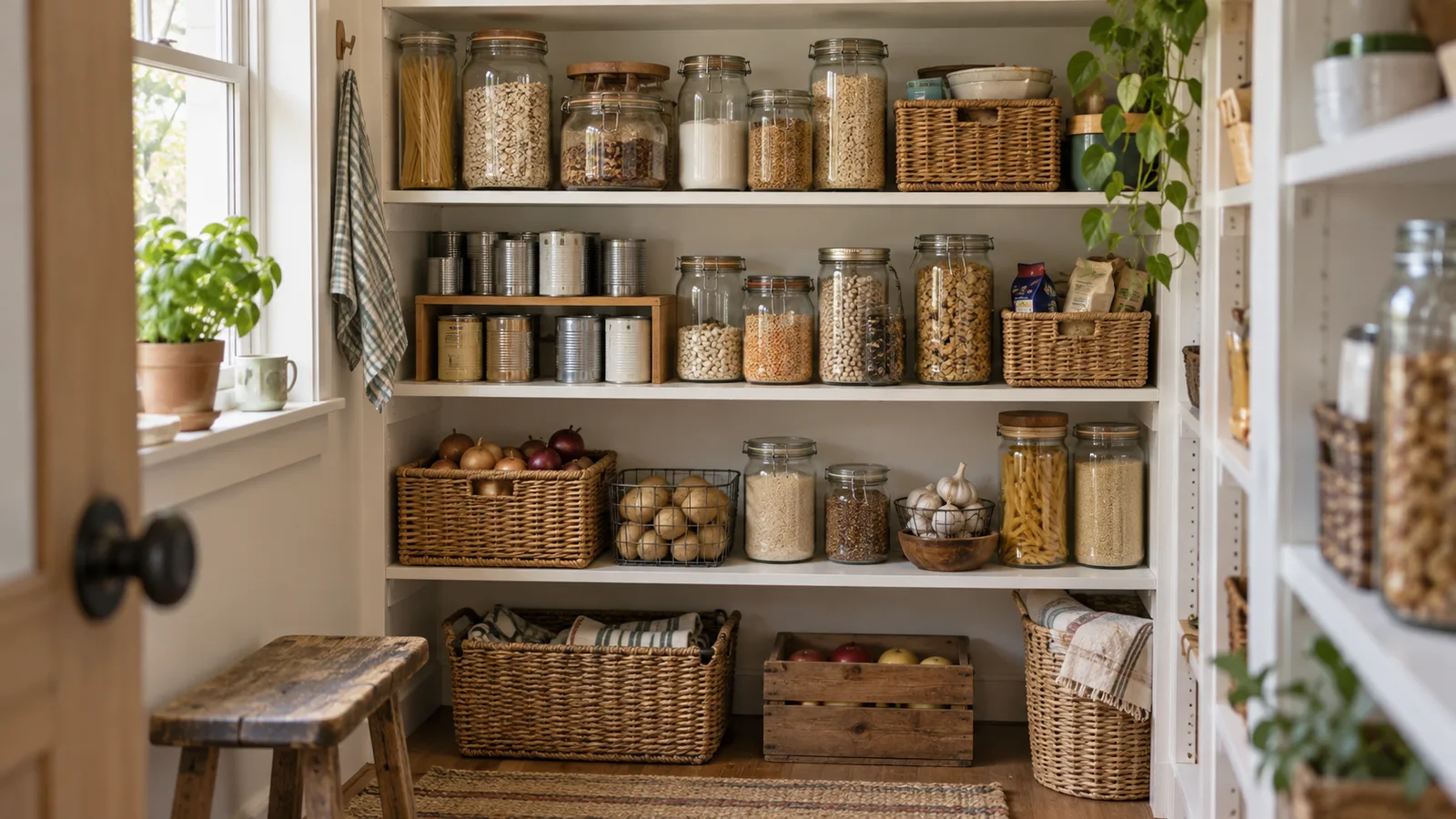

· 12 min read
Most pantry advice assumes you're buying a full matching container system on day one. You don't need one. A pantry that works comes from a handful of habits and a few cheap tools, not a shopping trip to a container store. The ideas below start with zoning and rotation, the two things that keep a pantry from sliding back into chaos, then move into the containers, risers, and small fixes that make those habits easy to keep. Most of this costs under $20 total, and a few ideas cost nothing at all.
Key Takeaways
- Zone by meal role first, not by container type. Baking, breakfast, snacks, and canned goods each get their own shelf or section.
- Decant only what spills, crumbles, or goes stale in its bag. Everything else can stay in its original packaging.
- A rotation habit beats a bigger pantry. Moving new stock to the back stops food from expiring at the front.
- Vertical space above eye level is real storage, not dead space, once you add a shelf or a hook strip.
- A one-home rule prevents duplicate buying, which is where most grocery money leaks.
- Kids need one bin they're allowed to mess up, or the whole system gets undone by snack time.
- A 10-minute seasonal reset catches what daily habits miss, like expired spices and stale flour.
14 Pantry Organization Ideas Worth Trying
Idea 1: Zone the Shelves by Meal Role, Not by Container Type
Before you buy a single bin, decide what each shelf is for: breakfast, baking, snacks, canned goods, and backstock. This matters more than any container, because it's the difference between opening the door and knowing exactly where something lives, and opening it to a wall of assorted boxes.
Put the zone you use daily, usually breakfast or snacks, at eye level or just below. Baking supplies, which you touch less often, can sit higher or lower. Canned goods and backstock go on the bottom, since cans are heavy and don't mind less light. It's the same logic behind organizing a kitchen by how you actually cook, just applied to a smaller, denser space.
Worth Avoiding: organizing by color or container shape. It photographs well and falls apart the first time you restock, because nothing tells you where a new box belongs.
Idea 2: Decant Only What Spills or Goes Stale
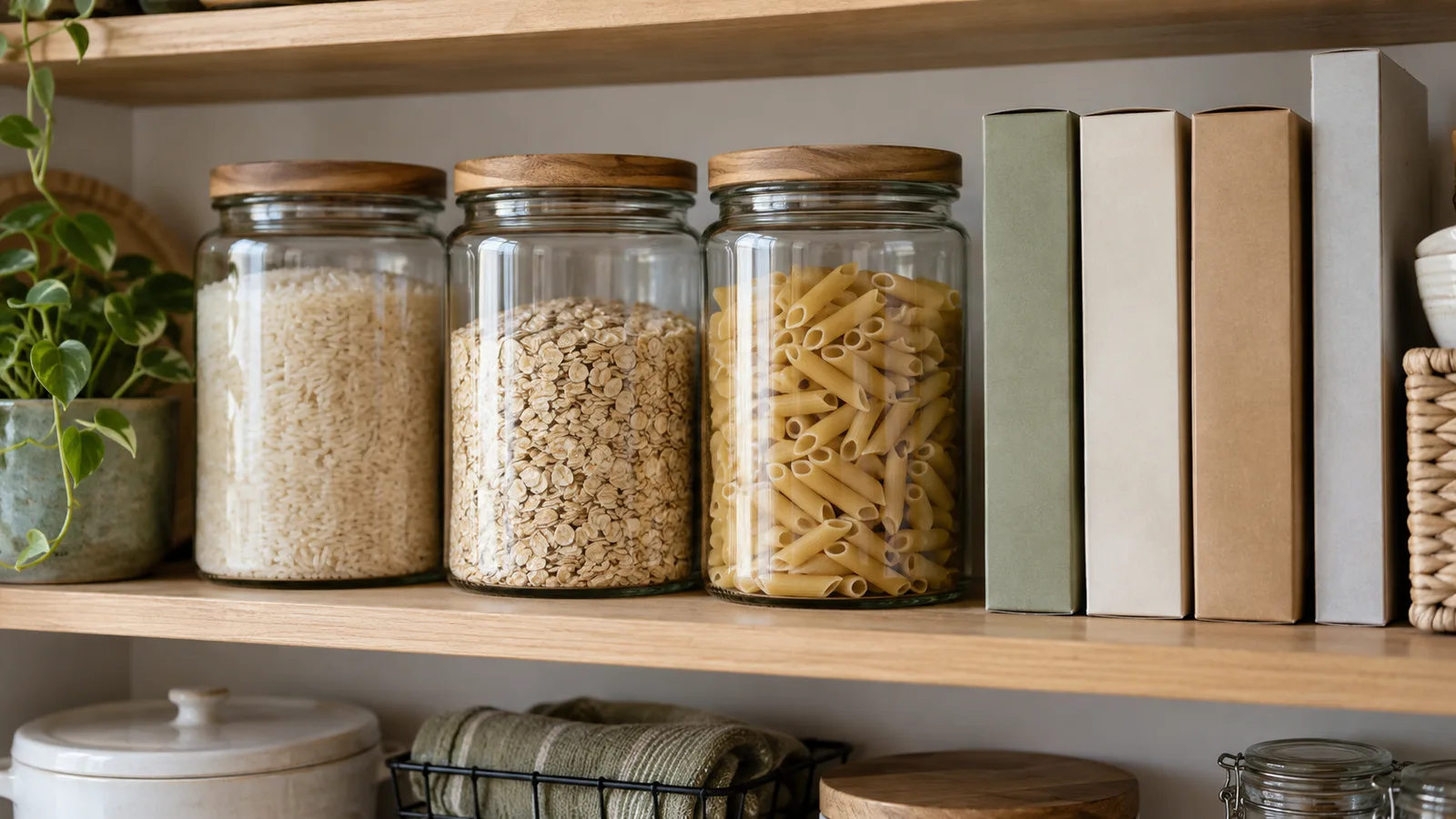
Clear canisters look great, but decanting every single item is expensive and creates extra dishes to wash. Save it for things that genuinely benefit: flour, sugar, rice, pasta, oats, and anything sold in a bag that tears or won't reseal.
Boxed items with a resealable liner, like crackers or cereal, usually don't need a new container. If the box fits the shelf and closes properly, leave it. This alone can cut a container shopping list from twenty pieces down to six or seven, and six matching jars cost far less than twenty.
Idea 3: Add Step Risers So Nothing Hides Behind a Taller Can
A flat shelf packed two or three cans deep hides everything behind the front row. A tiered riser, the kind sold for spice racks, solves this for under $15 and works on canned goods just as well as jars of spice.
Set the riser so the tallest items sit at the back and shorter ones step down toward the front. You'll see every label without moving a single can, which also means you stop buying a third jar of something you already had two of, just because it was out of sight.
Idea 4: Build a Labeling System You'll Keep Using
A label only works if refilling the container is easier than ignoring it. Skip anything that requires printing or a label maker you'll lose the batteries for. A grease pencil on the jar lid, or painter's tape and a permanent marker, does the same job and takes ten seconds.
Label by contents and, for baking staples, the date you opened the bag. That second detail matters more than people expect: flour and whole grains go stale faster than the sealed package suggests, and a date stops you from guessing. The same low-effort habit is what makes a closet organization system actually last instead of falling apart after a month.
Idea 5: Move Small Packets to the Back of the Door
The inside of the pantry door is often the most wasted square footage in the whole space. A shallow door-mounted rack, the wire or clear-pocket kind, holds packets, spice jars, foil, and small bags of snacks without eating into shelf depth.
This works best for items that are short and light. Heavy jars can pull a cheap rack loose over time, so keep those on the shelves and reserve the door for packets, pouches, and anything under about a pound. It reclaims real depth on the shelf behind it, which is often two or three extra inches you didn't know you had.
Idea 6: Put a Turntable in Every Dead Corner
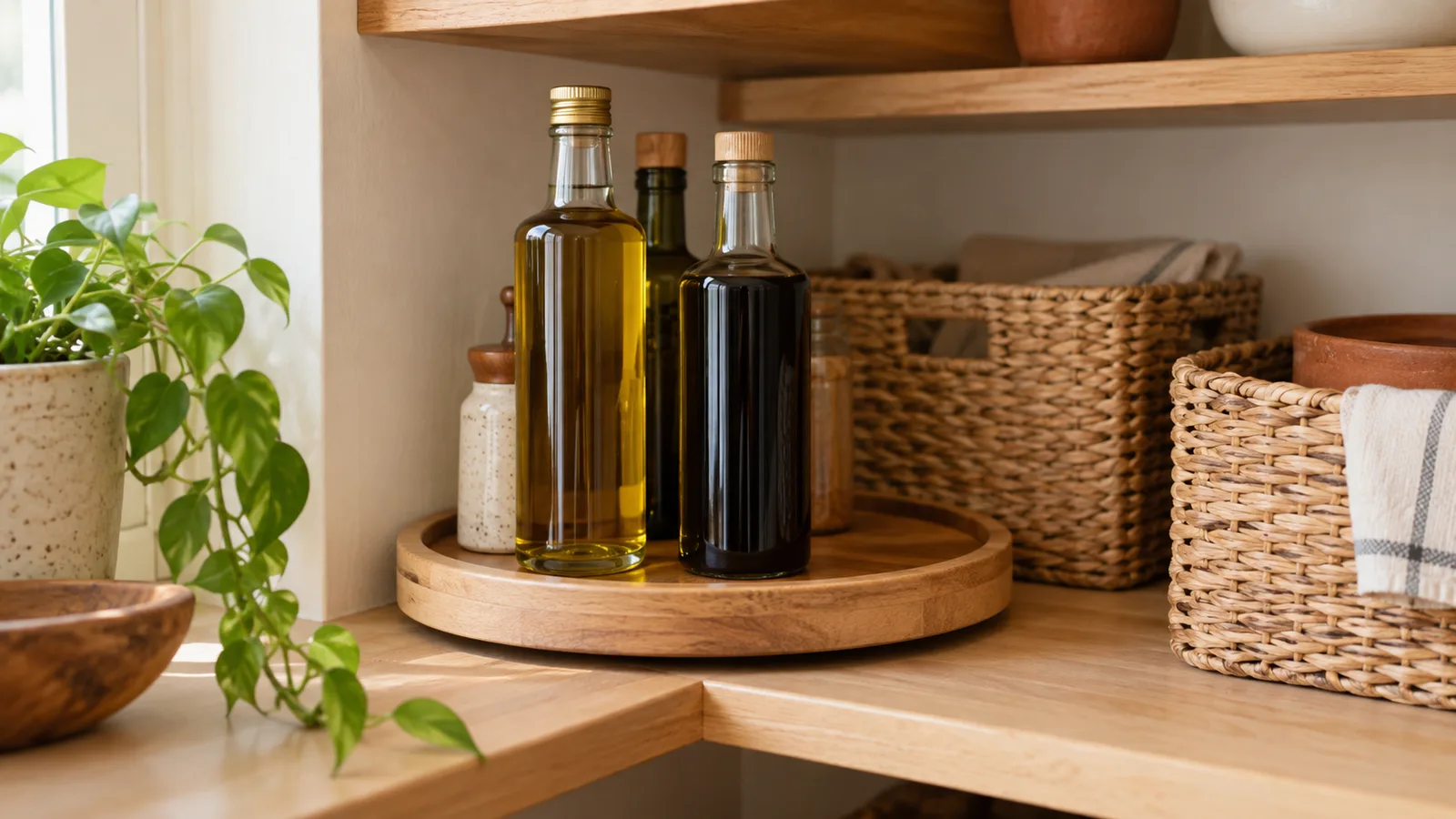
Corner shelves and deep cabinets both create a blind zone where things get pushed back and forgotten. A round turntable, the kind used for oils and spices, turns that blind zone into something you can spin into view instead of dig through.
Two turntables, one for oils and vinegars and one for smaller sauce bottles, cost less than one specialty organizer and solve the same problem for both. Reach in, spin, take what you need. Nothing gets shoved to the back and abandoned for a year.
Idea 7: Sort Loose Snacks Into Containers You Already Own
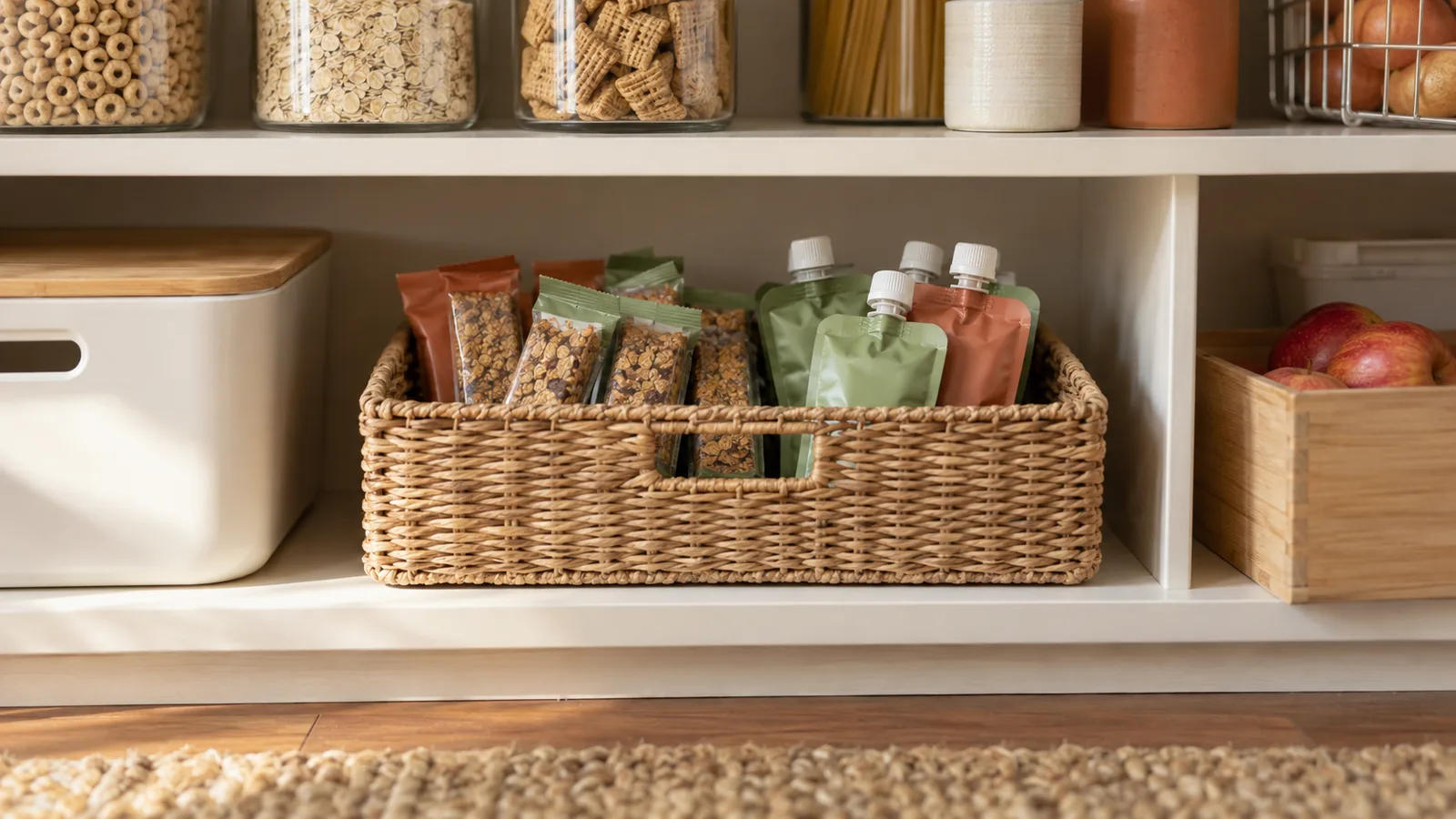
Snack bags, granola bars, and loose produce packets create clutter fast, but they don't need new containers. A shoebox, a dish tub, or even a sturdy tote bag folded flat into a shelf works fine as a snack bin. The goal is one container per category, not a matching set.
Group by type: crackers and chips in one, granola and cereal bars in another, dried fruit and nuts in a third. When the bin is empty, you know it's time to restock that category specifically, which also makes grocery lists faster to write. It's the same reuse-first approach behind small apartment storage that actually works: sort with what you own before you buy anything new.
Idea 8: Run a Simple Front-to-Back Rotation
Every time you put groceries away, move older stock to the front and put new items behind it. This single habit, often called first-in-first-out, is the reason some pantries never seem to have anything expired and others always do.
It costs nothing and takes maybe thirty extra seconds per grocery trip. The payoff is real: less spoiled food, less waste, and a pantry that empties out evenly instead of accumulating a backlog of forgotten cans at the rear of every shelf.
Idea 9: Use the Wall Above the Top Shelf
If your pantry has a gap between the top shelf and the ceiling, that space can hold trays, cutting boards, or a wire basket of bread, all without touching your daily zones. A simple wall-mounted wire shelf, installed with basic anchors, adds real capacity for under $20.
This is the easiest win in a small pantry, since it doesn't compete with anything you already use. Reserve it for lighter, less-used items. A heavy stack of cast iron up there is a hazard every time you reach for it.
Idea 10: Give Kids One Bin They're Allowed to Wreck
If snacks and lunch items are scattered across your carefully zoned shelves, a child reaching for a granola bar will undo the whole system in seconds. Set aside one low, easy-to-reach bin just for kid snacks, and let that bin get messy.
Small-Space Tip: if there's no low shelf to spare, a bin on the floor of the pantry works just as well, as long as it's the one spot where a little chaos is expected. Everything else stays intact because the one place kids touch is designed to take it.
Idea 11: Set a One-Home Rule Before You Restock
Duplicate purchases are one of the biggest quiet costs in a grocery budget. They happen because a second jar of peanut butter or a spare bag of rice ends up on a different shelf than the first one, and nobody notices until both are half empty.
Give every item exactly one home. Before adding a new one to the cart, check that spot first. This is less about tidiness and more about money: a pantry with duplicates scattered across three shelves is a pantry that's overspending every week without anyone noticing.
Idea 12: Keep a Running List on the Inside of the Door
A small whiteboard, or even a scrap of paper taped to the inside of the door, turns "I think we're low on something" into an actual list. Add an item the moment you use the last of it, not later, when you're standing in a store trying to remember.
This habit does double duty. It prevents the overbuying that comes from guessing, and it prevents the underbuying that leaves you without a staple mid-week. Pair it with the 15-minute declutter method as a monthly check to catch anything the list missed.
Idea 13: Add a Hook Strip for Everything That Isn't Food
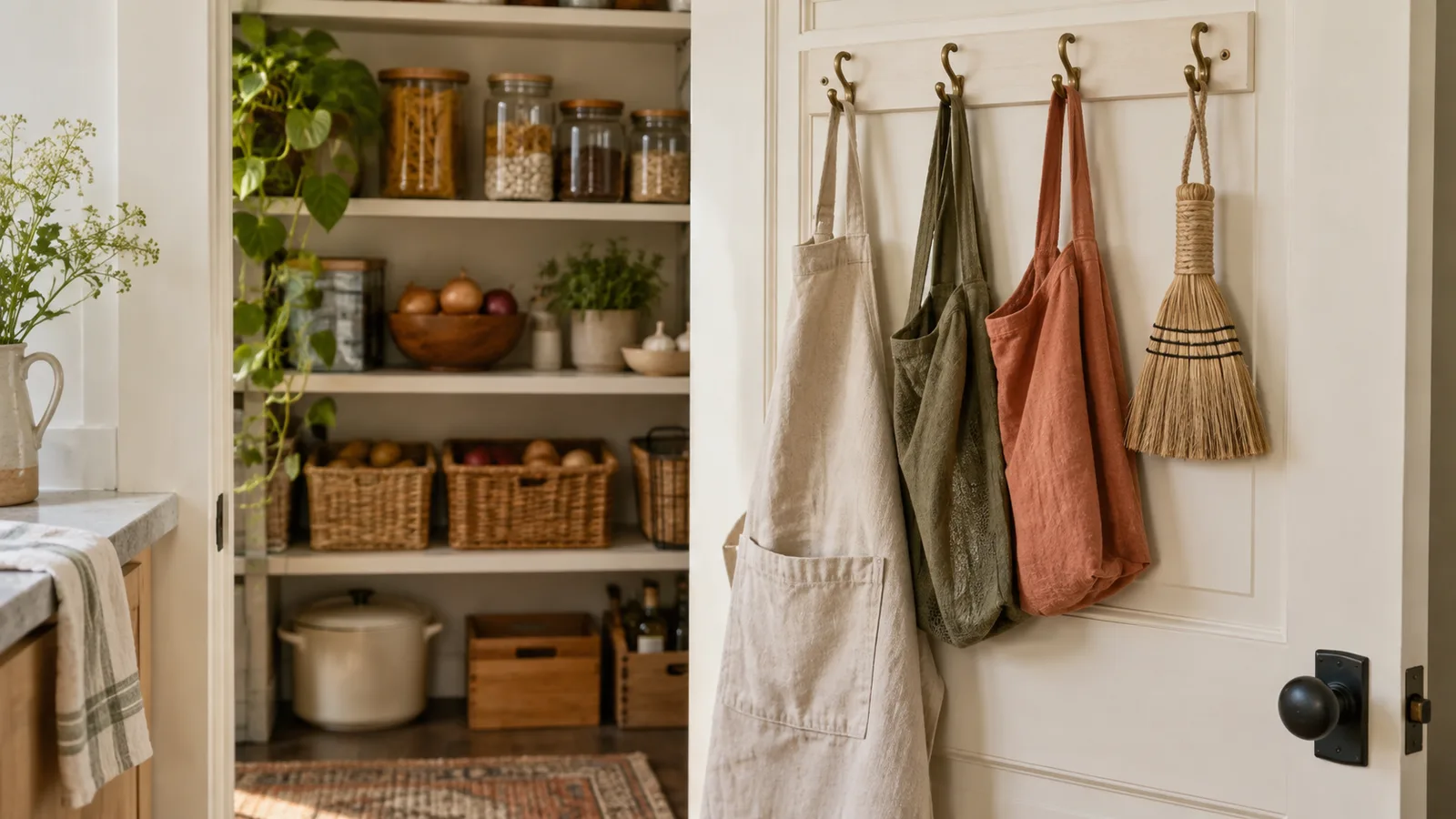
Pantries often double as the home for aprons, reusable bags, a broom, or a dustpan, and those items compete for shelf space they don't need. A row of adhesive or screw-in hooks on the inside wall or door keeps them off the shelves entirely.
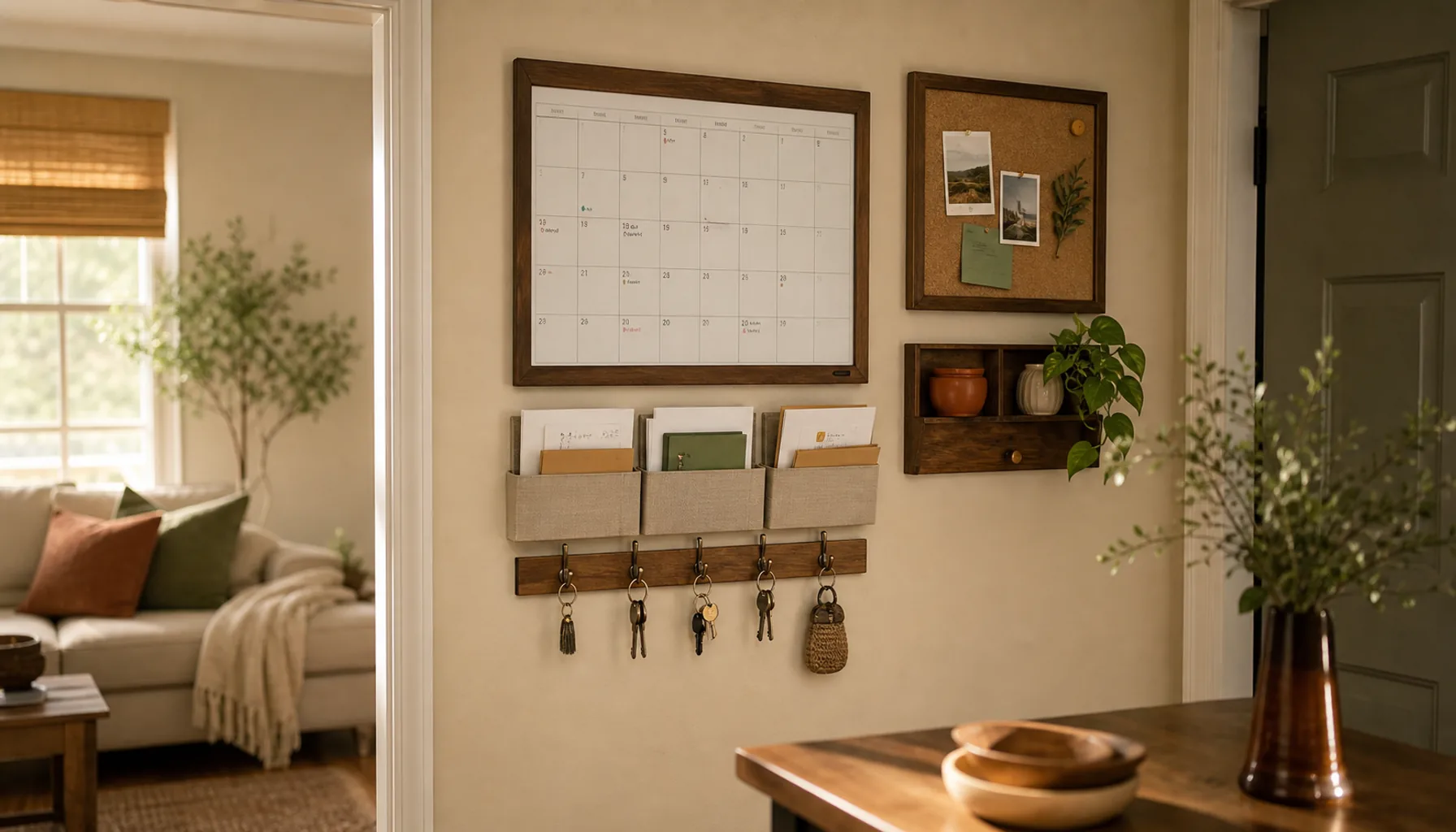
This is a five-dollar fix that frees up an entire shelf in a lot of pantries. If your pantry shares space with cleaning supplies, the same wall-mounted thinking behind an entryway command center applies here: give recurring items a fixed spot off the shelf, not a rotating one.
Idea 14: Book a 10-Minute Reset Every Season
Daily habits catch the obvious mess but miss the slow stuff: a spice that lost its smell two years ago, a bag of flour with a faint off odor, a canned good pushed so far back it expired unnoticed. A quarterly reset catches what the daily system doesn't.
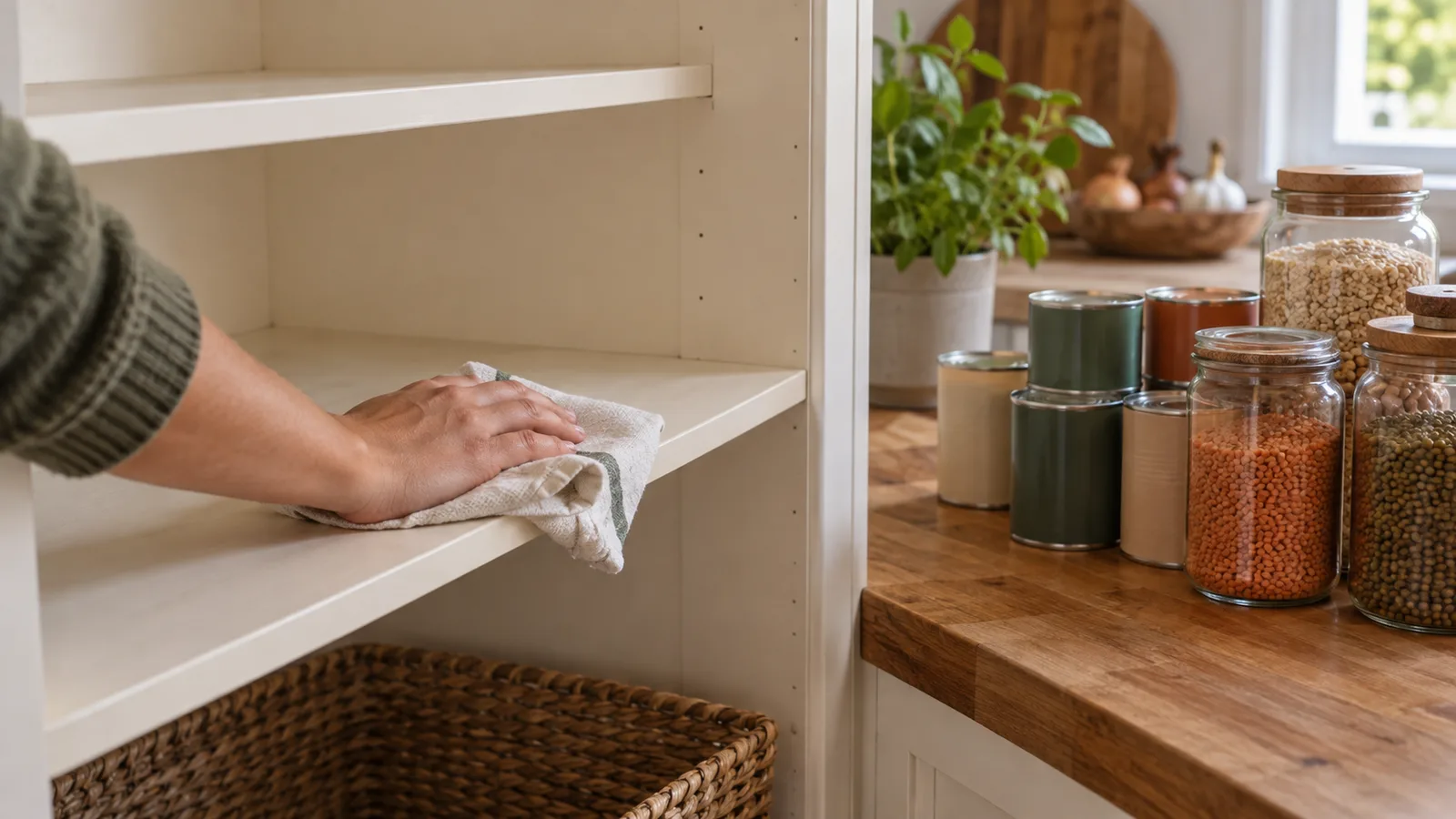
Pull everything off one shelf at a time, wipe it down, check dates, and put back only what's still good. Fifteen minutes per shelf, four times a year, keeps the whole system honest. It pairs naturally with a broader seasonal home reset if you're already doing one for the rest of the house.
Common Mistakes to Avoid
- Buying containers before deciding on zones. A full matching set solves nothing if the categories behind it aren't defined yet.
- Decanting everything. It adds cost and dish-washing for items that were already fine in their own packaging.
- Skipping the rotation habit. Even a perfectly organized pantry drifts back to clutter without it.
- Ignoring the door and the space above the top shelf. Both are usable storage that most pantries waste.
- Treating the kid-snack zone like the rest of the pantry. It needs to be lower-maintenance, not equally strict.
Frequently Asked Questions
Do I need matching containers for a pantry to look organized?
No. Matching containers help with the visual side, but the system that keeps a pantry usable comes from zoning, rotation, and a one-home rule for each item. A pantry with mismatched jars and clear zones works better than a pantry with matching jars and no system behind them.
What should I decant first if I'm on a tight budget?
Start with flour, sugar, rice, and pasta. These are the items most likely to spill, attract pests in their original bags, or go stale once opened. Six containers for these staples covers most of the benefit for a fraction of the cost of decanting the whole pantry.
How often should I do a full pantry reset?
Once a season works for most households. It's often enough to catch expired spices and stale staples, but not so often that it feels like a chore. Between resets, the daily rotation habit handles most of the upkeep on its own.
What's the cheapest way to add more shelf space?
A wall-mounted wire shelf in the gap above your top shelf, and a door-mounted rack for packets and spices, are usually the two lowest-cost additions. Both use space you already have instead of requiring you to buy new furniture or a bigger pantry.
How do I stop buying duplicates of pantry staples?
Give every item one fixed spot, and keep a running list on the inside of the door for anything you're low on. Duplicate purchases almost always come from an item having no clear home, or from shopping without checking what's already there.
Where to Start
If you only do three things from this list, zone your shelves by meal role, start a front-to-back rotation habit, and hang a small list on the inside of the door. Those three cost nothing and take less than an hour combined, and they solve the two problems that waste the most money: buying duplicates and losing food to the back of a shelf. Everything else on this list, the risers, the turntables, the hooks, is worth adding once those habits are already in place.
One useful home email a month
Real ideas to make your home work better. No spam, easy unsubscribe.