11 Kids Room Organization Ideas for Small Shared Bedrooms
11 kids room organization ideas for small shared bedrooms: zoned storage, under-bed bins, toy rotation, wall hooks, and systems kids can actually keep up.

· 9 min read
A shared kids room fails for a predictable reason: the storage was designed for an adult, not for the person who has to use it. A bin on a high shelf, a drawer that sticks, a closet rod set for grown-up shirts. The mess isn't a discipline problem. It's a reach and routine problem. These eleven ideas fix that for two kids in one small bedroom, starting with how the room is divided and ending with how toys leave it.
Key Takeaways
- Give each child a visible zone. Fights over space drop when "mine" has a clear edge, even if it's only a rug and a shelf.
- Store at the child's height. If they can't reach it and put it back alone, it won't go back.
- Open bins beat lidded boxes for daily toys. A lid is one extra step, and one extra step is usually where tidying stops.
- Use the space under the bed and behind the door. Those are the two biggest unused areas in most small kid rooms.
- Keep only part of the toy collection in the room. Rotation cuts clutter more than any container can.
- Anchor anything tall. Bookcases and dressers should be secured to the wall in a kids room.
- Pick a system a six-year-old can run. If it needs an adult every night, it will stop within a month.
11 Kids Room Organization Ideas Worth Trying
Idea 1: Split the Room Into Two Clear Zones
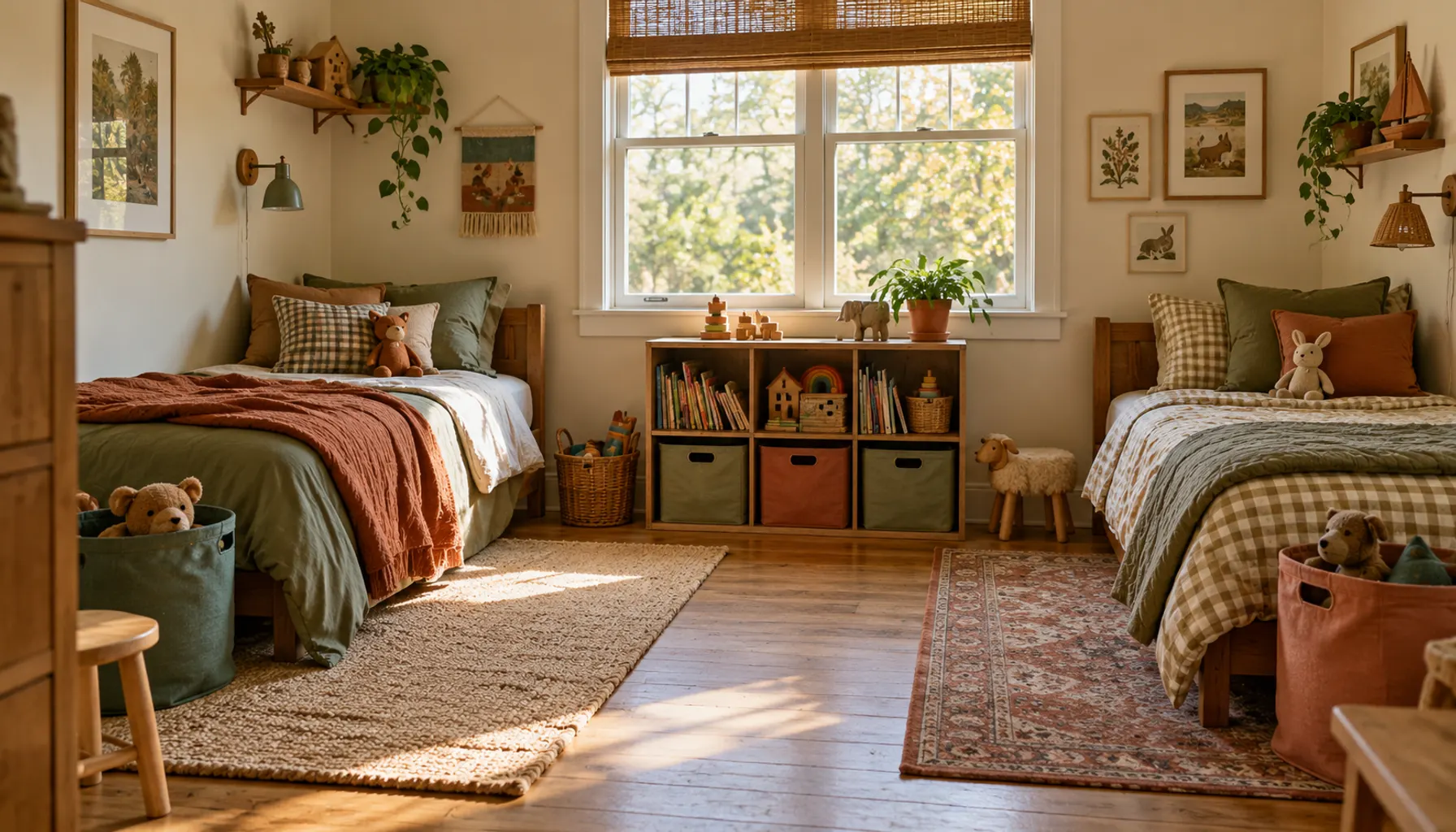
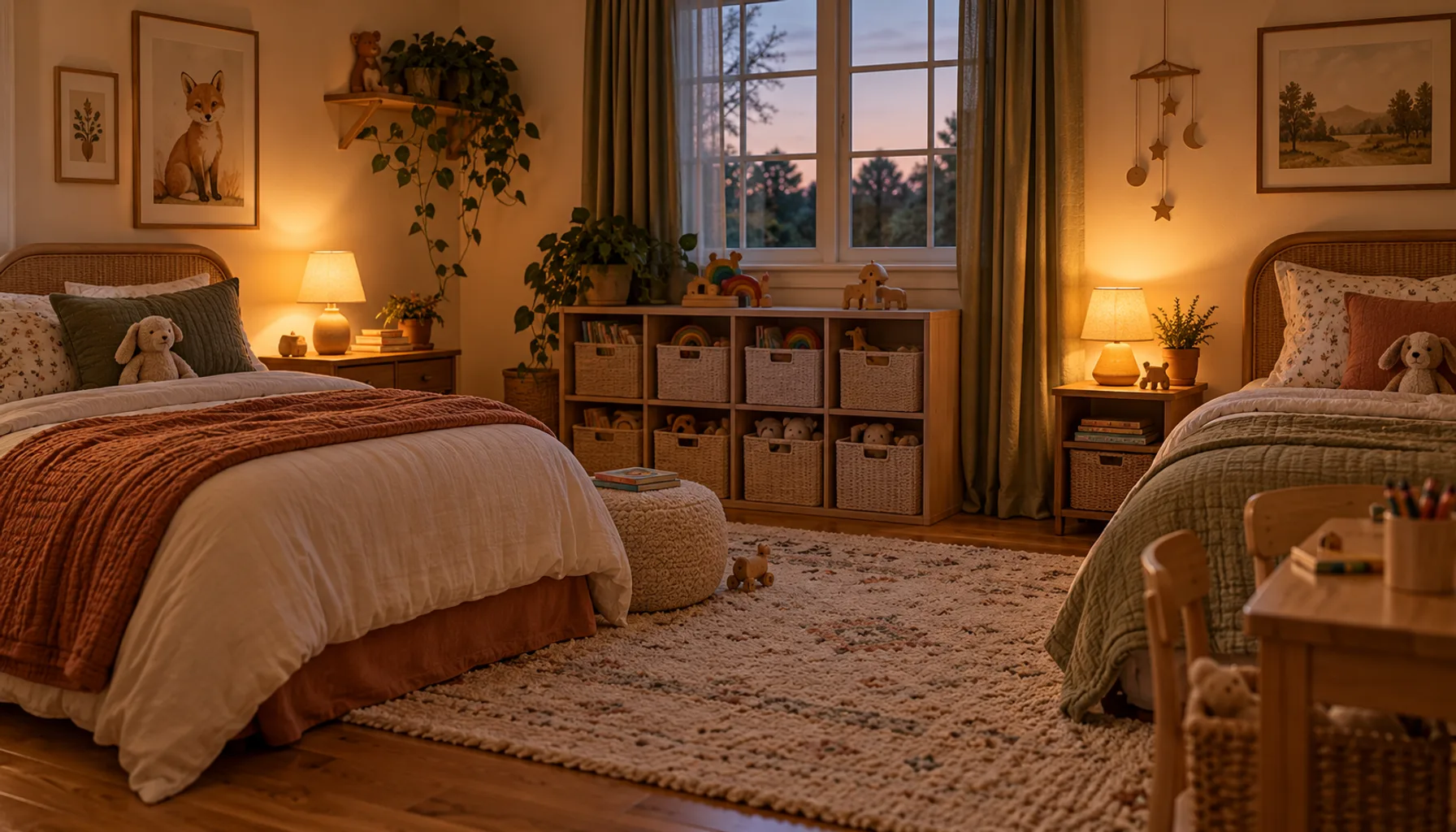
Start with the floor plan, not the bins. Divide the room down the middle, or by whichever wall each child sleeps against, and give each side a bed, a shelf, and a hook row. A small rug under each bed works as a visible border without building anything.
When kids share, the thing they argue about is usually the boundary. A defined edge settles most of it. Keep shared items, like a toy kitchen or a train table, in the middle on neutral ground.
Idea 2: Lift One Bed Onto a Loft or Bunk Frame
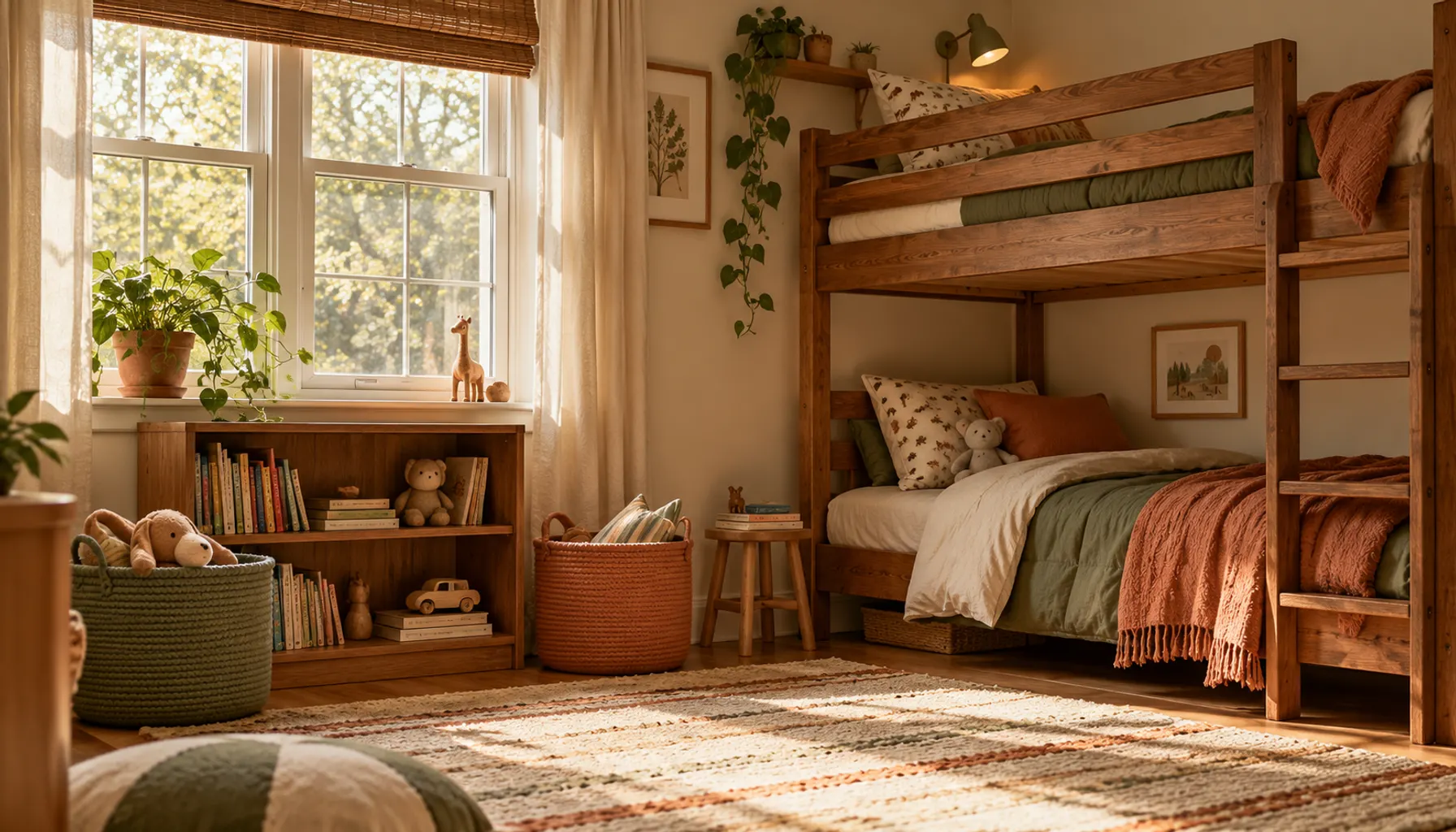
If the ceiling is high enough and the older child is old enough, a bunk or loft frees roughly half the floor. Under a loft bed you can fit a desk, a reading corner, or a wardrobe, which is a bigger gain than any bin will give you.
Check clearance before you buy, because a top bunk with too little headroom is miserable. Bunks aren't for everyone, so if the ceiling is low or the kids are very young, a trundle or a low platform bed with drawers underneath is the safer swap.
Idea 3: Use Under-Bed Storage Kids Can Pull Out Alone
The space under a bed is the largest flat storage area in the room, and most families waste it on dust. Shallow rolling drawers or wide fabric bins on wheels turn it into a toy garage. Pick ones a child can slide out with one hand.
Skip tall, lidded under-bed boxes for anything that gets used daily. Save those for off-season clothes and bedding, which an adult handles anyway.
Idea 4: Hang a Low Hook Row for Bags and Costumes
Hooks do more than shelves for clothes that aren't dirty enough to wash but aren't clean enough to fold. A rail set at the child's shoulder height, with two or three sturdy hooks per kid, holds backpacks, jackets, and the dress-up pieces that otherwise pile on the chair.
Mount the rail into studs or use proper wall anchors, since kids hang their whole weight on them. A different hook color for each child needs no labeling and works before they can read.
Idea 5: Switch to Open Bins With Picture Labels
Lidded boxes look tidy in a photo and fail in daily life. Open fabric or woven bins let a child drop things in from a distance, which is the actual behavior you want.
Add a picture label, either a printed photo or a simple drawing, to the front of each bin. Pre-readers can then sort cars from blocks without asking. Keep to a short list of categories, such as blocks, vehicles, art supplies, and books, because ten tiny categories will collapse by Friday.
Idea 6: Rotate Toys Instead of Storing All of Them
The fastest way to shrink the mess is to own less of it in the room at once. Keep roughly a third of the toys out, put the rest in a closed box on a high shelf or in the hall closet, and swap every few weeks.
Kids often treat the returning toys as new, so the rotation also cuts the "I'm bored" complaints. A caution: don't rotate things a child is currently attached to, like a favorite stuffed animal, or the system will feel like a punishment.
Small-Space Tip: If there's no spare closet, the back of a wardrobe shelf or the space above the door frame works fine for the off-duty box.
Idea 7: Build a Reading Corner Into a Dead Angle
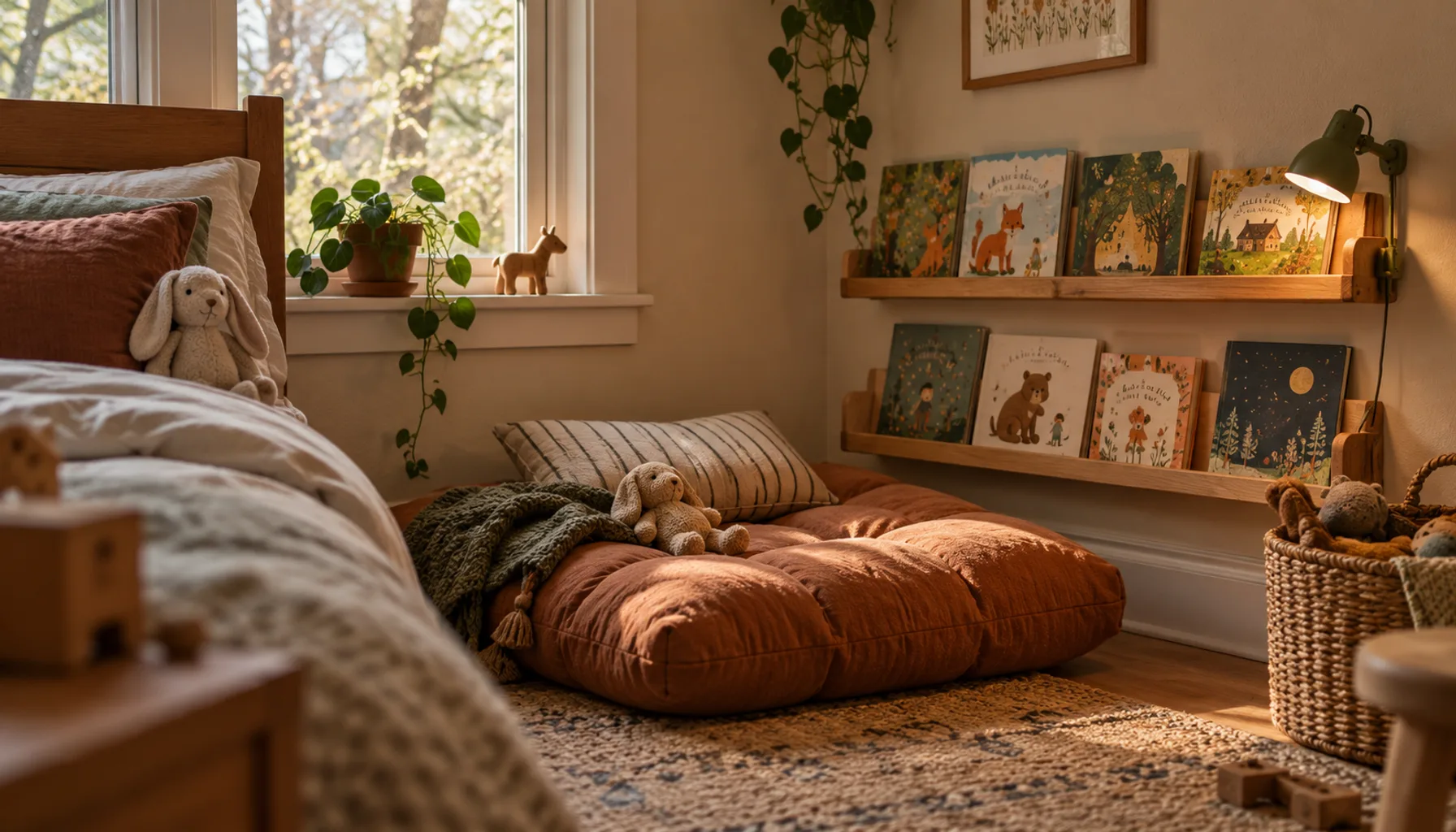
Most small kid rooms have one awkward corner, often beside the door or at the end of a bed. A floor cushion, a wall-mounted book ledge, and a clip-on light turn it into the quietest spot in the room.
Front-facing book ledges are worth the small cost because kids choose books by cover, and spine-out shelving gets ignored. For a deeper version of this move, see our reading nook ideas for small corners.
Idea 8: Use the Back of the Door and the Wall Above the Bed
Vertical space is cheap in a small room. An over-the-door shoe organizer with clear pockets holds small figurines, craft supplies, socks, and hair accessories at a glance. The wall above a bed can take a narrow shelf for lamps and a few treasured objects.
Keep the heavier or breakable items below head height, and keep anything above a bed lightweight. If you're deciding what the walls can take, our post on renter-friendly upgrades you can take with you covers the no-drill options.
Idea 9: Match the Closet Rod to the Child
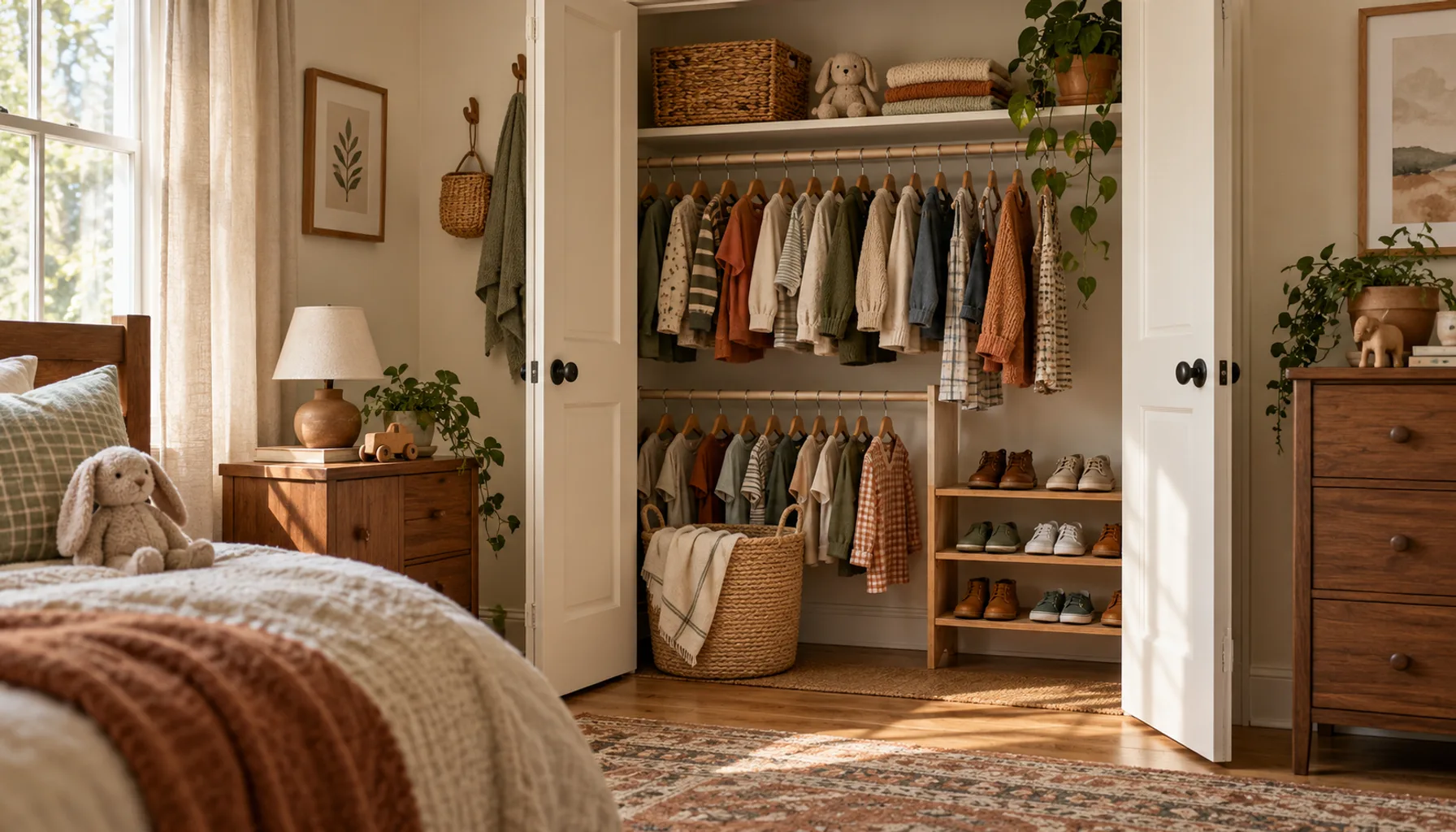
A standard closet rod sits too high for a child. Dropping it, or adding a second lower rod, lets kids hang their own clothes. Pair it with a bottom shelf for shoes and a bin for laundry.
For siblings sharing one closet, divide it vertically with a shelf divider and give each child a side. If the closet is tiny, move off-season clothing out of the room entirely. Our closet organization system goes through the sorting steps.
Idea 10: Put a Small Desk and Art Station in Each Zone
Homework and drawing happen somewhere, and if there's no place for it, it happens on the bed. A narrow desk or a wall-mounted fold-down table per child keeps papers and markers from spreading.
Mount a small pegboard or a rail with cups above each desk so supplies sit upright and visible. A fold-down option can close flat against the wall when floor space is needed for play. Use washable surfaces, because the table will see paint, glue, and juice.
Idea 11: End Each Day With a Five-Minute Reset
A small room gets messy fast, so it needs a routine more than a big one does. Set a five-minute timer before bed, put on a song, and have each kid return things to their own zone. Because every item has an obvious home by now, five minutes is enough.
Your part is to stop buying containers. If something still has no home after a month, it probably should leave. This pairs well with the approach in the 15-minute declutter method.
Common Mistakes to Avoid
Buying storage before sorting is the big one. Containers fill to whatever size you give them, so purge first and measure what's left. Another trap is choosing matching lidded boxes for the look, which kids ignore. Finally, don't build a system that only works when an adult is standing there.
Furniture safety deserves its own mention: anchor bookcases, tall dressers, and wardrobes to the wall using the hardware that fits your wall type, and keep climbable shelves away from windows.
Expert Tips for Making It Last
Photograph the room when it's right. When things slip, the picture shows kids what to match, and they can do it without you. A "one in, one out" rule for toys and clothes also keeps the volume steady without a big purge.
Revisit the setup every six months or at a new school year. A system built for a four-year-old will not fit a seven-year-old, and small adjustments, like moving a shelf down a notch, keep it working.
Frequently Asked Questions
How do you organize a small bedroom shared by two kids?
Divide the room into two zones, one per child, and give each a bed, a shelf, hooks, and a bin set. Use vertical space with a loft or bunk, and store shared items in the middle. A clear boundary like a rug stops most disputes.
What storage works best for toys in a small room?
Open, low bins with picture labels work best because kids can use them alone. Limit the toys in the room to about a third of the total and rotate the rest from a closet shelf.
How do you keep a shared kids room clean every day?
Keep the routine short and fixed: a five-minute reset before bed, with every item having an obvious home. A system a young child can run alone lasts longer than one that needs adult help.
Is a bunk bed a good idea for small shared rooms?
It can be. A bunk frees a lot of floor, but it needs enough ceiling height and a child old enough for the top. If either is missing, a trundle or a platform bed with drawers is safer.
How often should you declutter a kids room?
Every few months, and again at a new school year or season change. Kids outgrow toys and clothes quickly, so a short regular sort beats one large clear-out.
Where to Start
Start with the floor. Clear it, mark each child's zone, and decide what stays within reach. Then add one storage piece at a time and watch what actually gets used before you buy more. For more ways to stretch a tight footprint, our guide to small apartment storage ideas that actually work is a good next read, and hidden storage furniture hacks covers pieces with built-in room for toys.
One useful home email a month
Real ideas to make your home work better. No spam, easy unsubscribe.