9 Garage Organization Ideas for Small, Cluttered Spaces
Nine garage organization ideas built for small spaces: wall storage, overhead racks, activity zones, and smart use of corners so the car actually fits.

· 10 min read
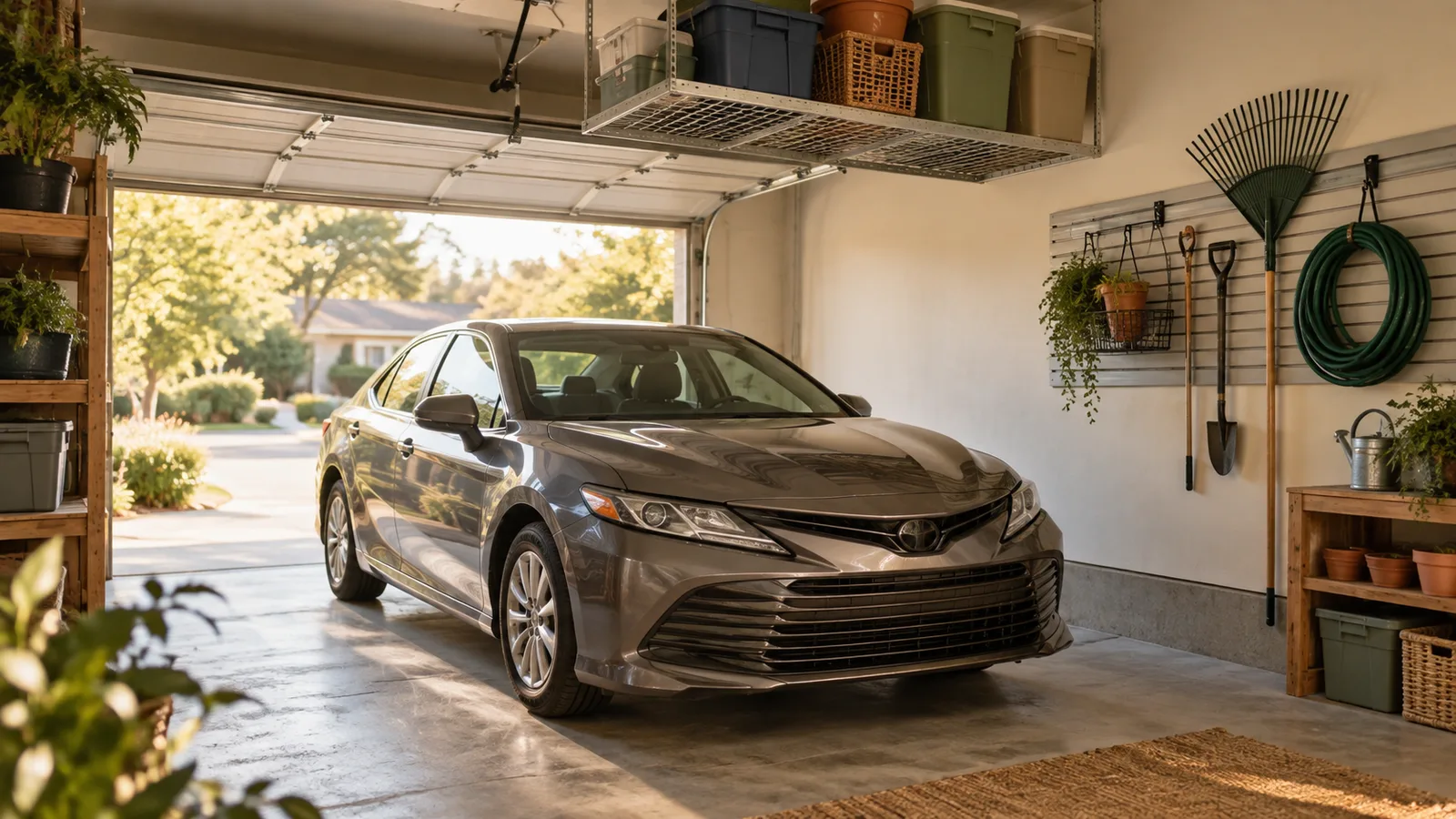
A small garage fails for a specific reason: everything lives on the floor because nobody planned for the walls, the ceiling, or the corners. Once the floor fills up, the car gets parked outside and the garage becomes a room-sized junk drawer. The fix isn't more bins. It's putting storage where the floor isn't, and giving every category of stuff one home instead of three overlapping piles. These nine ideas focus on space you're already paying for and not using: the wall above the workbench, the ceiling over the hood, the dead triangle in the corner.
Key Takeaways
- Off-the-floor storage is the real fix. Walls and ceiling hold more than a small garage's square footage ever will.
- Zone by activity, not category. A "yard zone" and a "car zone" survive daily use better than a shelf labeled "tools."
- Bikes are the biggest floor-space thief in most small garages and the easiest to move vertical.
- Clear bins beat cardboard boxes because you stop opening five boxes to find one thing.
- A fold-down workbench earns its keep only if it actually folds away when you're done.
- Corners are the most wasted space in almost every garage layout.
9 Garage Organization Ideas Worth Trying
Idea 1: Put Bulky Tools on a Wall Track System
Rakes, shovels, ladders, and extension cords are the items most likely to end up leaning against a wall in a pile that slowly falls over. A slatwall or metal track system with hooks solves this because each tool hangs from its own point instead of stacking against its neighbors.
Mount the track at a height where the longest tool (usually the ladder or the snow shovel) still clears the floor by a few inches. Space hooks with a few inches of gap so handles don't compete for the same slot. This single change usually clears more floor space than any bin purchase, because it's the tall, awkward items, not the small ones, that eat the most square footage leaning at odd angles.
Budget version: a row of $3 utility hooks screwed into wall studs does almost the same job as a $150 slatwall kit. The track system is nicer to look at and easier to rearrange, but the hooks work.
Idea 2: Reclaim the Ceiling for Rarely Used Bins
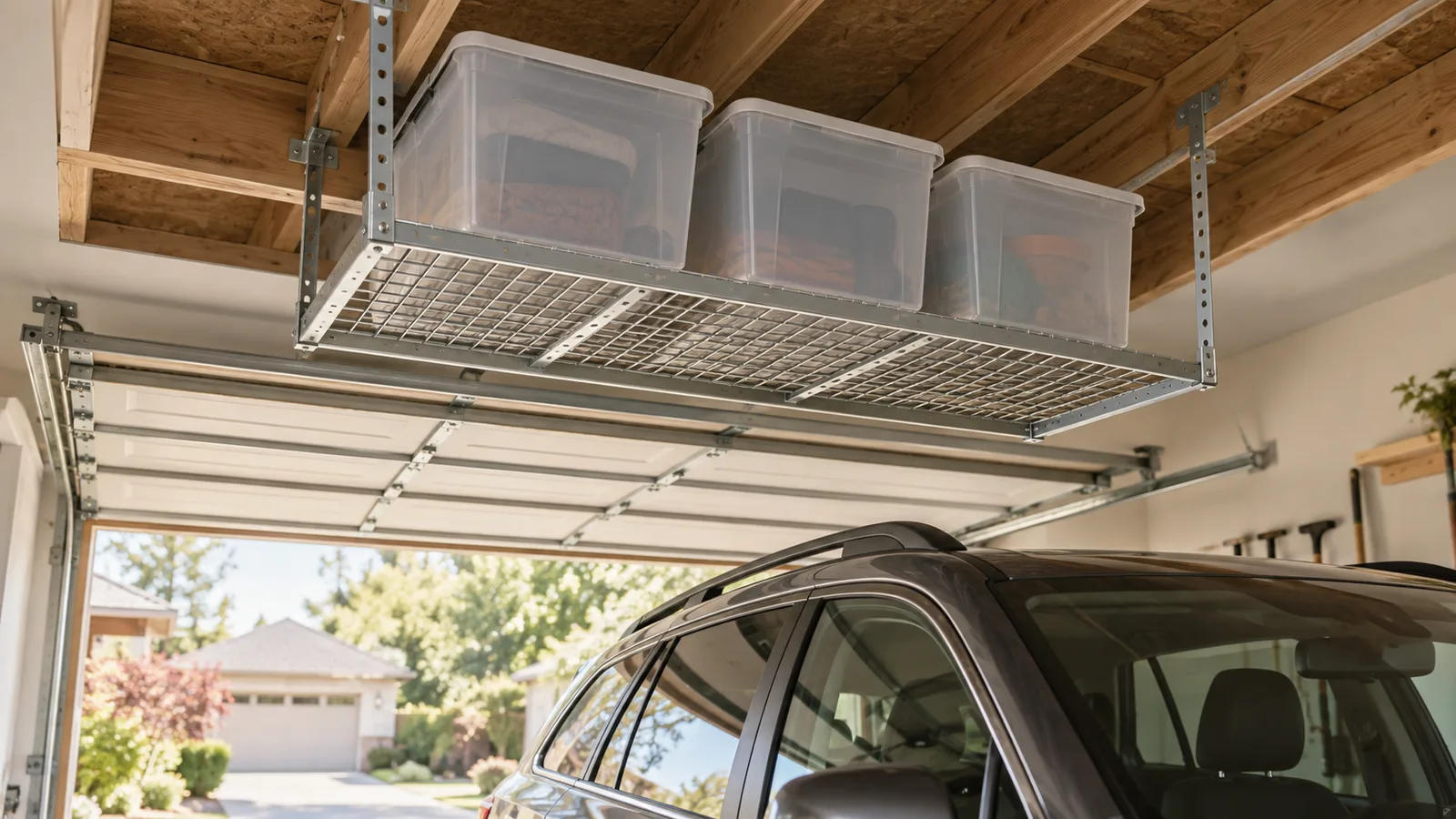
Every small garage has a category of stuff used twice a year: holiday decorations, camping gear, spare tires, luggage. This is exactly what ceiling-mounted storage racks are for. A single 4x4-foot platform rack installed between the joists, set above where the car's roofline sits, holds several large bins without touching the usable floor at all.
Leave a clear zone directly above where the driver's door opens, since ceiling racks placed too low make it impossible to load or unload the car comfortably. Label bins on the side facing down, not the top, since that's the only face you'll actually see once they're up there.
This is the highest-leverage idea on this list for anyone parking a car inside. Most small garages lose their parking function to floor clutter that could sit overhead instead.
Idea 3: Zone the Garage by Activity, Not Category
A garage organized purely by object type (all tools together, all sports gear together) sounds logical but breaks down fast, because most tasks pull from several categories at once. Washing the car needs a hose, soap, and rags. Yard work needs a rake, gloves, and fertilizer. Group by the task instead: a car-care zone near the door, a yard zone near the side exit, a sports zone near wherever the kids grab gear on the way out.
Walk through your last month of actual garage visits and note what you reached for each time. That list, not a generic category system, should decide where things go. A car-care zone works best within arm's reach of the driver's door. A yard zone belongs near whichever exit leads to the yard, not on the opposite wall.
Small-Space Tip: in a one-car garage, limit yourself to three zones maximum. More than that and the zones start overlapping, which puts you back where you started.
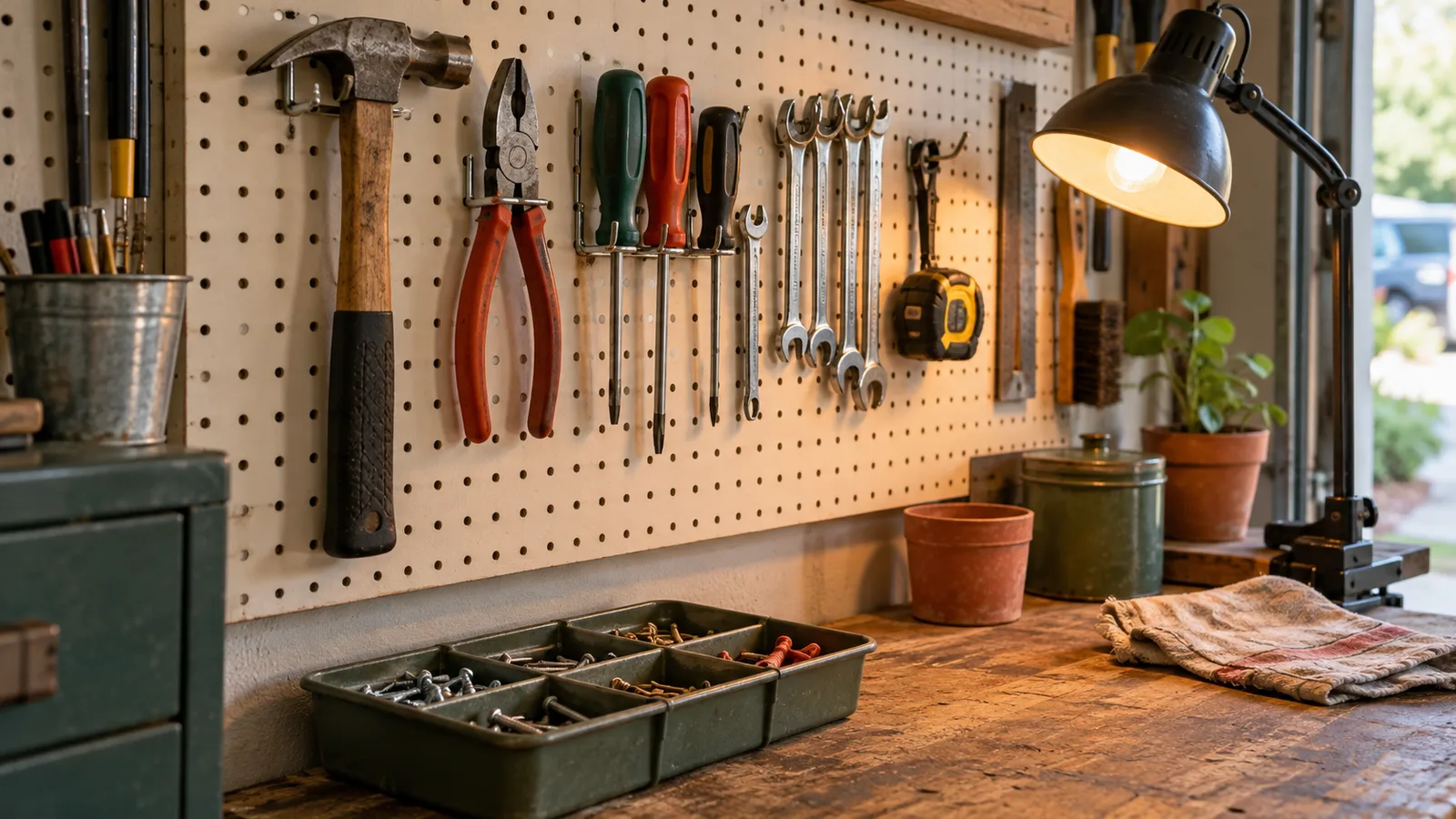
Idea 4: Use a Pegboard for Hand Tools You Actually Use Weekly
Pegboard gets recommended constantly, but it only works when it's reserved for tools used often enough that seeing them matters. Trace an outline around each tool in marker so a missing hammer is obvious at a glance, and mount the board within easy reach of the workbench, not across the garage from it.
Skip the pegboard for anything used less than once a month. Those tools belong in a labeled drawer or bin instead, because a pegboard covered in rarely touched items just becomes visual clutter that hides the tools you actually reach for.
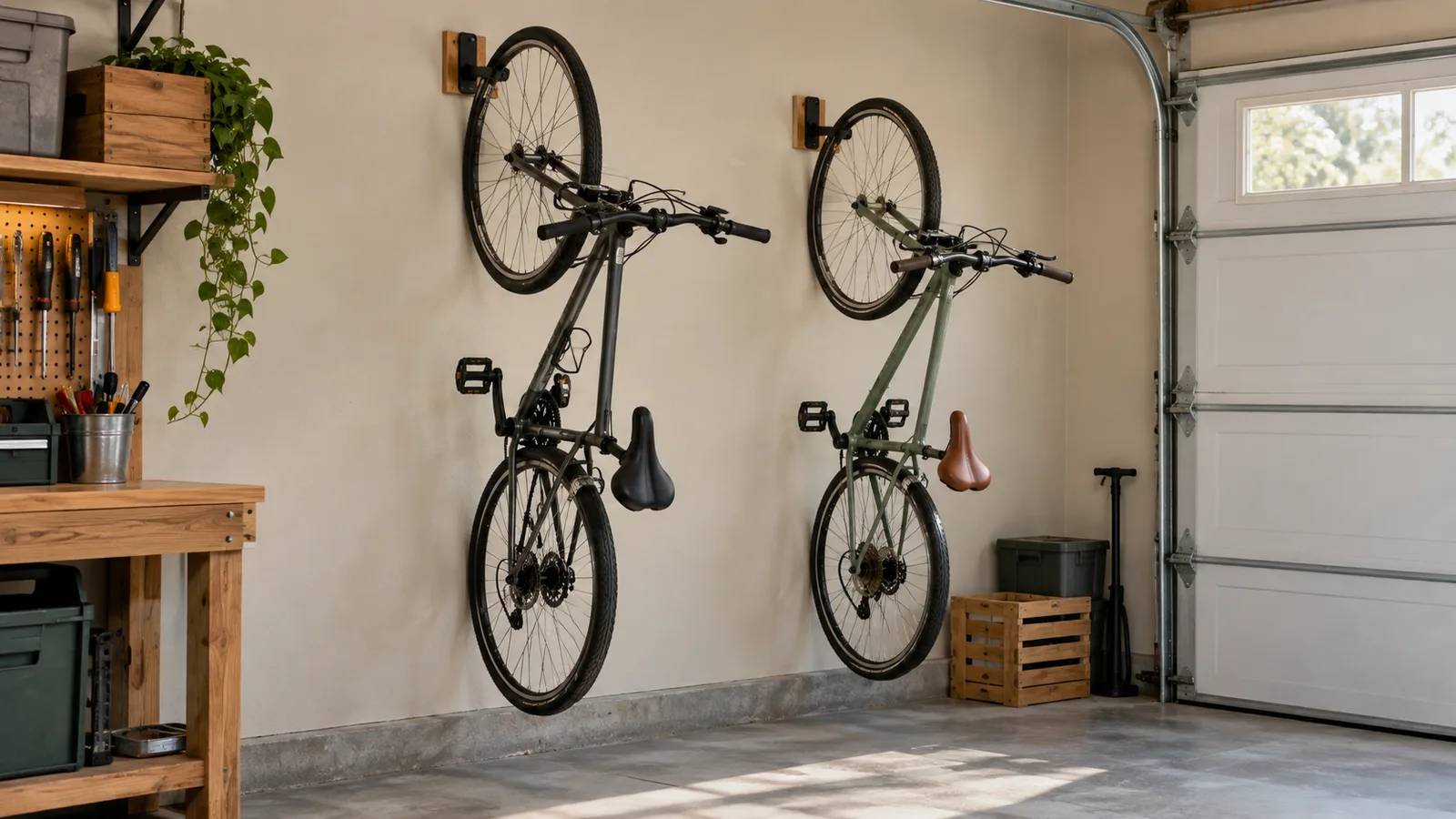
Idea 5: Move Bikes to a Vertical Wall Mount
Bikes leaned against a wall or each other are one of the single biggest floor-space losses in a small garage, because a leaning bike claims a footprint roughly the size of itself plus a fall radius. A wall-mounted vertical hook, which holds the bike by one wheel with the frame flush against the wall, shrinks that footprint to a few inches deep.
For two or more bikes, stagger the hooks at slightly different heights so handlebars don't collide. A pulley-style ceiling hoist is the alternative if wall space is also tight, though it takes longer to load and unload than a simple hook, which matters if the bike gets used often.
This is worth doing even in a garage that already feels organized. Bikes are often the last item anyone thinks to move off the floor, and they're usually the widest.
Idea 6: Add a Fold-Down Wall Workbench
A full-size workbench is the single largest floor-space commitment most people make in a small garage, and it often sits unused between projects. A wall-mounted, hinged workbench that folds flat against the wall gives you a full work surface when needed and gives the floor back the rest of the time.
Mount it at standard counter height, around 34 to 36 inches, and make sure the support leg folds cleanly without catching on anything stored beneath it. This only works if putting it away is genuinely easy. A folding bench that takes two minutes to collapse will get left open, which defeats the entire point.
Budget Alternative: a simple hinged shelf bracket kit costs far less than a purpose-built folding workbench and does the same job for lighter tasks like potting plants or minor repairs.
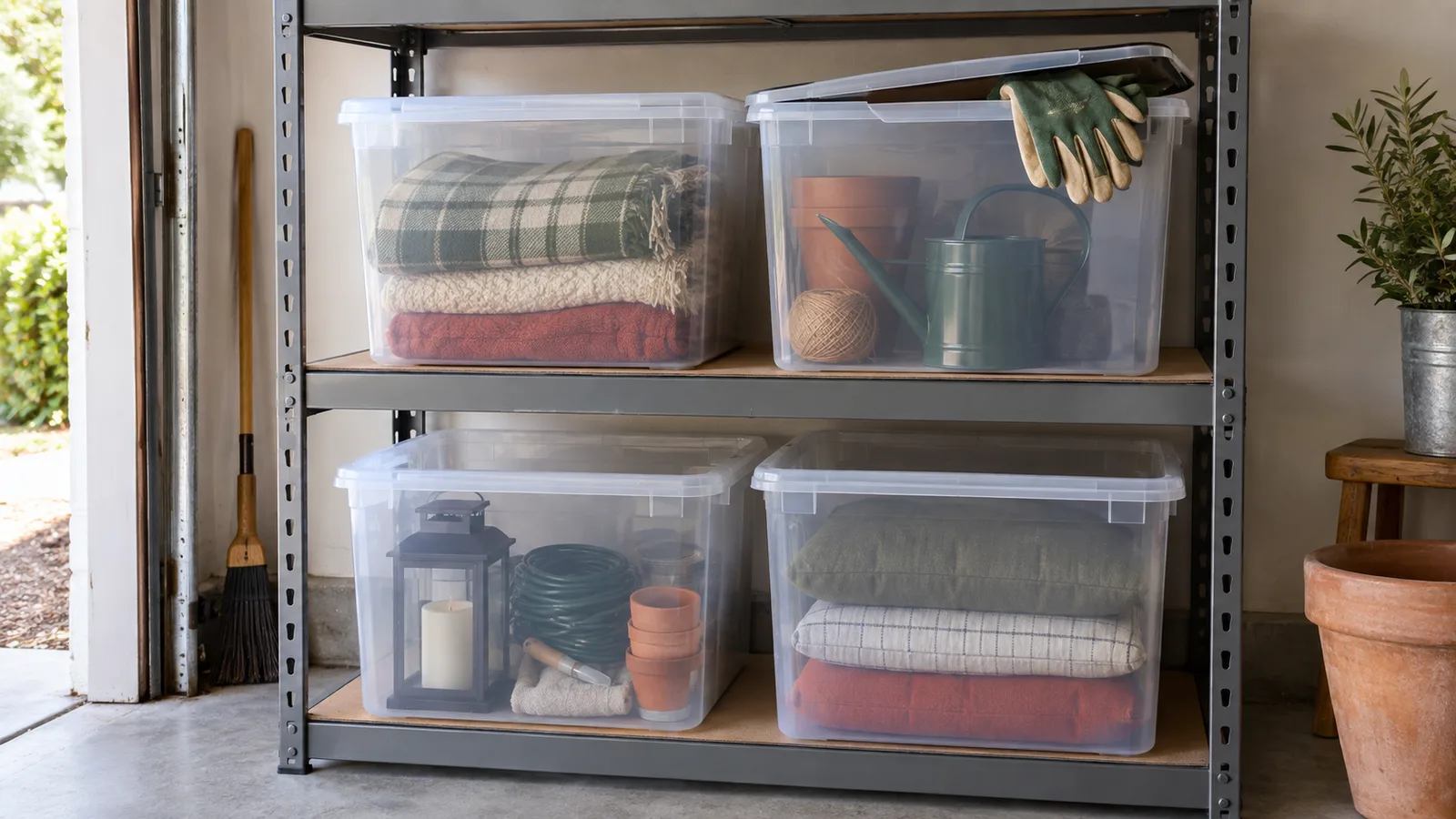
Idea 7: Sort Small Parts Into Clear, Labeled Bins by Season
Cardboard boxes marked "misc" or "garage stuff" are where organization systems quietly die, because nobody can see what's inside without opening every box. Clear plastic bins, sorted by season or by project type rather than by vague category, solve this in one move: you can see the contents and the label at the same time.
Sort into groups that actually map to when you need them: spring and summer gear, fall and winter gear, and an "active projects" bin for whatever you're working on right now. Stack heavier bins low and lighter ones higher, and keep the active-projects bin at the most accessible height since that's the one you'll open weekly.
Idea 8: Build Shelving Into the Dead Corner
Nearly every garage has one triangular or awkward corner that ends up empty because standard shelving units don't fit it well. A corner shelf unit, built or bought specifically for that angle, turns dead space into several square feet of usable storage without stealing an inch from the rest of the room.
Use these corner shelves for lighter, bulkier items rather than heavy tools, since corner brackets generally carry less weight than a full wall-mounted unit. Empty cases, seasonal cushions, and lightweight bins are a better fit here than a box of hand weights.
Worth Avoiding: don't stack anything taller than the shelf's depth allows on a corner unit. Overhanging items catch on car doors and foot traffic more than in any other part of the garage, simply because the corner sits closest to where people turn to walk toward the door.
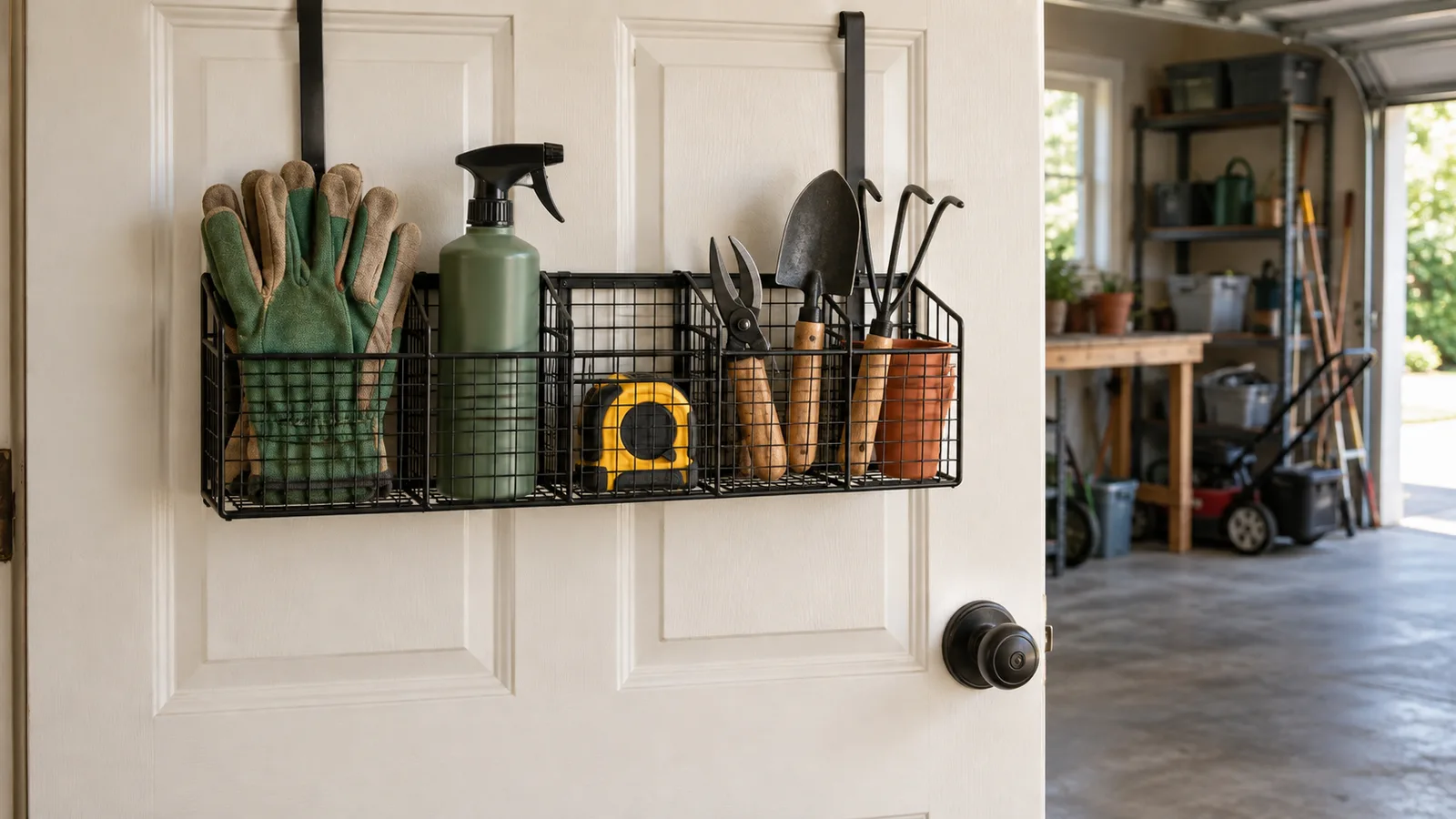
Idea 9: Add Door-Back Storage for Small, Frequently Grabbed Items
The back of the garage's entry door is almost always empty, and it's exactly where small, frequently grabbed items belong: gloves, sunscreen, bug spray, a tape measure, spare batteries. An over-the-door shoe organizer or a shallow wire rack mounted there holds a surprising amount without touching the floor or a single wall stud.
Reserve this space for things you grab on your way out, not for long-term storage. It works because it sits at the exact point where you're already pausing to open the door, which makes it the most convenient spot in the whole garage for anything you need in under five seconds.
Common Mistakes to Avoid
- Buying storage before measuring the space. A shelving unit that doesn't fit the wall height or the corner angle becomes its own clutter problem.
- Storing daily-use items in hard-to-reach ceiling racks. Ceiling storage is for the twice-a-year items only.
- Skipping labels on the sides of stacked bins. A label only on top is useless once bins are stacked or shelved.
- Leaving the fold-down workbench open by default. If it's easier to leave down than to fold up, it will stay down.
Frequently Asked Questions
How much weight can a ceiling storage rack safely hold?
Most consumer ceiling racks are rated between 250 and 600 pounds when installed into ceiling joists, not drywall alone. Always mount into the joists and check the specific rack's weight rating before loading it, since ratings vary by brand and mounting hardware.
What's the cheapest way to start organizing a small garage?
Wall hooks and clear bins from a hardware or discount store cost very little and solve the two biggest problems: bulky items leaning on the floor and boxes nobody can see into. Start there before buying any shelving system.
Should I organize by zone or by category first?
Zone first. Deciding where car-care, yard, and project supplies each live gives every category a destination. Sorting by category without a zone plan just creates neat piles in the wrong places.
How do I organize a garage I also park a car in?
Prioritize anything that touches the floor: bikes, ladders, and bulky tools move to walls or ceiling first. The goal is a clear rectangle for the car with nothing extending into that footprint at bumper height or door-swing width.
Where to Start
Pick the one item currently costing you the most floor space, in most small garages that's a bike, a ladder, or a workbench that never folds away, and move it off the floor first. That single change usually frees up more usable space than an afternoon of rearranging bins. Once the big floor items are gone, the smaller systems (pegboard, bins, door storage) are quick to add and much easier to keep up.
If you're tackling storage room by room, The 15-Minute Declutter Method and Closet Organization: A Simple System That Actually Lasts use the same zone-first logic applied indoors. For the seasonal bins specifically, pair this with a Seasonal Home Reset Checklist so the swap actually happens twice a year instead of becoming another pile. If you're weighing whether a storage piece is worth buying new, Before You Buy: When DIY Beats New and Thrift Store Furniture: How to Spot Pieces Worth Flipping both apply directly to garage shelving and workbenches.
And if the plan involves building anything, from a corner shelf to a folding bench, Upcycling Furniture: Tools & First Projects covers the basic tool kit worth having first. For the rest of the house, the same off-the-floor thinking behind Small Apartment Storage Ideas That Actually Work applies just as well to a garage as it does to a studio apartment.
One useful home email a month
Real ideas to make your home work better. No spam, easy unsubscribe.