Kitchen Zones: Organise by How You Cook
A practical way to organize the kitchen around real cooking habits, not perfect photos.

· 5 min read
Most kitchen advice starts with matching jars and empty counters. That looks nice, but it rarely matches how you actually move around the room. A kitchen that works is one built around the meals you really cook, in the order you really cook them. Zones are just a way of grouping tools and ingredients by the job they do, so the right thing is within reach at the right moment.
Watch yourself cook one meal
Before you buy a single organizer, pay attention. Cook something ordinary, like a weeknight dinner, and notice where you stand, what you reach for, and what makes you sigh. Do you cross the room to grab a spoon every time you stir? Do you dig past three lids to find the one that fits? Those small frustrations are the map. Your zones should follow your habits, not a photo you saw somewhere.
Try this over two or three normal meals rather than one showpiece dinner. Patterns show up quickly: the drawer you open twenty times a day, the corner you never touch, the spot where dirty dishes always pile up. Once you can see the pattern, arranging the kitchen becomes obvious. You are not inventing a system. You are matching one to a routine that already exists.
Keep prep tools near the prep space
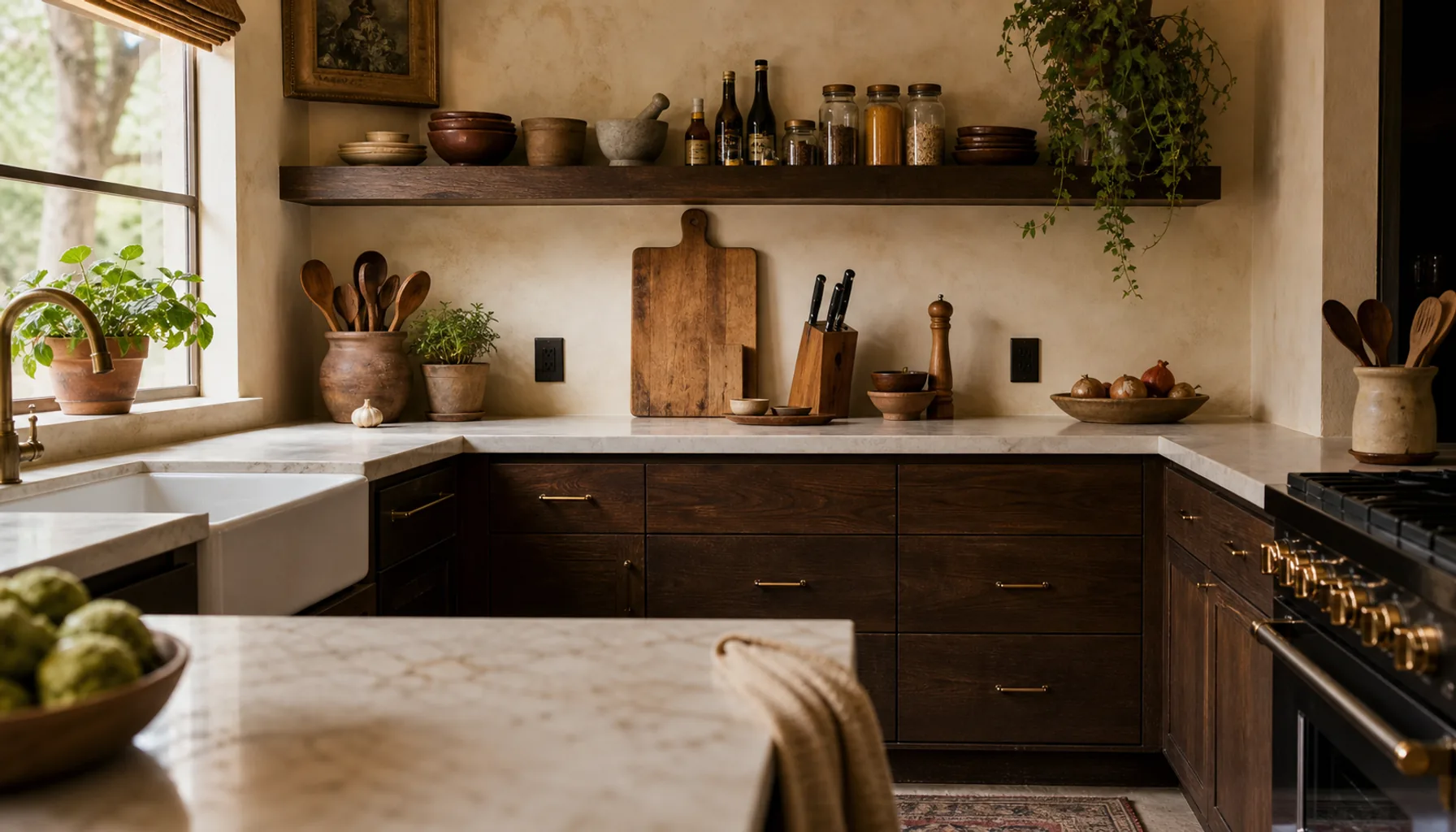
Prep is where most cooking time goes, so it deserves the best real estate. Knives, cutting boards, mixing bowls, measuring spoons, oil, salt, pepper, and a stack of clean towels should live within a step of where you actually chop and mix. If you have to walk to a far cabinet for a board, you will end up chopping on a plate instead, and the mess spreads.
Think about the flow of a simple task. You pull out a board, grab a knife, reach for salt, wipe your hands. If all of that lives together, prep feels smooth. If it is scattered, every step becomes a small errand. A shallow drawer near the counter for knives and peelers, a shelf just above for oil and everyday seasoning, and a hook or bar for towels can turn a cramped corner into the busiest, calmest part of the kitchen. If space is tight, the same thinking behind storage that actually solves clutter applies here: keep the everyday tools within reach and send everything else somewhere out of the way.
Put breakfast on autopilot
Mornings run on tired brains, so the fewer decisions the better. Coffee, tea, mugs, cereal, bowls, bread, and any daily vitamins can share one shelf, one drawer, or a single tray you lift out in one move. The goal is simple: your morning routine should not require opening six cabinets before you are properly awake.
Grouping breakfast items also makes the rest of the kitchen calmer, because those things stop drifting onto counters and into random spots. A small tray works especially well here. You pull it out, everything you need is on it, and when you are done you slide it back. If two people have different mornings, give each a corner of the same zone rather than splitting things across the room.
Store pans by use
Not every pan earns the same spot. The skillet you reach for three times a week deserves the easiest, most accessible place, ideally somewhere you can grab it without moving anything else. The heavy roasting tray you use twice a year can move to a high shelf, the back of a deep cupboard, or on top of the fridge. Convenience should track frequency.
A quick way to sort this out:
- Keep daily and weekly pans at or near counter height, front and center.
- Move occasional pieces to lower or higher shelves where a little bending or reaching is fine.
- Send rarely used items, like party platters or seasonal bakeware, to the least handy spot you have.
Lids are their own small battle. A short rack, a drawer divider, or even a sturdy bin keeps them upright and findable, which saves you the clatter of the whole stack every time.
Leave a landing strip
Every kitchen needs one clear area that stays empty on purpose. This is your landing strip: a stretch of counter for setting down grocery bags, resting a hot pot, cooling a tray, or packing lunches. When this space disappears under mail, chargers, and half-used jars, cooking gets stressful, because there is nowhere to put anything down. A quick habit of clearing the surfaces first is often all it takes to win the strip back.
Protect that space fiercely. Decide where it lives, keep it clear, and gently move anything that tries to settle there. A landing strip does not need to be large. Even a modest patch near the fridge or stove gives your hands and your groceries somewhere to go, and that small buffer smooths out the whole cooking process.
Let the zones settle before you buy anything
Once your zones make sense, live with them for a couple of weeks before spending money on containers and racks. You will notice which spots work and which ones you keep fighting. Only then does it pay to buy organizers, because now you know exactly what shape and size you need. A kitchen arranged around how you cook keeps working long after the tidy photo would have fallen apart, especially if you reset the kitchen regularly as the seasons and your habits shift, and that is the whole point.