5 Lighting Mistakes That Make Rooms Feel Cold
Simple lighting fixes that make a room feel warmer before you replace furniture or repaint.

· 5 min read
Sometimes a room feels off and you can't quite say why. The furniture is fine, the colors are fine, but the space still feels flat and a little cold. More often than not, the reason is lighting. And lighting happens to be one of the easiest things in a room to change. A few small adjustments can warm a space up before you spend a cent on new furniture or paint.
Using only the ceiling light
A single ceiling light makes every corner compete with the middle of the room. It pours light straight down from one point, so faces look tired, shadows fall in the wrong places, and the whole space feels a bit like an office after hours. Your eye has nowhere soft to land.
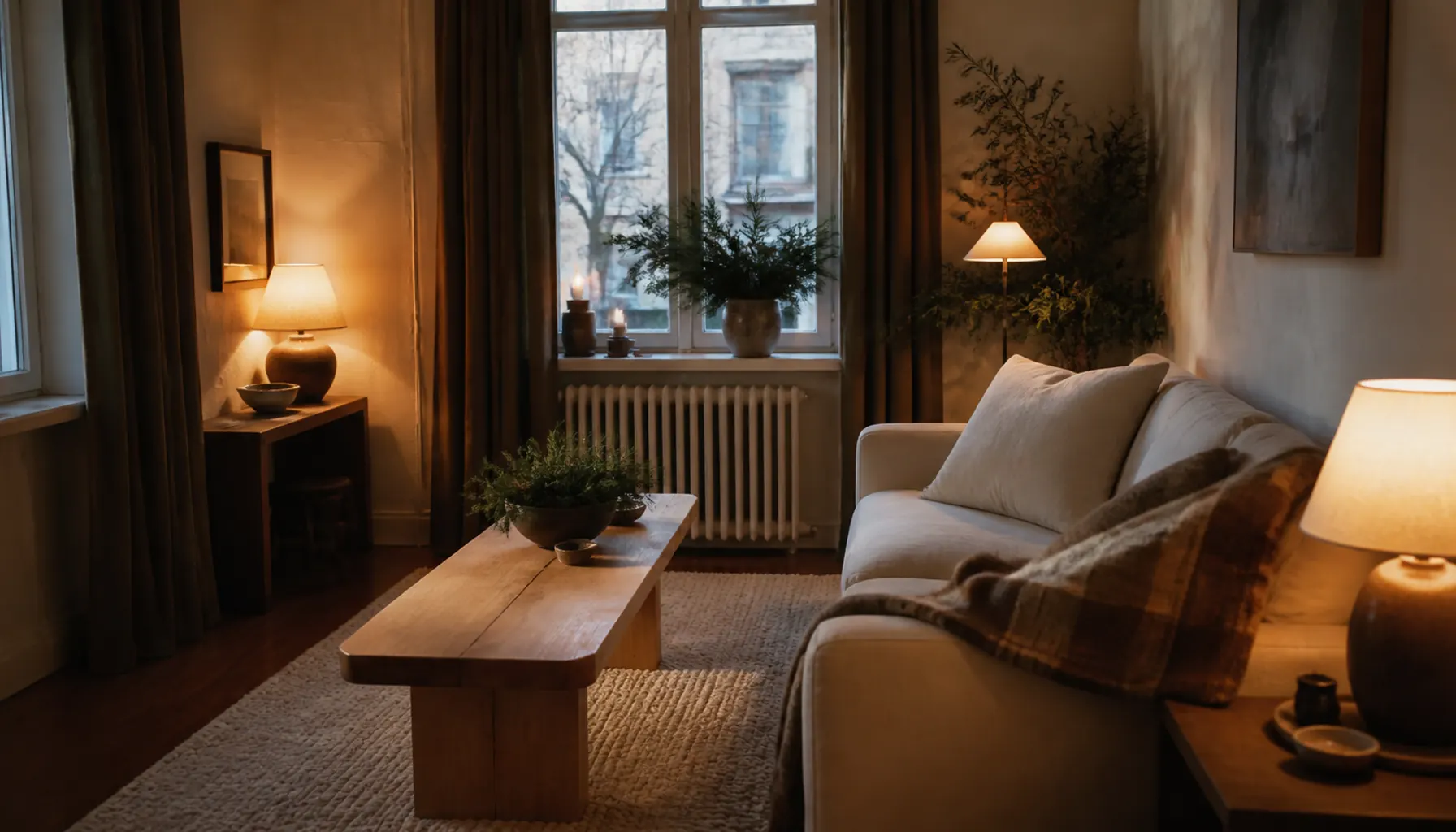
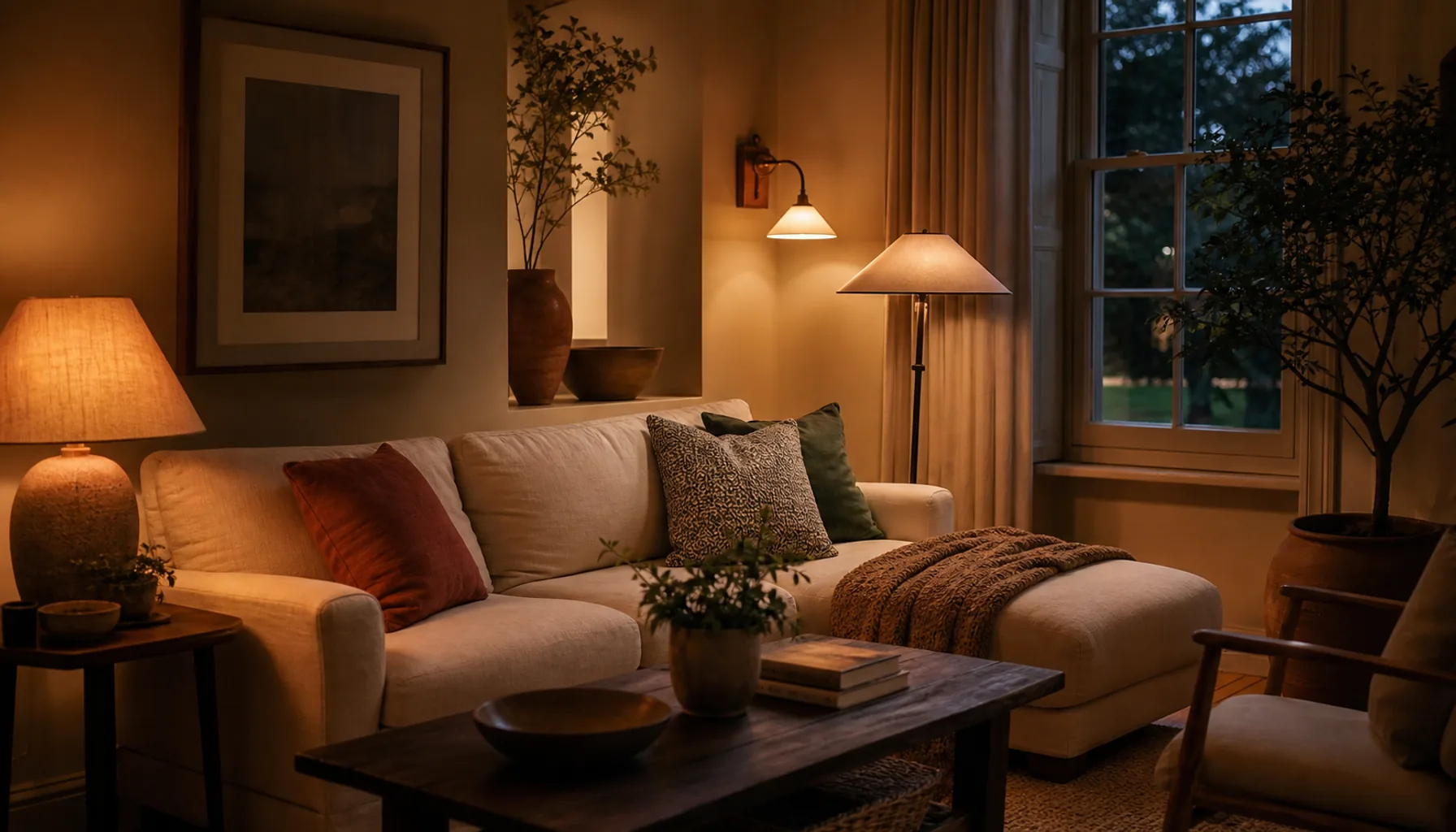
The fix is to spread the light out and bring it lower. Before deciding the room needs new decor, add one low lamp and one task light. Think of it as building light in layers:
- Ambient light for the general glow of the room.
- Task light for reading, cooking, or working.
- Accent light to highlight a plant, a shelf, or a piece of art.
When light comes from several heights instead of one ceiling fixture, the room instantly feels calmer and more lived-in. You may find you rarely turn the ceiling light on at all.
Choosing bulbs that are too cool
Cold bulbs can make cream walls look clinical and warm wood look gray, quietly changing the way the colours you chose actually read. That bluish, daylight-style light is useful in a garage or a bathroom mirror, but in the rooms where you relax it works against you.
The number to look for is the color temperature, measured in Kelvin. For living rooms and bedrooms, warm white usually feels softer. Check the Kelvin number on the box and stay around 2700K to 3000K for a cozy feel. Higher numbers push toward cool, blue-white light; lower numbers glow warmer and gentler.
It also helps to keep your bulbs consistent within one room. When one lamp glows warm and another beams cool white beside it, the mismatch is easy to sense even if you can't name it. Buy a few of the same bulb at once so your light reads as one warm tone rather than a patchwork.
Forgetting dark corners
A dark corner makes the whole room feel unfinished, as if the space stops before it reaches the wall. Your eye reads that shadow as empty, and the room shrinks a little.
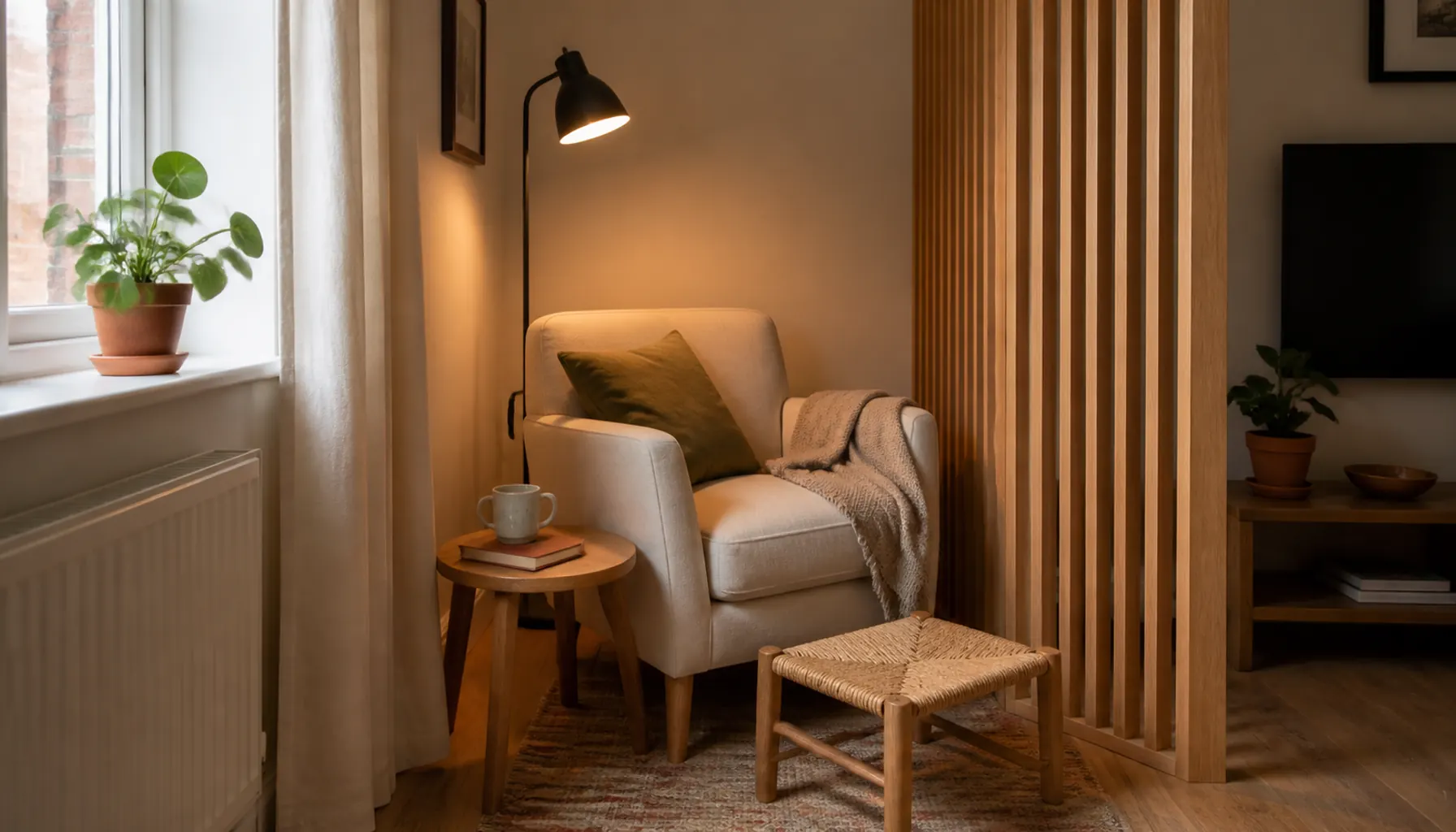
A small lamp, wall light, or picture light can make that corner feel deliberate instead of forgotten. You don't need a big fixture. A single low light behind a chair or beside a plant is enough to tell the eye that the corner belongs to the room. This is also a quiet way to make a small space feel larger, since light in the far corners pushes the walls outward rather than letting them close in.
Lighting everything equally
Rooms need contrast. When every part of a space sits at the same brightness, it feels flat, like a photo with no shadows. Nothing draws you in because nothing stands out.
Let the reading chair be brighter than the bookshelf. Let the dining table glow more than the hallway. Good lighting creates zones, and those zones tell you how to use the room and where to settle. A pool of warmer, brighter light around the sofa says "sit here," while dimmer edges make the space feel restful. You are not trying to light the whole room evenly; you are trying to guide the eye.
Buying fixtures before testing placement
It is tempting to blame the fixtures and start shopping, but placement often matters more than the lamp itself. Move the lamps you already own for one evening. Try one beside the sofa, one in the dark corner, one on a low shelf, and see how the room changes as the sun goes down.
You may discover the problem was position, not the fixture. Living with the change for an evening or two tells you far more than a store display ever could, and it saves you from buying something that turns out to sit in the wrong spot.
The role of dimmers
If there is one upgrade worth making, it is the ability to lower your light. A room needs different brightness at different times, and a bulb fixed at full strength can only ever feel like midday. Dimmable bulbs, or a simple plug-in dimmer, let the same lamp feel bright in the morning and soft at night. Being able to bring the light down in the evening is one of the quickest ways to make a room feel warm and calm, much like settling into a warm, cozy palette does for the walls around you.
Warm surfaces make warm light
Light does not just come from bulbs; it bounces off everything around it. A lamp beside a pale wood table, a woven basket, or a soft textured shade will feel warmer than the same lamp against cold glass and bare white. When you place your lights near natural, warm-toned materials and a mix of soft textures, the whole glow softens.
Start small and notice the change
You don't have to fix all of this at once. Change one bulb, move one lamp, or light one forgotten corner, then sit in the room that evening and notice how it feels. Warmth in a room is rarely about buying more. It is about lighting what you already have with a little more care.