12 Reading Nook Ideas for Small Corners and Odd Spaces
Twelve reading nook ideas for small corners, from the chair you can sit in for an hour to where the lamp has to sit and how to feel enclosed in an open room.

· 14 min read
Most reading nooks fail for one of two reasons. The light is in the wrong place, so your page sits in shadow and your eyes give up after ten minutes. Or the chair was chosen because it looked good in the corner, not because a person can stay in it. Both problems are fixable, and neither one is about buying more decor.
A reading nook only needs four things: a seat your back tolerates, light landing on the page, a surface for a mug, and enough separation that you stop noticing the rest of the room. These twelve reading nook ideas work through those decisions in order, from the corner of a small bedroom to the awkward space under a staircase, and they flag which ones cost nothing and which need a real purchase.
Key Takeaways
- Light position beats light quantity. A lamp beside and slightly behind your shoulder puts the glow on the page; the same lamp across the room lights the wall.
- Seat depth and back angle decide whether you stay. A deep upright chair and a shallow reclined one fail for different reasons.
- The side table has one job: hold a mug and a closed book at roughly the height of the chair arm.
- A footrest changes your hip angle, which is why an ottoman often rescues a chair you were about to replace.
- Enclosure can be faked with a rug edge, a chair back turned to the room, and one screen or shelf.
- Free moves first: move a lamp, turn a chair, pull a rug. Buy only after you know where you actually read.
12 Reading Nook Ideas Worth Trying
Idea 1: Start With a Chair You Can Sit In for an Hour
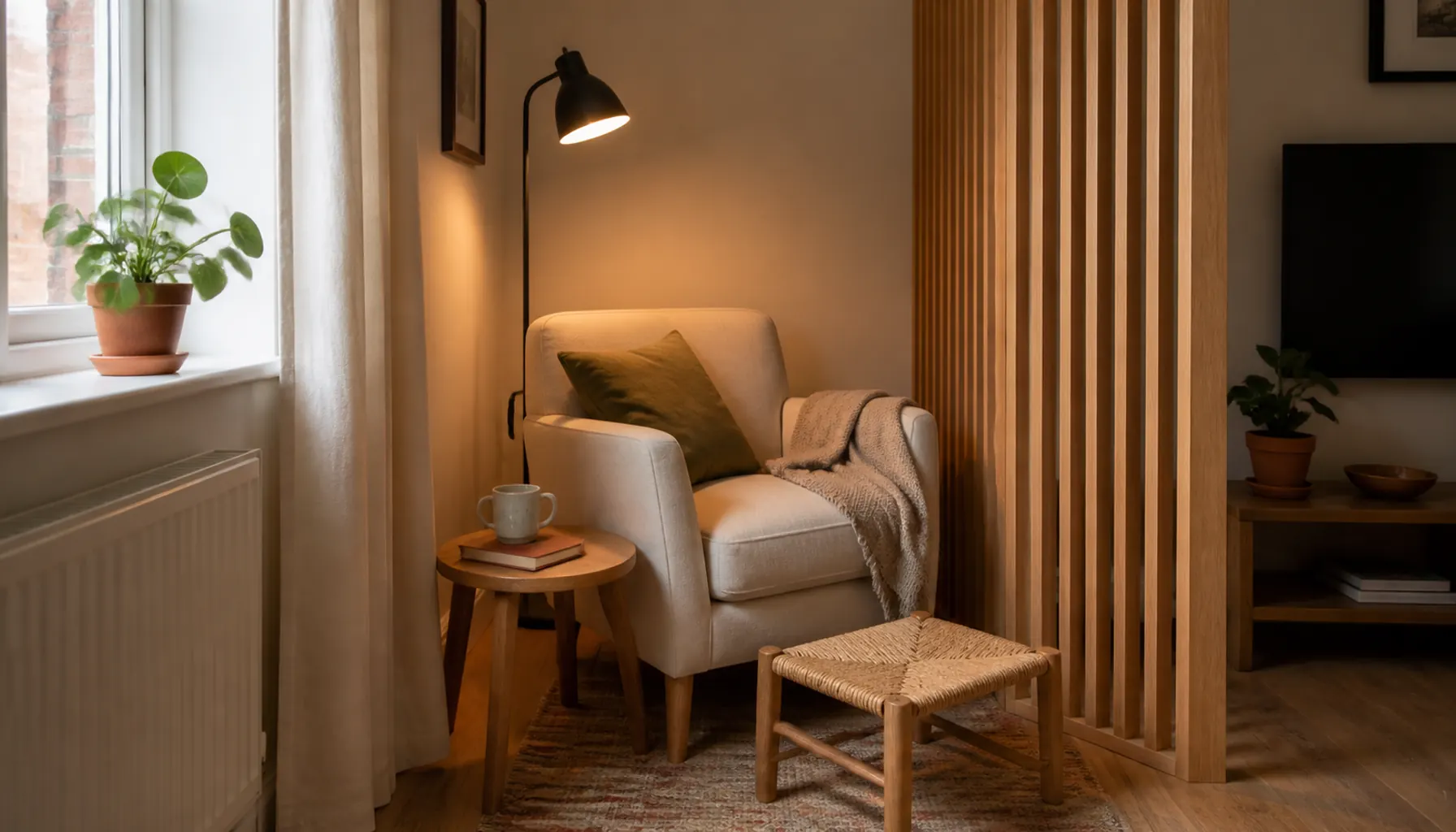
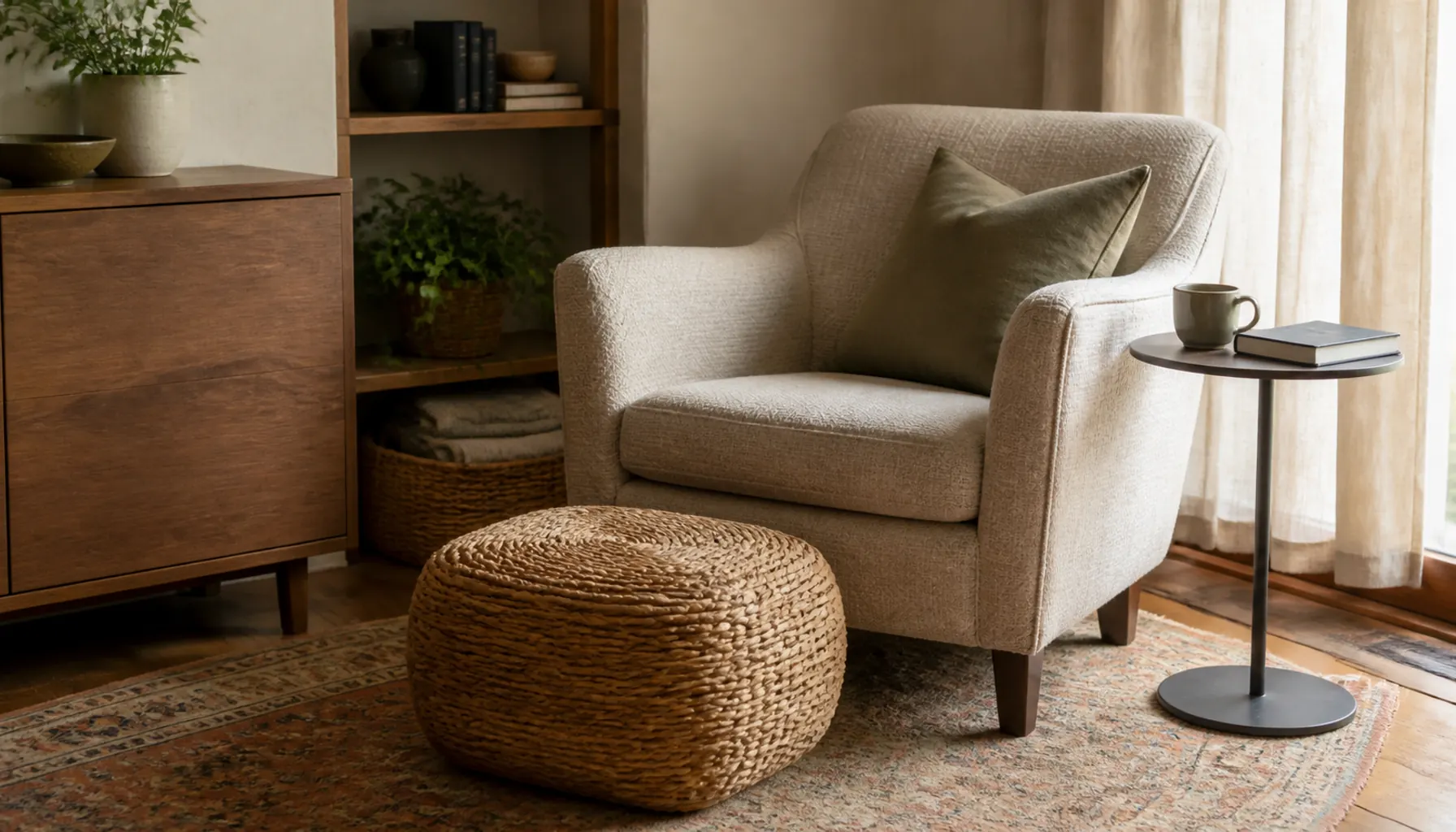
Sit in the chair you are considering, with a book, for fifteen minutes before it goes in the corner. Most decorative accent chairs fail on one of three counts: the seat is too deep, so your lower back loses contact with the backrest; the back is bolt upright, which suits a dining table and tires you out over a novel; or the arms sit so low that your book hand has nothing to rest on.
What works is a moderate seat depth, a back reclined slightly past vertical, and arms high enough that your forearm lands on them naturally. Wingbacks and older club chairs often hit all three. This is the one purchase worth making carefully, and a secondhand frame with good bones beats a new chair with none, so check a used piece properly first.
Idea 2: Put the Light on the Page, Not the Room
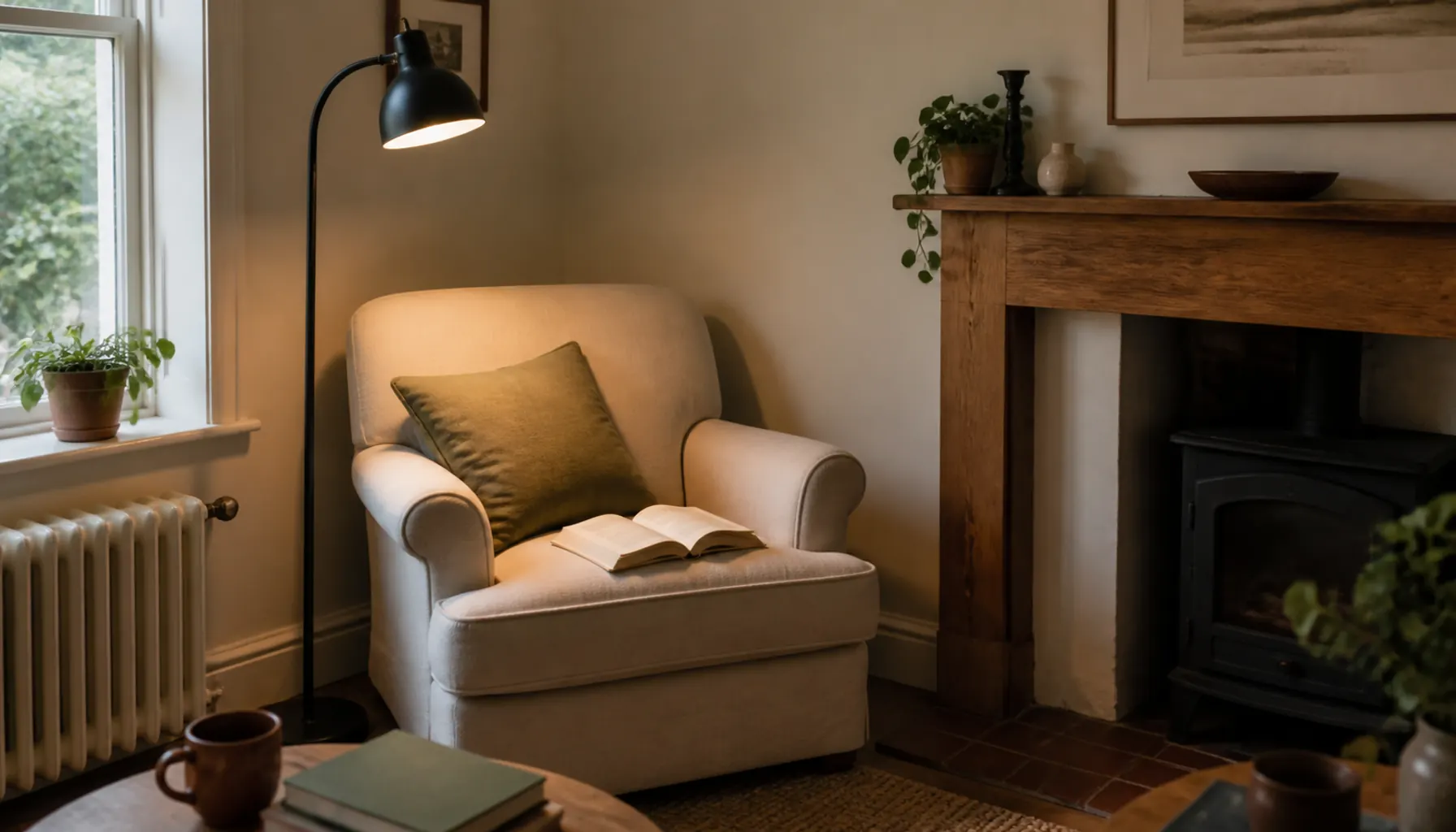
This is the most important decision in the whole nook. Light for reading should come from beside and slightly behind your shoulder, with the bottom of the shade above your eye level when seated. The light then falls across the page while the shade hides the bulb. Move that lamp in front of you and you get glare; put it across the room and your own body shadows the book.
A floor lamp with an adjustable arm is the easiest fix, since you tune the position once and leave it. A tall table lamp works too, if the shade clears your eyeline. Keep the bulb warm and dimmable. If the whole room reads flat and chilly, the cause is probably on our list of lighting mistakes that make rooms feel cold.
Idea 3: Size the Side Table for a Mug and a Book
The side table is where small nooks get greedy. A wide table eats the floor you needed for the chair and turns into a landing pad for mail and remotes. Aim for a surface that holds a mug, a closed book, and your glasses, and nothing more.
Height matters more than width. Roughly level with the chair arm means you can set a cup down without looking or leaning. Too low and you reach down every time; too high and the mug sits in your sightline. A C-table that slides its base under the chair works when the floor is tight, and a small stool does the job for nothing while you decide. A stone or sealed wood top survives coffee rings better than raw timber.
Idea 4: Add a Footrest and Fill the Lower Back Gap
Before replacing a chair that feels wrong, try raising your feet. An ottoman or low stool lifts the knees, opens the hip angle, and shifts weight off your tailbone, often the real reason a chair gets uncomfortable at the thirty-minute mark. It also fixes a too-deep seat, since your thighs no longer need to reach the front edge.
The second cheap fix is a small firm cushion in the hollow of your lower back. Most chairs carry a curve that suits nobody in particular, and a bolster or folded wool throw fills the gap so your spine stops holding itself up. Choose dense over soft; a feather cushion compresses to nothing within a minute.
Idea 5: Turn a Window Seat or Bay Into the Nook
A bay window is the one place where the nook is already built, but daylight cuts both ways. With the window behind you, light comes over your shoulder onto the page, which is ideal. Facing the glass, you read against a bright background and your eyes fight the contrast. If the bay allows only one orientation, angle the chair or plan on a blind you can drop.
Existing sills sit hard and shallow. A cushion cut to the depth of the ledge, firm rather than squashy, turns a perch into a seat, and bolsters against the side reveals give your back something. Add a lamp anyway, or the seat is useless after dark. Renters can do all of this with no fixings.
Idea 6: Use the Slope Under the Staircase
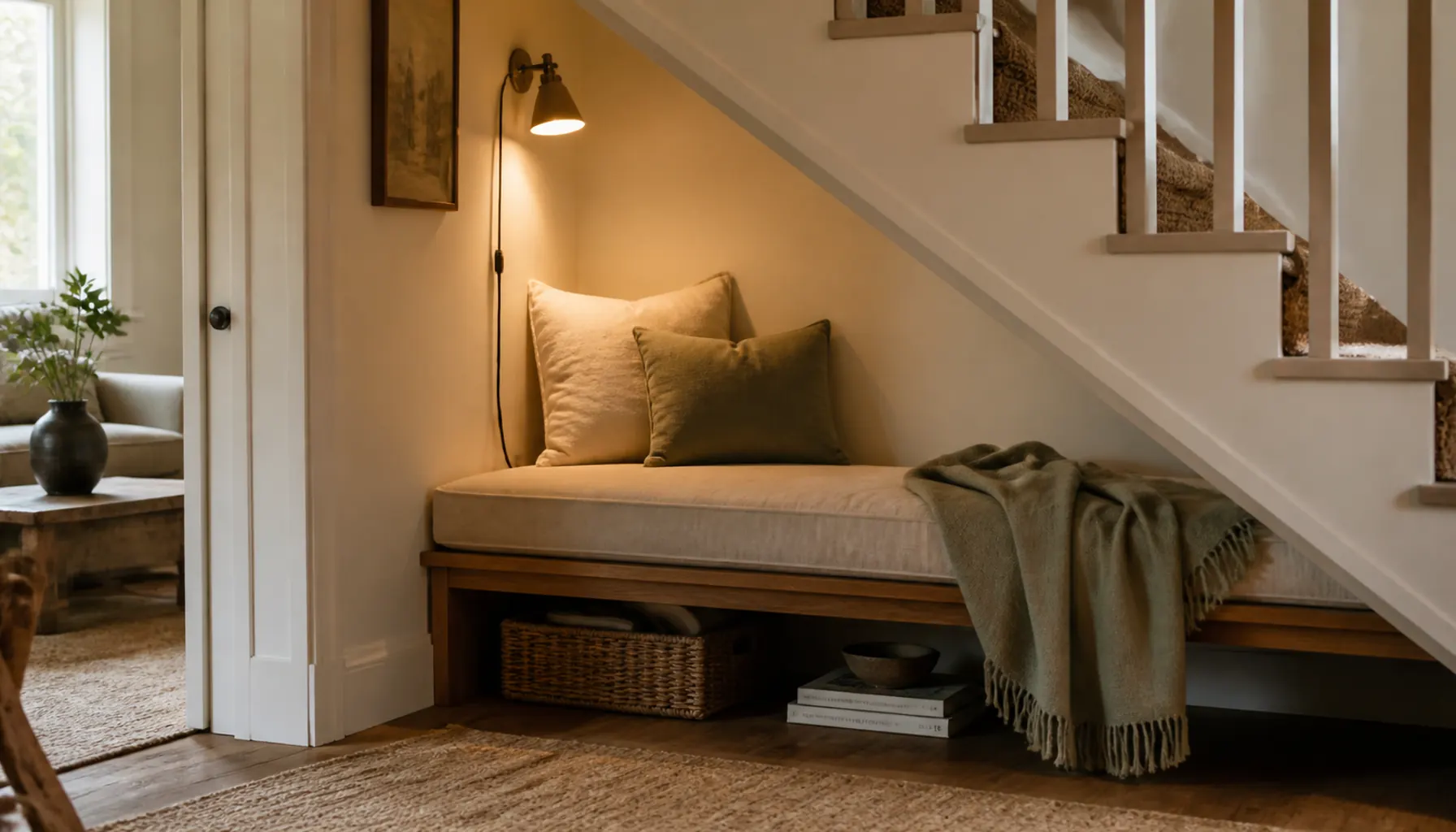
Understair space suits a nook because the headroom problem disappears once you are seated. The rule: put your head where the ceiling is highest and your feet where it is lowest, which usually means facing out into the room with your back to the tall end of the slope.
Since the volume is already three-quarters enclosed, keep the furniture low. A cushioned bench reads better than a tall wingback fighting the diagonal line above it. Wiring a light here is the usual sticking point, so a plug-in wall light or a clamp lamp on a fixed shelf saves an electrician. Paint the recess a shade deeper than the surrounding wall and it stops looking like leftover space.
Idea 7: Convert a Closet or Shallow Alcove
Take the door off a small closet, or find a shallow alcove beside a chimney breast, and you have a nook with three walls already done. The depth decides the format. A closet deep enough for a person to sit sideways takes a bench across the back; a shallow alcove takes a chair pushed into it, with the walls doing the enclosing.
Two moves make this look deliberate rather than improvised. Paint the interior a deeper tone than the room so the recess reads as its own pocket, the effect described in these paint tricks that change a room. Then add one shelf at shoulder height for a lamp and a couple of books. Resist filling the walls with shelving; if you do want built work, our guide to built-in cabinetry covers what that involves.
Idea 8: Choose the Bedroom Corner or the Living Room Corner Deliberately
These two locations behave differently, and picking the wrong one is why some nooks sit unused. A bedroom corner is quiet and private, but it competes with the bed. If you can read lying down four steps away, the chair becomes a laundry shelf. It works best when the bedroom is shared and one person wants to stay up, or when the room has real daylight and you read in the morning. Tight bedroom layout is its own puzzle, covered in these small bedroom ideas.
A living room corner gets used more during the day and takes pressure off the sofa, but it sits in traffic and in earshot of the television. In a small shared living room, put the nook in the corner furthest from the door and the screen, ideally one that keeps a window over your shoulder.
Idea 9: Keep Blankets and a Few Books Within Arm's Reach
A nook needs a blanket and a handful of books nearby, not a library. Keep what you are reading and the next two or three titles within reach, and let the rest live elsewhere. Stacks that grow past that point become a chore to look at.
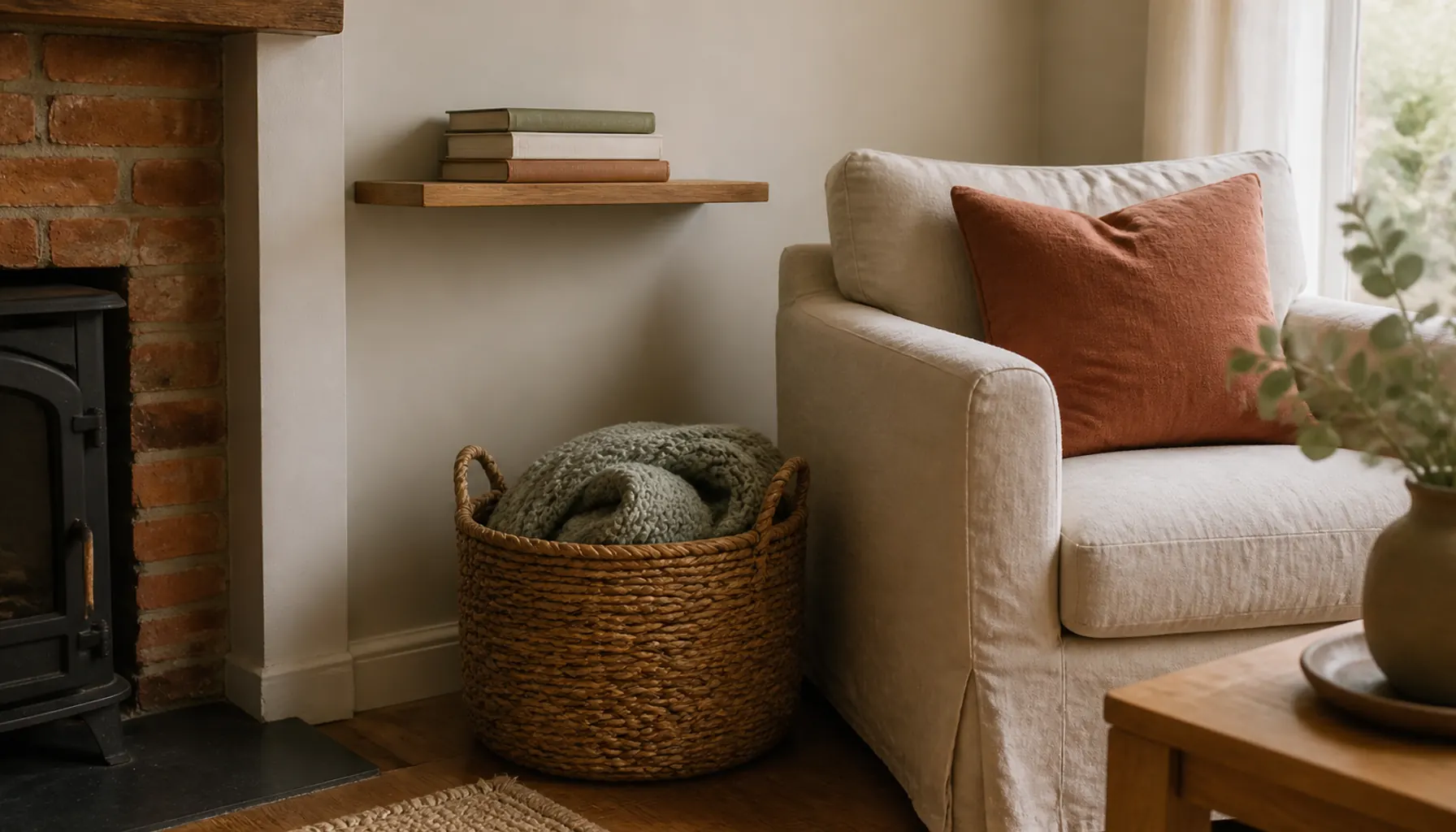
A basket beside the chair holds a throw and a book or two for almost nothing. A picture ledge or magazine rack hung at arm height does the same without using floor space, which matters when the chair already fills the corner. For the throw, a chunky knit or washed linen reads warmer against a smooth chair than another smooth fabric would, and mixing textures is doing that work rather than the color.
Idea 10: Build Enclosure in an Open Room Without Walls
A chair alone in the middle of an open plan never feels like a nook, because nothing tells you where the nook ends. Three cheap moves create that boundary. Put a small rug under the chair so the floor changes underfoot, and let it read as a defined patch rather than a floating mat; sizing a rug properly keeps it from looking like an accident.
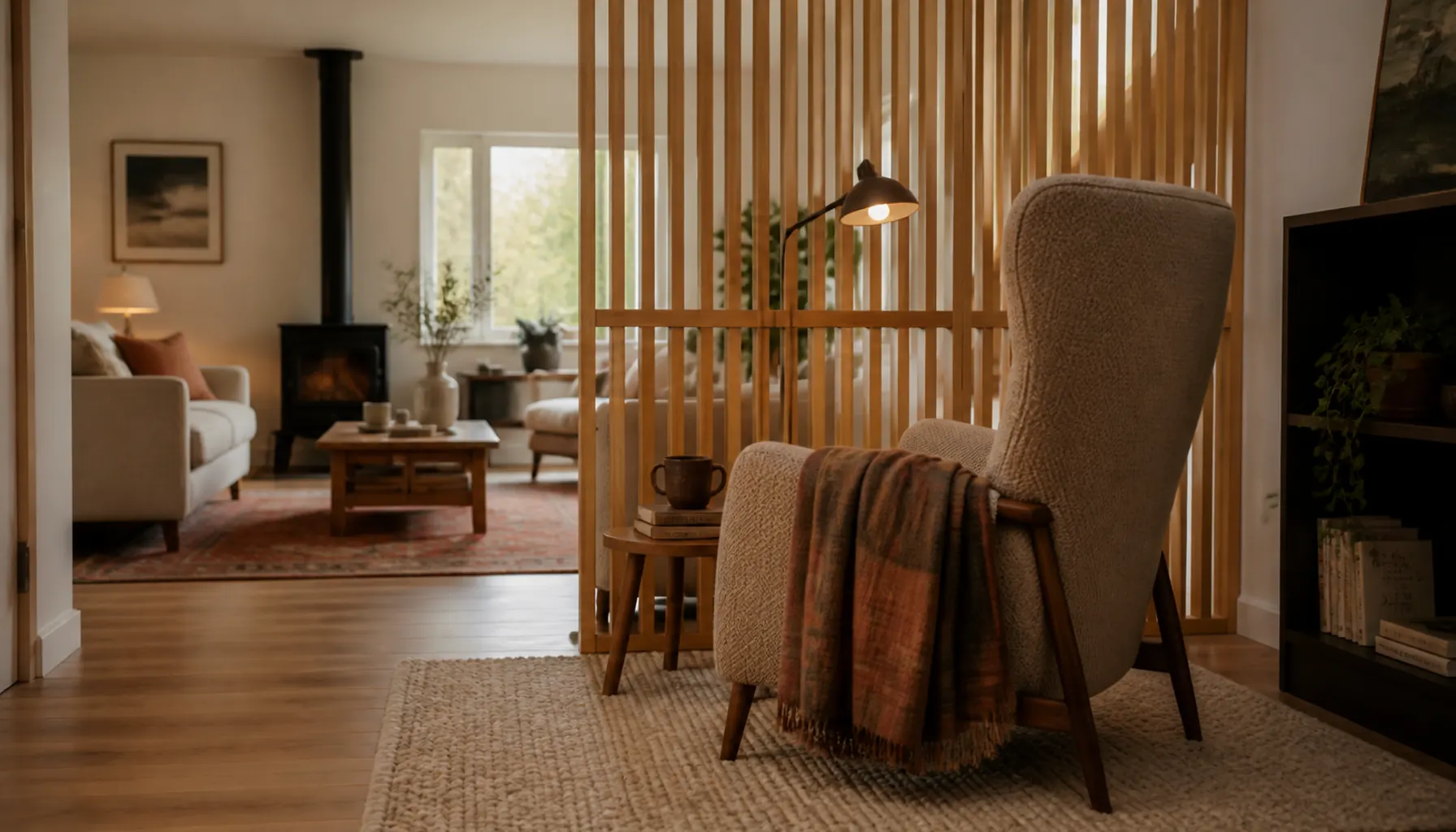
Turn the chair so its back faces the busiest part of the room. A high back does real work here, blocking the sightline behind you so your brain stops tracking movement. Then add one vertical element on the open side: a tall plant, a bookcase turned end-on, or a floor lamp with presence. Two anchors and a rug are enough. A fourth element starts rebuilding the clutter you were escaping.
Idea 11: Plan for Sound and Interruption
Reading breaks on noise before it breaks on discomfort. The nook wants soft surfaces around it, because bare walls and hard floors bounce voices and television straight into the corner. A rug, a lined curtain nearby, an upholstered chair, and a throw take the edge off those reflections.
Position helps as much as material. Keep your back to the walkway rather than facing it, so people passing do not catch your eye every time. If the corner opens straight onto a busy zone, a wooden screen or open room divider blocks the sightline while still letting light through, which suits an open room better than a solid partition.
Idea 12: Test the Nook Against Where You Already Read
Here is the honest test, and it costs nothing. Where do you read now? If the answer is the left end of the sofa or propped up in bed, that tells you something about light, back support, and privacy that styling will not override. Build the nook near those conditions, or fix the reason the current spot wins.
Give a new nook two weeks before committing money to it. Build a temporary version with a chair you own, a lamp dragged in from another room, and a stool as a table. If you use it, the corner works and you can spend on the chair. If you avoid it, check the light first, then the seat, then the noise. An unused nook is almost always failing on one of those three, not on decoration.
Common Mistakes to Avoid
- Lighting the corner instead of the page. A pendant above the chair looks tidy and drops light on your head, not your book.
- Choosing the chair for the photograph. Sculptural shapes with shallow reclined seats and low arms are the usual offenders.
- Letting the side table grow. Once it holds a lamp, a plant, a candle, and a coaster, there is nowhere for the mug.
- Putting the nook where you already sit for something else. A chair that doubles as the spot where bags land keeps being that spot.
- Sealing the corner too tightly. A nook with no daylight and no view out reads as a cupboard, and it gets abandoned.
Expert Tips for Pulling the Nook Together
Repeat one warm tone across the three soft elements in the corner, meaning the cushion, the throw, and the rug, and let the chair sit slightly apart from that family. The nook then reads as one pocket without looking matched.
Give the chair breathing room off both walls if the floor allows. A chair jammed hard into the angle looks stored rather than placed, and a couple of inches of clearance changes that.
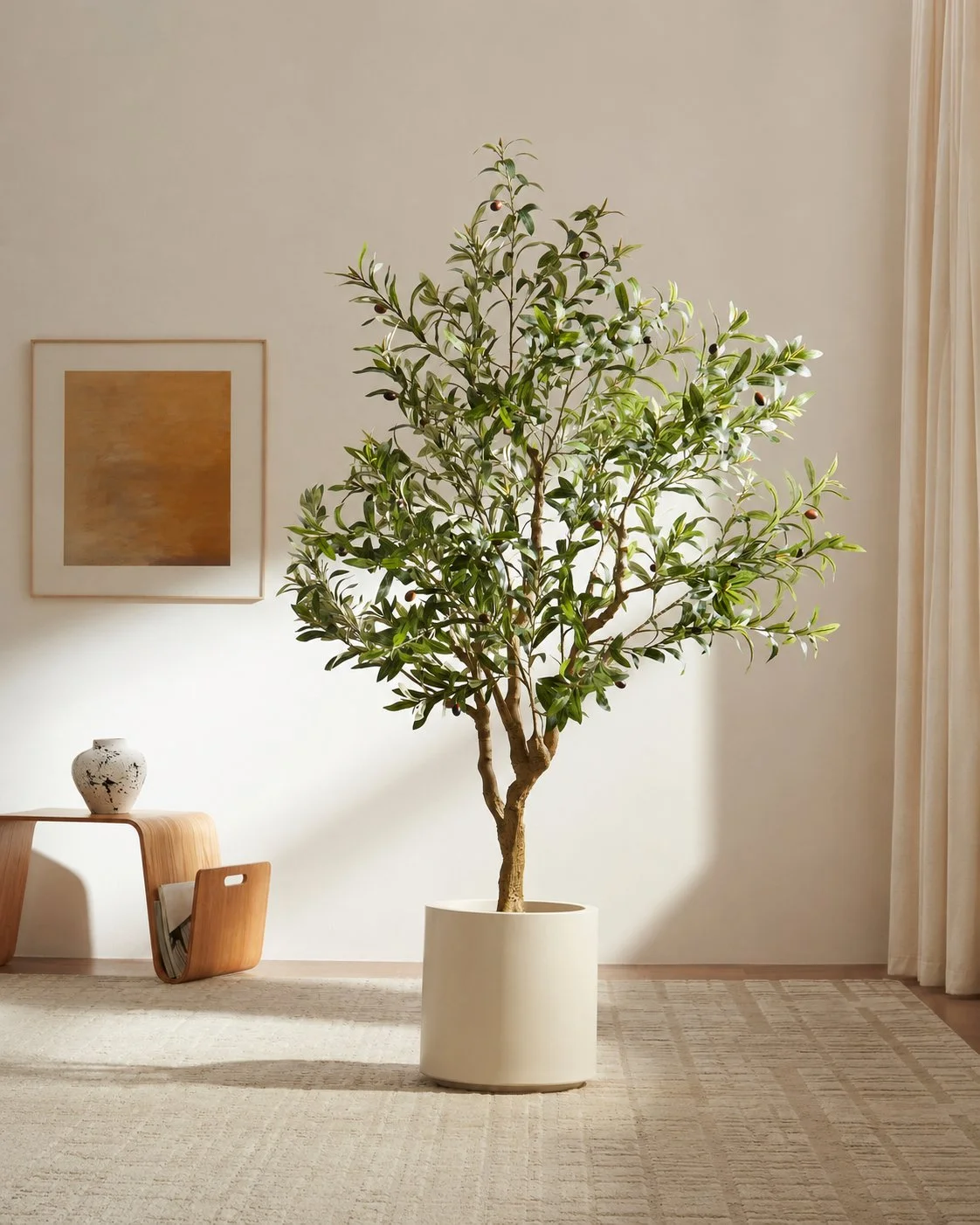
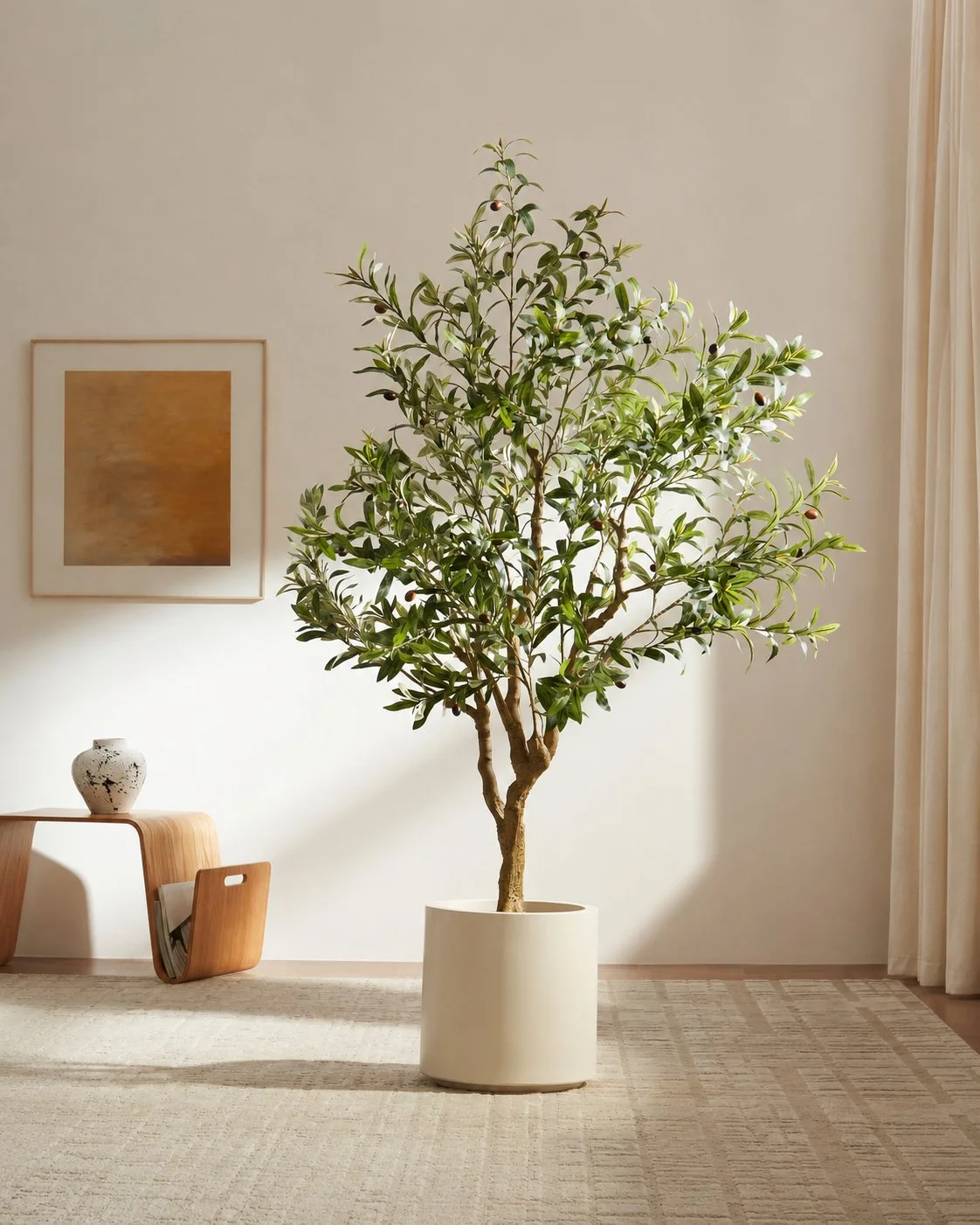
Keep the tallest object at the open side of the nook and the lowest against the wall. That gradient makes a small corner feel deliberate instead of crowded, and one tall plant is a cheap way to get it. For more on positioning greenery around furniture, these indoor plant styling ideas go further than a nook needs.
Frequently Asked Questions
How much space does a reading nook actually need?
Enough for a chair, a small surface, and a lamp base, which in practice means a corner rather than a room. If you can walk past the chair without turning sideways and the door still opens, the corner is big enough. Depth matters more than width, since a chair pushed into a shallow niche still needs room for your feet or an ottoman in front of it.
What kind of lamp is best for a reading nook?
A floor lamp with an adjustable head or a swing arm, positioned beside and slightly behind your shoulder. The adjustability is the point: you can aim it at the page rather than the wall. A tall table lamp works if the shade sits above your eyeline. Warm bulbs feel better in the evening, and a dimmer lets the same lamp serve daytime and night.
Can you make a reading nook in a rental?
Yes, and most of these ideas need no fixings. A chair, a plug-in floor lamp, a rug, a basket, and a loose window seat cushion cover almost everything. Skip the hardwired light and the painted alcove, or check whether paint is allowed and can be returned to the original color when you leave.
How do I stop the nook from becoming a dumping ground?
Give it a job and keep the surface small. A side table that only fits a mug and a book physically cannot hold a laundry pile, and a chair with a cushion and throw already on it is less inviting to stack things on. If the corner still collects clutter, it is usually a sign the nook is not being used for reading and something upstream needs fixing.
Where to Start
Start with the light, because it is free to test and it is the most common reason a nook fails. Move a lamp you own to a spot beside and slightly behind your shoulder, sit down with a book, and see whether the page brightens. Then work on the seat: try an ottoman and a firm cushion before deciding the chair is wrong.
Once you know the corner gets used, spend on the chair and only the chair. That one piece decides whether you stay for an hour, and everything else in the nook can stay cheap.
One useful home email a month
Real ideas to make your home work better. No spam, easy unsubscribe.