Mixing Textures: A Beginner's Guide
How to layer texture with fabric, wood, metal, and ceramics without making the room busy.

· 4 min read
Most people think about choosing a color palette first when they decorate, then pick furniture, then wonder why the room still feels flat. The missing piece is usually texture. It works quietly in the background, and once you learn to notice it, you cannot unsee it.
Texture is the quiet part of decorating
Texture is why two beige rooms can feel completely different. One can feel cold and empty, the other warm and lived in, even though the paint chip is the same. The difference is in the surfaces. Linen, wool, clay, wood, glass, and metal all catch light in their own way. A smooth surface bounces light back at you, so it reads as bright and a little hard. A rough or matte surface scatters that light, so it feels soft and settled.
This matters because your eye reads texture before you can even name it. When a room has only one kind of surface, everything smooth or everything glossy, your brain registers it as monotonous, and you feel it as boredom or unease without knowing why. Layering different textures gives your eye small places to rest and small moments of interest. That is what makes a space feel finished rather than furnished.
Start with soft plus rough
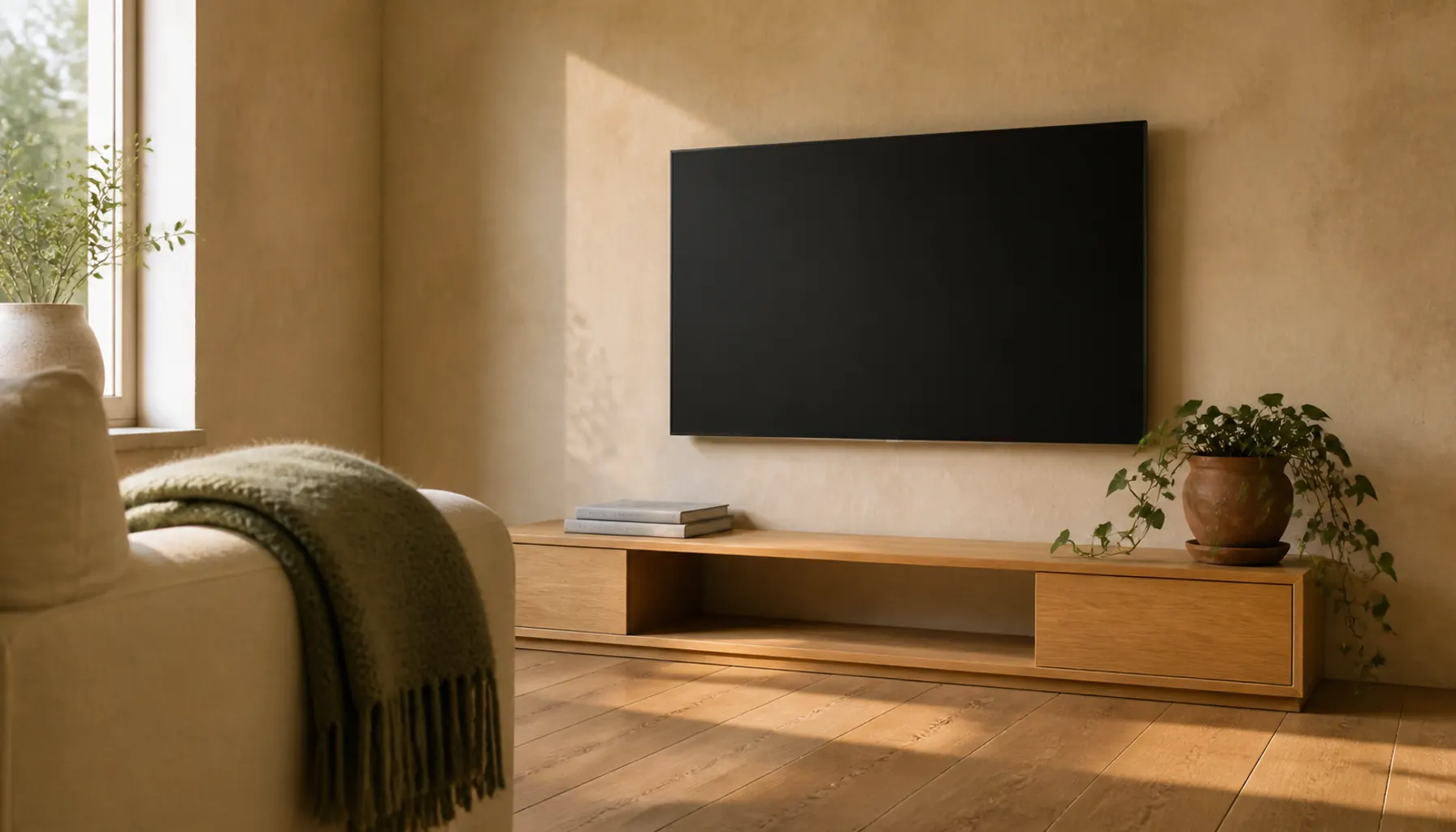
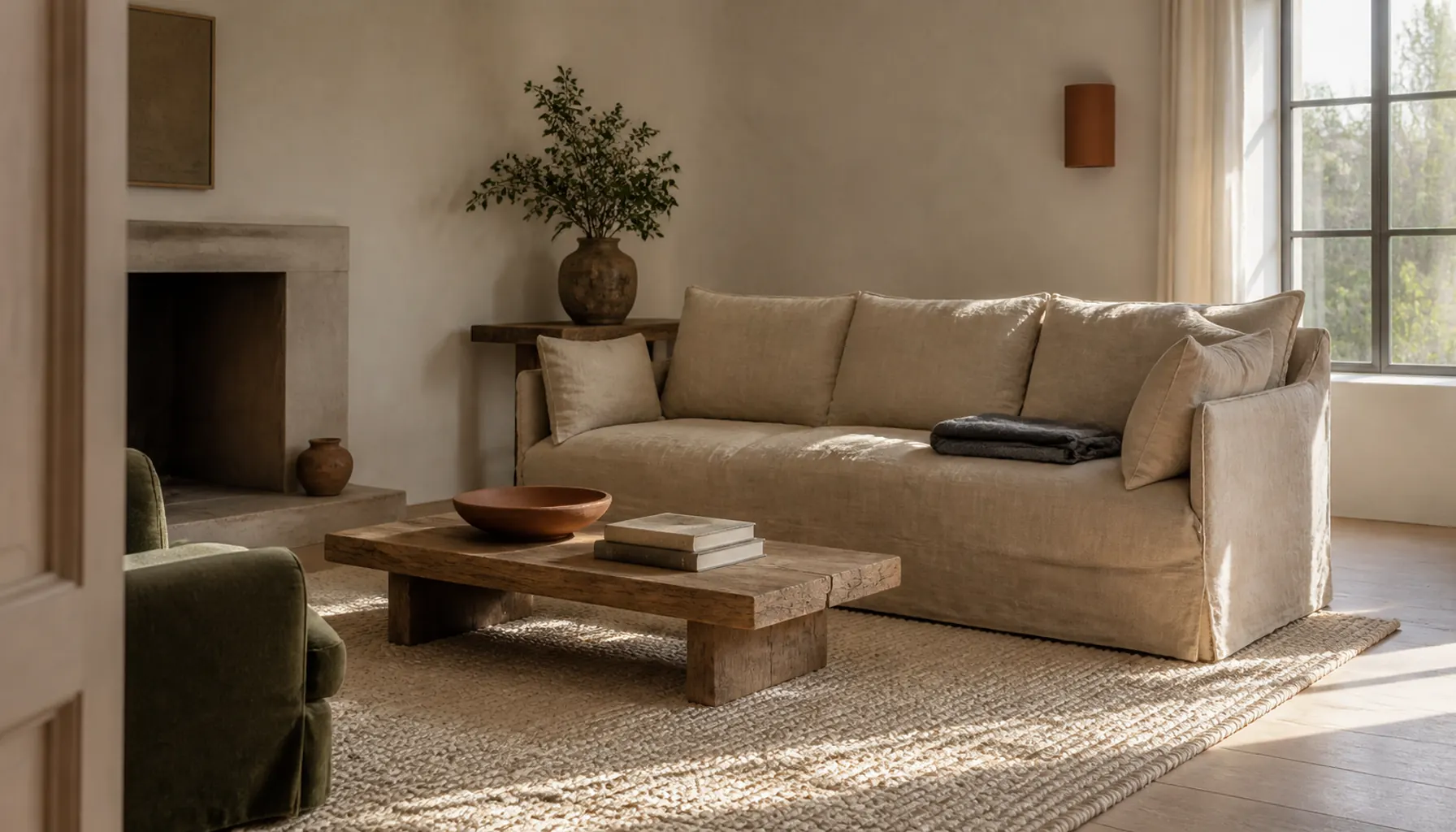
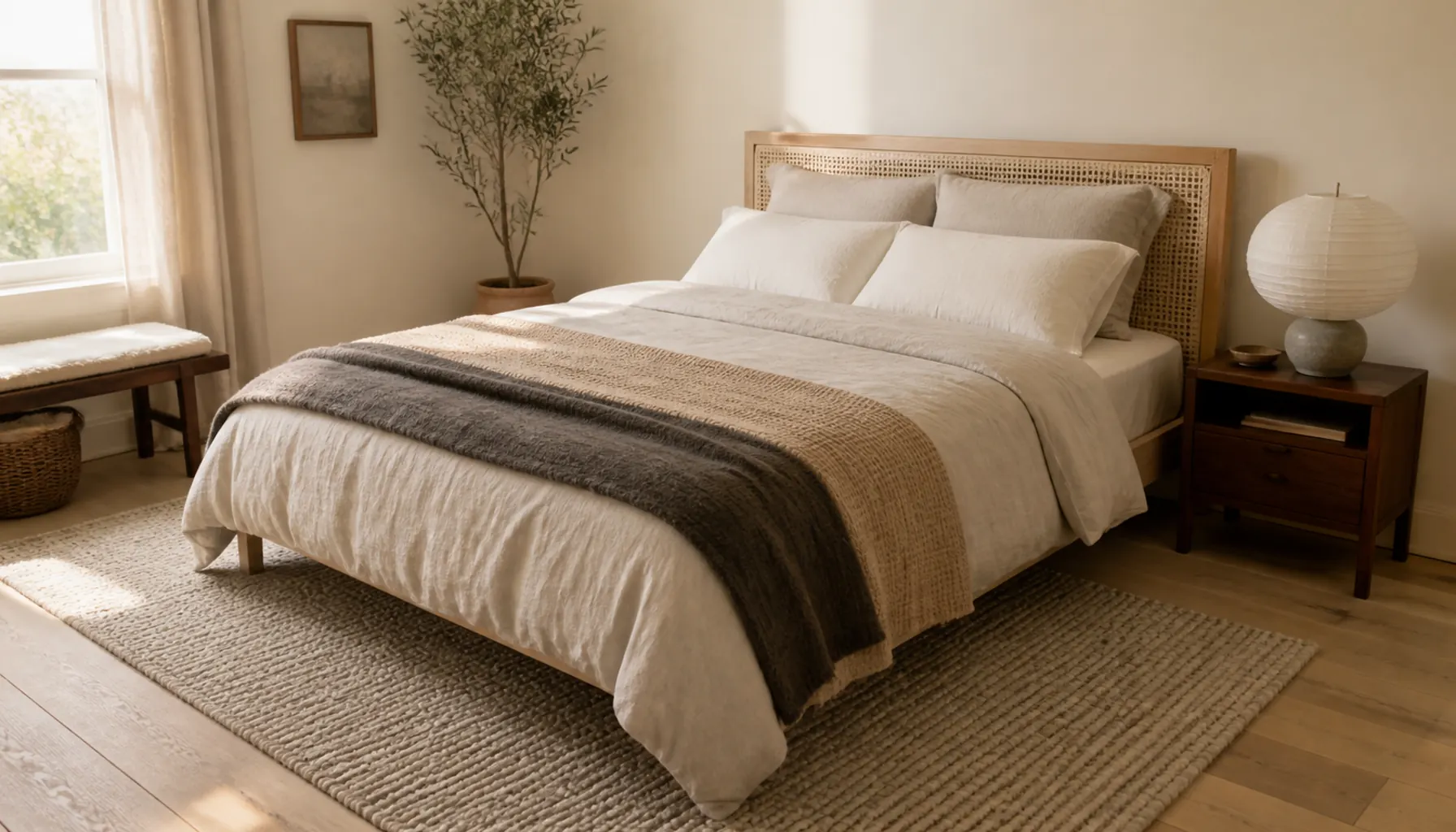
The easiest place to begin is contrast. Look at what you already have and name its texture. If your room has a smooth sofa and smooth painted walls, it is leaning heavily in one direction, so add something rougher to balance it. A woven basket, linen curtains, a jute rug, or a handmade ceramic bowl will all do the job.
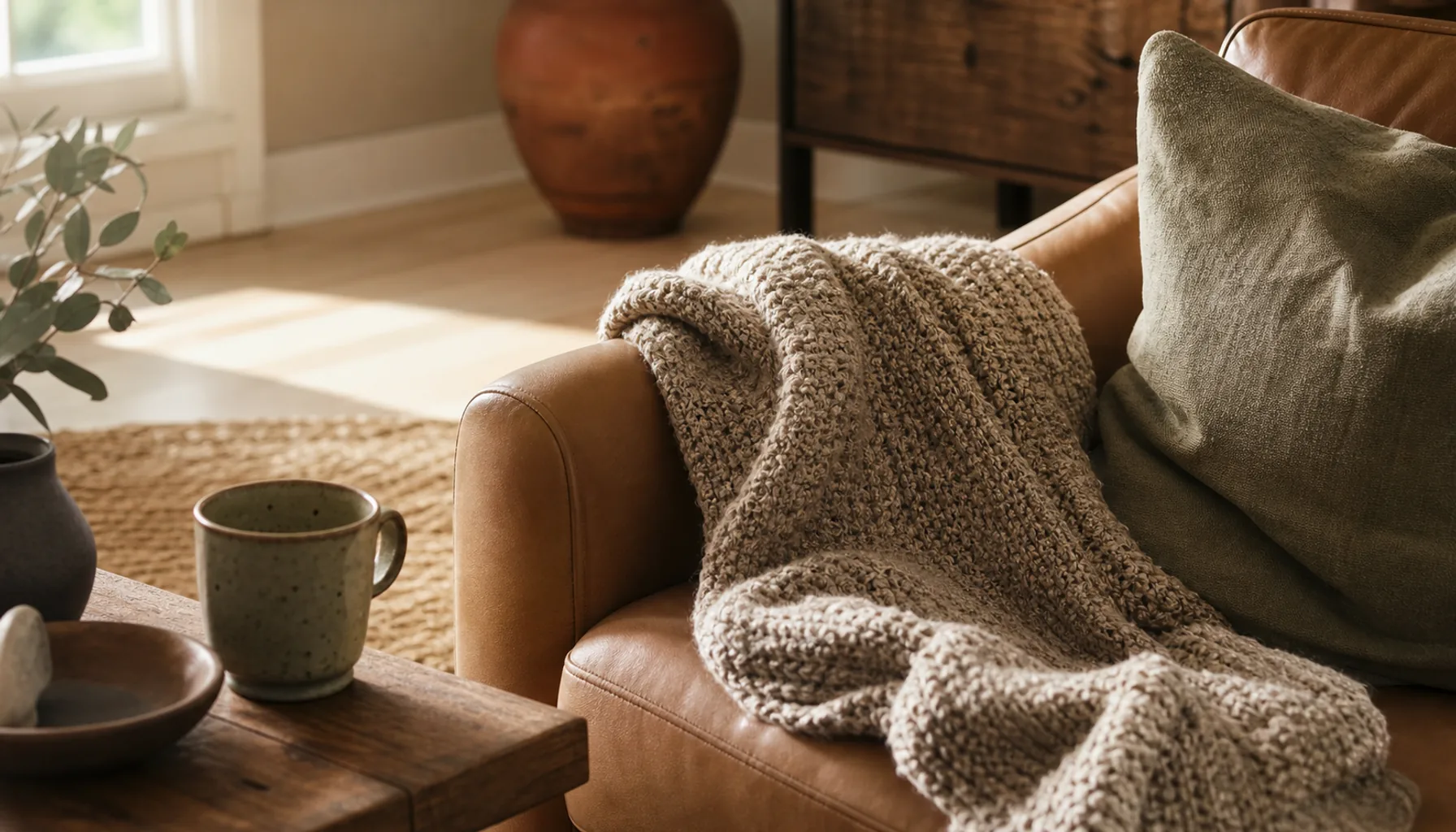
It works because contrast makes each surface more noticeable. Put a nubby wool throw on a sleek leather chair and both suddenly look better, because each one shows off what the other is not. You do not need much. One rough element in a smooth room, or one smooth element in a rustic one, is often enough to break the sameness.
A few reliable pairings to try:
- A smooth leather or velvet sofa with a chunky knit throw.
- Sleek cabinets with a woven runner or a rough stone board.
- Crisp painted walls with a raw wood shelf or a coarse linen curtain.
Use shine carefully
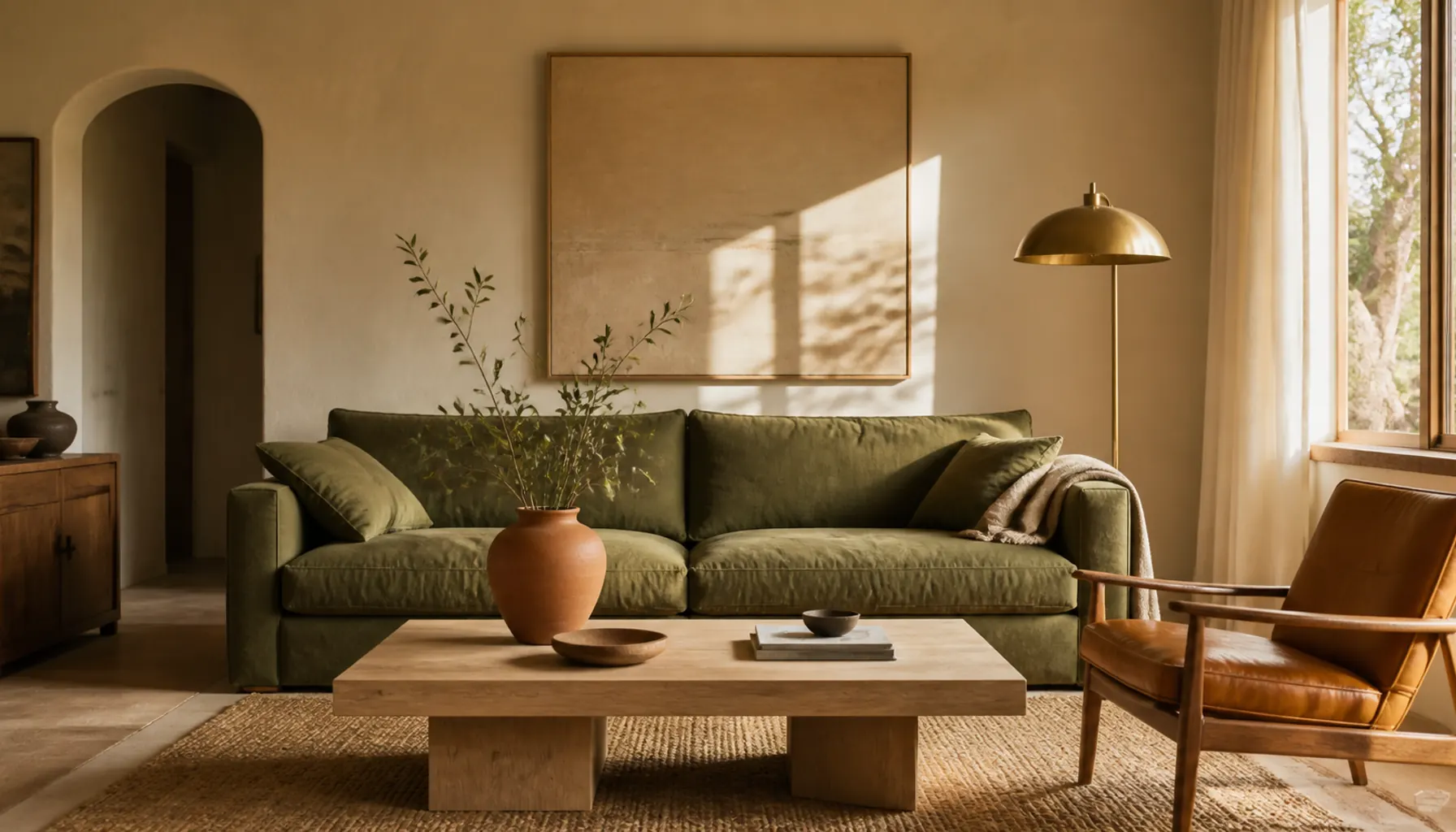
A little shine wakes up a warm room. It reflects light, adds a spark of contrast, and keeps things from feeling too flat and earthy. But shine is powerful, so a small amount goes a long way. Too much of it makes a room feel staged, like a showroom no one actually lives in.
Try one brass lamp, one glass vase, or one glossy tray rather than all three crowded together. Give each shiny piece a little breathing room so it feels intentional. A good rule of thumb is to let shine be the accent, never the main event. If you counted your surfaces, matte and rough textures should easily outnumber the glossy ones.
Repeat the natural materials
Once you have some contrast, you need a thread to tie it all together, and repetition is that thread. Wood legs on a chair, a wooden frame, and a wooden bowl can quietly connect a room from one corner to another. The same works with woven fibers, with warm metals, or with pottery in a warm clay tone.
Notice that repetition matters more than matching perfectly. The woods do not need to be the same species or the same stain. In fact, slight differences feel more natural and collected than a matched set. What your eye picks up is the family resemblance, not the exact match. This is how you get a layered, gathered-over-time look instead of a room that feels bought all at once.
Watch the scale of your textures
Texture has size as well as feel. A tight, fine weave reads almost as smooth from across the room, while a loose, chunky weave reads as bold and heavy. If everything is fine and delicate, the room can feel fussy. If everything is chunky and coarse, it can feel clumsy. Mixing scales, one large-grained texture with a couple of finer ones, keeps things balanced. Larger textures work well on bigger pieces like rugs and sofas, while finer ones suit smaller accents.
Let light do half the work
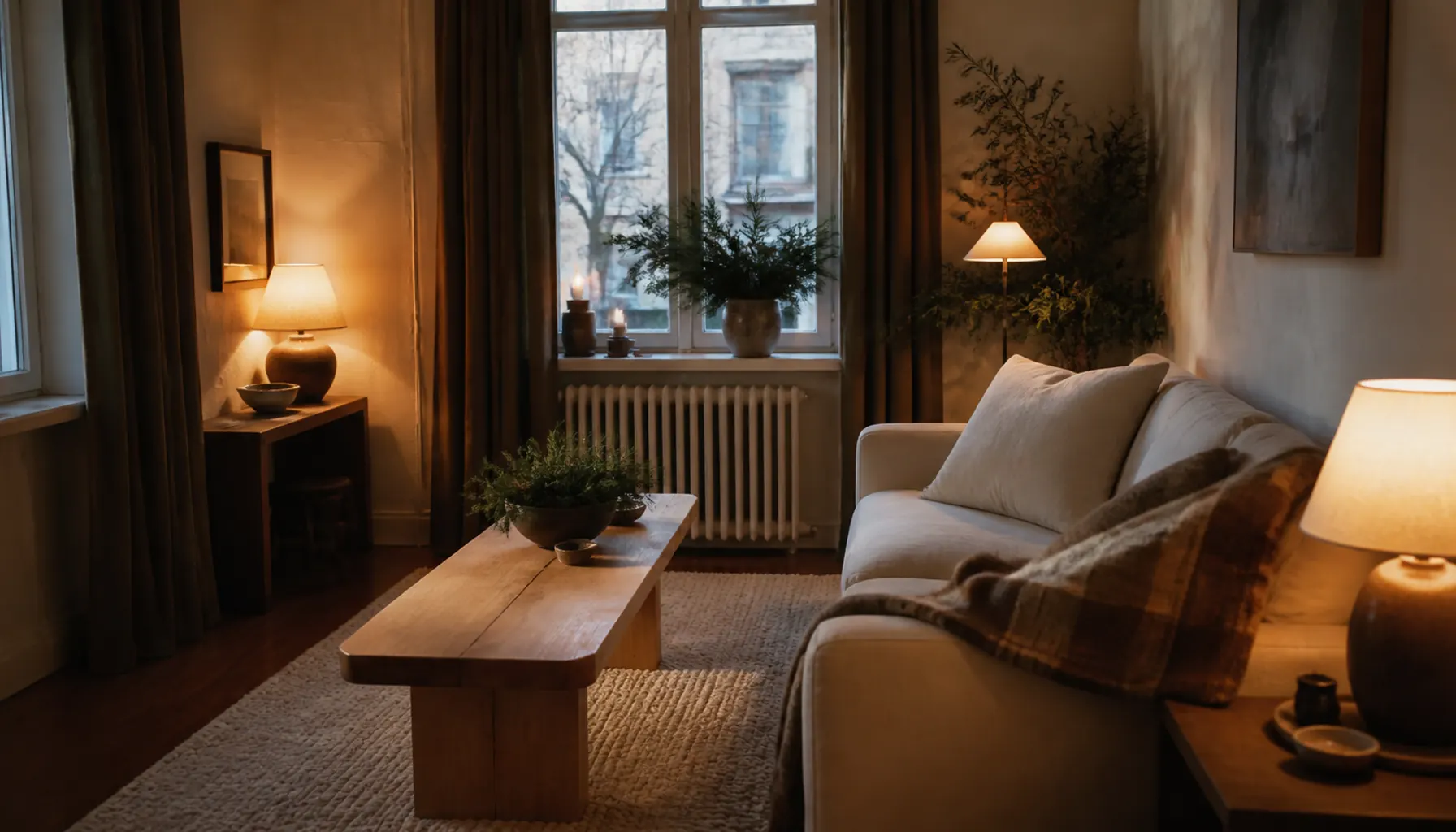
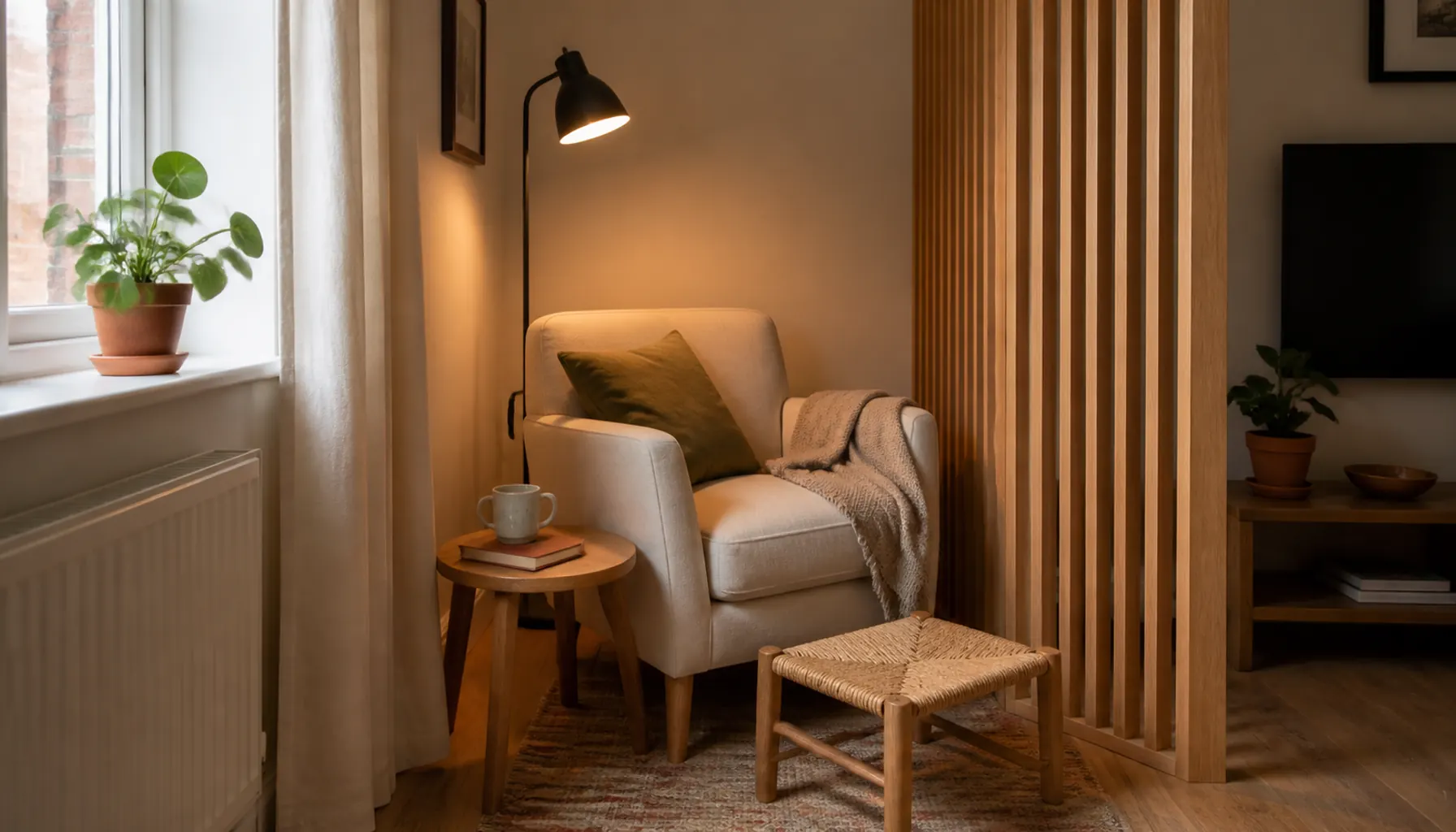
Texture and light are partners. Side light, from a window or a low lamp, rakes across a surface and reveals its grain, while the wrong overhead lighting flattens everything. So place your most textured pieces where they will catch light from the side, and use lamps to bring surfaces to life in the evening.
A simple texture checklist
When you are not sure whether a room has enough going on, run through this quick list. Aim to include most of these:
- Something soft.
- Something woven.
- Something matte.
- Something with a small amount of shine.
- Something living, like a plant or flowers.
If you can point to each one, your room probably has the layers it needs. Start small, add one texture at a time, and trust your eye. You will feel it settle into place long before you can explain exactly why.