Paint Tricks That Change a Room Completely
Small paint decisions that can shift proportion, mood, and focus without a full renovation.

· 4 min read
Paint touches every surface you look at, yet it asks for so little in return. You do not need to move a wall or replace furniture to make a room feel different. You just need to be more thoughtful about where the colour goes and why.
Paint the trim on purpose
White trim is not always the answer. It has become a default, and defaults are easy to stop noticing. When you match the trim to the wall colour, the edges of the room soften and the space feels calmer and larger, because your eye is not stopping at every doorway and skirting board. This works well in small rooms and bedrooms where you want a quiet, wrapped feeling.
A darker trim does the opposite, and that can be just as useful. Painting the trim a shade or two deeper than the wall frames the room and gives plain architecture more presence. A modest window suddenly looks intentional. Before you pick up a brush, ask yourself one question: do you want the edges to disappear, or to be part of the design? The answer tells you which direction to go.
Use colour to lower or lift the room
Ceilings are the most overlooked surface in the house, and they change how a room feels more than most people expect. A darker ceiling pulls the top of the room down and makes the space feel cosy and enclosed. That is exactly what you want in a bedroom, a dining corner, or a snug reading nook where intimacy is the point.
A lighter ceiling has the reverse effect. If your room feels low or a little heavy, keeping the ceiling brighter than the walls lets the eye travel upward and the space breathe. You can go further with the walls themselves:
- Paint the lower two thirds of a wall a darker tone and the top third lighter to make a tall, narrow room feel more grounded.
- Carry a single pale colour from the walls onto the ceiling to blur where one ends and the other begins, which makes a small room read as bigger.
None of this requires special skill. It only requires deciding what you want the room to do before you commit.
Try the door first
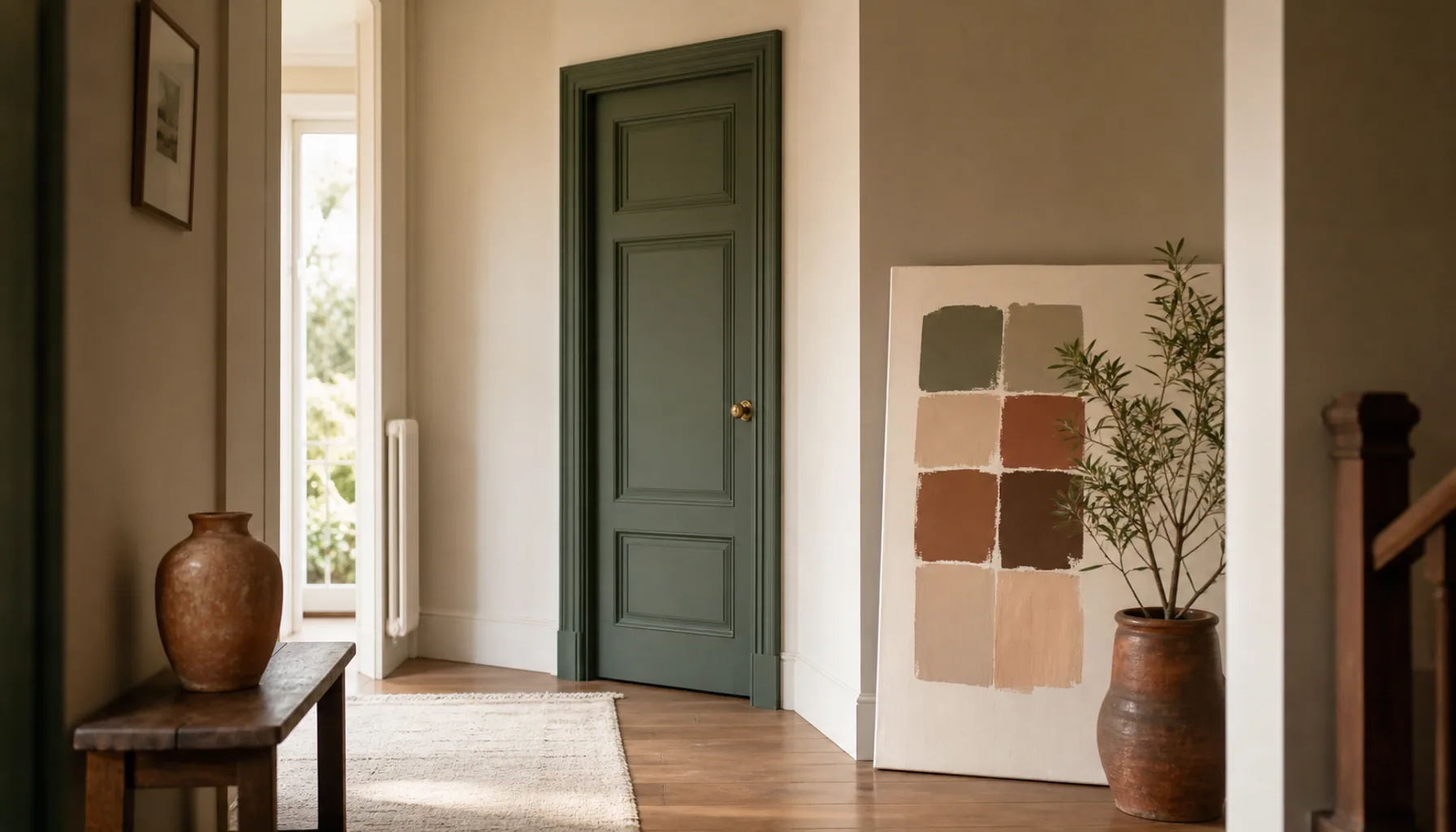
If a whole room feels like too much, start with a single interior door. Painting one door is a small job, it uses very little paint, and it is easy to undo if you change your mind. Yet a coloured door can carry a surprising amount of character. A deep green or a warm clay tone at the end of a plain hallway gives you something to look at and a hint of personality without repainting anything else.
Doors are also a low-risk way to test a colour you are still choosing but not ready to commit to across four walls. Live with it for a week. If you love it, you now know it works in your light and can use it somewhere bigger with confidence.
Sample larger than you think
Tiny swatches lie. A little square on the wall is surrounded by whatever colour is already there, and your eye reads it in that context rather than on its own. Colours also shift dramatically through the day as the light changes, warming up in the afternoon and cooling toward evening.
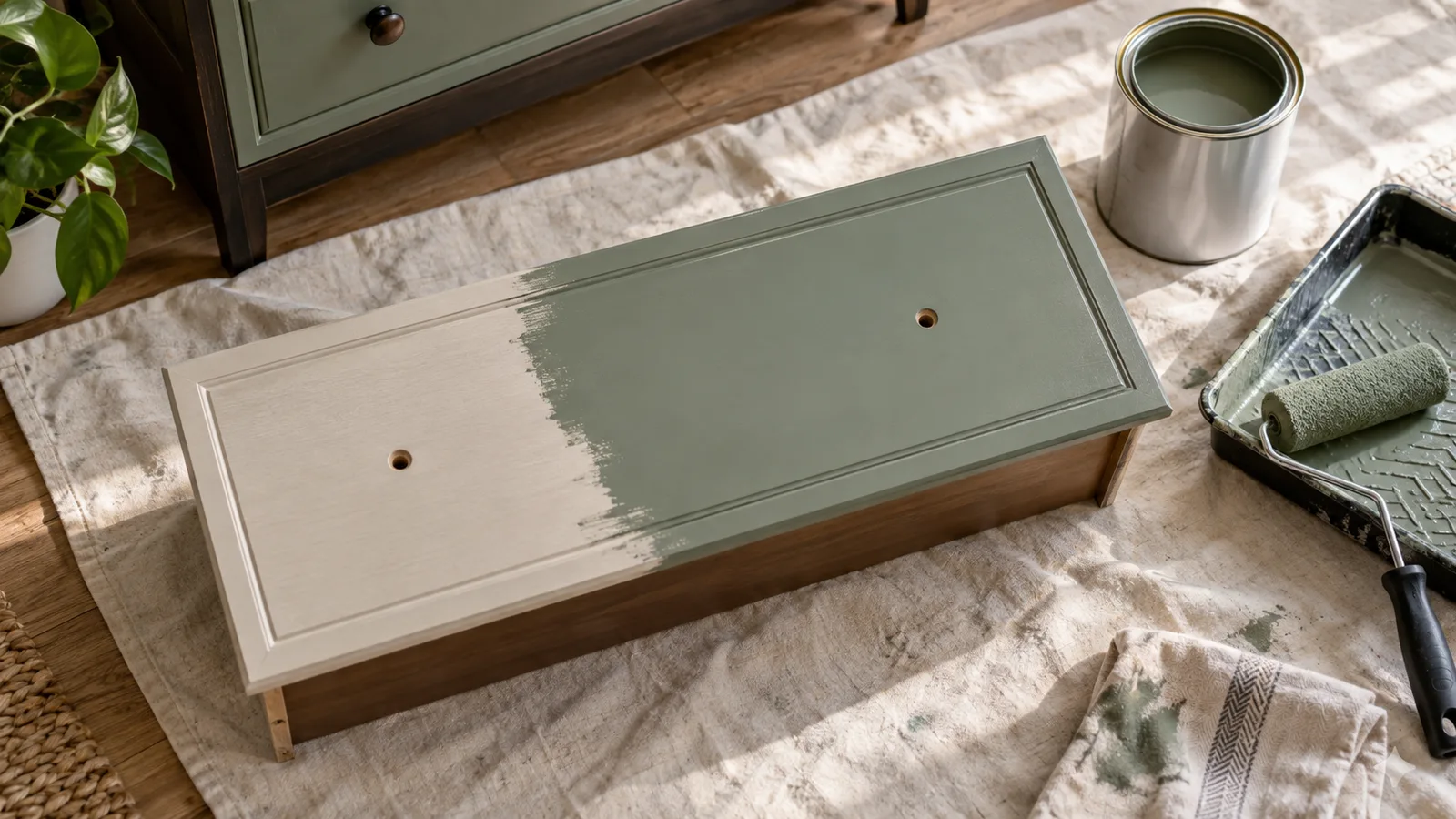
The fix is simple. Paint a large board with two coats so the colour is true. Then move that board around the room over a few days: hold it near the window, set it in the darkest corner, look at it in the morning and again at night under your lamps. A colour that looks perfect at noon can feel cold and grey after dark, and it is far better to learn that from a board than from a finished wall.
Prep is the difference
Most bad paint jobs are decided before the tin is even opened. The finish you get depends less on the paint than on the surface underneath it. Take the time to:
- Clean the walls so dust and grease do not stop the paint from gripping.
- Fill holes and small cracks, then sand them smooth once dry.
- Tape edges carefully and press the tape down firmly so paint cannot creep behind it.
- Use the right roller for your wall texture, and do not overload it.
None of this is glamorous, and all of it is tempting to rush. But a careful hour of prep is what separates a wall that looks freshly finished from one that looks patchy and tired within a season.
Start small and keep going
You do not have to plan the whole house at once. Paint one door, or one ceiling, or match one room's trim, and notice how it changes the way the space feels. It is often the cheapest step in a whole room refresh. The best paint decisions are rarely dramatic. They are small, deliberate choices that shift proportion, mood, and focus, and they add up to a home that feels considered rather than renovated.
One useful home email a month
Real ideas to make your home work better. No spam, easy unsubscribe.