11 No-Sew Fabric Projects for Beginners to Try This Weekend
No-sew fabric projects for curtains, pillows, a headboard, and more. Clips, glue, tape, and grommets stand in for stitching. Budget-friendly and renter-safe.
· 12 min read
You don't need a sewing machine to turn a few yards of fabric into real decor. Clips, fusible tape, fabric glue, grommets, and a hot glue gun can do almost everything a needle can, and most of these projects take under an hour. The trick is matching the right no-sew technique to the right object, because a method that works beautifully on a pillow will fall apart on a curtain. These 11 projects cover windows, seating, lighting, storage, and walls, each using a different way to secure fabric without a single stitch.
Key Takeaways
- Clips and grommets suit anything that hangs and moves, like curtains, because stitched hems can't compete with hardware for holding shape under weight.
- Fabric glue and fusible tape work best on edges that stay still, such as pillow seams and runner hems, not high-tension spots.
- A staple gun is the strongest no-sew option for anything stretched over foam or wood, like a headboard panel.
- Renters should favor removable hardware: tension rods, adhesive Velcro, and clip rings leave no permanent marks.
- Raw edges need a fray-check step, whether that's pinking shears, liquid seam sealant, or a folded hem tape edge.
- Match fabric weight to the technique. Heavy canvas won't hold to spray adhesive the way a light cotton will.
- Start with one small project before committing yardage to a headboard or wall piece.
11 No-Sew Fabric Projects Worth Trying
Idea 1: Clip-Ring Curtain Panels
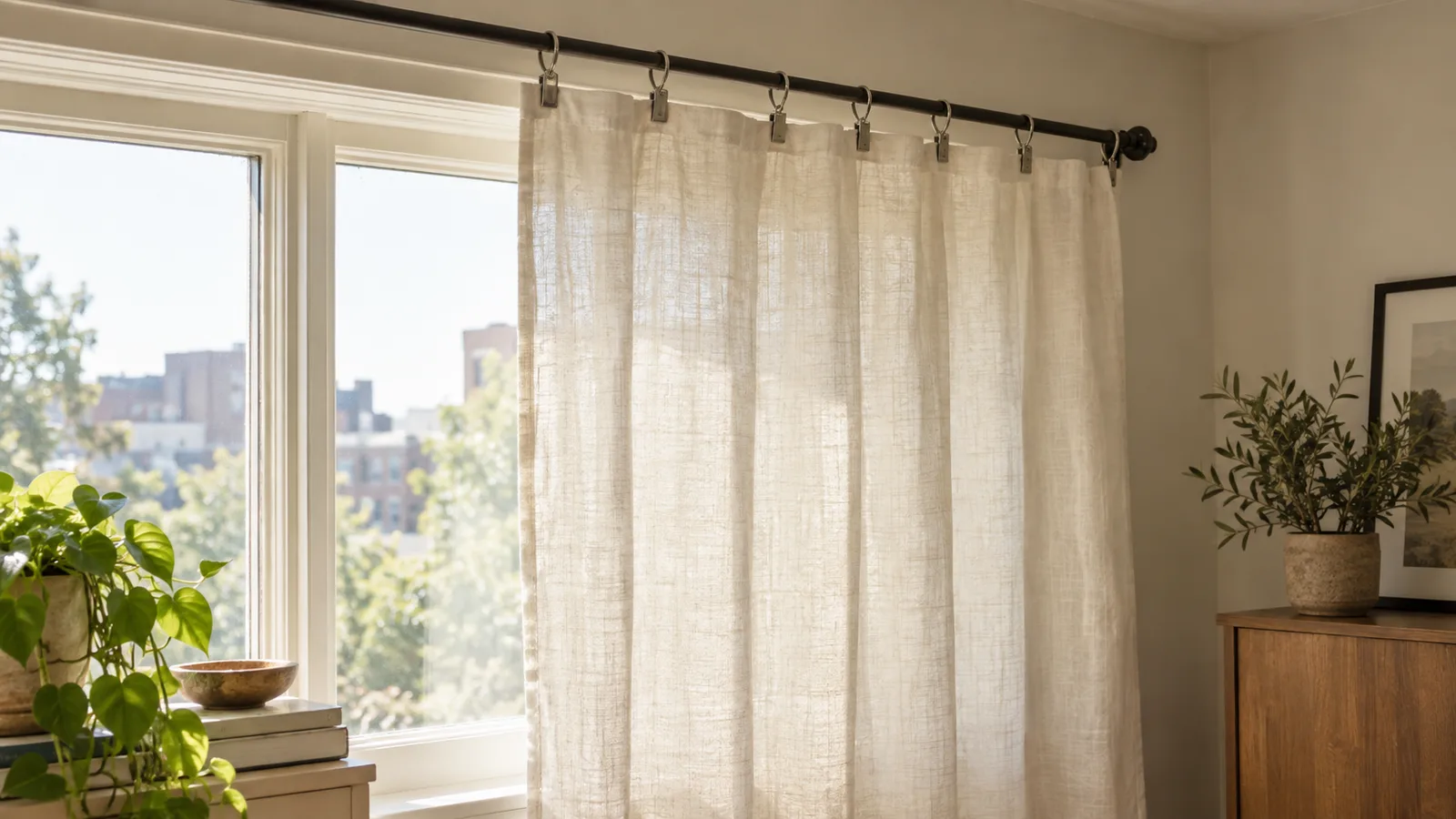
Skip the rod pocket entirely. Buy flat fabric panels, or cut and fray-seal your own, then hang them with curtain clip rings instead of stitching a sleeve at the top. The clips grip the fabric edge and slide along the rod, so the curtain moves the same way a sewn panel would.
Clips distribute the pulling weight across several points instead of concentrating it on one stitched seam, which is why hardware often outlasts stitching on anything that opens and closes daily. Choose rings with a wide clip mouth for heavier fabrics like linen or velvet.
If you're unsure what rod height or panel width to buy, our window treatments guide covers sizing before you cut anything.
Worth Avoiding: thin polyester panels sag out of clip rings within a season. Stick to mid-weight cotton or linen blends.
Idea 2: Fusible Hem Tape for a No-Fray Table Runner
Iron-on hem tape melts between two folded layers of fabric and bonds them under heat, giving you a clean, fray-free edge in the time it takes to run an iron down a table runner. No pins, no needle, no visible stitching.
Fold the raw edge under about half an inch, tuck a strip of the tape inside the fold, and press for the time listed on the package, usually 10 to 15 seconds per section. Let it cool flat before moving the fabric or the bond can shift.
This is the gentlest technique on this list, so it works only where the fabric stays flat and undisturbed, a table runner, a valance edge, a throw blanket border. It won't survive constant pulling or washing on a high heat cycle.
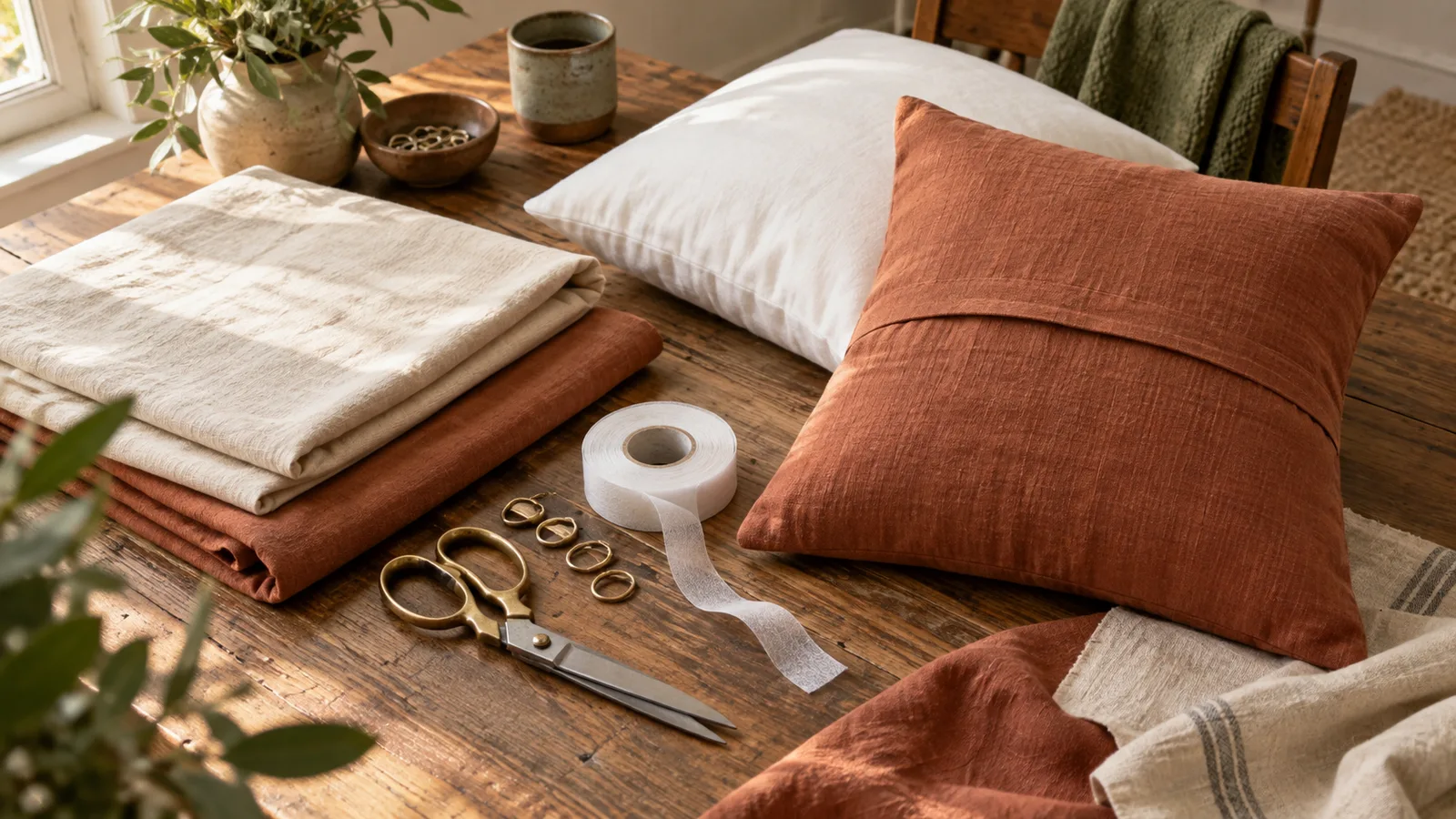
Idea 3: Fabric Glue Envelope Pillow Covers
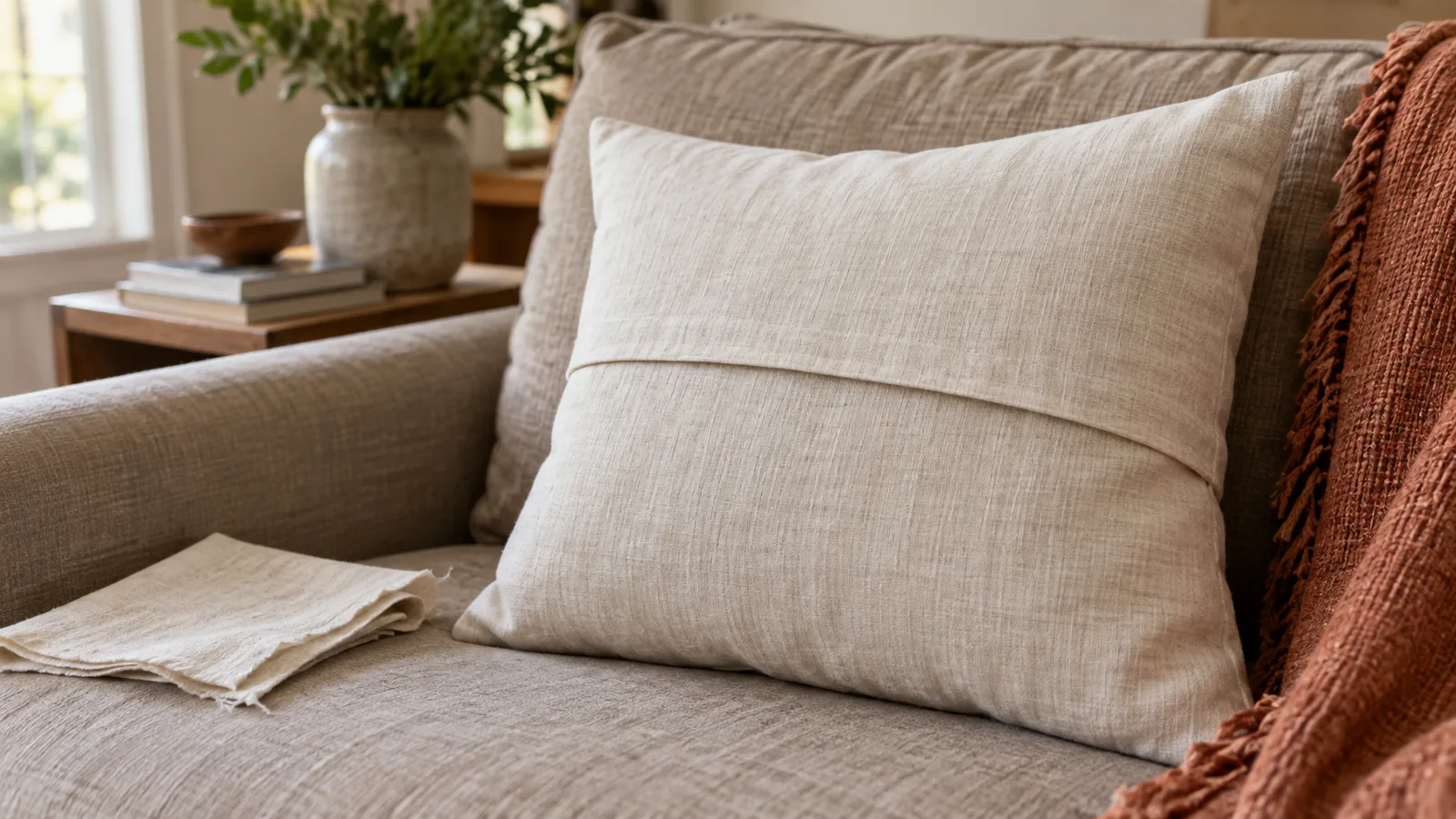
An envelope pillow cover is just one rectangle of fabric folded into thirds, with the overlapping back panel glued shut instead of stitched. Fold the top and bottom edges under first and glue them flat, then fold the whole piece into an envelope around the pillow insert and glue the overlap.
The envelope shape matters here: it lets you remove the insert to wash the cover, unlike a fully glued box. Use a flexible fabric glue rated for washing, not a rigid craft glue that will crack.
This is the fastest project on the list for a room refresh. If you're working through a full room on a set budget, see our real-budget room refresh plan for where pillow covers fit into the bigger picture.
Idea 4: Staple-Gun Upholstered Headboard Panel
Wrap a piece of plywood or MDF in batting, then fabric, and staple both layers to the back edge with a staple gun. This is the strongest bond on this list because staples grip the wood directly rather than relying on adhesive, which matters for something that gets leaned on nightly.
Pull the fabric taut on opposite sides before stapling, working outward from the center of each edge like tightening a drum skin, so the front stays smooth instead of puckering at the corners. Trim excess fabric close to the staple line and cover the raw edge with a strip of trim or leave it against the wall where it won't show.
For more headboard shapes and mounting options once you've got the basic panel down, our DIY headboard ideas roundup has variations for different budgets.
Idea 5: Furoshiki Knot Wrap for an Ottoman or Stool
Furoshiki is a Japanese fabric-wrapping method that uses knots instead of stitches or glue, and it works well for disguising a scuffed ottoman or plain stool. Lay a square of sturdy fabric over the piece, pull two opposite corners up and knot them tightly on top, then do the same with the remaining two corners at a slight offset so the knots don't stack.
The technique works because tension does the holding, not adhesive, so it comes apart just as fast when you want your fabric back or need to wash it. Choose a fabric with enough body to hold a knot shape, quilting cotton or midweight linen, not anything slippery like satin.
Budget Alternative: a flat bedsheet works as well as designer yardage for this project, since the knots hide any pattern mismatch at the corners.
Idea 6: Spray-Adhesive Lampshade Recover
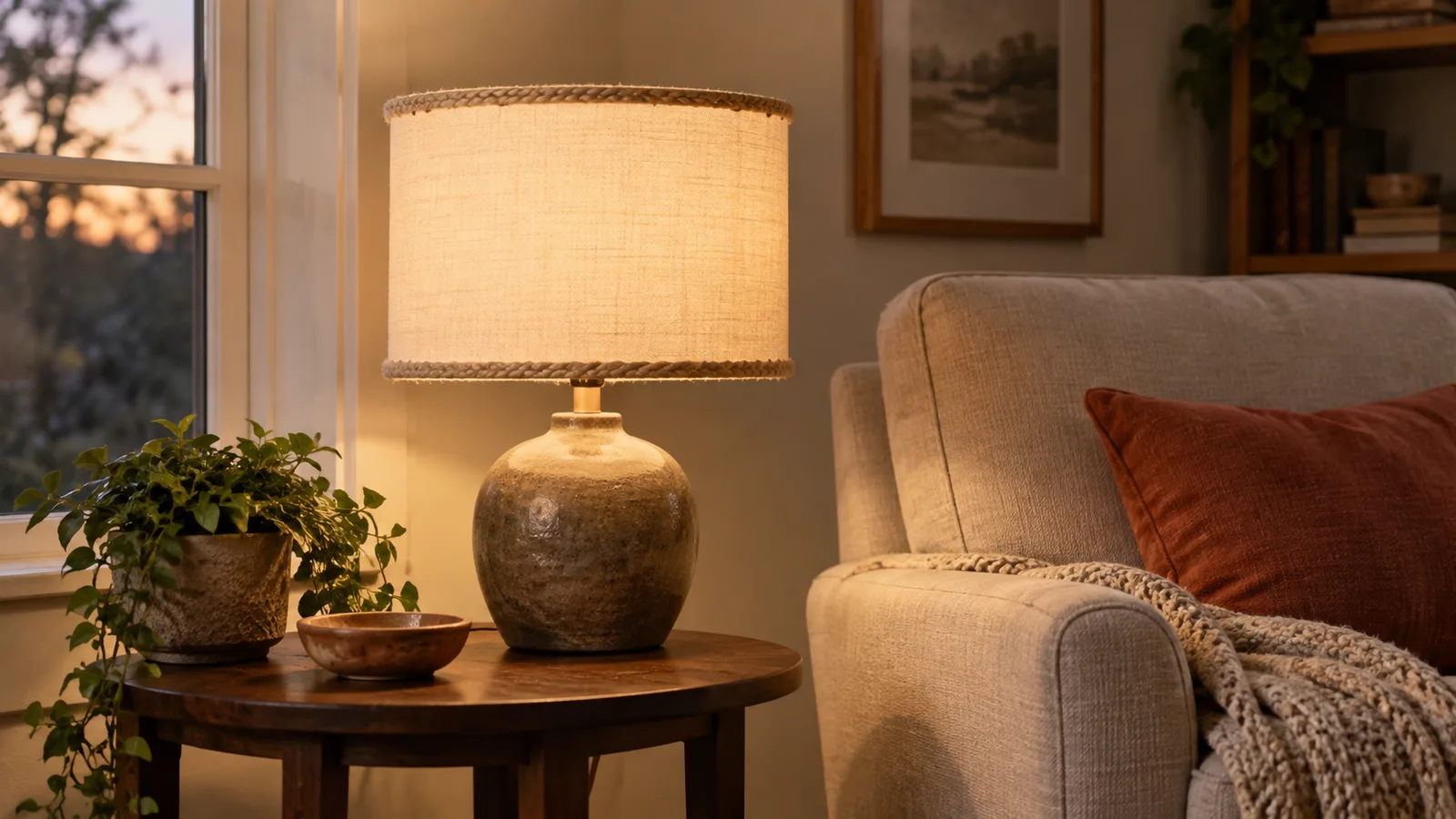
A dated lampshade is one of the easiest no-sew wins because the surface is already a defined shape you're covering, not building. Spray a light, even coat of fabric spray adhesive on the shade, then smooth your fabric over it from top to bottom in one motion, working out air bubbles as you go rather than after the fact.
Trim excess fabric flush with the top and bottom rings using sharp scissors, and glue a thin trim cord over each raw edge to finish it cleanly. Work in a ventilated space and mask the inside of the shade so overspray doesn't scorch when the bulb heats up.
Idea 7: Grommet Café Curtain for Open Shelves
A hammer-in grommet kit turns raw fabric edges into finished eyelets without a sewing machine, and a row of grommets threaded onto a tension wire makes a simple café curtain for open shelving, a laundry nook, or a cabinet with no door. This hides clutter while still looking intentional, unlike a flat sheet pinned in place.
Space grommets about 6 to 8 inches apart along the top edge for even gathering, and mount a thin tension wire or cafe rod just inside the cabinet opening so the curtain clears the shelf edge when it swings. This is a different hardware system than the clip rings in Idea 1, better suited to short, low-tension panels than full-length window curtains.
If open shelving is the bigger project, our guide to styling open shelves without the clutter covers what to hide behind a curtain like this versus what to leave visible.
Idea 8: Velcro-Mount Fabric Wall Hanging
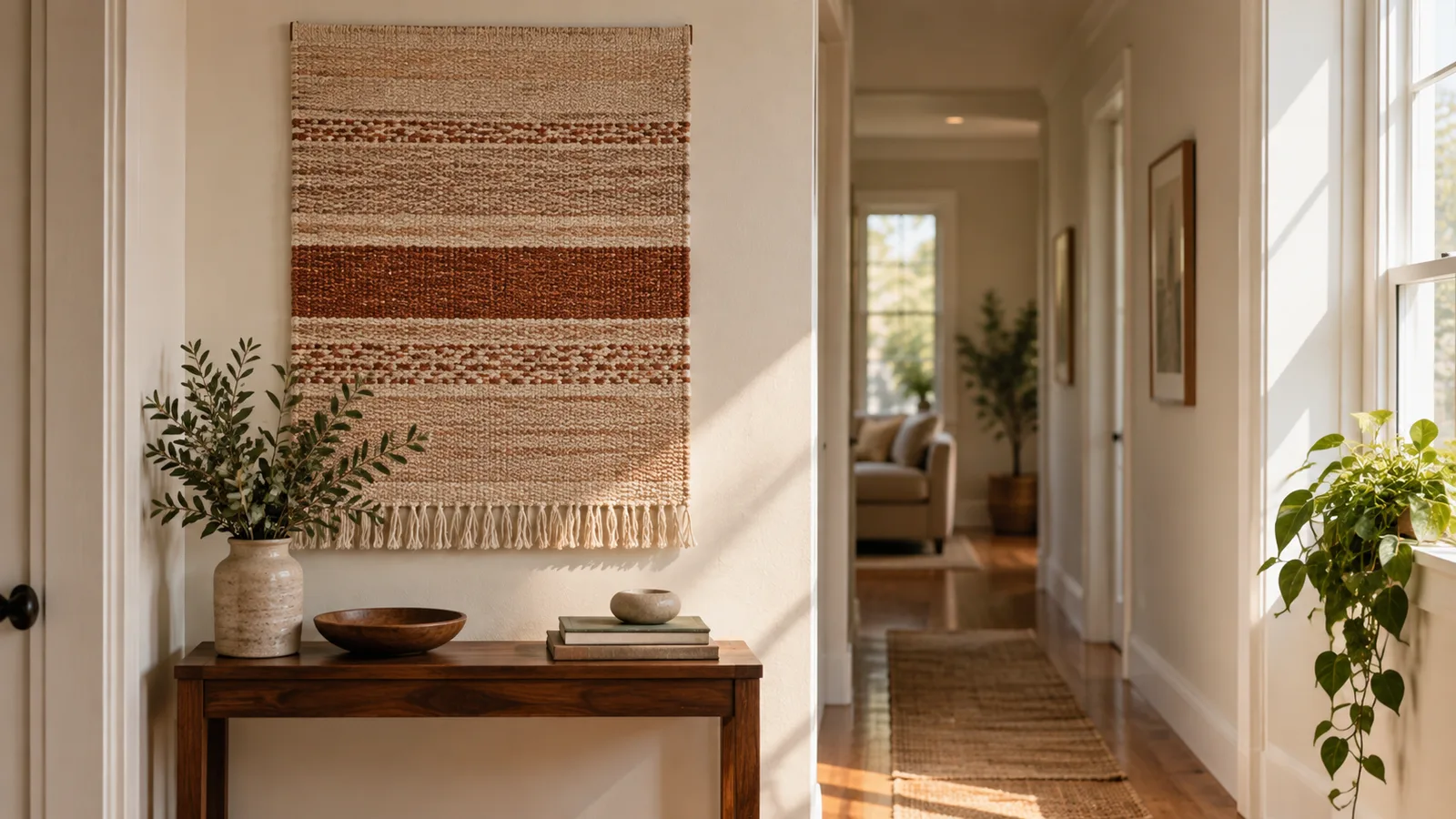
Adhesive-backed Velcro strips let you hang a flat fabric panel on the wall like art, without a frame, nails, or a sewn rod pocket. Attach the hook side of the Velcro to a thin wood slat, glue or clip the loop side along the top back edge of your fabric, then press the slat to the wall.
This is the most renter-friendly hanging method here because the Velcro releases cleanly and the wall slat can be reused for a different fabric later. Weight matters: a lightweight cotton or linen panel holds to Velcro strips reliably, but anything heavier than a light blanket needs actual hardware.
Pair a fabric hanging like this with framed pieces for a mixed-texture wall, the way our gallery wall guide lays out spacing for mixed formats.
Idea 9: Elastic-Corner No-Sew Dining Chair Cushion
Cut a fabric square larger than your chair seat pad, wrap it over the foam, and glue a short loop of elastic cord to each underside corner with a dab of hot glue, then hook the loops around the chair legs or frame to hold the cover taut. The elastic does the cinching a sewn corner would normally do.
Hot glue sets fast, so work one corner at a time and press the fabric down firmly for a few seconds while it bonds, rather than gluing all four corners before checking the fit. This project is a good one to practice hot glue technique on before trying it on visible upholstery, since mistakes hide underneath the seat.
Designer Note: covering a full dining set this way, using one fabric across every chair, reads as a deliberate refresh rather than a patch job.
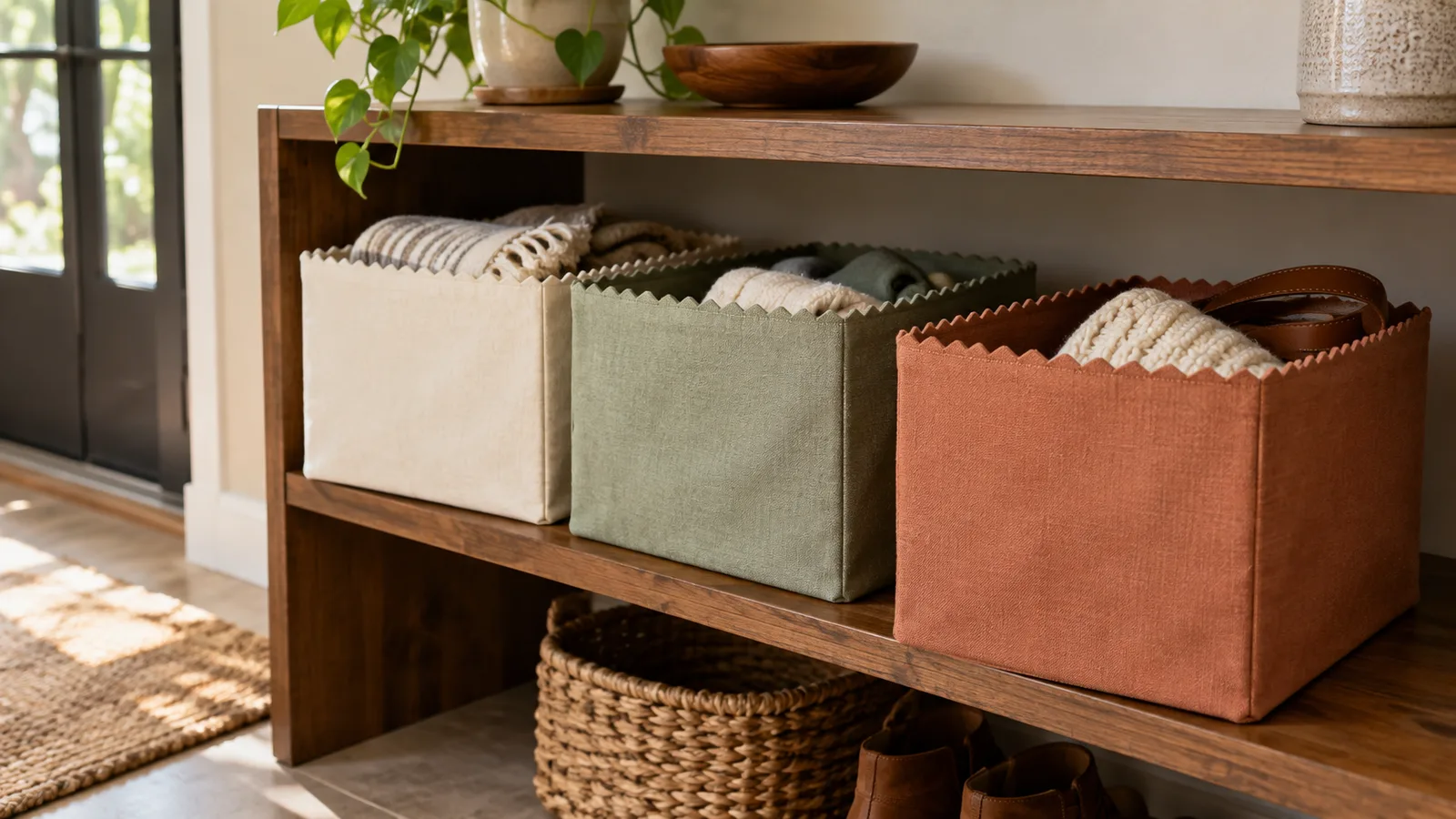
Idea 10: Hot-Glue Pinked-Edge Fabric Bin Wraps
Plain plastic or wire storage bins get a fabric wrap using pinking shears for a fray-resistant zigzag edge and hot glue to tack the fabric to the bin's rim and base. No hem is needed because the zigzag cut slows fraying enough for a decor object that isn't being washed weekly.
Measure the bin's circumference plus an inch for overlap, wrap the fabric around, and glue the seam vertically first, then glue the top and bottom edges under the rim where the seam won't show. For a broader storage pass, our small apartment storage ideas roundup has more on choosing bin sizes and placement before you start wrapping them.
Idea 11: Fusible-Web Fold Catch-All Pouch
An iron-on fusible web sheet, ironed between two fabric layers, bonds them into one stiff panel you can fold into a flat pouch shape without a single seam sewn. Fuse two rectangles together for structure, fold the bottom third up, and fuse the side edges shut the same way, leaving the top open as the pouch mouth.
This is the most structural project on the list, closer to a small bag than a flat textile, so it's worth practicing the fold before fusing anything permanently. Use it as a catch-all for mail, chargers, or loose bathroom supplies.
Before buying new organizers for a project like this, our piece on when DIY beats buying new is a useful gut check on where the time is actually worth it.
Common Mistakes to Avoid
- Skipping the fray-check step on cut edges. Pinking shears, liquid seam sealant, or a folded hem hold up over time; a raw cut edge will not.
- Using rigid craft glue on anything meant to be washed. It cracks with flexing. Choose a fabric glue labeled washable for pillow covers and cushions.
- Overloading Velcro strips or adhesive hooks beyond their rated weight. Check the package weight limit before hanging anything heavier than a light throw.
- Gluing all four corners of an elastic-corner cushion before test-fitting one. Fit and adjust one corner first, then match the rest.
Expert Tips for Cleaner Results
Iron fabric flat before starting any glue or fusible-tape project. Wrinkles telegraph through a bonded seam in a way they never would through a sewn one, since there's no stitch line to hide behind.
Keep one wood scrap on hand as a straightedge for pressing fusible tape evenly, especially on longer runs like a table runner hem. A wobbly hand with the iron shows up as a wavy bonded line.
Frequently Asked Questions
Is no-sew fabric glue actually durable?
Washable fabric glue holds up well on low-stress seams like pillow covers and small wraps, especially after it fully cures for 24 hours before first use. It's not meant for anything under constant tension, like a curtain hem, where clips or grommets do a better job.
Can I use any fabric for these projects?
Midweight, tightly woven fabrics like cotton, linen, and cotton-linen blends work best across nearly every technique here. Very thin or very heavy fabrics need adjustments, thin fabric needs extra fusible layers for structure, and heavy fabric may be too stiff for spray adhesive to grip.
Will Velcro or adhesive hooks damage rental walls?
Most adhesive-backed products marketed as removable release cleanly from painted drywall when pulled slowly and at a low angle, but always test on a hidden spot first. Our renter-friendly upgrades guide has more on which adhesives are actually safe to remove.
How long do fusible hem tape bonds last?
A properly pressed fusible bond holds through regular use and gentle washing for a year or more, though it's not as permanent as stitching. Runners and valances that stay mostly undisturbed hold up longer than anything handled daily.
Do I need special tools to start?
Most of these projects need only scissors, an iron, and fabric glue or hot glue, all inexpensive and reusable across future projects. A staple gun and a grommet kit are the only two tool purchases, and both pay for themselves after one or two projects.
Where to Start
If you've never tried a no-sew project, start with the envelope pillow cover or the fusible-tape table runner. Both use forgiving techniques, take under 30 minutes, and teach the two core skills, gluing a flat seam and pressing a fusible bond, that show up again in nearly every other project here. Once those feel easy, the headboard panel and the wall hanging are natural next steps for a full room refresh.
One useful home email a month
Real ideas to make your home work better. No spam, easy unsubscribe.