In this article
Small Bedroom Ideas That Feel Calm and Spacious
Practical small bedroom ideas to make a tight room feel calm, cozy, and more spacious using smart layout, light, color, and hidden storage.

· 7 min read
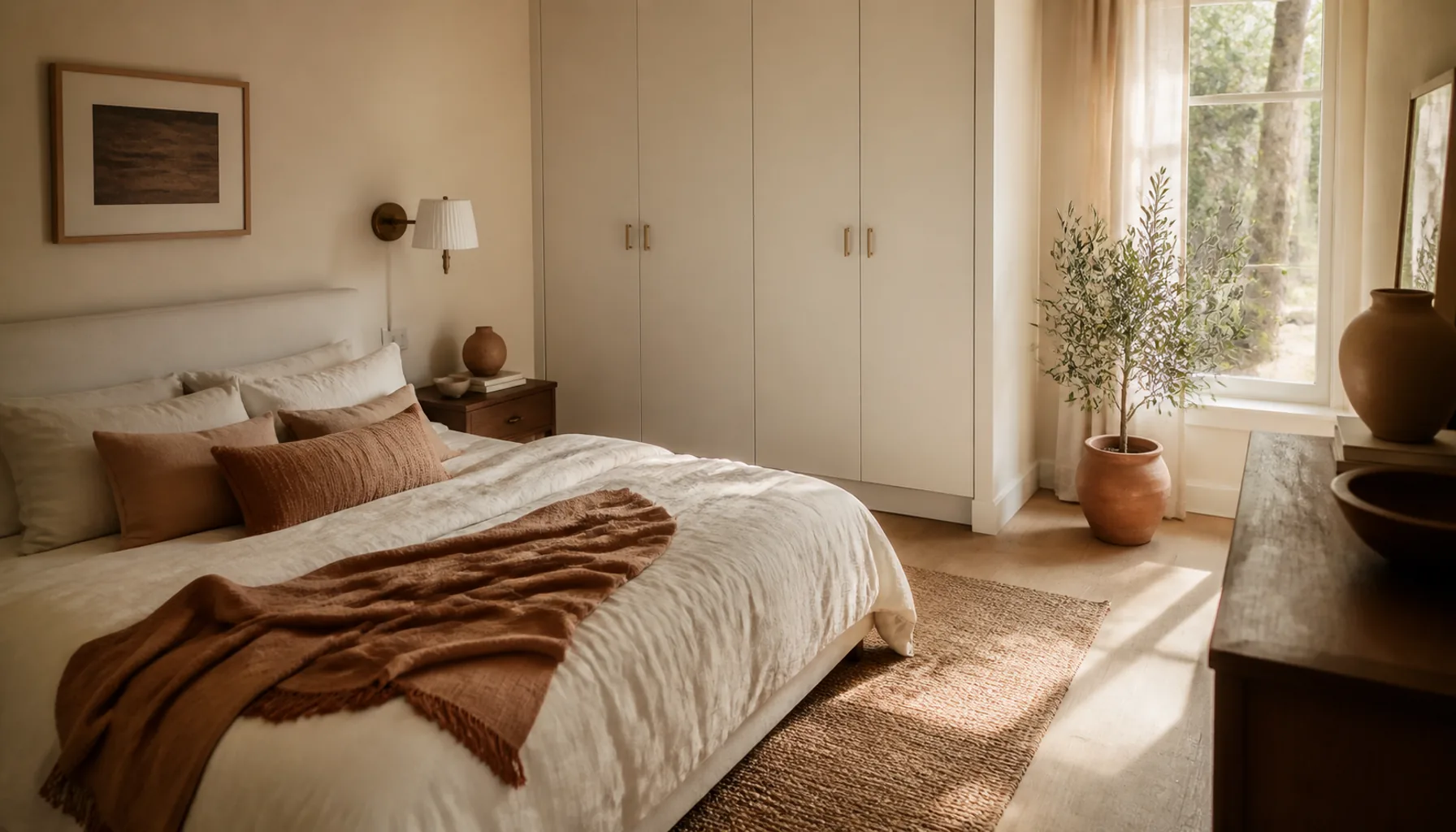
A small bedroom does not have to feel cramped. With a few thoughtful changes to how you arrange, light, and style the room, even the tightest space can feel restful and open. These small bedroom ideas focus on the things that actually move the needle: where the bed goes, how much floor you can see, how light bounces around, and where all your stuff quietly lives. You do not need to knock down walls or spend a fortune. You just need to work with the room you have.
The Bed and the Path Around It Come First
The bed is the biggest object in the room, so it decides almost everything else. Before you shop for anything, figure out your small bedroom layout by placing the bed first. The goal is a clear path on at least one long side so you can move without shuffling sideways.
Push the bed against a wall or into a corner if the room is very tight, and keep the walkway around it at least the width of your shoulders plus a little room to turn. Floating the bed in the center of a small room usually wastes space and blocks the natural walking line.
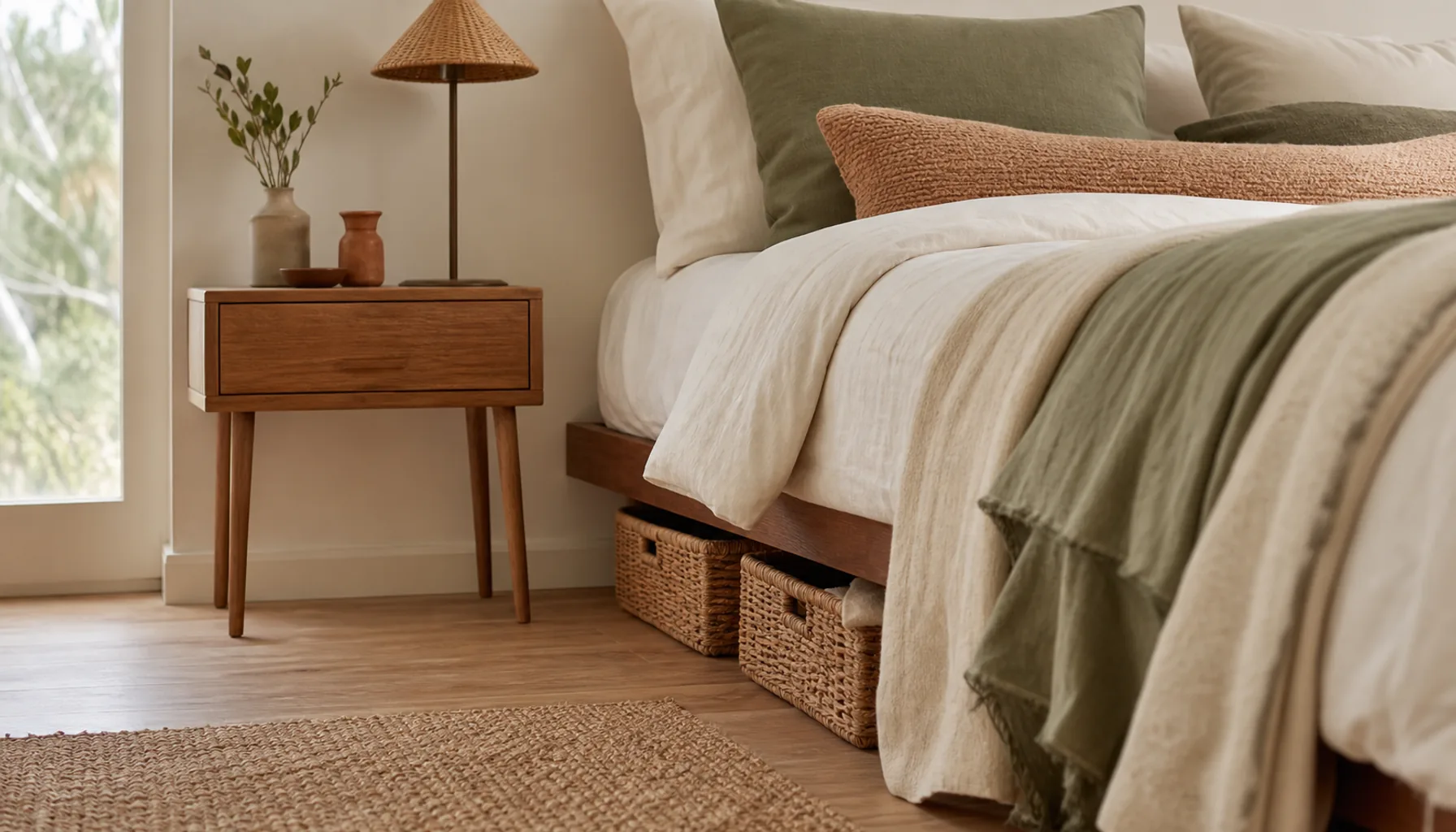
A common mistake is buying a frame that is too large "to feel grown-up." A slim frame or a platform bed with a low profile leaves more visible floor, and visible floor is what makes a room read as spacious. If you can see the ground, the room feels bigger.
Let the Floor Breathe
Speaking of floor: the more of it you can see, the calmer the room feels. Clutter on the ground shrinks a space faster than anything else.
Choose furniture with legs rather than pieces that sit flush to the floor. A nightstand or dresser raised on legs lets light and shadow pass underneath, which tricks the eye into reading more open space. It is a small detail that does a lot of quiet work.
Avoid crowding the room with too many separate pieces. One well-chosen dresser beats three mismatched bins. When you reduce the number of items touching the floor, the whole room settles down.
Use Light Colors to Push the Walls Back
Color is one of the cheapest ways to change how big a room feels. Soft, light tones reflect light and make walls feel like they are further away, while heavy dark colors can close in on you in a tight space.
That does not mean everything must be stark white. Warm off-whites, soft greiges, and gentle putty tones keep a room feel cozy while still feeling airy. Paint the ceiling a shade lighter than the walls, or the same tone, to draw the eye upward. If you want to go deeper on choosing tones that work together, our guide to building a small-room color palette walks through the same logic room by room.
A quick tip: keep your walls, curtains, and bedding in the same tonal family. When colors blend instead of contrast, the eye stops noticing where one surface ends and the next begins, and the room feels larger.
The mistake to avoid here is chasing a bold accent wall in a dark shade. In a large room it adds drama; in a small bedroom it often just makes the wall feel like it is stepping toward you.
Layer Light Instead of Relying on One Bulb
A single ceiling light casts flat, harsh shadows that flatten a room and make corners feel dead. Small rooms especially need soft, layered light to feel warm rather than boxy.
Aim for a few sources at different heights:
- A warm-toned bulb overhead for general light
- A bedside lamp for reading and a softer evening glow
- A small accent light, like a wall sconce or a strand of warm string lights, to fill a dark corner
Warm light around 2700K feels restful; cold blue-white light makes a cozy room feel clinical. If your room already feels chilly or unwelcoming, you may be making one of the errors covered in these common lighting mistakes. Fixing the light is often the single biggest upgrade a small bedroom can get.
Hang Curtains High and Wide
Windows are your friend in a small room because they bring in the light that makes everything feel open. The trick is in how you dress them.
Mount your curtain rod close to the ceiling and let it extend a few inches past each side of the window frame. This makes the window look taller and wider than it is, and it lets the curtains stack off the glass so you get maximum daylight during the day. Floor-length panels that just brush the floor add a sense of height.
Avoid short curtains that stop at the windowsill. They cut the wall in half visually and make the ceiling feel lower. Long lines, top to bottom, always help a small room.
Give Everything a Place to Hide
Storage is where small bedrooms live or die. When there is nowhere to put things, they end up on the floor, on the chair, and on every flat surface, and the room feels chaotic no matter how nice the furniture is.
Look for storage you already own but are not using: the space under the bed, the wall above the door, the back of the door itself. Under-bed drawers or flat bins are ideal for off-season clothing and spare bedding. Vertical shelving uses wall height that would otherwise sit empty.
Choose furniture that does two jobs
- A bed frame with built-in drawers
- A storage bench or ottoman at the foot of the bed
- A nightstand with a drawer instead of an open shelf
- A slim dresser that goes up rather than out
The mistake to avoid is buying open baskets and shelves that leave clutter on display. Closed storage hides the mess and keeps the visual field calm. For a deeper toolkit, these small-space storage ideas that actually work cover renter-friendly options that leave no holes in the walls.
Add Depth With a Mirror
A well-placed mirror is the oldest trick in the book because it works. Mirrors bounce light around and create the illusion of a second window or a space beyond the wall.
Place a large mirror opposite or beside a window so it reflects daylight back into the room. A tall, leaning floor mirror also adds a vertical line that lifts the ceiling. You do not need several small mirrors scattered around; one generous piece does more than a gallery of little ones and keeps the walls from feeling busy.
Style It Simply So It Feels Cozy, Not Cluttered
Once the bones are right, styling is what makes the room feel like yours. In a small space, restraint is the whole game. A few meaningful objects feel intentional; a dozen tiny trinkets feel like noise.
Keep surfaces mostly clear. Let one soft throw, a couple of layered pillows, and a single piece of art carry the personality. Texture matters more than quantity here, so lean on a chunky knit, a linen cover, or a woven basket to add warmth without adding bulk.
If your bed feels flat against the wall, a headboard adds a focal point and a sense of finish, and you can build one to fit your exact width. These budget-friendly DIY headboard ideas show a few ways to do it without buying a whole new frame.
Bringing It All Together
A calm, spacious small bedroom comes down to a handful of choices working together: place the bed so the floor can breathe, keep colors light and tonal, layer your lighting warmly, dress the windows tall, hide the clutter, and style with a light hand. None of it is expensive, and you can tackle one piece at a time. Start with whatever bothers you most today, and let the room open up from there.
If you are not sure which direction fits your space and your taste, try the Room Style Finder for a starting point tailored to your room.
One useful home email a month
Real ideas to make your home work better. No spam, easy unsubscribe.