How to Choose and Size a Rug for Any Room
A practical rug size guide to help you pick the right rug size, style, and placement for your living room, bedroom, and dining room with confidence.

· 6 min read
The most common rug mistake is buying one that is simply too small. A rug that floats in the middle of the floor, disconnected from the furniture around it, can make an entire room feel unfinished and a little awkward. Sizing a rug, though, is far from guesswork. Once you understand a few simple placement rules, choosing the right rug becomes surprisingly easy. In this guide you will learn how to choose a rug size for the three trickiest rooms, how to think about style and material, and which errors to sidestep along the way.
Measure the Room Before You Shop for a Rug
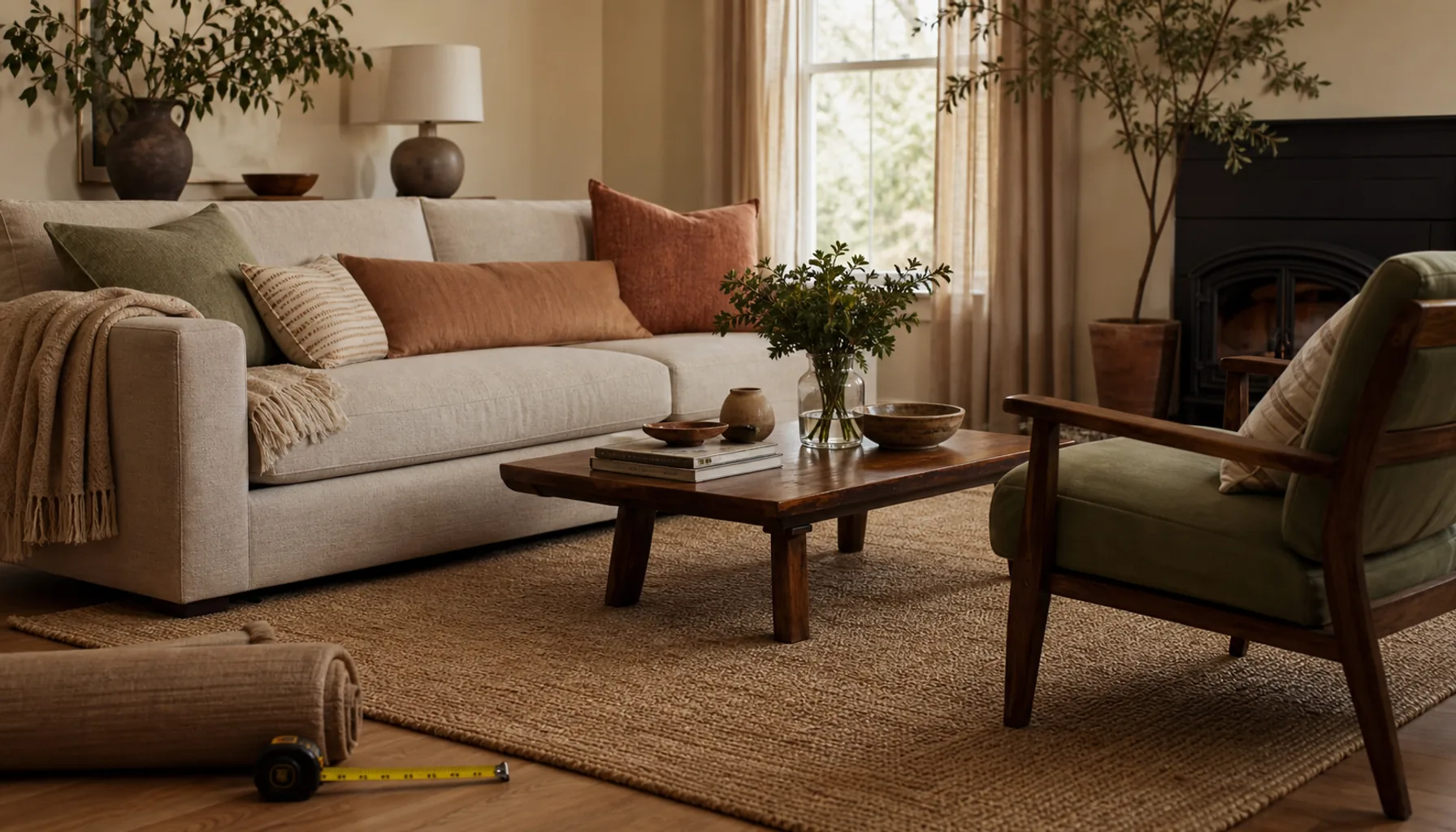
Before you fall in love with a pattern, measure your space. Grab a tape measure and note the length and width of the area you want to define. A rug is a tool for grounding furniture and shaping a room, so its job depends entirely on the space it lives in.
A rug quietly sets the visual boundary of a seating or sleeping zone, which is exactly why this step comes first. Get the boundary right and everything inside it feels intentional. A quick example: in a 12 by 15 foot living room, a tiny 4 by 6 rug will look like a postage stamp, while an 8 by 10 anchors the whole seating group.
A helpful trick: use painter's tape to outline your intended rug size on the floor. Live with it for a day before you buy.
The mistake to avoid here is shopping by price or pattern first. Decide the size your room needs, then find a rug that fits it.
Quick Rug Size Rules to Memorize
If you remember nothing else, keep these rug placement rules in mind:
- Leave 10 to 18 inches of bare floor between the rug edge and the wall.
- All front furniture legs should sit on the rug, at minimum.
- A dining rug must extend at least 24 inches beyond the table on every side.
- Bigger usually reads better than smaller in open rooms.
- Runners suit hallways and the sides of a bed.
These numbers work because they keep proportions balanced and stop the rug from looking like an afterthought. The common error is splitting the difference and buying a medium rug that fits no rule at all.
Sizing a Living Room Rug
The living room is where most people ask *what size rug* they actually need, and it is where a well-chosen rug does the most work.
The Three Placement Styles
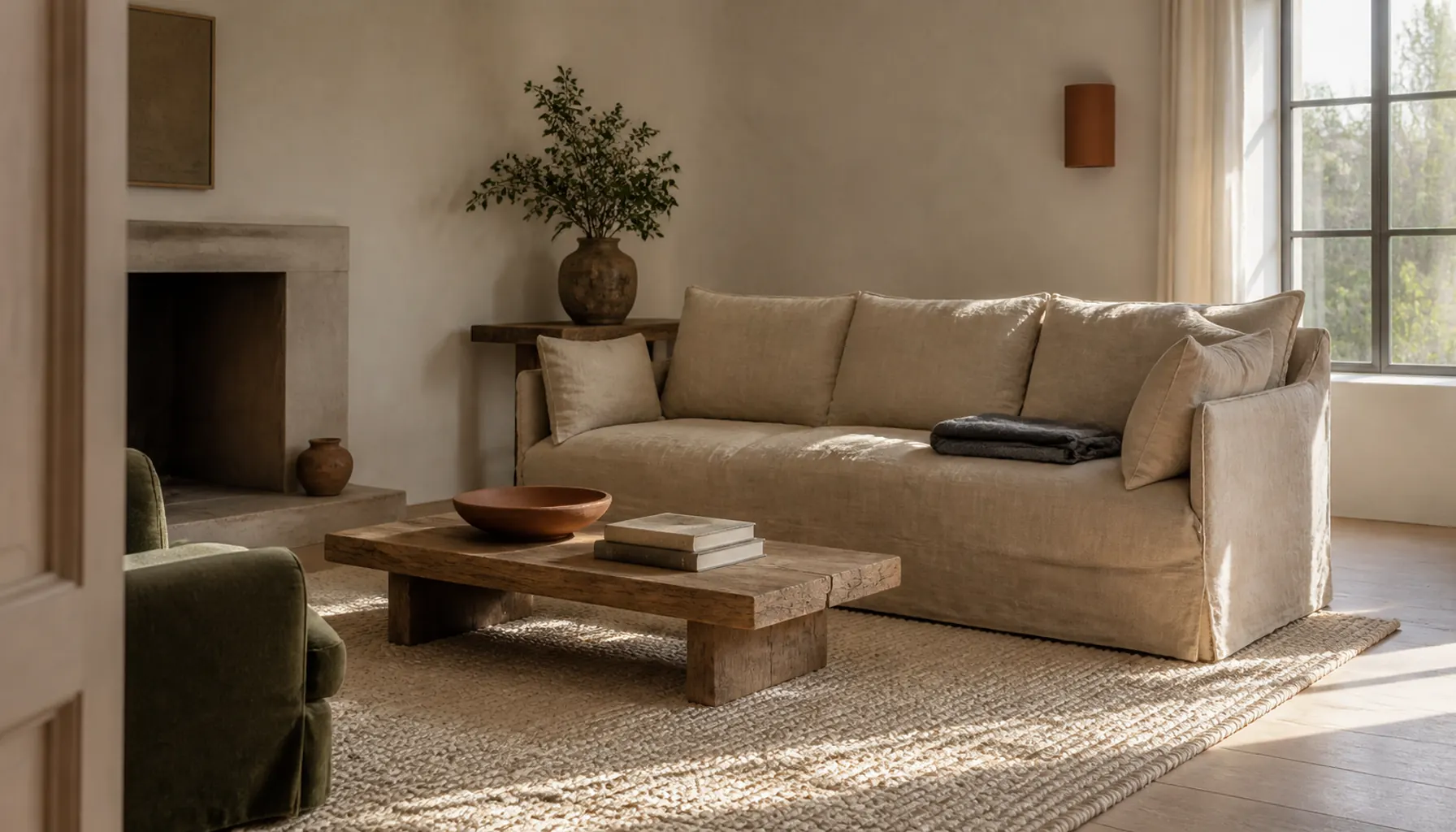
You have three solid options. All legs on puts every piece of furniture fully on the rug, which feels lush and cohesive but needs a large rug. Front legs on places only the front legs of your sofa and chairs on the rug, tying the group together while saving space and money. Floating keeps furniture off the rug entirely and only works with a genuinely large rug in a big room.
For most spaces, front legs on is the sweet spot. In a standard living room, an 8 by 10 or 9 by 12 rug lets your sofa and chairs share the same visual base. That connection is what makes a area rug living room layout feel like a designed room rather than a collection of parts. If you are also weighing wall and upholstery tones, our guide on choosing a color palette for a small living room pairs naturally with your rug decision.
The mistake to avoid is the floating island: a small rug marooned under the coffee table with every sofa leg on bare floor. It shrinks the room instead of expanding it.
Sizing a Bedroom Rug
In the bedroom, the rug's job is to greet your feet in the morning and soften the space around the bed.
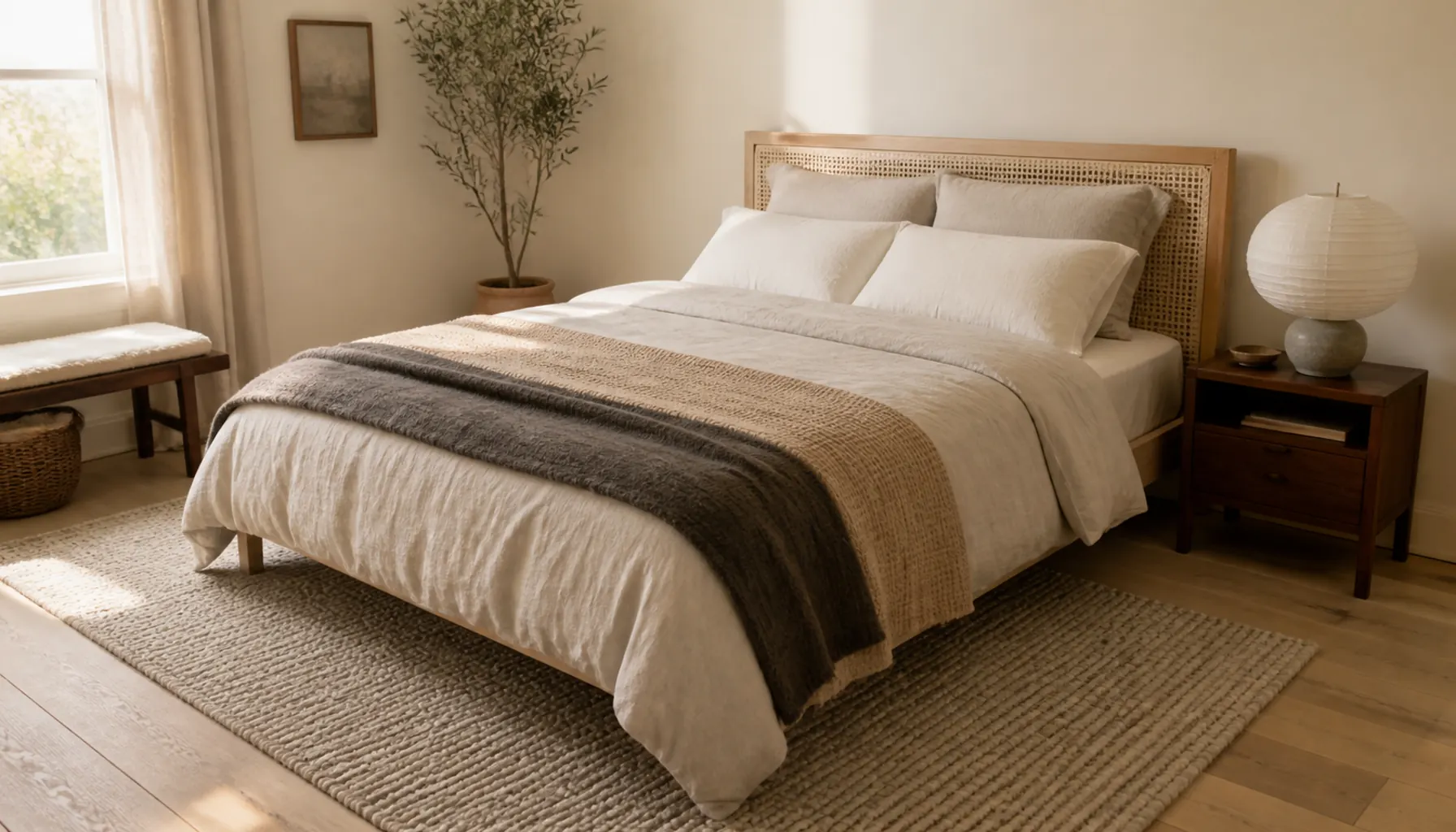
The most comfortable approach is a large rug placed under the lower two thirds of the bed, so it extends well past the sides and foot. For a queen bed, an 8 by 10 works beautifully; for a king, reach for a 9 by 12. You want at least 18 to 24 inches of rug showing along each side of the bed, because that border is exactly where your feet land.
If a full rug is not in the budget, two runners on either side of the bed, or a rug turned crosswise under the foot, both do the trick. Thinking about how soft wool meets a smooth headboard or crisp linen is worth a moment, and our beginner's guide to mixing textures can help you layer them well.
The error here is centering a small rug fully under the bed, where it disappears from view and does nothing for your morning routine.
Sizing a Dining Room Rug
Dining rooms have the clearest rule of all, and it is entirely about the chairs.
Your rug needs to be large enough that when someone pushes their chair back to stand, the back legs stay on the rug. That means at least 24 inches of rug beyond every edge of the table. For a table that seats six, an 8 by 10 is usually the minimum; a longer table often needs a 9 by 12.
This matters because a chair that catches its back legs on the rug edge rocks, scratches, and annoys everyone at dinner. Match the rug shape to the table too: rectangular rugs for rectangular tables, round rugs for round tables. The mistake to avoid is a rug that ends right at the table's edge, leaving chairs half on and half off.
Choose Material and Style for the Room
Size gets the rug right; material keeps it right. In high-traffic zones like the living and dining room, a flat, tight weave in wool or a durable synthetic handles spills and footsteps. In the bedroom, you can indulge in something plush and soft underfoot.
Style should echo the mood you are building. A warm, earthy scheme leans toward soft terracottas, creams, and natural fibers, an approach we explore in styling a warm home with terracotta and neutrals. The concrete example: a jute rug suits a relaxed, textural room, while a low-pile patterned wool rug reads more polished. The mistake is choosing a delicate, light rug for a room where kids and pets live.
Putting It All Together
Choosing a rug comes down to a simple order of operations: measure the room, pick the placement style, apply the size rules, then choose material and color last. Follow that sequence and you avoid the floating-island look that undermines so many rooms. A properly sized rug quietly pulls everything together, defines your zones, and makes the whole space feel considered.
When you are ready to plan the rest of your refresh without overspending, try the Decor Budget Calculator to map your rug and furniture spending in one place.
One useful home email a month
Real ideas to make your home work better. No spam, easy unsubscribe.