Window Treatments 101: Curtains, Blinds & How to Hang Them Right
A calm, practical guide on how to choose curtains and blinds, pick fabrics, and hang everything at the right height and width for any room.

· 6 min read
Windows can make or break how a room feels, yet they are often the last thing we think about. Dressing them well is not complicated once you know a few basics. This guide walks you through how to choose curtains, when blinds make more sense, which fabrics to reach for, and the simple hanging rules that instantly make a space look taller and more finished.
First, Decide What the Window Needs to Do
Before you fall in love with a fabric, ask what the window actually has to accomplish. A bedroom that faces the morning sun needs real darkness. A living room might only need softness and a little privacy in the evenings. A kitchen window over a sink needs something that shrugs off steam and splashes.
Write down the function first: light control, privacy, insulation, or pure decoration. Most windows want two of these at once, which is why layering is so common. When you know the job, the shopping decisions get much easier and you stop buying pretty things that do not work.
A common mistake is treating every window in the house the same way. Matching hardware is fine, but a heavy blackout panel in a bright hallway just makes the space feel closed off and dim.
How to Choose Curtains for Your Room
When people ask how to choose curtains, they usually mean three decisions rolled into one: the fabric weight, the color, and the heading style.
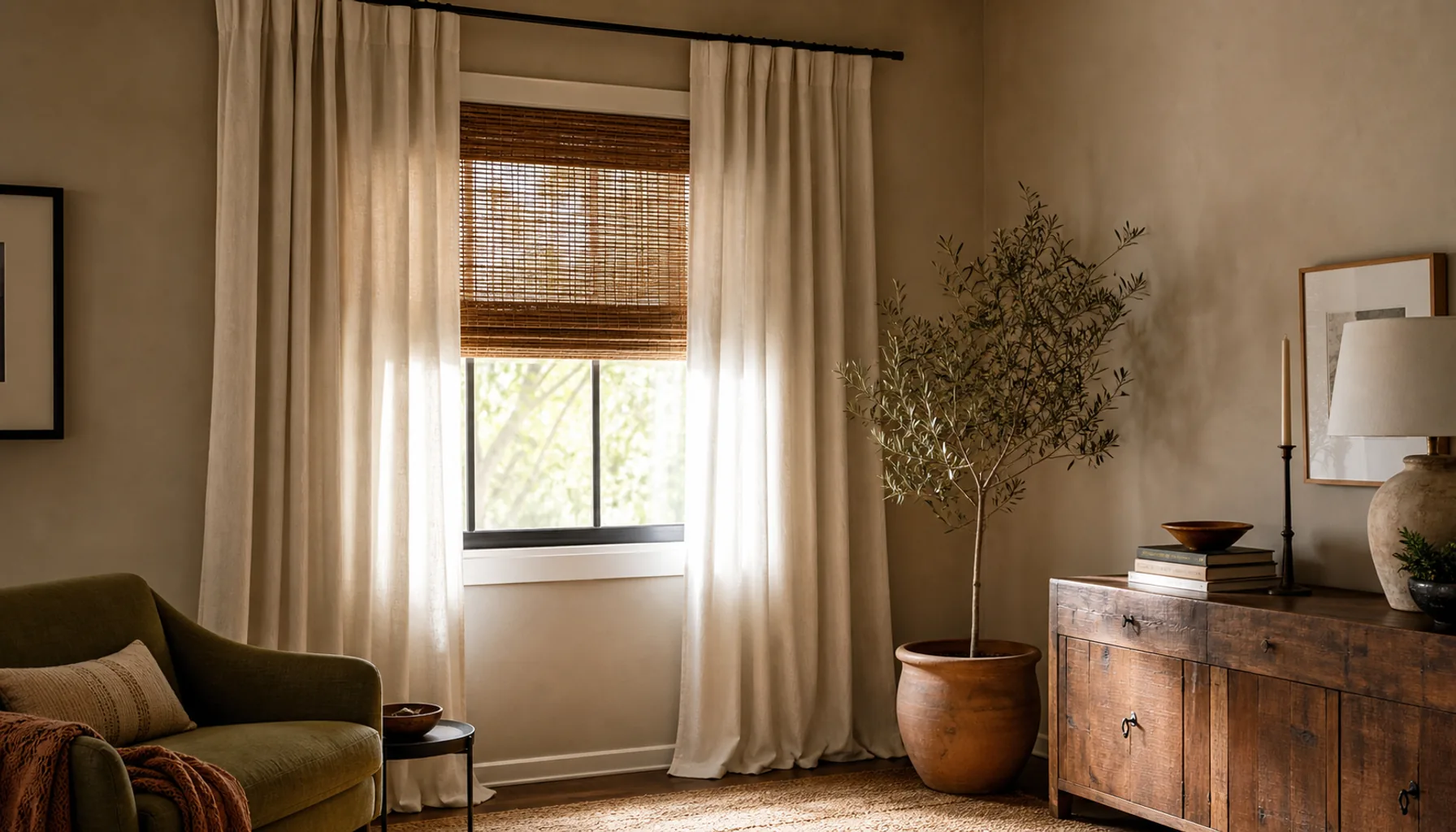
For fabric weight, think about mood and light. Lightweight linen and cotton let a soft glow through and feel relaxed. Heavier velvet or lined cotton blocks light, muffles sound, and reads more formal. For color, a shade close to your wall color makes a room feel calm and larger, while a contrasting panel becomes a feature. If you are unsure, the same logic that guides paint choices applies here, and it helps to read up on how to build a color palette for a small living room before you commit.
For the heading, pleated tops look tailored, while simple rod-pocket or tab tops feel casual and cost less. There is no wrong answer, only what suits the room.
Curtains vs Blinds: Which One Wins
Curtains and blinds solve overlapping problems, so the choice often comes down to space and style.
Curtains soften hard architecture, add warmth and texture, and can make a window look grander than it is. They suit living rooms, bedrooms, and anywhere you want a cozy feel. Blinds sit flat against the window, take up almost no room, and give you precise control over light and privacy. They shine in kitchens, bathrooms, small home offices, and tight spots where a fabric panel would get in the way.
You do not have to pick a side. Pairing a roller or roman blind for function with light curtains for softness is one of the most flexible setups there is. If daylight in your rooms already feels flat, it is worth checking that your window treatments are not part of the problem, since they interact closely with your lighting choices around the room.
A quick tip: if a window is very small or oddly shaped, a blind almost always looks neater than curtains, which need generous fabric to hang well.
Understanding Fabrics and Light
Fabric is where comfort lives. Sheer fabrics filter light and give daytime privacy without blocking the view, but they do nothing after dark. Blackout linings are stitched behind a panel to stop light and are worth every penny in a bedroom or a child's room. Thermal or lined fabrics add a layer that helps with drafts in winter and heat in summer.
Texture matters too. A slightly nubby linen catches light in a way that feels lived-in, while smooth cotton looks crisp and simple. If your window faces strong sun, remember that thin, unlined fabrics can fade over time, so a lining protects both the room and the curtain itself.
The mistake to avoid here is choosing on looks alone. A gorgeous sheer in a west-facing bedroom will leave you squinting at sunrise and regretting the purchase within a week.
How High to Hang Curtains
This is the single change that transforms a room, and almost everyone gets it wrong at first. The instinct is to mount the rod right at the top of the window frame. Instead, lift it much higher so the eye travels upward and the ceiling feels taller.
Here are the simple hanging rules worth remembering:
- Mount the rod high, roughly two-thirds to all the way up toward the ceiling, not on the frame.
- Extend the rod wide on each side so open curtains clear the glass and let in full light.
- Aim for panels that just kiss the floor or break slightly against it, never floating above.
- Use enough fabric width so closed curtains look full and gathered, not stretched flat.
- Keep hardware sturdy; a sagging rod undoes all the careful measuring.
The classic error is hanging curtains too low and too narrow. Low, skimpy panels chop the wall in half and make windows look smaller than they are. High and wide does the opposite, and it costs nothing extra beyond a longer rod.
Getting the Length Right
Curtain length is a matter of a few finger-widths, and small misses are very visible. As a curtain length guide, the most forgiving option is panels that reach the floor with the faintest touch, sometimes called a float. A gentle break, where the fabric pools an inch or two, looks relaxed and softens a formal room.
Short curtains that end at the sill can work in a kitchen or above a radiator, but in a living room or bedroom they tend to look unfinished, like trousers that are too short. When in doubt, measure from your chosen rod height down to the floor, then order slightly long rather than slightly short. Hems are easy to adjust; fabric you do not have is not.
Window Treatment Ideas for Renters
If you cannot drill into walls, you still have room to play. Tension rods fit inside a window recess with no hardware, and adhesive hooks rated for weight can hold a lightweight rod for sheers. Freestanding options and clip-on panels let you add softness without touching the structure, and everything comes down cleanly when you move.
Keep receipts and packaging, and favor neutral pieces you can reuse in the next place. These small, reversible additions pair nicely with other changes renters can take with them, and together they make a temporary space feel genuinely yours.
Bringing It All Together
Good window treatments are less about expensive fabric and more about thoughtful choices: knowing the window's job, matching the material to the light, and hanging everything high, wide, and long enough to flatter the room. Start with one window, apply the rules, and you will see the difference immediately.
If you want help deciding which look fits your space before you shop, try the Room Style Finder for a few tailored ideas to point you in the right direction.
One useful home email a month
Real ideas to make your home work better. No spam, easy unsubscribe.