DIY Cord Covers: 3 Inexpensive Ways to Hide Ugly TV and Lamp Cables Along the Wall
Learn how to hide TV cords and lamp cables along the wall with 3 cheap, no-drill DIY cord covers. A renter-safe, step-by-step guide to a clean look.

· 10 min read
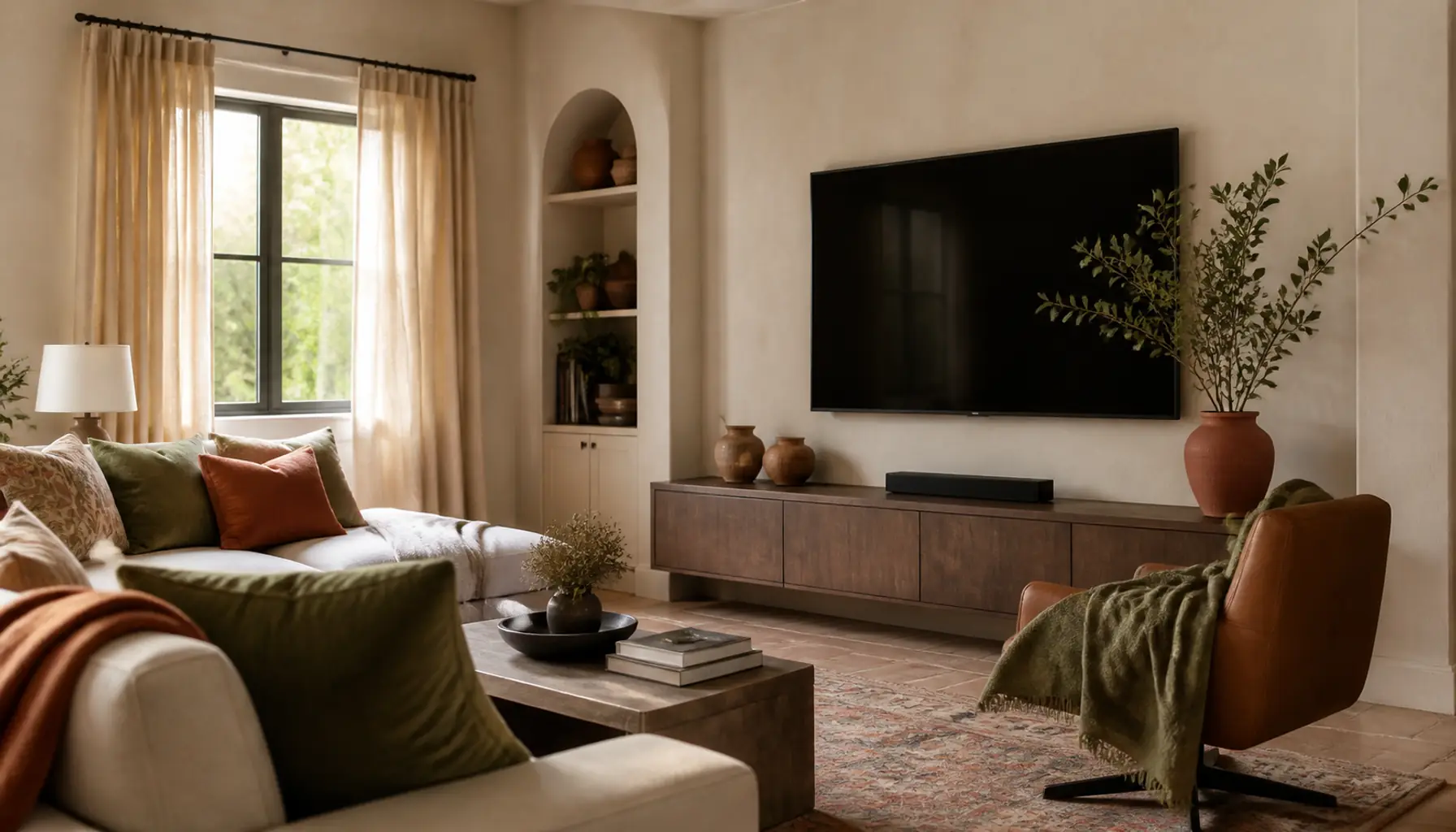
You can hide TV cords and lamp cables along the wall in an afternoon, without drilling a single hole. A tangle of black cables is one of the fastest ways to make a tidy room look unfinished, and most of us are staring at one right now behind the television. The good part is that the fix is cheap and reversible. This guide walks you through three inexpensive DIY cord covers, when to use each, and how to keep everything safe.
Dangling cords pull your eye straight to the floor. Once they disappear, the whole wall reads as calmer and more intentional, the same way a clear surface makes any room feel bigger.
Key Takeaways
- Pick your method by wall type: a paintable raceway for a clean flush look, a fabric sleeve for a soft bundle, or adhesive clips to trace the baseboard.
- None of these need drilling, so they work in a rental and come off cleanly later.
- Measure the full cord run before you buy, and add a little extra for slack.
- Paint a raceway the exact wall color and it nearly vanishes.
- Keep power strips accessible, never buried, and never run cords under a rug where feet cross.
- Plan the route first. The shortest straight line usually looks best and uses the least material.
Before You Start: Measure, Plan, and Stay Safe
Start by planning the route the cords will take, because a good path does half the work. Look at where the cord leaves the device and where it needs to reach the outlet. The cleanest routes drop straight down from a wall-mounted TV, then run along the baseboard to the plug.
Measure that full run with a tape measure and write the number down. Add about six inches of slack so nothing pulls tight. Buy your covers or clips to match that length, rounding up.
A quick tip: take a phone photo of the wall before you start. It helps you see which cords actually show and which are already hidden behind furniture.
Safety matters more than looks here, so keep a few rules firm. Do not bury a power strip or an adapter inside a cord channel, since they need air and easy access. Keep cords away from heat sources. And never route a cable under a rug in a walkway, because foot traffic wears the insulation over time. If a cord is damaged, replace it instead of hiding it.
If your goal is a whole calmer setup, hiding cords pairs well with other renter-friendly upgrades you can take with you that leave no marks behind.
The 3 Ways to Hide Cords Along the Wall
Here are three methods that cover almost every situation, from a wall-mounted TV to a lamp in the corner. Match the method to your wall and your patience.
1. The Paintable Cord Raceway
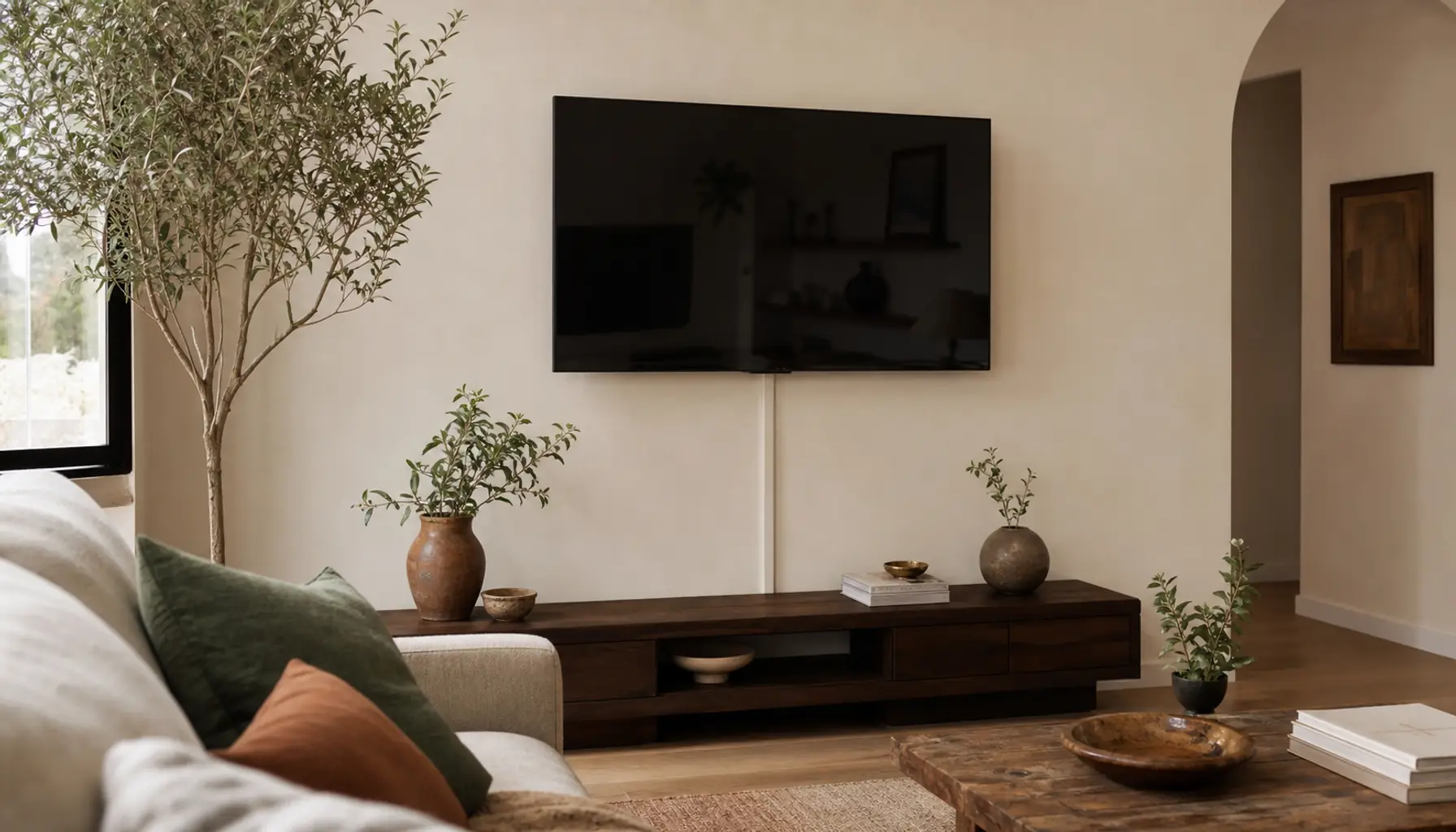
A cord raceway is a slim plastic or metal channel that sticks to the wall and holds the cords inside a snap-on lid. It is the closest thing to an in-wall look without cutting drywall.
You will need a raceway kit, which usually runs about $10 to $25 in USD, plus wall-color paint and a small brush. Most kits come with strong adhesive backing.
- Cut the channel to length with a hacksaw or strong scissors, depending on the material.
- Paint it the exact color of your wall and let it cure fully.
- Peel the backing, press the base to the wall, tuck the cords in, and snap the lid closed.
The reason this method wins for a mounted TV is that it hides several cords at once in a straight vertical drop. The main trap is skipping the paint step. Bare white plastic on a colored wall stands out more than the cords did.
2. The Fabric Cord Sleeve or Braided Wrap
A fabric sleeve gathers loose cables into one soft tube. It does not hide cords against the wall so much as turn an ugly tangle into one tidy bundle, which is perfect behind a lamp, a desk, or a console.
A zip-up neoprene sleeve or a spiral wrap costs about $8 to $15. Choose a color close to your wall or furniture.
- Unzip or unwind the sleeve.
- Lay all the cords inside together.
- Zip or wrap it closed from top to bottom.
This is the gentlest option and the easiest to undo, so it suits renters and anyone who rearranges often. It works beautifully next to a reading nook, the kind you might build into a calm, spacious small bedroom. Just know it makes one visible bundle rather than making cords disappear entirely.
3. Trace the Baseboard With Adhesive Clips
The cheapest route uses small adhesive cord clips to walk the cable along the top of the baseboard or the seam where the wall meets the floor. From a few steps back, the cord follows a line your eye already accepts.
A pack of adhesive clips is often under $10. You will also want rubbing alcohol to clean the surface first.
- Wipe the baseboard and wall with rubbing alcohol so the clips grip.
- Press a clip every eight to twelve inches along your planned line.
- Snap the cord into each clip, keeping it taut but not stretched.
This method shines for a lamp cord crossing to an outlet. Pair it with hiding the bulk of the cord behind furniture, and almost nothing shows. If your outlet sits behind a sofa, you may not need anything more than good placement and a couple of clips.
Hide Even More by Working With the Room
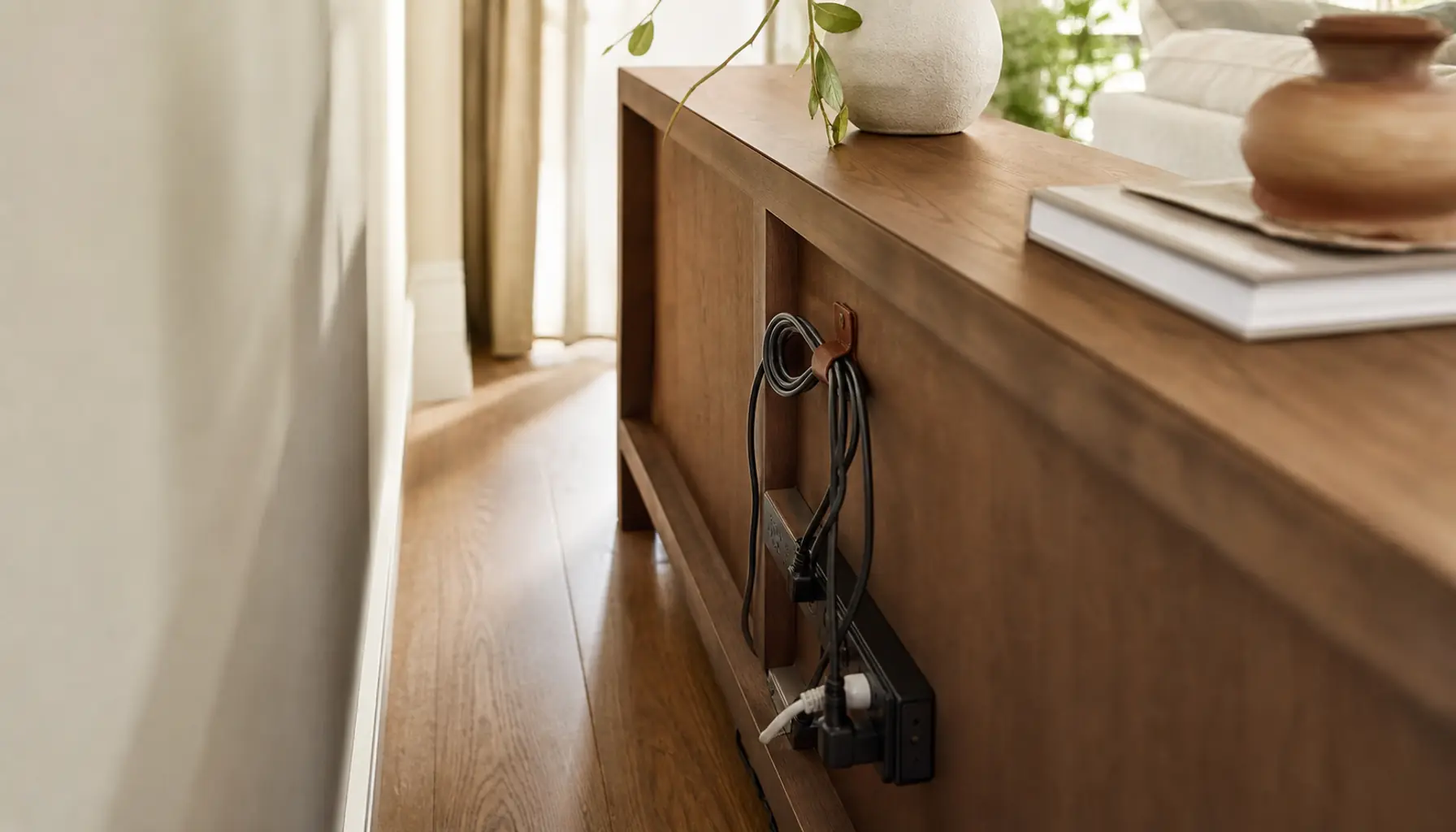
The best cord trick is often to let the furniture do the hiding. A console, a bookshelf, or a storage piece that pulls double duty can swallow most of a cord run before you cover the rest.
Position the outlet-facing side of a media unit so the cords drop behind it. Then only the last short stretch needs a cover. This is the same "solve it with placement first" thinking behind an entryway that works on busy mornings, where the right spot removes the problem instead of managing it.
A small cord-hiding box is another cheap helper. It is a vented plastic box that hides a power strip and the slack of coiled cords on the floor or a shelf, while still letting heat escape.
Common Mistakes That Keep Cords Looking Messy
Most cord projects fail for the same few reasons. Watch for these.
- Skipping the measurement. Guessing means a channel that ends short or a sleeve too small for the bundle. Measure the full run first.
- Leaving the raceway unpainted. A white channel on a sage or clay wall draws more attention than the cords did. Paint it to match.
- Cleaning nothing. Adhesive clips and raceways fail on dusty or freshly painted walls. Wipe with rubbing alcohol and let fresh paint cure for a few weeks.
- Burying the power strip. Sealing a strip inside a channel traps heat. Keep it in a vented box or open air.
- Pulling cords tight. A taut cable strains the plug and can pop out of clips. Leave gentle slack.
Expert Tips for a Truly Invisible Finish
A few small habits take the result from good to nearly invisible.
Match your method to your wall texture. Raceways and clips grip best on smooth, cured paint. On heavy texture, lean on furniture placement and a fabric sleeve instead, since adhesive struggles to hold on rough surfaces. This is the same surface rule that governs peel-and-stick projects in a rental.
Run the raceway behind or beside a piece of trim when you can, so it reads as part of the architecture. And if you are painting the channel anyway, it is a fine moment to touch up scuffs on the wall, the way a few smart paint tricks quietly change a whole room.
Finally, label the ends of bundled cords with a small tag before you sleeve them. When you move or swap a device later, you will thank yourself.
Frequently Asked Questions
How do I hide TV cords without drilling into the wall?
Use a paintable adhesive raceway for a mounted TV, or route the cords along the baseboard with adhesive clips. Both stick on with strong backing and peel off cleanly, so you avoid holes entirely. For the tidiest look, paint the raceway your wall color and drop the cords straight down behind the TV before running them to the outlet.
Are stick-on cord covers safe to leave up long term?
Yes, as long as you do not trap a power strip or adapter inside them and you keep cords away from heat. The covers themselves only hold low-heat cable runs. Check them once in a while for sagging adhesive, and never run a cable under a rug in a walking path, where wear can expose the wires.
Will adhesive clips or raceways damage my paint?
They can lift paint if you rip them off fast or if the paint was not fully cured. Remove them slowly, and warm stubborn adhesive with a hair dryer to soften it first. On fresh paint, wait a few weeks before sticking anything. Testing one clip in a hidden spot tells you how your wall will react.
What is the cheapest way to hide a lamp cord?
Adhesive clips are the cheapest, often under $10 for a pack. Clip the cord along the baseboard from the lamp to the outlet, and hide the bulk behind the nearest furniture. If the lamp sits near a sofa or console, good placement plus two or three clips usually makes the cord disappear.
Can I paint a cord cover to match my wall?
Yes, and you should. Most plastic raceways take latex wall paint well after a light scuff with fine sandpaper. Paint it the exact wall color, let it cure, then install. A matched channel nearly vanishes, while a bare white one stands out. Paint the snap-on lid too, not just the base.
How do I hide cords on a textured wall?
Adhesive grips poorly on heavy texture, so rely on furniture placement and a fabric cord sleeve rather than a raceway. Tuck the bundle behind a console or shelf and sleeve the exposed part. If you must use clips, press hard on the flattest high points and expect to replace a few over time.
Do I need an electrician for any of this?
No. These methods only tidy and cover existing cords that already plug into a standard outlet. You are not touching wiring inside the wall. If you want cords fully inside the drywall or a new outlet behind the TV, that is when you call a licensed electrician, since in-wall power work has real code and safety rules.
A Clean Wall Starts With a Plan
Hiding TV and lamp cords comes down to choosing the right cover for your wall and letting furniture hide the rest. A painted raceway for the mounted TV, a fabric sleeve for the loose bundle, and a few clips along the baseboard will handle almost any room, all without a drill and all reversible on move-out day.
Start with the cord that bothers you most, and work outward from there. When you are ready to plan the bigger picture of the room around that tidy wall, map the numbers first with the Decor Budget Calculator so the whole refresh stays affordable.