The Mixed Wood Tone Blueprint: How to Balance Light and Dark Furniture in One Room
Learn how to mix wood tones like a pro. This blueprint shows you how to balance light and dark furniture, match undertones, and make any room feel pulled together.

· 15 min read
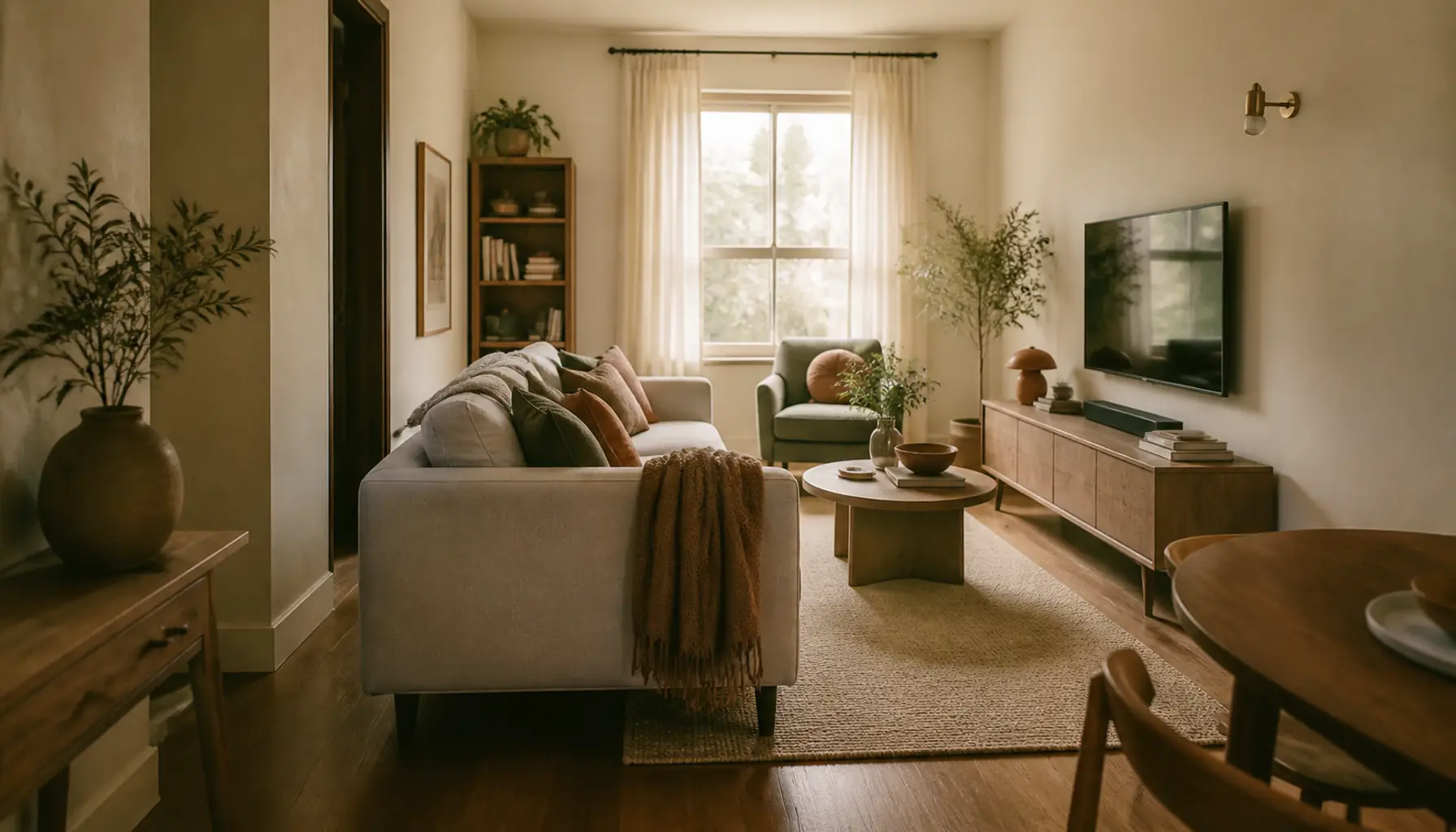
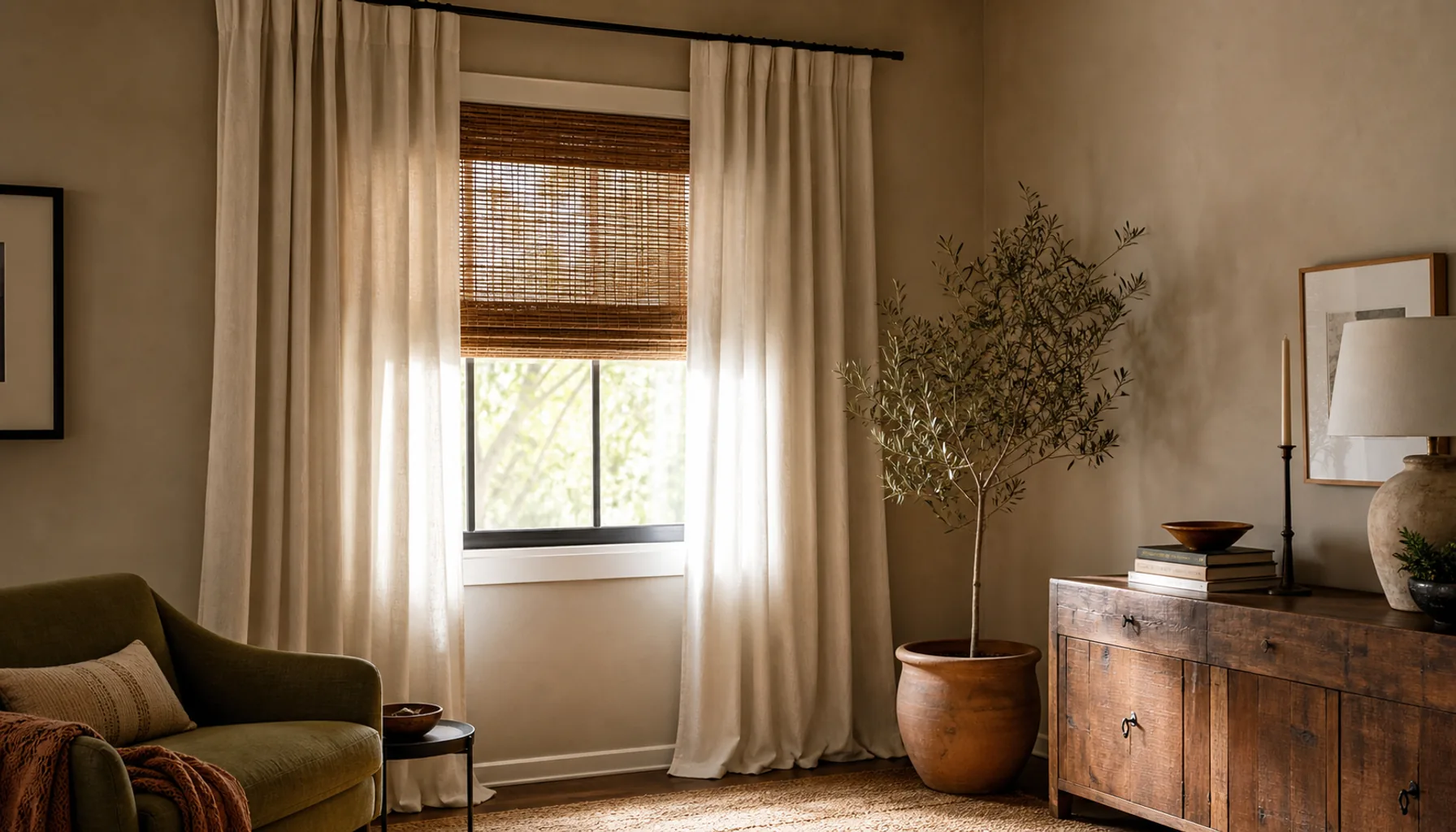
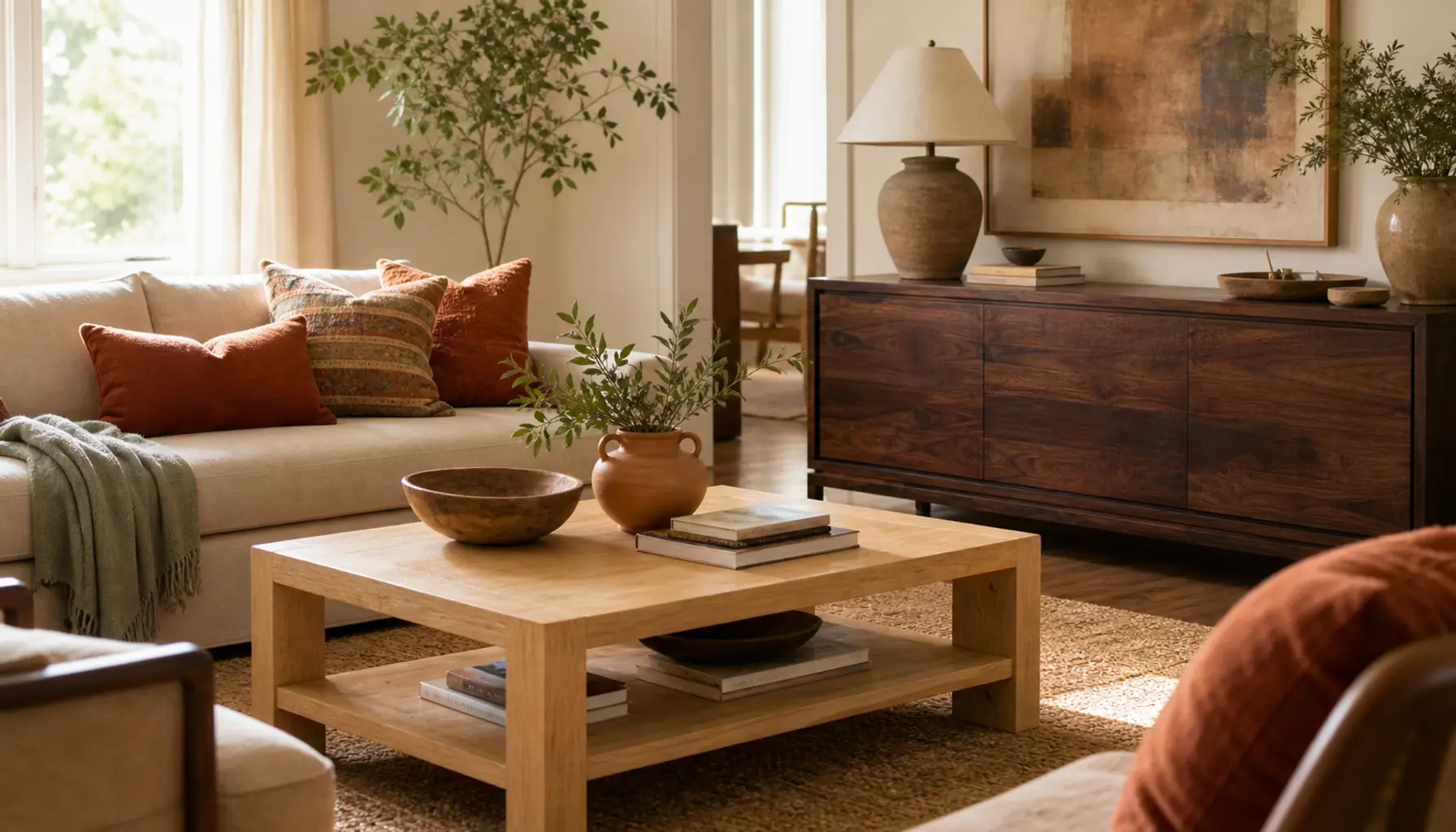
You can mix wood tones in one room, and honestly, you should. The old rule said every wood piece had to match. A matching bedroom set. A matching dining set. But matching sets feel flat and dated now. Rooms with a light oak table, a walnut sideboard, and a pine bench look collected and warm. They look like a real home, not a showroom.
Here's the short answer. To mix wood tones well, find the undertone of each piece (warm or cool), pick one dominant wood for the room, and repeat every other tone at least twice. Then put a buffer between any two pieces that clash, like a rug or a plant. That's the whole blueprint. The rest of this post breaks each step down with real examples so you can do it in your own space today.
I'm Isabella, and I've rearranged my Brooklyn apartment more times than I'd like to admit. Mixing wood was the thing that finally made my living room click. Let's get into it.
Key Takeaways
- Mixing wood tones is the current direction. Perfectly matched furniture sets tend to feel dated.
- Match undertones, not colors. A warm oak and a warm walnut look great together even though one is light and one is dark.
- Pick one dominant wood to cover about 60 percent of the wood in the room. Let a second tone take 30 percent and an accent take 10 percent.
- Repeat every wood tone at least twice so it looks intentional, not accidental.
- Use a buffer (a rug, a textile, a metal piece, or a plant) between two woods that fight each other.
- Contrast between light and dark furniture adds depth. Sameness is what makes a room feel dull.
- When in doubt, hold two pieces next to a white sheet of paper to read their real undertone.
Start by Finding the Undertone
The first step in mixing wood tones is to figure out each piece's undertone, because undertone matters far more than light or dark. Every wood leans one of three ways: warm, cool, or neutral.
Warm woods pull toward yellow, orange, or red. Think honey oak, cherry, teak, and most pine. Cool woods pull toward gray or ash. Think gray-washed oak, some walnuts, and driftwood finishes. Neutral woods sit in the middle and play nicely with almost anything.
Here's the trick that never fails. Grab a plain white sheet of paper and hold it against the wood. The white cancels out the color noise around it, and the undertone jumps out. Do this in daylight if you can. Bad lighting lies about color, and it's one of the reasons rooms feel off. If your lighting is fighting you, my post on 5 lighting mistakes that make rooms feel cold walks through the fixes.
Why undertone beats color
Two woods can be totally different shades and still look like they belong together, as long as their undertones agree. A pale warm oak and a deep warm walnut share the same golden base. Your eye reads them as a family. But pair a warm honey pine with a cool gray oak, and something feels wrong even if you can't name it. That's clashing undertones.
Quick tip: Take phone photos of your wood pieces in daylight. Looking at them on a screen side by side makes undertone differences obvious.
Learning to read undertones is a skill that pays off everywhere in your home, from paint to textiles. It's the same eye you use when you're choosing a color palette for a small living room.
Pick One Dominant Wood
Choose a single wood tone to lead the room before you add anything else. This is what keeps a mix from turning into a mess.
Your dominant wood is usually your biggest piece or your floor. If you have hardwood floors, they often set the tone for the whole room. A big dining table, a large bookshelf, or a bed frame can also take the lead. Pick the one your eye lands on first when you walk in.
Once you have a leader, everything else supports it. You're not trying to make the other woods disappear. You're giving the room an anchor so the mix reads as a choice, not chaos.
The 60/30/10 balance
Borrow this idea from color theory and apply it to wood.
- 60 percent goes to your dominant wood. Floors, the largest furniture, the pieces that fill the most visual space.
- 30 percent goes to a secondary wood. A sideboard, a coffee table, a set of chairs.
- 10 percent goes to an accent wood. A small stool, a picture frame, a bowl, a tray.
You don't need a tape measure. Just eyeball it. The point is that one tone clearly leads, one supports, and one adds a little spark. When all three woods fight for equal attention, the room feels busy and unsettled.
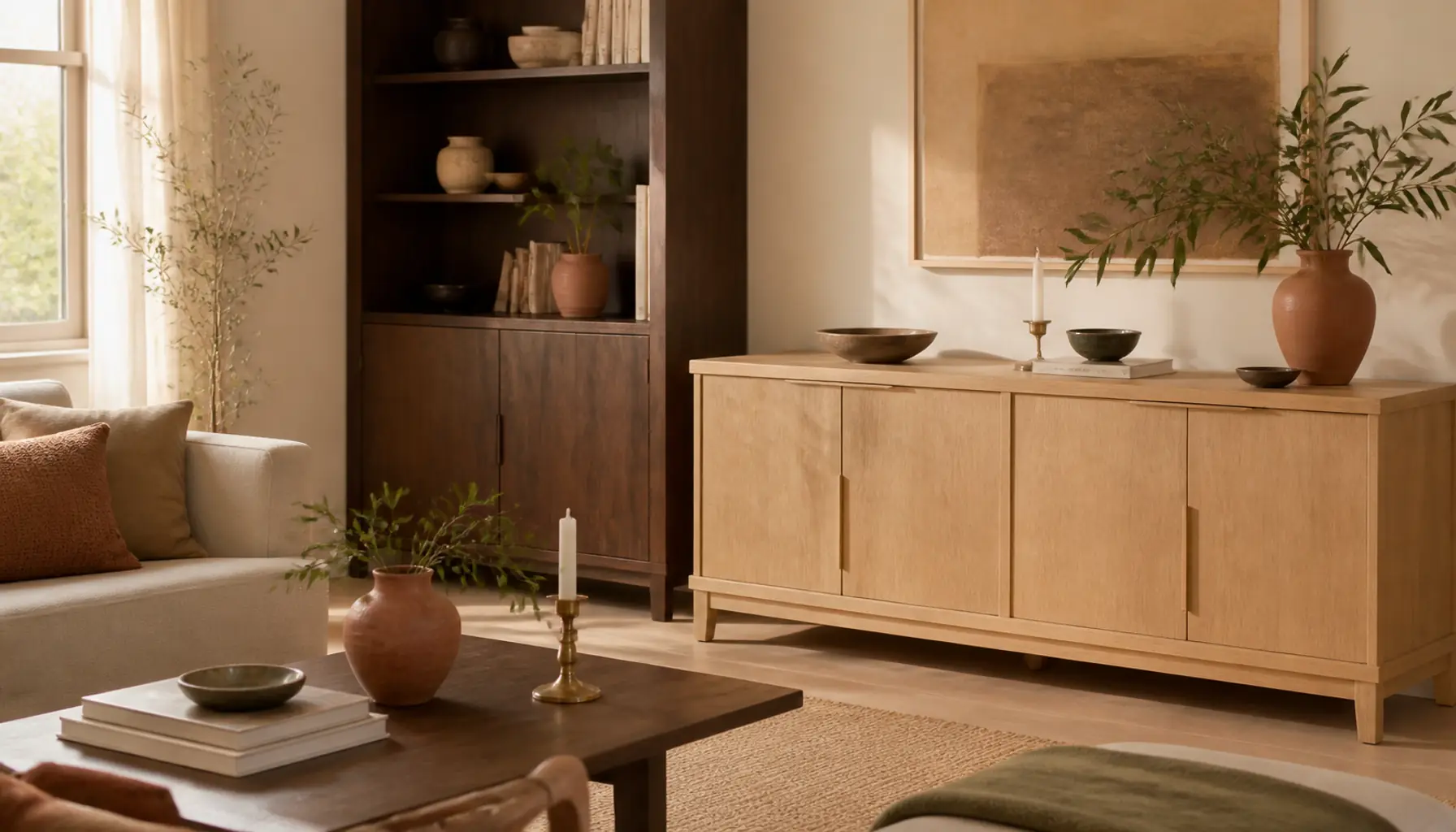
If your floors are a wood tone you don't love, don't panic. A large area rug can cover enough of them to shift the balance. My guide on how to choose and size a rug for any room helps you get the coverage right so the rug actually does its job.
Repeat Each Tone at Least Twice
Every wood tone in the room should show up at least twice, because a tone that appears only once looks like a mistake. Repetition is the difference between "collected" and "random."
Say you bring in a warm walnut side table, and it's the only dark wood in a room full of light oak. It'll feel like it wandered in from another house. But add a walnut picture frame on the wall, or a walnut bowl on the shelf, and suddenly the side table belongs. Your eye connects the dots. Two points make a line, and the room reads that line as intention.
This is where small accessories earn their keep. You don't need a second big piece of furniture. A tray, a candle holder, a frame, or a wooden lamp base can echo a tone for very little money. Thrift stores are gold for this. If you want to hunt smart, read thrift store furniture: how to spot pieces worth flipping.
Rule of thumb: If you can only find one spot for a wood tone, either commit to adding a second echo or swap the piece for one that matches a tone you already repeat.
Repeat across the room, not in a cluster
Spread your repeats around. Don't stack all your walnut pieces in one corner and all your oak on the other side. That splits the room in half. Instead, place a dark piece low and left, then echo it high and right. The tone travels across the space and ties the whole thing together.
Use a Buffer Between Clashing Pieces
When two woods sit right next to each other and fight, slide a buffer between them to break up the contact. This is the fastest fix in the whole blueprint.
A buffer is anything that isn't wood. It gives your eye a rest between two competing tones so they stop arguing. The most common buffers are:
- A rug. The biggest and easiest buffer. It separates your floor tone from your furniture tone.
- A textile. A throw blanket over a chair arm, a runner on a table, a cushion on a bench.
- A metal piece. A brass lamp, a black iron stand, a chrome frame.
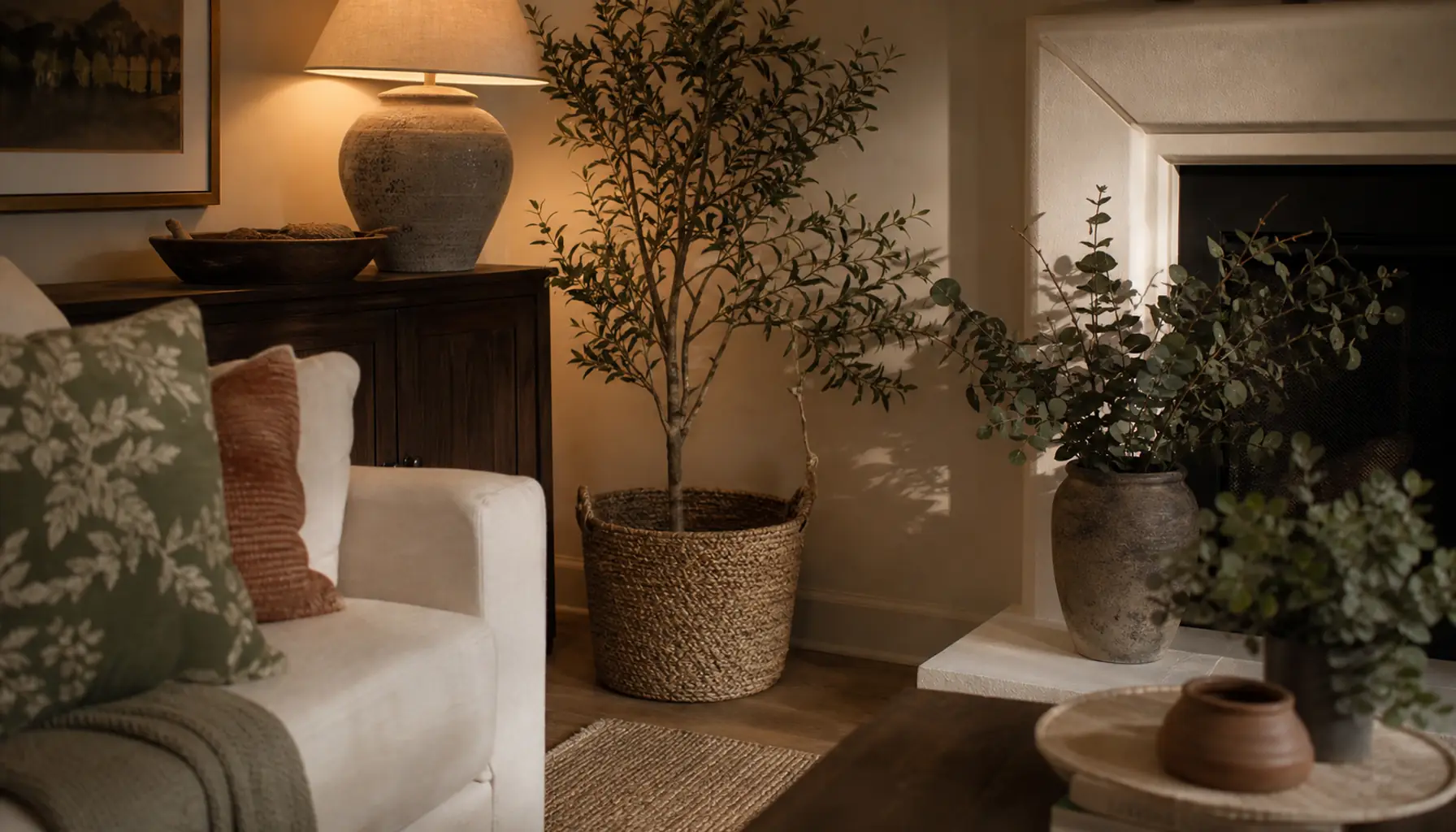
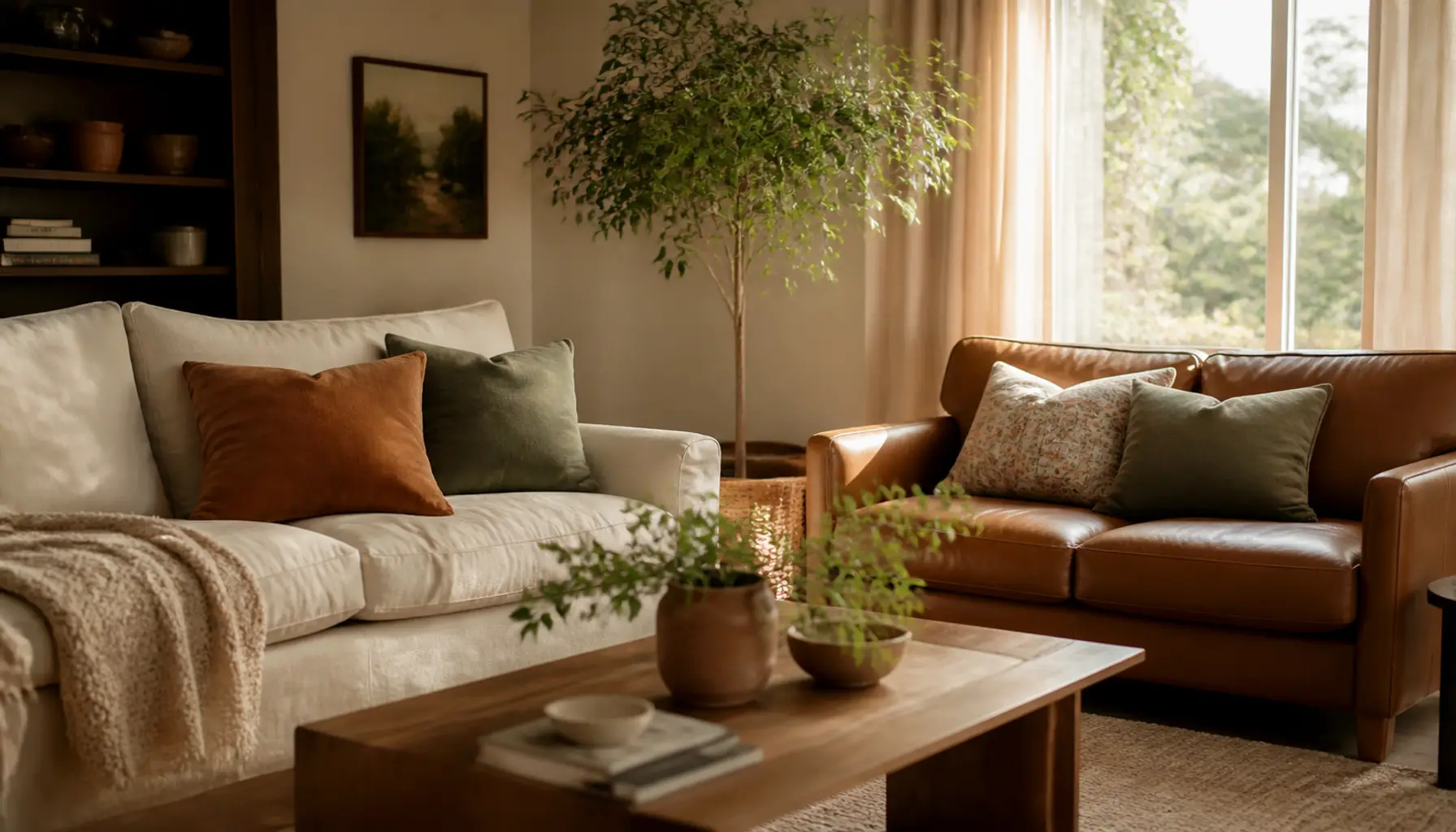
- A plant. Greenery softens everything and adds life. A trailing plant on a shelf breaks up a run of wood beautifully.
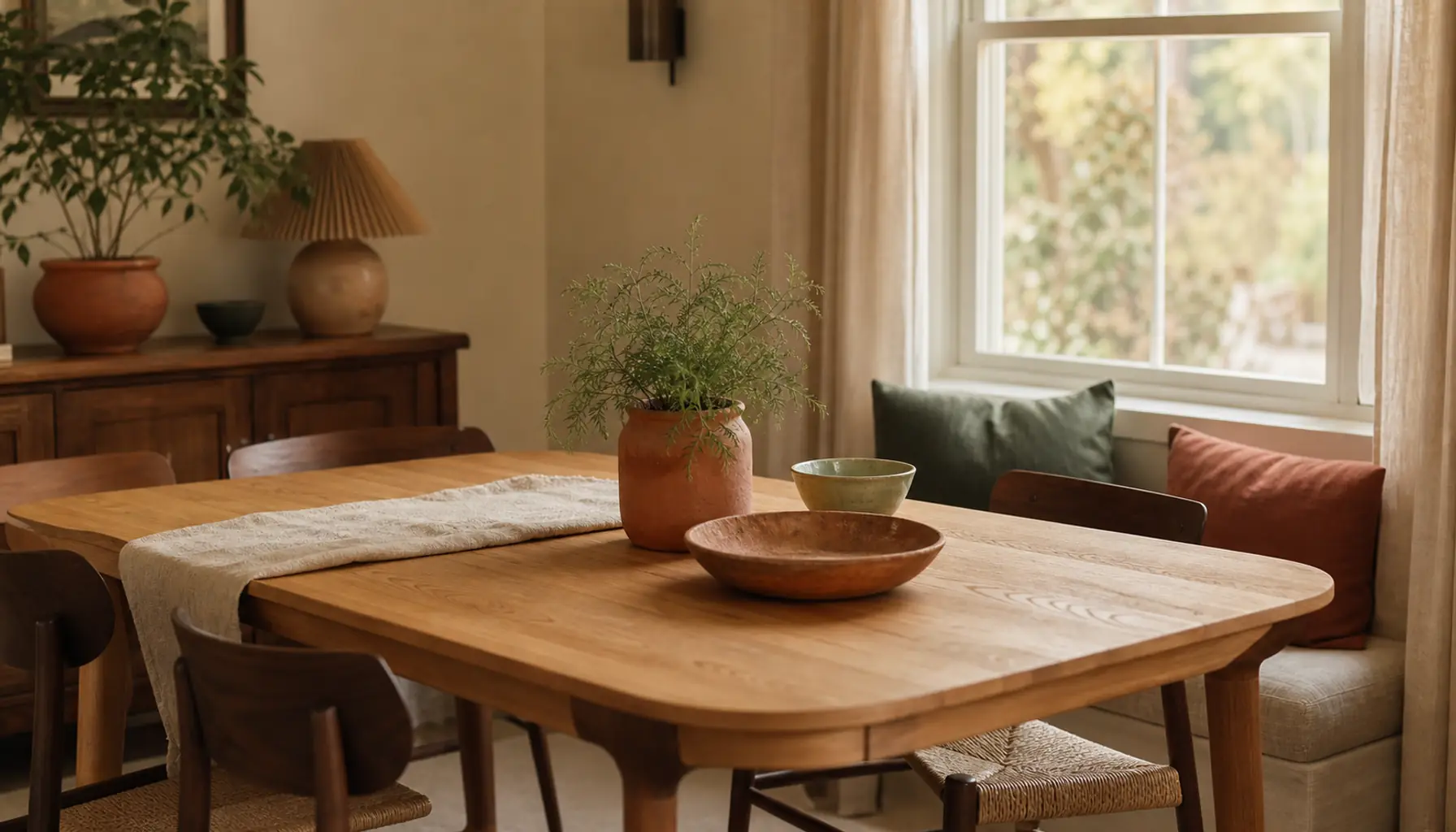
Picture a light oak dining table with dark walnut chairs pushed right up against it. If the mix feels tense, drop a natural linen runner down the center and add a woven placemat under each setting. The table and chairs stop touching directly, and the tension melts. Layering these soft elements is a whole skill on its own, and my beginner's guide to mixing textures goes deep on it.
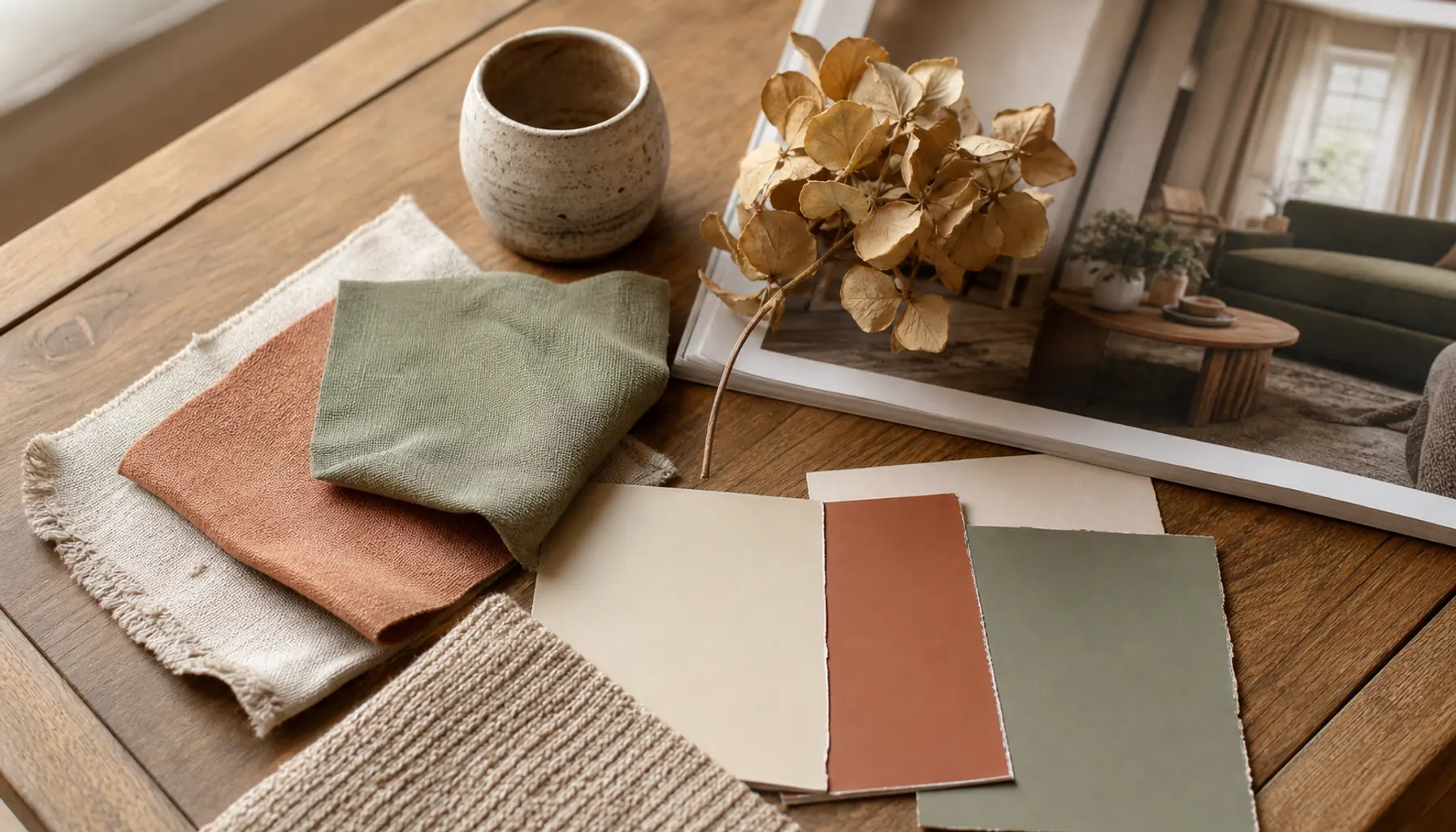
Buffers do double duty. They calm the wood mix and they add warmth. Natural fibers, terracotta, and sage tones work especially well as buffers in a warm home. If that palette speaks to you, you'll like terracotta and neutrals: styling a warm home.
Match Undertones, Not Exact Colors
Aim to match the undertone family across your pieces rather than chasing an exact color match. Trying to match colors exactly is a trap. You'll drive yourself crazy, and the result looks like a failed matching set anyway.
Warm goes with warm. Cool goes with cool. That's the core of it. A light warm oak, a medium warm teak, and a dark warm walnut are three different colors, but they're all warm. Together they look rich and layered. The variety is the point.
What about mixing warm and cool?
You can do it, but you need a strong buffer and a reason. Say you love a cool gray-washed oak shelf but your room is all warm woods. Give the cool piece its own zone, back it with a warm textile or a plant, and repeat a hint of that cool tone somewhere else so it doesn't feel stranded. It takes a lighter touch, so save warm-cool mixing for when you're comfortable with the basics.
Neutral woods are your peacemakers. A neutral-toned piece bridges a warm and a cool piece without drama. When you're stuck, reach for neutral.
If you're still figuring out your overall look, take the style finder quiz or read what is my interior design style. Knowing your style makes every wood choice easier.
How to Apply the Blueprint: Step by Step
Here's how to walk through a real room from start to finish. Do it in order and don't skip ahead.
Step 1: Name your dominant wood
Walk into the room and notice what your eye hits first. Usually that's your floor or your largest piece. Write it down. Note its undertone using the white paper trick. This is your leader, your 60 percent.
Step 2: Choose a secondary wood
Pick your next biggest wood piece and check its undertone against the leader. If they share a family, great. If they clash, decide whether to keep it (with a buffer) or swap it. This is your 30 percent.
Step 3: Add an accent wood
Bring in one smaller wood in a third tone for your 10 percent. A stool, a tray, a frame. Keep it small. This is the pop that makes the mix feel intentional instead of safe.
Step 4: Repeat every tone
Look around. Does each wood show up at least twice? If not, add a small echo. A bowl, a lamp base, a frame. Spread the repeats across the room, not in one pile.
Step 5: Drop in buffers
Stand back and look for tension. Wherever two woods clash or crowd each other, add a rug, a textile, a metal piece, or a plant. Let your eye rest.
Step 6: Check in daylight, then adjust
Look at the room in daylight and again at night. Lighting changes everything. Nudge pieces around until it feels calm and warm. Trust your gut on the final tweaks.
Common Mistakes
A few slip-ups trip people up again and again. Watch for these.
- Buying a matching set to be safe. It feels safe, but it reads flat and dated. Break it up with at least one different tone.
- Ignoring undertone. Two "brown" woods can clash hard if one is warm and one is cool. Always check the undertone.
- Using a tone only once. A single lonely piece looks like an accident. Repeat it or replace it.
- No buffers. Wood on wood on wood with nothing soft between them feels heavy and tense.
- Too many tones. More than three or four wood tones in one room gets noisy. Edit down.
- Judging color in bad light. Yellow bulbs and dim corners hide undertones. Check in daylight.
- Forcing perfection. You're not matching a paint chip. Aim for a harmonious family, not a clone.
Expert Tips
Small moves that make a big difference once you've got the basics down.
Keep a "wood diary" on your phone. Snap daylight photos of every wood piece you own. When you shop, compare on the spot instead of guessing from memory.
- Let metal and wood work together. Warm woods love brass and gold. Cool woods love black iron and chrome. Matching your metals to your wood undertones pulls the room tighter.
- Use paint as a reset. If a wood piece just won't cooperate, paint it. A painted dresser becomes a neutral buffer and takes the pressure off the mix. See paint tricks that change a room completely.
- Style shelves with tone in mind. Open shelving is the perfect place to repeat a wood accent. Just keep it calm, which my post on styling open shelves without the clutter covers.
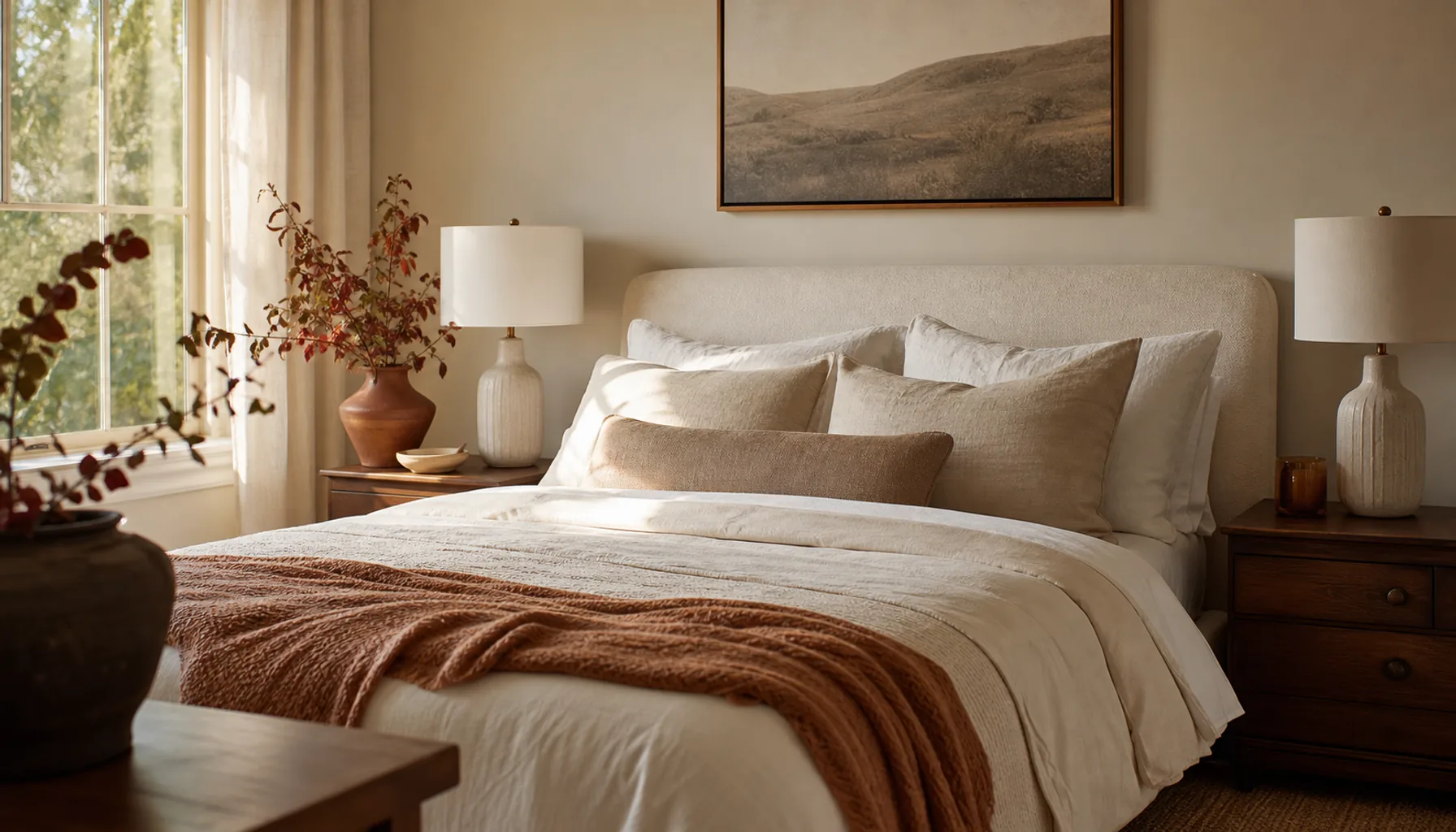
- Balance your bedroom the same way. A mixed-wood bedroom feels layered and grown-up. My guide to decorating a bedroom like a designer shows how.
- Budget before you buy. Echoing tones with accessories is cheap, but bigger swaps add up. Run the numbers with the budget calculator first.
Frequently Asked Questions
Can you mix light and dark wood furniture in the same room?
Yes, and it usually looks better than matching everything. Light and dark furniture together adds depth and keeps a room from feeling flat. The key is to match undertones. A light warm oak and a dark warm walnut work beautifully because they share a golden base. Pick a dominant tone, repeat each one at least twice, and add buffers where pieces clash.
How many wood tones can one room handle?
Two or three tones is the sweet spot. Three feels collected without getting noisy. You can stretch to four if the room is large and you use plenty of buffers, but past that it starts to feel busy. Remember the 60/30/10 idea: one tone leads, one supports, and one accents. That structure keeps even a few tones feeling calm.
What if my wood floors clash with my furniture?
First, check the undertone of the floor against your pieces. If they clash, the easiest fix is a large area rug that covers enough floor to shift the balance. A rug is also a natural buffer. If a specific piece is the problem, you can paint it or move it to a spot where a rug or textile separates it from the floor. You don't have to refinish anything.
Do wood tones need to match the trim and doors?
No, they don't. Trim, doors, and built-ins are often a separate finish, and that's fine. Treat painted trim as a neutral that goes with anything. If your trim is stained wood, just fold its undertone into your plan like any other piece and repeat that tone somewhere in the room so it feels connected rather than random.
How do I tell if a wood is warm or cool?
Hold a plain white sheet of paper next to it in daylight. The white cancels the surrounding color and the undertone shows up. Warm woods lean yellow, orange, or red. Cool woods lean gray or ash. If it's hard to call, it's probably a neutral, which is good news because neutrals mix with almost anything.
What's the easiest buffer to add between clashing woods?
A rug or a plant. A rug separates your floor from your furniture and covers a lot of ground fast. A plant is even quicker: set it between two competing pieces and the greenery gives your eye a break while adding warmth. Textiles like throws and runners and metal accents in brass or black work great too.
Is matching furniture ever okay?
Sure, but use it as one layer, not the whole room. If you have a matching set you love, keep two pieces and swap the rest for different tones. That breaks up the showroom look while keeping what you like. The goal isn't to ban matching. It's to add contrast so the room feels layered and personal.
Bring It All Together
Mixing wood tones is less about rules and more about balance. Find each piece's undertone, pick one wood to lead, repeat every tone at least twice, and slip a buffer between anything that clashes. Do that, and light and dark furniture will look like they were always meant to share a room.
Start small this week. Pull out one wood accent you love, find a second spot to echo it, and add a plant or a throw nearby. Step back in daylight and see how much calmer the room feels. That's the blueprint working.
Want help nailing your overall look before you start swapping pieces? Take the style finder quiz, then come back and build your mix with confidence. Your home is allowed to look collected, warm, and a little bit imperfect. That's what makes it yours.