How to Build a Día de Muertos Ofrenda at Home, Respectfully
How to build a Día de Muertos ofrenda at home: what each element means, a step-by-step setup for any space, safe candle tips, and mistakes to avoid.
· 11 min read
An ofrenda is a home altar built to welcome back the souls of loved ones who have died. It is part of Día de Muertos, a Mexican tradition observed around November 1 and 2, and it is a way of remembering people with food, light, and color. You can build one on a shelf, a table, or a corner of a room. This guide explains what goes on an ofrenda, what each element means, and how to set one up with care, especially if the tradition is new to you.
Key Takeaways
- An ofrenda honors specific people. It is a personal remembrance, not a seasonal decoration or a Halloween variation.
- Traditions vary by region and by family. Mexico has many local customs, so treat any single list of items as a starting point.
- Photos, light, scent, food, and water are the core. Most ofrendas are built around those five things, in whatever form fits your space.
- Marigolds and candles guide the souls. The orange color, the scent, and the flame are all meant to light the way home.
- Use real belongings and favorite foods. The most meaningful pieces are the ones tied to the person being remembered.
- Safety comes first. Keep flames away from paper and cloth, and use flameless candles if you have children, pets, or a small space.
- If you're learning, learn from the source. Mexican and Mexican American communities, museums, and cultural centers are the best guides.
What an Ofrenda Is and Why It Matters
An ofrenda is an offering, a place where the living set out the things their dead loved while they were alive. It is often described as a welcome, and the belief is that the souls return for a visit around November 1 and 2. In many families, November 1 is set aside for children who have died, and November 2 for adults.
This is not decoration in the usual sense. Every item has a job, and the person being remembered is the center of it. If you are not from this tradition, it helps to treat the ofrenda the way you would treat any religious or family ritual: with care, curiosity, and a willingness to follow how the tradition is actually practiced.
A note on respect: Día de Muertos is distinct from Halloween. If you are building an ofrenda, keep it separate from your spooky decor, and don't mix skeleton props or costume items into it.
The Elements of a Traditional Ofrenda
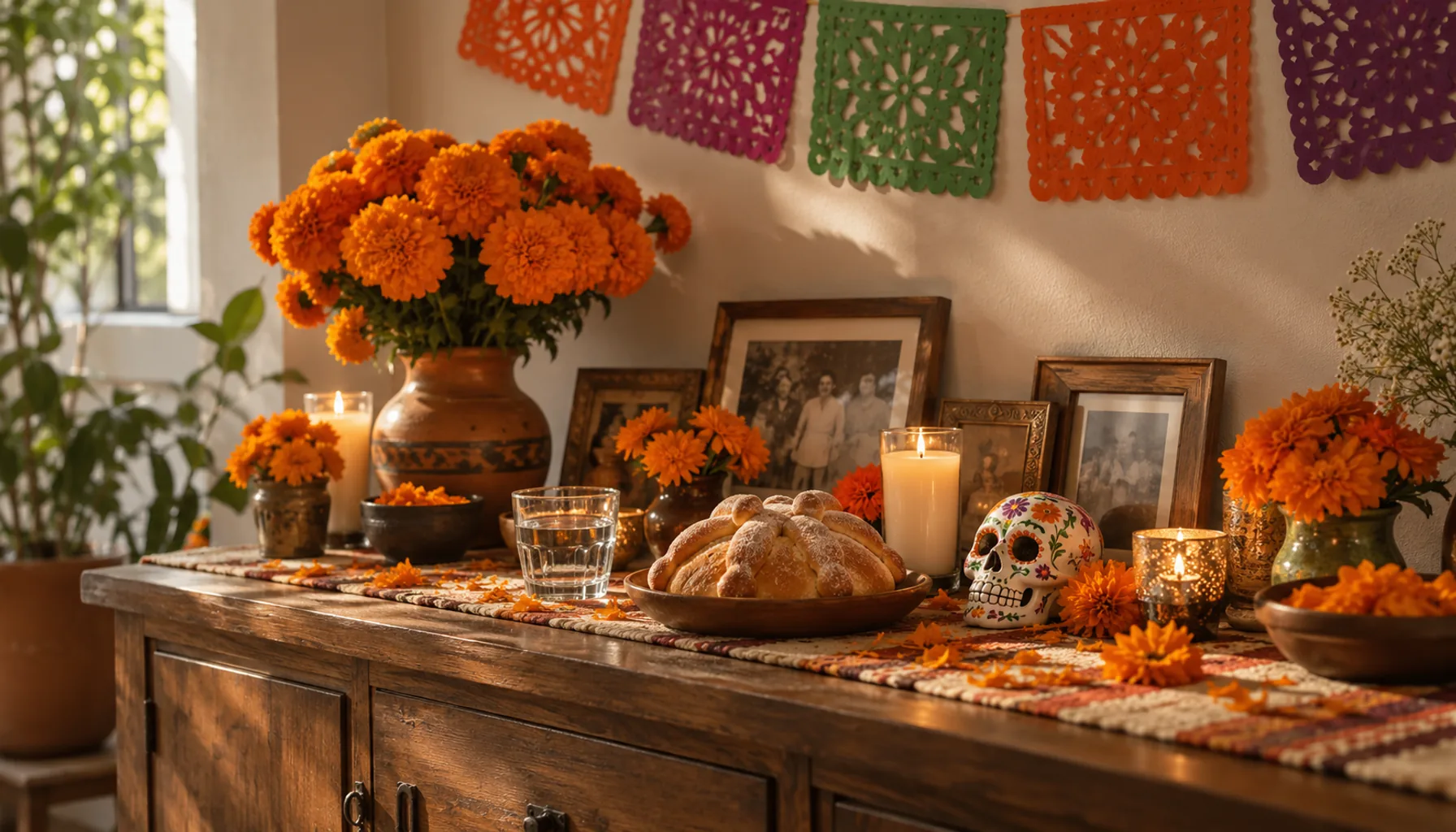
Most ofrendas share a set of elements, and each has a meaning. Here is what you will see most often.
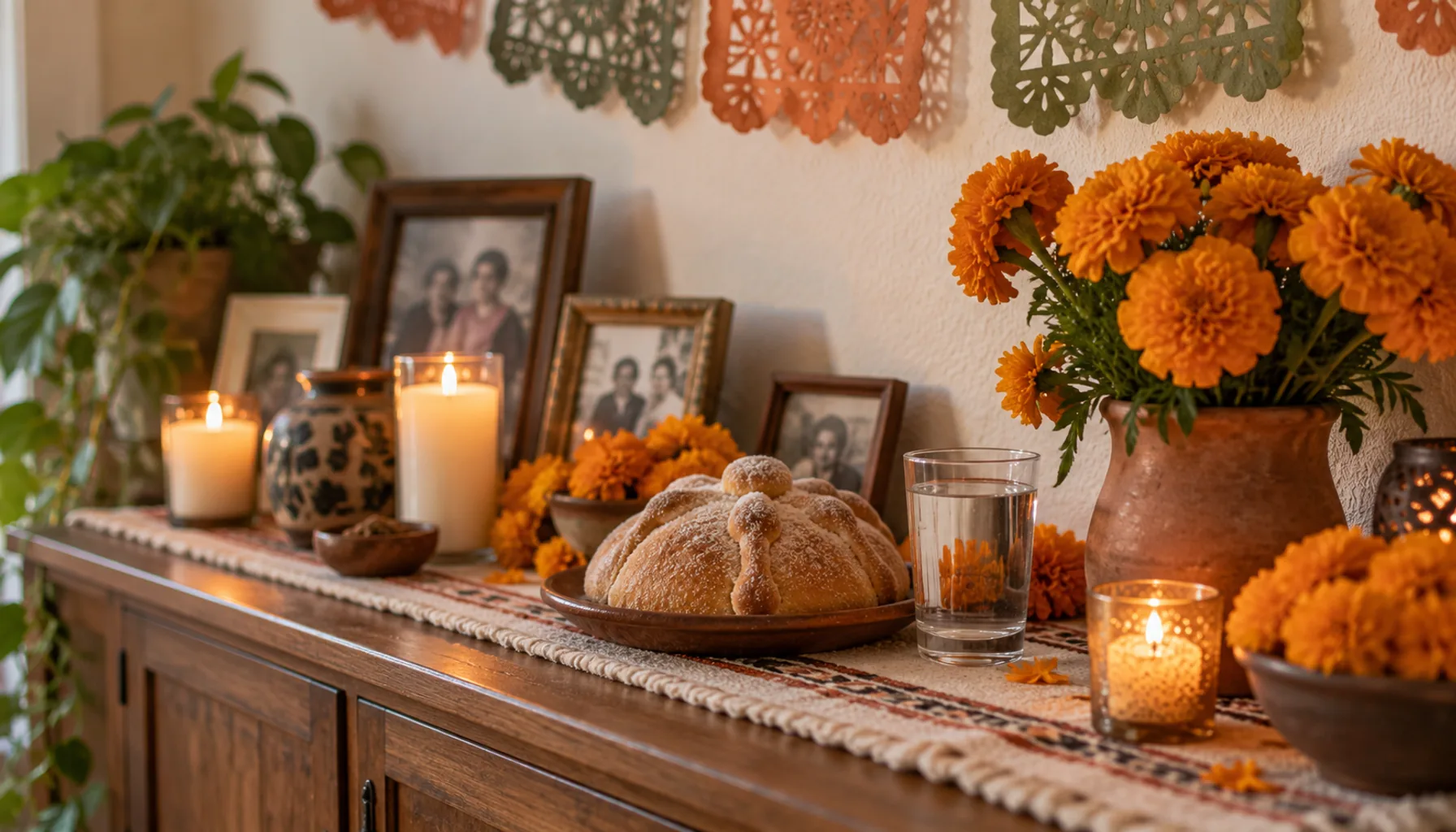
- Photographs. The heart of the ofrenda. A photo of each person goes toward the top or center, so they are the focus.
- Candles. The flames light the path for the souls. Some families set out one candle for each person remembered.
- Marigolds (cempasúchil). The Mexican marigold, with its bright orange petals and strong scent, is said to guide souls to the altar. Petals are often scattered in a path.
- Papel picado. Cut tissue paper banners that add color and movement. The air moving through them is said to signal the souls' arrival.
- Food and drink. Favorite dishes of the person remembered, along with pan de muerto, a sweet bread made for the season.
- Water. A glass or jug, to refresh the souls after a long journey.
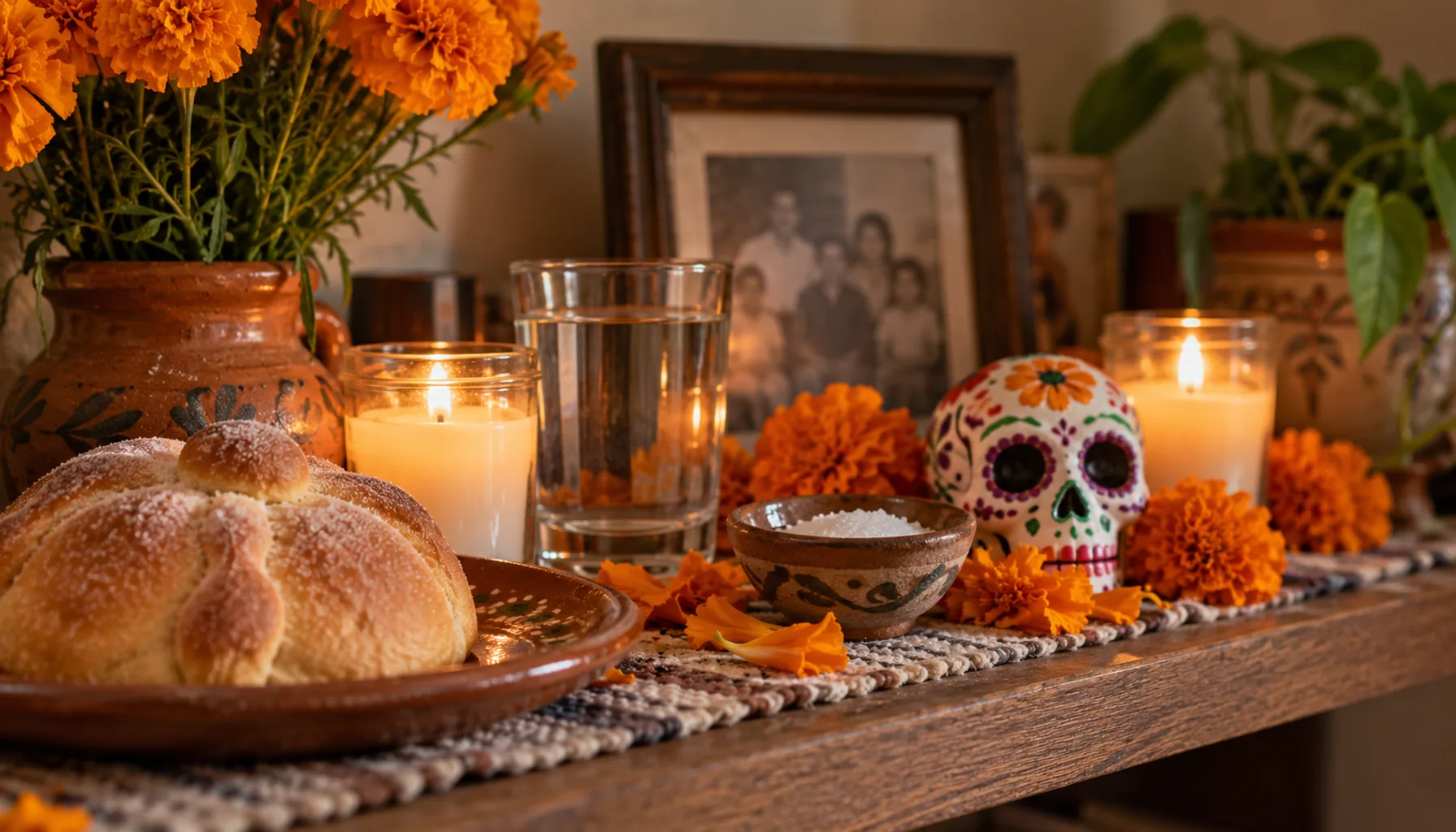
- Salt. Often included as a symbol of purification, though practices differ between families.
- Copal or incense. The smoke is a way of cleansing the space and calling the souls.
- Sugar skulls (calaveras de azúcar). Often decorated with names, they represent the dead with affection and humor.
- Personal belongings. A favorite hat, a toy, a pack of cigarettes, a book, a pair of reading glasses. Whatever tells a story about the person.
Some ofrendas are built in two or three levels, with each level carrying symbolic meaning, and some families build seven. A single shelf with a photo, a candle, flowers, and a glass of water is still a sincere ofrenda.
Choosing a Location and a Surface
The right place is a stable, uncluttered surface where the ofrenda can stay for a few days. A table, a sideboard, a bookshelf, a fireplace mantel, or a corner on the floor all work.
- Pick somewhere safe. Stay away from curtains, fans, open windows, and heating vents, and keep the surface out of high traffic paths.
- Keep it visible but not in the way. A living room or dining room is common because the family passes through it.
- Think about the wall behind it. A plain wall lets the colors stand out, and you can hang papel picado from it.
- Clear the surface first. A cluttered table crowds the ofrenda. Our 15-minute declutter method is a fast way to prepare a space.
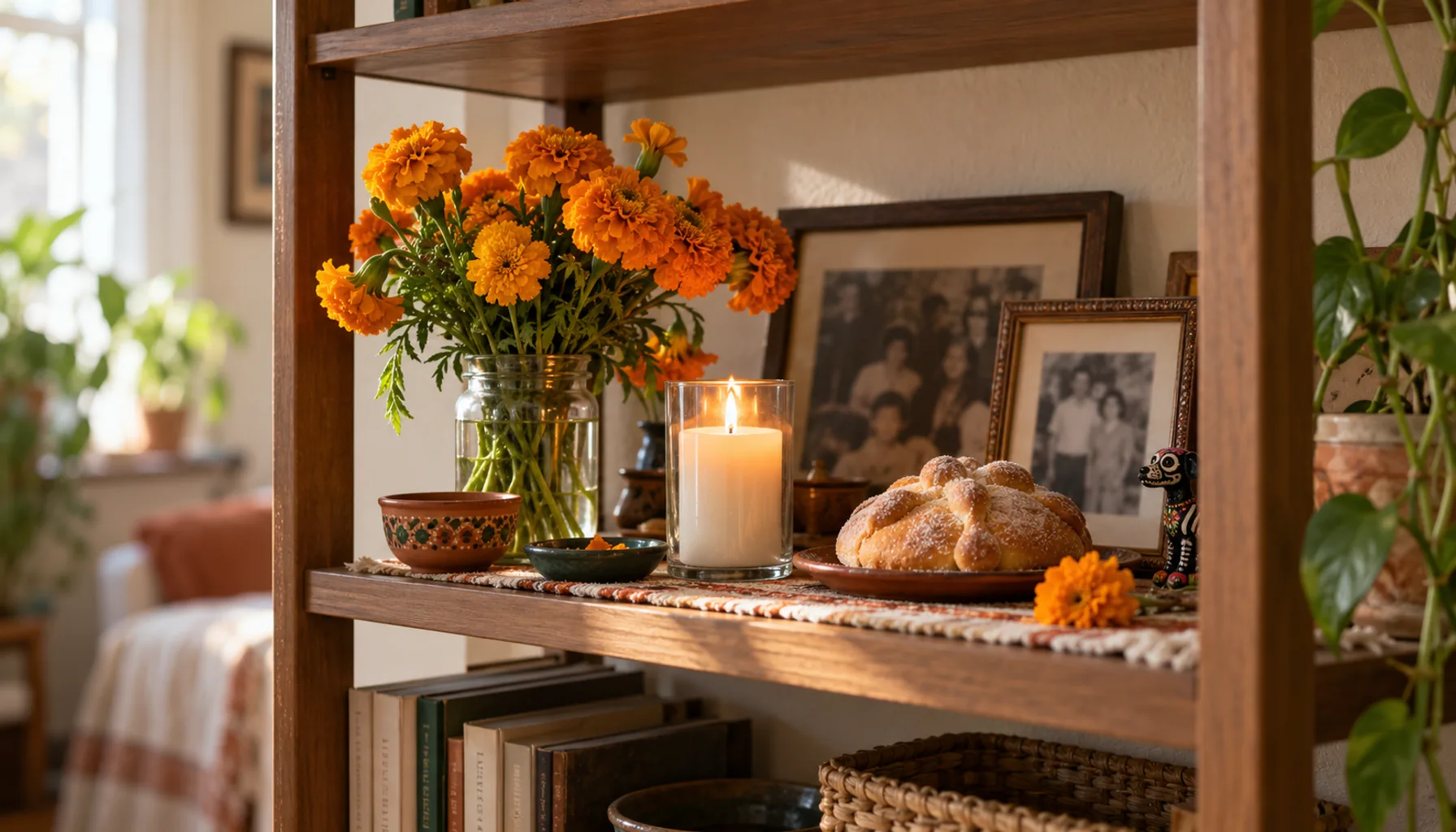
If you're short on room, a console table or a bookcase shelf will hold everything you need. Our guides on styling a console table and styling open shelves without clutter cover the basics of arranging a small surface.
Step-by-Step: Building the Ofrenda
Step 1: Decide Who You Are Remembering
Start with the people, not the decorations. Choose the family members or friends you want to honor, and gather their photos, their favorite foods, and a few of their belongings.
If you're building the ofrenda with children, talk about the people first, and ask what they remember about them. Stories are part of the tradition.
Step 2: Prepare the Surface
Clean the surface, and cover it with a cloth. White or cream is common, and many families add a layer of brightly colored fabric or a woven mat. If you use levels, stack sturdy boxes or crates, and drape the cloth over them so the steps are even.
Test that everything is stable before you set anything on it. A wobbling box with candles on it is a hazard. For help with fabrics, see our beginner's guide to mixing textures.
Step 3: Place the Photographs First
Set the photos at the top or the back, so they are what you see first. If you are using an old or irreplaceable print, display a copy and keep the original safe, since candles, smoke, and handling can damage it.
Frame the photos if you can, or stand them up with small easels. If you are arranging several, our gallery wall guide explains how to balance sizes and spacing.
Step 4: Add Marigolds and Papel Picado
Place marigolds in vases, scatter petals around the base, or lay a path of petals from the door to the altar. If fresh marigolds are hard to find, use dried ones or high-quality paper marigolds.
Hang papel picado along the back wall or across the top of the table. Use removable tape or a thin line with clips, which is easy on rental walls. Our list of renter-friendly upgrades has more ways to hang things without damage.
Step 5: Set Out Food, Water, and Personal Items
Place a favorite dish or drink for each person, along with pan de muerto, fruit, and a glass of water. Add the personal belongings that mean the most to you.
If the person loved music, a record sleeve or a small speaker belongs here. Our post on record and music wall art ideas has ideas for showing a record collection with care. Keep food fresh and clear it away when the observance ends.
Step 6: Add Candles and Incense Last
Light is the last step. Set candles in stable holders, away from paper and cloth. If you use copal or incense, place it on a fireproof dish, and open a window slightly.
Warm candlelight changes the whole mood of a room, and our article on lighting mistakes that make rooms feel cold explains why low, warm light feels so welcoming. Never leave flames unattended, and put them out when you leave the house or go to sleep.
Safety Tips for Candles, Food, and Pets
Candles, paper, and flowers sit very close together on an ofrenda, so a little planning matters.
- Use glass-enclosed or flameless candles if you have children, pets, or a small space. A flickering LED gives the same glow.
- Keep papel picado above and away from flames. Tissue paper ignites quickly.
- Never leave candles burning unattended. Put them out before you leave or go to bed.
- Watch for pets. Dogs and cats can knock over candles, and some foods, such as chocolate, are harmful to dogs.
- Ventilate when using incense. Smoke can bother people with asthma and set off smoke alarms.
Common Mistakes to Avoid
- Treating it as decor. An ofrenda is for specific people, so choose photos and items that relate to them.
- Mixing it with Halloween props. Plastic skeletons and costume items belong elsewhere.
- Adding too many items. A crowded altar loses its meaning. Fewer, more personal items work better.
- Using candles next to paper. Keep a clear gap, or switch to LED.
- Leaving food out too long. Replace or remove it after the observance, and follow your family's custom for what to do with it.
- Skipping the learning. If this is new to you, read about regional traditions and talk with people who practice them.
Expert Tips
Build it a few days ahead so you aren't rushing, and add the fresh items, like flowers and bread, the day before. Make the photos the highest point, and let color work up from the base.
If you're remembering someone you didn't know well, ask relatives for a favorite food or story. A personal detail does more than any amount of marigolds. And once the observance ends, our seasonal home reset checklist helps you pack away the pieces you plan to reuse.
Frequently Asked Questions
When is Día de Muertos celebrated?
Día de Muertos is observed on November 1 and 2. Many families dedicate November 1 to children who have died and November 2 to adults. Some families begin building the ofrenda a few days earlier, and some start the evening of October 31, so check what your family or community does.
Can anyone build an ofrenda, or only people from Mexico?
Anyone can build one to remember a loved one, as long as it is done with respect and understanding. If you aren't from the tradition, learn its meaning first, follow its customs, and avoid treating it as a themed party. Local cultural centers often welcome visitors.
What do I put on an ofrenda?
Most ofrendas include photographs, candles, marigolds, papel picado, food and drink, water, salt, incense or copal, sugar skulls, and personal belongings. There is no fixed list. Choose items that reflect the person you are remembering and the customs of your family.
Why are marigolds used on an ofrenda?
Marigolds, called cempasúchil, are believed to guide the souls home with their bright orange color and strong scent. Petals are often laid in a path from the entrance to the altar. If you can't find fresh ones, dried or paper marigolds work.
How do I build an ofrenda in a small apartment?
Use a shelf, a console, or a small table. Keep it simple with a photo, a candle, flowers, a glass of water, and one or two personal items. Use flameless candles if space is tight, and hang papel picado on a removable line rather than on the wall.
What should I do with the food afterward?
Customs differ. Many families share the food after the observance, while others set it aside or dispose of it respectfully. Follow your own family's practice, and don't leave perishable food out for days, since it spoils and attracts pests.
Is it appropriate to include alcohol or cigarettes?
Many families include a favorite drink or item that the person enjoyed, including alcohol or tobacco. It is a personal choice, and the point is to remember the person as they were. Keep anything like that out of reach of children.
Making It Personal
A photo, a light, some flowers, and a favorite dish do more than a crowded table. What matters is that the ofrenda belongs to a specific person.
Begin with the people you want to remember. Gather their photos and one or two belongings, pick a safe corner, and build outward from there. Take your time, and let the details come from the memories.
One useful home email a month
Real ideas to make your home work better. No spam, easy unsubscribe.