In this article
- Key Takeaways
- Start by Reading the Room's Shape
- Where to Put the TV in a Narrow Room
- Protect the Walkway and Traffic Flow
- Choose Furniture That Fits the Proportions
- Make a Narrow Room Feel Wider
- Step-by-Step: Arrange Your Room From Scratch
- Common Mistakes to Avoid
- Expert Tips
- Frequently Asked Questions
- Your Narrow Room Has More Potential Than You Think
How to Arrange a Long Narrow Living Room With a TV (Without Blocking the Walkway)
Learn how to arrange a long narrow living room with a TV so the walkway stays clear, the layout feels balanced, and every seat has a good view.

· 14 min read
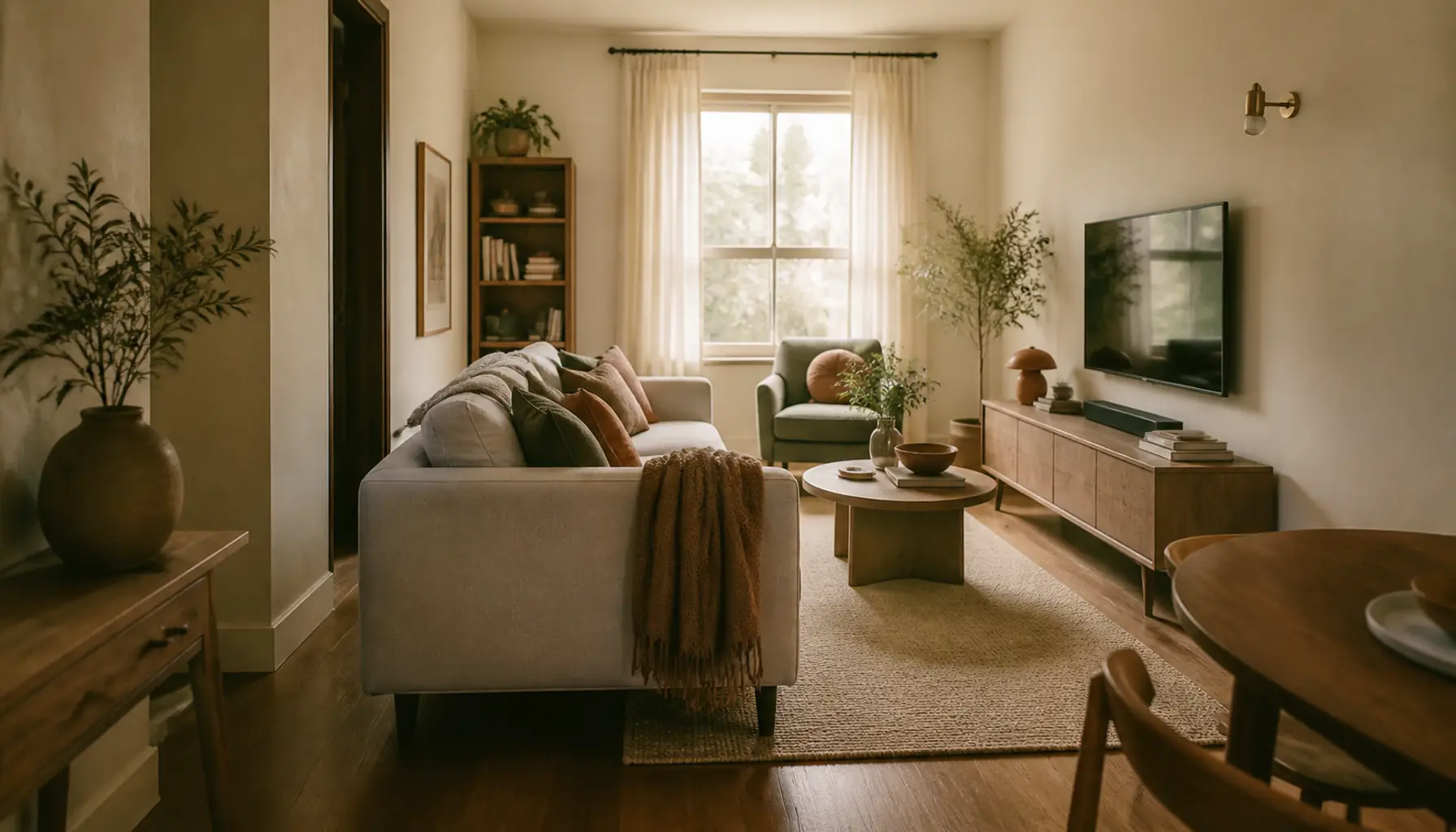
To arrange a long narrow living room with a TV, split the space into zones, float the sofa off the long wall, and keep one clear path running end to end. That's the short version. A narrow room fights you when you push everything flat against the walls, because it turns your living room into a hallway with a couch.
The good news? You have more options than you think. A room that feels like a bowling lane can become cozy and functional with a few smart moves. You just need to stop treating the walls as the only place furniture can go.
Below you'll find a full plan. We'll cover where to put the TV, how to protect your traffic flow, and how to make the whole room feel wider than it measures. Let's get your space working for you.
Key Takeaways
- Divide a long room into two or three zones so it reads as purposeful, not stretched out.
- Place the TV on a short wall or on the long wall opposite your main seating, never where it blocks the walkway.
- Keep a clear path at least 30 to 36 inches wide running the length of the room.
- Float furniture away from walls when you can, even by a few inches, to add depth.
- Use a large rug to anchor each seating zone and stop the room from feeling scattered.
- Draw the eye upward and outward with lighting, mirrors, and low, horizontal furniture.
- Measure everything twice before you buy, because narrow rooms punish oversized pieces.
Start by Reading the Room's Shape
The first step to arrange a long narrow living room is to figure out where your doorways, windows, and the TV need to live. These fixed points decide everything else.
Walk the room. Notice where you enter and where you exit. Most long rooms have a door at one end and either a window or another opening at the other. That line between the two openings is your natural walkway, and you should protect it.
Find your fixed points:
- Entry doors set the start of your traffic path.
- Windows bring in daylight you don't want to block with tall furniture.
- Radiators, vents, and outlets limit where the TV and lamps can go.
- The main view is the spot people will look at most, usually the TV.
Once you know these anchors, sketch a quick top-down plan on paper. You don't need to be an artist. Boxes and lines are enough to test ideas before you move a single heavy thing.
Tip: Snap a photo of the empty room from the doorway. Looking at a flat image helps you spot the true proportions your eyes gloss over in person.
Zone the space
A long room feels best when it does more than one job. Instead of one big furniture blob, plan two or three zones.
A common split is a main TV lounge at one end and a small reading nook, desk, or dining spot at the other. The two areas share the room but feel distinct. A large rug sized to fit the seating does most of this work for you, since it visually draws a border around each zone.
Where to Put the TV in a Narrow Room
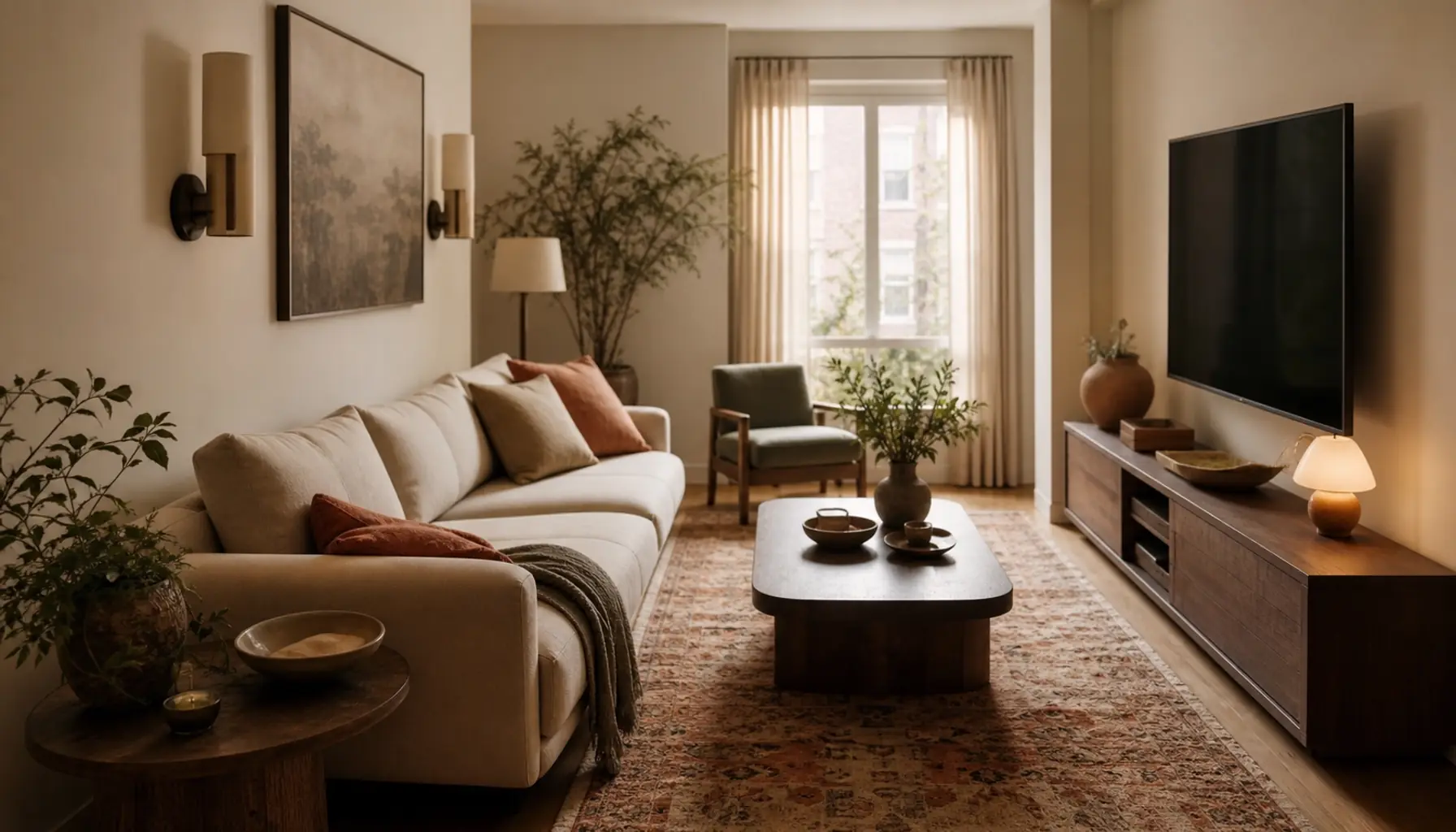
Put the TV on a short end wall or on the long wall directly across from your sofa, whichever keeps the walkway clear and the viewing distance comfortable.
TV placement is the piece most people get wrong. They shove the set wherever the cable outlet sits, then build the room around a bad angle. Start with where you'll sit, then decide where the screen goes.
Option 1: TV on the short wall
Mounting the TV on a short end wall is often the cleanest choice. It lets you line the sofa up along the length of the room and keeps the screen out of the walkway.
This works well when the room isn't too long, so you're not sitting 15 feet back. Pair it with a low, wide media console that hugs the wall and doesn't eat into your path.
Option 2: TV on the long wall
If your room is very long, the short-wall setup can push seating too far from the screen. In that case, mount the TV on one of the long walls and float the sofa opposite it.
This splits the length in half and instantly makes the space feel more like a square. You get a proper face-to-face layout, and the walkway can run behind the sofa along the other long wall.
Keep these numbers in mind:
- Viewing distance: sit roughly 1.5 to 2.5 times the screen's diagonal away.
- TV height: center the screen near eye level from a seated position.
- Console width: aim for a console a bit wider than the TV, but never so deep it narrows the path.
Tip: Mount the TV flat if wall space is tight, but leave the cords hidden. A renter-friendly cord cover keeps the wall clean without drilling a hole.
Protect the Walkway and Traffic Flow
Always leave one continuous path through the room, and make it at least 30 inches wide, or closer to 36 if the room is your main route to other spaces.
Traffic flow is the whole game in a narrow living room layout. If people have to squeeze past the coffee table or climb over an ottoman, the room fails no matter how nice it looks.
Rules that keep the path open:
- Run the walkway along one long wall, not down the center, so seating stays grouped.
- Keep 14 to 18 inches between the sofa and the coffee table.
- Choose armless or slim-arm seating to reclaim inches.
- Skip bulky recliners that need clearance to open.
If your room is also a hallway to the kitchen or a bedroom, be strict. Nothing should ever force a detour. Position the sofa so its back guides people along the intended route, almost like a soft fence.
Use furniture to direct movement
Furniture can steer traffic instead of blocking it. A console table behind a floated sofa creates a natural boundary between the lounge and the walkway. A pair of small chairs can mark the edge of a zone without walling it off.
For rooms that double as storage-starved apartments, lean on pieces that do two jobs. These small apartment storage ideas that actually work pair well with narrow layouts, since a storage ottoman or a slim bench can hold clutter and still sit inside your zone.
Choose Furniture That Fits the Proportions
Pick low, horizontal pieces with visible legs, and scale everything down so the room can breathe.
Big, boxy furniture is the enemy here. A deep sectional swallows a narrow room. Instead, look for a sofa with a lower back and slim profile. Legs matter too, because seeing floor under your furniture tricks the eye into reading more open space.
Smart picks for narrow rooms:
- A three-seat sofa rather than a sectional, placed lengthwise or floated.
- Round or oval coffee tables that soften the room and are easier to walk around.
- Nesting tables you can pull out only when needed.
- Open-frame shelving instead of a solid, heavy bookcase.
Round shapes deserve a special mention. In a room full of straight lines, a round coffee table or a curved accent chair breaks up the tunnel effect and gives your eyes somewhere gentle to land.
Go vertical for storage
When floor space is tight, build upward. Tall, narrow shelving uses the wall without stealing the walkway. Just style it well, because open shelves can tip into chaos fast. Follow a simple system for styling open shelves without the clutter so the storage still feels calm.
Make a Narrow Room Feel Wider
Trick the eye with color, light, and placement so the room reads wider than its true measurements.
You can't move the walls. But you can change how the space feels with a few visual moves that cost little and pay off big.
Widen the room visually:
- Paint the short walls a slightly deeper or warmer tone to pull them closer and balance the length.
- Run stripes or a rug pattern crosswise to break up the long axis.
- Hang one large mirror on a long wall to bounce light and double the sense of depth.
- Keep window treatments high and wide so daylight fills the whole space.
Color choice sets the mood. Soft, warm neutrals open a room up, while a smart accent keeps it from feeling flat. If you're stuck on shades, this guide to choosing a color palette for a small living room will help you land on a scheme that feels roomy and warm.
Texture matters as much as color. Layering a few materials adds richness without adding bulk, and mixing textures the easy way keeps a pared-back room from looking cold. Think a nubby throw, a smooth ceramic lamp, and a woven basket.
Step-by-Step: Arrange Your Room From Scratch
Here's a clear order to follow when you're ready to move things around. Work through it top to bottom.
Step 1: Clear the room
Take everything out, or at least push it all to one end. You want to see the empty shape and start fresh. It's hard to plan around clutter you've stopped noticing.
Step 2: Mark your walkway
Use painter's tape on the floor to mark a path 30 to 36 inches wide from your main entry to the far end. This line is sacred. Every piece of furniture has to respect it.
Step 3: Place the TV and main seating
Decide on short-wall or long-wall TV placement, then set your sofa. Sit down and check the view and the distance before you commit. Adjust until the angle feels right.
Step 4: Add the rug and coffee table
Slide a large rug under the front legs of your seating to anchor the zone. Center the coffee table on the rug, keeping that 14 to 18 inch gap from the sofa.
Step 5: Build the second zone
At the other end, set up your secondary area. A reading chair and a floor lamp, a compact desk, or a small dining table all work. Keep it low and simple so it doesn't crowd the room.
Step 6: Layer lighting and accents
Add lamps at different heights, then finish with art, a plant, and a few personal pieces. Step back, walk the path, and tweak anything that snags.
Common Mistakes to Avoid
The most common mistake is lining every piece of furniture flat against the long walls.
Pushing everything to the walls. People think it opens the middle, but it just creates a hollow runway. The fix is to float at least one piece, usually the sofa, even a few inches off the wall to add depth and stop the tunnel feeling.
Buying furniture that's too big. A deep sectional or an oversized coffee table eats your walkway and dwarfs the room. Measure your space, then measure the furniture, and leave clearance on every side before you buy. Use a budget calculator to plan pieces that fit both your room and your wallet.
Ignoring the lighting. One harsh overhead light makes a long room feel like an office corridor. Cold, flat light flattens everything. Learn from these lighting mistakes that make rooms feel cold and layer in warm lamps at seated height instead.
Using tiny rugs. A small rug floating in the center makes the room look bigger only in the worst way, by exposing more bare floor. Size the rug so your seating sits at least partly on it. That single change grounds the whole zone.
Blocking the windows. A tall bookcase in front of a window kills your daylight and your view. Keep the tallest pieces on solid walls and let the windows breathe.
Expert Tips
A few extra moves separate a room that works from one that feels truly finished.
- Float a console behind the sofa. It defines the walkway, hides cords, and gives you a spot for a lamp and a tray. This is the single best trick for a long room.
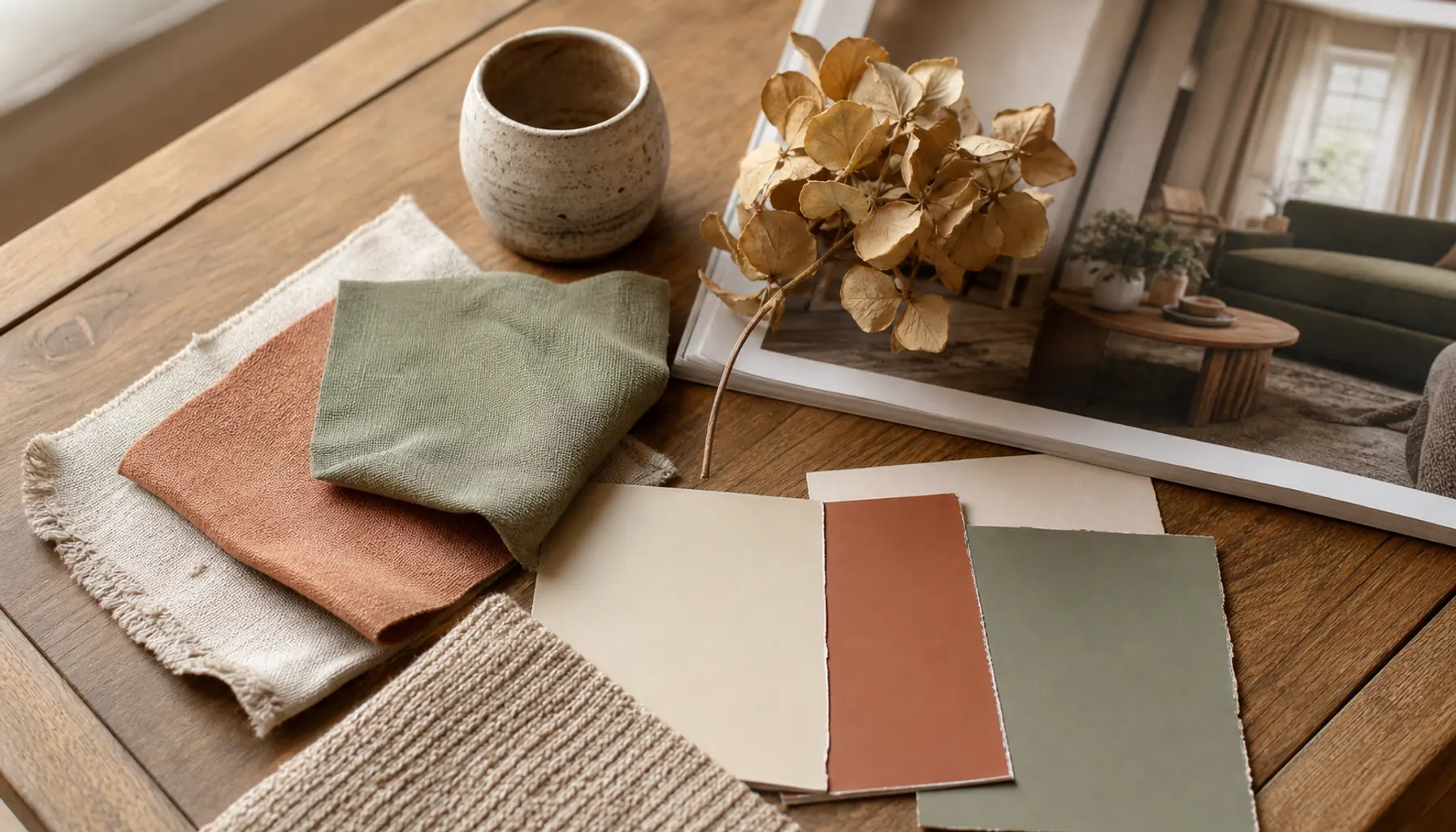
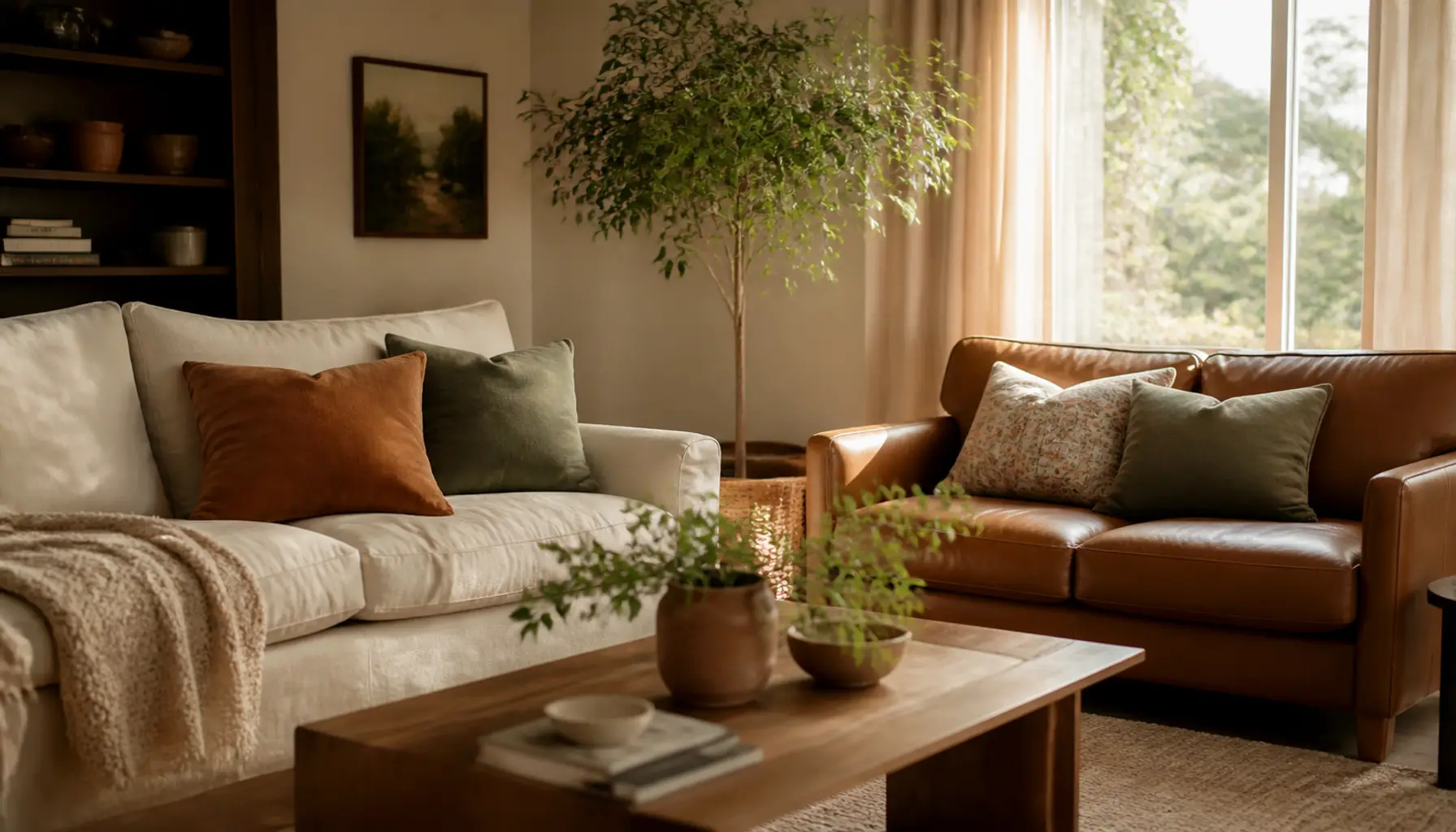
- Repeat one warm accent. Carry a color like terracotta or sage across cushions, a throw, and a piece of art. Repetition ties the two zones together. The look in terracotta and neutrals styling suits narrow rooms because it feels cozy without going dark.
- Hang curtains high and wide. Mount the rod close to the ceiling and let panels extend past the window frame. It stretches the wall up and out. This window treatments guide walks through hanging them right.
- Add art at the far end. A gallery wall or one large piece on the short end wall pulls your eye down the room and gives the length a purpose.
- Not sure of your look? Try the style finder to lock in a direction before you shop.
Frequently Asked Questions
Where should the TV go in a long narrow living room?
Put the TV on a short end wall if the room isn't too long, so the sofa can run lengthwise and the walkway stays clear. In a very long room, mount it on a long wall opposite a floated sofa. Either way, choose the spot that gives a comfortable viewing distance and never blocks your main path.
How wide should the walkway be?
Leave at least 30 inches for a walkway you use occasionally, and closer to 36 inches if it's your main route through the home. A clear, continuous path is the most important rule in any narrow living room layout. If two people can pass without turning sideways, you're in good shape.
Should I float my sofa or push it against the wall?
Floating the sofa, even a few inches off the wall, almost always looks better in a long room. It adds depth and helps define a seating zone. Pushing it flat against the long wall creates a hallway feel. If you must save space, floating it just slightly still breaks the tunnel effect.
What size rug works best?
Go bigger than you think. Choose a rug large enough that the front legs of your sofa and chairs rest on it, which anchors the whole seating zone. A rug that's too small makes the room feel choppy. For a full breakdown, see our guide on choosing and sizing a rug for any room.
Can I have a dining area in the same room?
Yes, and a long room is ideal for it. Use one end for the TV lounge and the far end for a compact dining table or a small desk. A rug under each zone keeps them visually separate. Just protect the walkway between the two so movement stays easy.
How do I make a narrow room feel wider?
Paint the short walls a warmer or deeper tone, hang a large mirror on a long wall, and run your rug pattern crosswise. Keep furniture low and choose pieces with visible legs. Warm, light neutrals and good layered lighting also open the space and stop it from feeling like a corridor.
What furniture should I avoid?
Skip deep sectionals, oversized coffee tables, and bulky recliners that need clearance to open. Avoid tall, solid bookcases in front of windows. These pieces crowd the walkway and shrink the room. Slim-arm sofas, round tables, and open-frame shelving all serve a narrow space far better.
Your Narrow Room Has More Potential Than You Think
Learning to arrange a long narrow living room is really about respecting one clear walkway and giving each end of the room a job. Do that, and the awkward shape starts to feel intentional and warm.
Start small. Tape out your walkway this weekend, float your sofa a few inches, and see how different the room feels before you spend a dollar. The best layouts come from testing, not guessing.
When you're ready to take the next step, browse the rest of the blog for more room-by-room ideas, and use the style finder to pin down the cozy, lived-in look that fits your home. Your long, narrow room is waiting to become your favorite spot in the house.