The Best Fake Plants That Actually Look Real (And How to Style Them in Dark Rooms)
The best fake plants that actually look real, plus how to style faux greenery in dark rooms where real plants die. What to look for and which types fake best.

· 10 min read
The best fake plants that look real share a few honest details, and once you know them you can spot a good one in seconds. Faux greenery has come a long way, and it solves a real problem: you want that warm, lived-in, organic feel, but your room faces a brick wall or gets an hour of weak light a day. Real plants slowly die in those spots. A well-chosen fake looks great for years. This guide covers what makes a faux plant convincing, which types fake best, and how to style them so a dark room still feels alive.
The trick is not spending the most money. It is choosing the right plant for the light you have and styling it like you would the real thing.
Key Takeaways
- Look for matte leaves, varied color, visible stems, and natural shaping. Shine gives a fake away instantly.
- Some plants fake far better than others. Fiddle-leaf figs, olive trees, and snake plants are safe bets.
- Style faux greenery near a lamp, not a bright window, where too much light exposes the material.
- Swap the plastic pot and add a real soil topper. The base sells the illusion as much as the leaves.
- Dust fake plants often, because dust is the fastest way to make them look fake.
- Mix one or two real low-light plants with your faux ones for extra realism.
What Makes a Fake Plant Look Real
A convincing faux plant gets the details right that your eye checks without you noticing. Before you buy, look closely for these signs of quality.
Matte, not shiny leaves. Real leaves are mostly matte. Cheap fakes have a plastic sheen that catches light and reads as fake from across the room. Good ones use a soft finish.
Color variation. A real plant is never one flat green. Look for leaves that shift from deeper to lighter tones, with a little brown or yellow at the edges. Uniform color is a red flag.
Real-touch or fabric materials. Higher-quality faux leaves use a soft, slightly textured material rather than stiff plastic. They bend and feel closer to the real thing.
Visible, natural stems. Real stems are not perfectly straight, and they branch at gentle angles. The best fakes have wired stems you can bend into a natural shape.
A quick test: photograph the plant with your phone. A camera exaggerates plastic shine and flat color, so a fake that looks good on screen usually looks great in person.
The reason these details matter is that your eye reads texture and color before shape. Nail those, and a faux plant blends into a room the way natural textures make any space feel warm and layered.
The Faux Plants That Fake Best
Some plants are far easier to fake than others, so start with the reliable ones. Broad, simple leaves and sculptural shapes hold up. Delicate, thin foliage tends to look plastic.

Fiddle-Leaf Fig
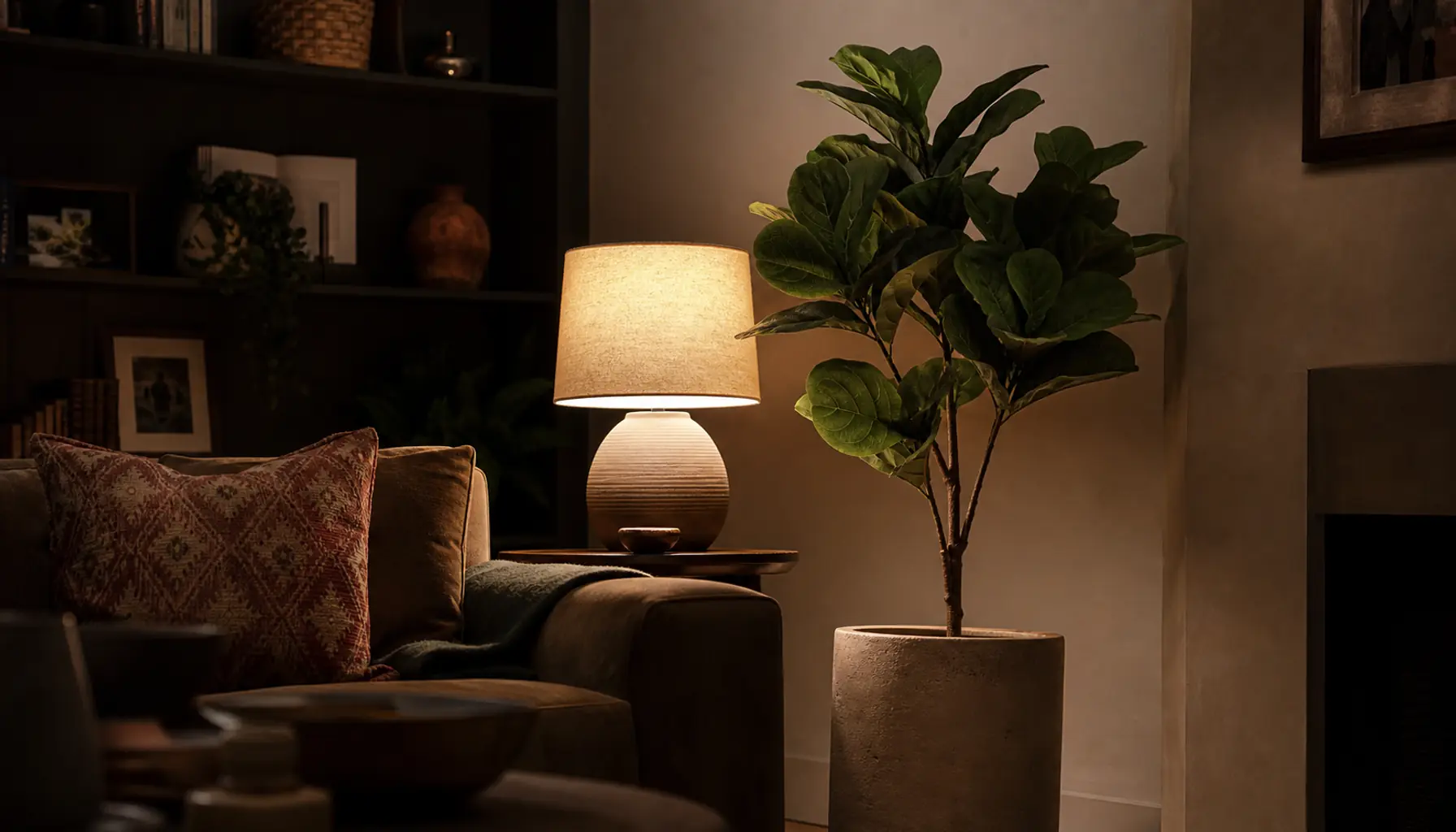
The fiddle-leaf fig fakes beautifully because its large, matte leaves are easy to reproduce. One tall faux fig in a corner reads as a real statement plant. Bend the branches so they reach in different directions, since a real tree is never symmetrical.
Olive Tree
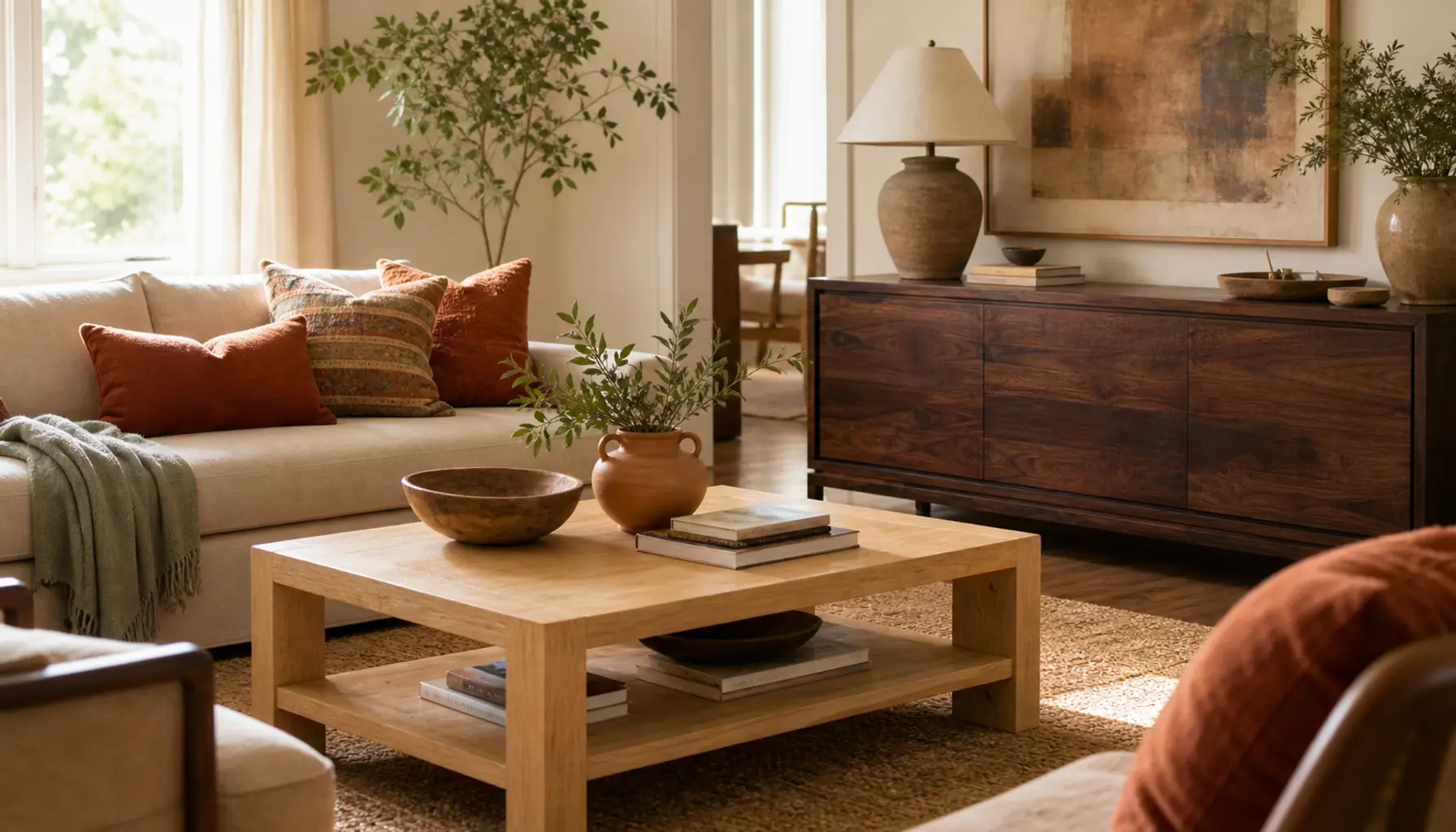
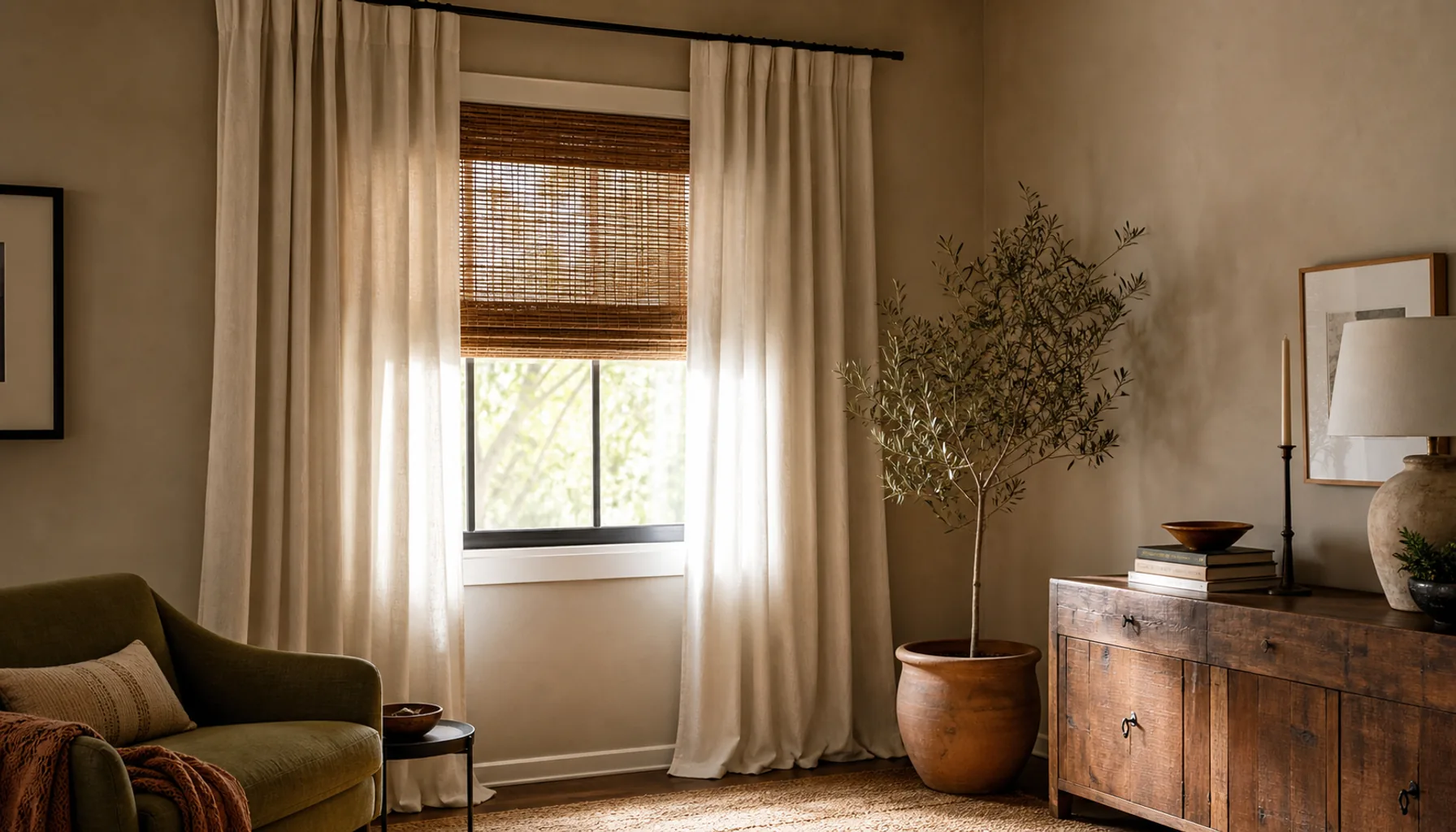
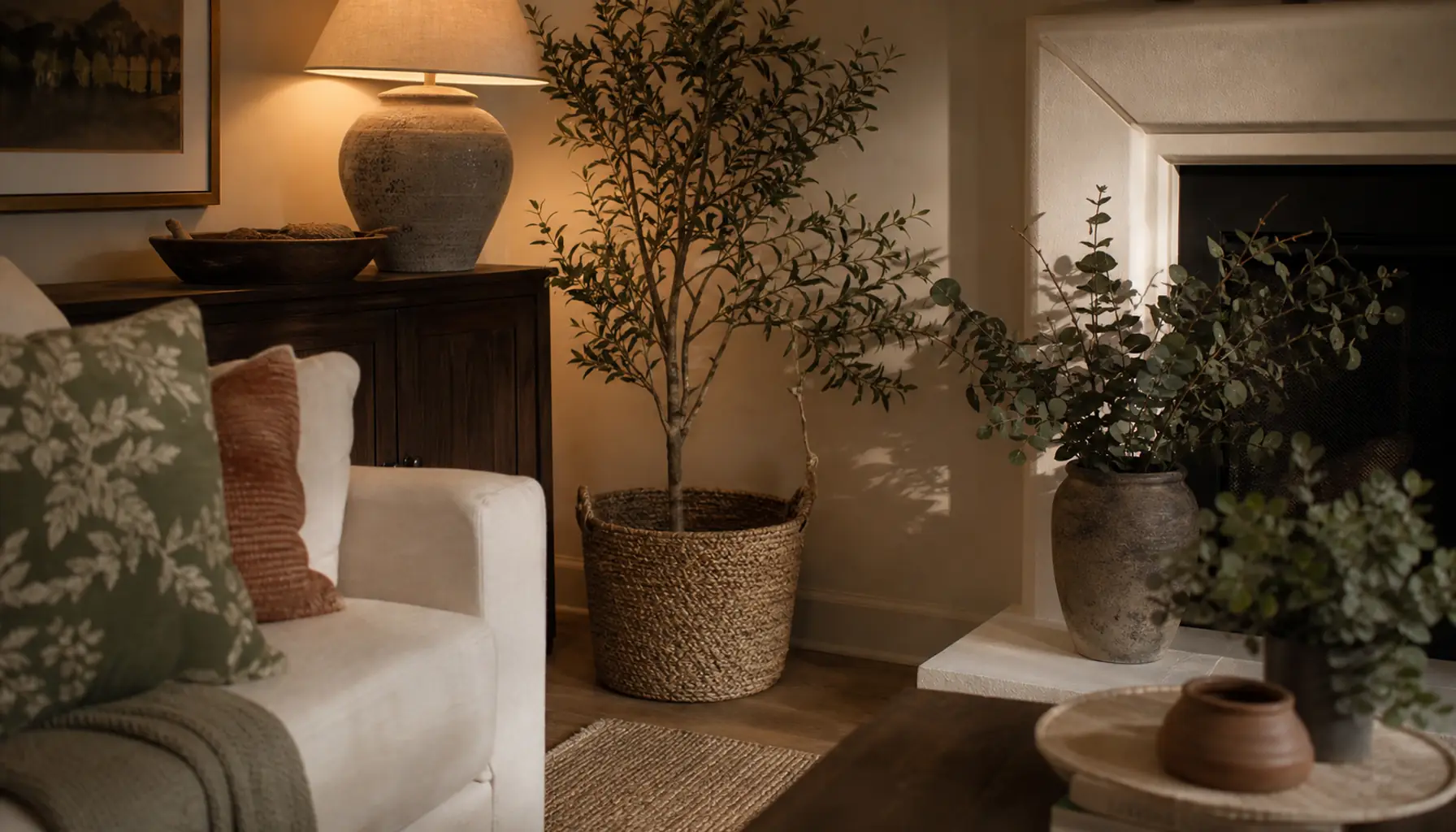
A faux olive tree brings soft, silvery-green color and a slim, airy shape. It suits warm, neutral rooms and pairs naturally with terracotta and clay tones, the same palette in terracotta and neutrals styling. Its small leaves hide imperfections well.
Snake Plant
The snake plant is nearly foolproof as a fake because its stiff, upright leaves look the same real or faux. It also happens to survive real low light, so this is one where you could go either way. For a dark corner, a faux one needs zero thought.
Pothos and Trailing Vines
A trailing pothos softens a shelf or the top of a cabinet. Choose one with matte, varied leaves and drape it so the vines fall unevenly. This is a lovely finishing touch when styling open shelves without clutter.
Monstera
A faux monstera makes a bold, sculptural statement with its split leaves. One large stem in a floor pot fills an empty corner. Look for leaves with real color variation, since flat green monstera leaves look especially plastic.
Dried Grasses and Eucalyptus
Dried and preserved stems are a half-step between real and faux. Pampas grass, eucalyptus, and bunny tails are actually real, just dried, so they look completely natural and need no light or water at all. A tall vase of dried grasses is one of the easiest ways to warm a dark room.
How to Style Fake Plants in Dark Rooms
Styling is where a faux plant either convinces or falls flat, so treat it like a real plant would be treated. A dark room actually helps you, because low light hides small imperfections.
Place it near a lamp, not a bright window. Strong daylight exposes the material and makes a fake obvious. Soft, warm lamplight flatters faux leaves and matches how a real plant would sit in a dim corner. If your room feels cold and flat, the fixes in these lighting mistakes help the whole space, not just the plant.
Upgrade the pot and add a soil topper. The cheap plastic nursery pot is the biggest giveaway. Slip the plant into a ceramic or woven basket, and cover the fake base with a layer of real soil, moss, or small stones. The base sells the illusion.
Bend and fluff the leaves. Faux plants ship compressed. Spend a few minutes spreading the branches, bending stems to different angles, and separating leaves so nothing looks stamped from a mold.
Vary the height. Group a tall floor plant with a low tabletop one and a trailing vine. Real greenery grows at different heights, and a mix reads as natural. A single perfectly centered plant looks staged.
Faux greenery is also a gentle way to test a look before you commit, a bit like using the room style finder to settle a direction before you spend. If a plant works in the corner, you know the spot wants greenery.
Common Mistakes That Give a Fake Away
Most faux plants look fake for a handful of avoidable reasons. Watch for these.
- Leaving the plastic pot on. The nursery pot is the number one giveaway. Always rehome it in a real planter with a soil topper.
- Choosing shiny leaves. Glossy plastic reads as fake from across the room. Buy matte.
- Skipping the fluffing. A compressed, symmetrical plant looks stamped out. Bend and spread it.
- Letting dust build up. A dusty fake looks obviously fake. Wipe the leaves regularly.
- Putting it in bright light. Direct sun exposes the material and fades it. Keep faux plants in softer light.
Expert Tips for Realistic Faux Greenery
A few small habits keep your fakes looking convincing for years.
Dust is the enemy, so wipe leaves with a soft damp cloth every couple of weeks, or blast them gently with a hair dryer on cool. A clean faux plant looks far more real than an expensive one covered in dust.
Mix in one real low-light plant if you can. A snake plant or a ZZ plant survives dim corners, and one real plant beside your fakes makes the whole grouping read as genuine. Your eye trusts the real one and extends that trust to the rest.
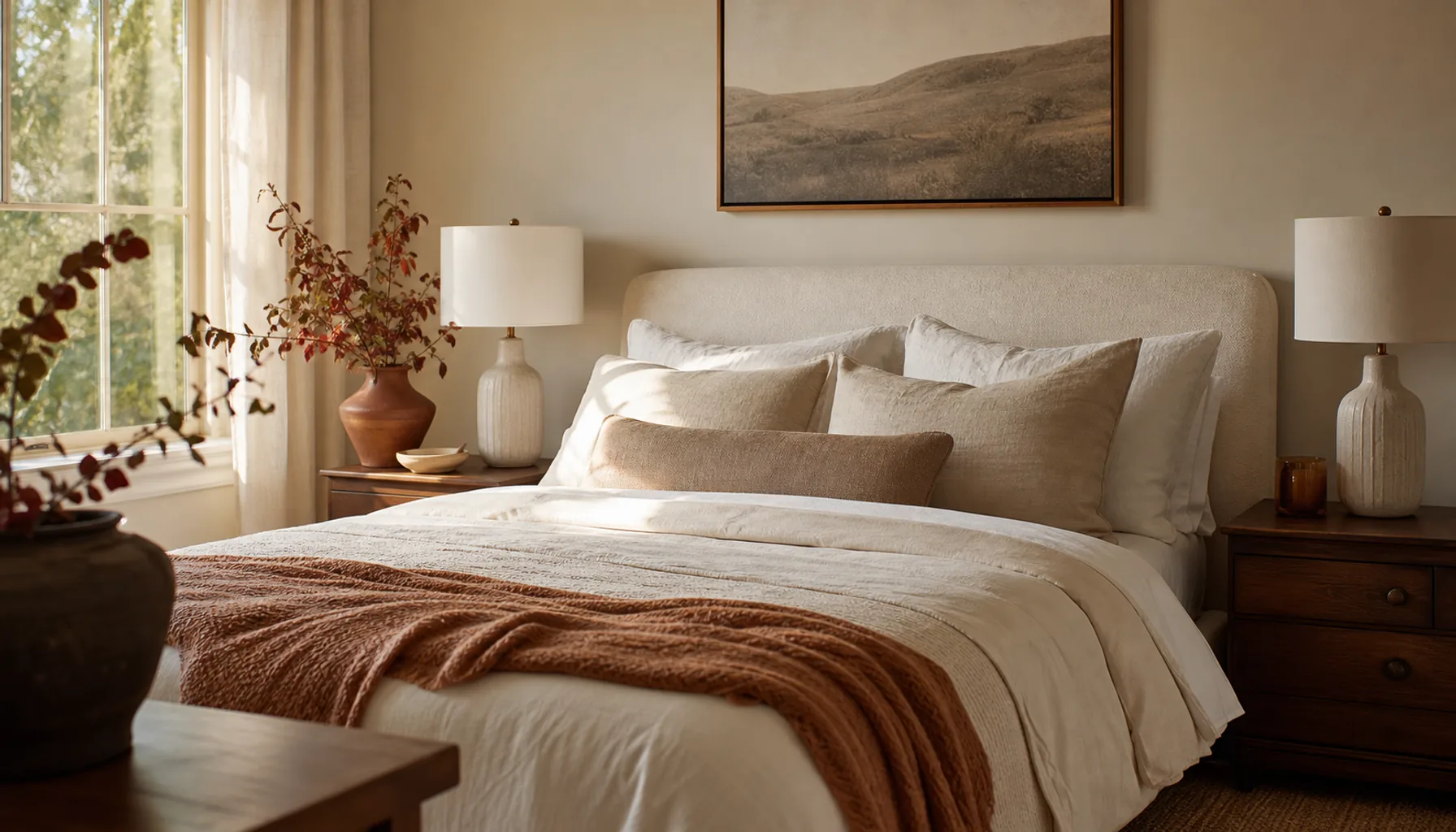
Finally, buy the biggest faux plant your corner can take rather than several small ones. One large, well-styled plant looks intentional, while a scatter of tiny fakes looks like decoration. This is the same restraint that makes a designer-styled bedroom feel calm rather than busy, and it pairs with a palette you can plan using a simple small-room color approach.
Frequently Asked Questions
What are the best fake plants that actually look real?
Fiddle-leaf figs, olive trees, snake plants, monsteras, and trailing pothos fake the best, because their leaves are broad or sculptural and easy to reproduce well. Dried and preserved stems like eucalyptus and pampas grass are even more convincing, since they are real plants that simply do not need light or water. Avoid delicate, thin foliage, which tends to look plastic.
How do I make a fake plant look more realistic?
Swap the plastic nursery pot for a real planter and add a soil, moss, or stone topper to hide the base. Bend and fluff the branches so nothing looks symmetrical, keep the leaves matte and dust-free, and place it in soft lamplight rather than bright sun. Those four moves fix almost every fake plant.
Do fake plants look obvious in bright light?
Yes. Strong daylight exposes plastic sheen and flat color, so a fake stands out most near a sunny window. This is why faux plants are perfect for dark rooms and dim corners, where softer light flatters the material. If you do place one in a bright spot, choose a higher-quality real-touch plant and keep the leaves clean.
Which fake plants are best for a room with no natural light?
Any faux plant works in a dark room, since none of them need light. Sculptural choices like a faux fiddle-leaf fig or olive tree fill a dim corner nicely, and dried grasses or eucalyptus add warmth with zero upkeep. Style them near a lamp so the warm light makes them feel alive rather than staged.
How do I clean and maintain faux plants?
Wipe the leaves with a soft, slightly damp cloth every couple of weeks, or use a hair dryer on the cool setting to blow off dust. Dust is what makes fakes look fake, so this small habit matters more than anything. For deeper cleaning, a quick rinse in the sink works for many plastic and fabric plants. Let them dry fully before restyling.
Are faux plants worth it compared to real ones?
For dark rooms, busy schedules, or spots where real plants keep dying, yes. A good faux plant gives you the organic look with no watering, no light needs, and no mess. Real plants still win for air and life where they can thrive, so many people mix a few hardy real plants with faux ones to get the best of both.
Can I mix real and fake plants together?
Absolutely, and it is one of the best tricks for realism. Place one real low-light plant, like a snake plant or ZZ plant, beside your faux greenery. Your eye trusts the real one and reads the whole grouping as genuine. Keep them at similar heights and in matching pots so the mix looks intentional.
Bring a Dark Corner to Life
The best fake plants that look real come down to matte leaves, natural color and shaping, and a proper pot, then styling them in soft light the way you would a real plant. Choose sculptural types like figs, olive trees, and snake plants, hide the plastic base, and keep them dusted, and a dim corner can feel warm and green all year.
Pick one empty corner and start there. When you are ready to build the rest of the room around it, take a few minutes with the Room Style Finder to settle on a look that feels like home.