In this article
- Key Takeaways
- The 3-Color Bridge Rule
- How to Choose Your Three Bridge Colors
- Arranging Two Mismatched Sofas
- Unifying With a Rug and Pillows
- Matching Scale and Height
- When to Reupholster or Slipcover Instead
- How to Apply the 3-Color Bridge Rule Step by Step
- Common Mistakes
- Expert Tips
- Frequently Asked Questions
- Bringing It All Together
How to Style a Living Room With Two Mismatched Couches: The 3-Color Bridge Rule
Learn how to style two mismatched couches with the 3-Color Bridge Rule. Coordinate sofas that don't match using pillows, rugs, and art for a pulled-together room.


· 15 min read
Two mismatched couches can look intentional instead of accidental, and the fix comes down to one simple idea. Pick three colors and repeat them across both sofas and the room around them. That's it. When the same three colors show up on your pillows, your throw, your rug, and a piece of art, your eye reads the whole space as one plan. The couches stop competing. They start talking to each other.
I call this the 3-Color Bridge Rule. I've used it in my own Brooklyn apartment, where a hand-me-down leather loveseat sits across from a soft linen sofa I saved up for. On paper they don't go together. In the room, they look like I chose them on purpose. Below, I'll walk you through exactly how to pick your three colors, arrange the sofas, and tie everything together so nobody guesses the couches came from two different lives.
Key Takeaways
- The 3-Color Bridge Rule means choosing three colors that repeat across both couches and the room, so mismatched sofas read as one design.
- Your three colors usually break down as one main neutral, one supporting tone, and one accent that adds warmth or contrast.
- A large rug that sits under both sofas is the single fastest way to unify the space.
- Pillows and throws are your cheapest, most flexible tools for spreading the bridge colors around.
- Matching scale and height matters as much as color, so watch the seat depth and back height of each piece.
- Reupholstering or slipcovering is worth it only when a couch has good bones but a color you can't work around.
- Facing layouts, L-shapes, and separate zones all work, as long as the colors carry across the gap.
The 3-Color Bridge Rule
The 3-Color Bridge Rule is a simple system: choose three colors, then make sure each one appears on or near both couches so the eye connects them. Think of the colors as a bridge stretched across the room. Each sofa stands on one side. The colors are the planks that let your eye walk from one to the other without a bump.
Most rooms fall apart because the two couches share nothing. One is gray. One is brown. There's no thread linking them. The bridge fixes that. You don't need matching furniture. You need matching color cues placed with intention.
A room feels "off" when your eye can't find a path between the big pieces. Three repeated colors build that path.
Here's why three works. One color feels flat and matchy. Two can read as a coincidence. Three colors give you enough range to cover a neutral, a supporting tone, and an accent, while still being few enough to feel controlled. More than three and you're back to visual noise.
How the three roles work
- The main neutral carries the most weight. It's your walls, one couch, or a big rug. Think cream, sand, greige, or soft white.
- The supporting tone is a mid-value color that adds depth. This might be a warm brown, a muted sage, or a denim blue.
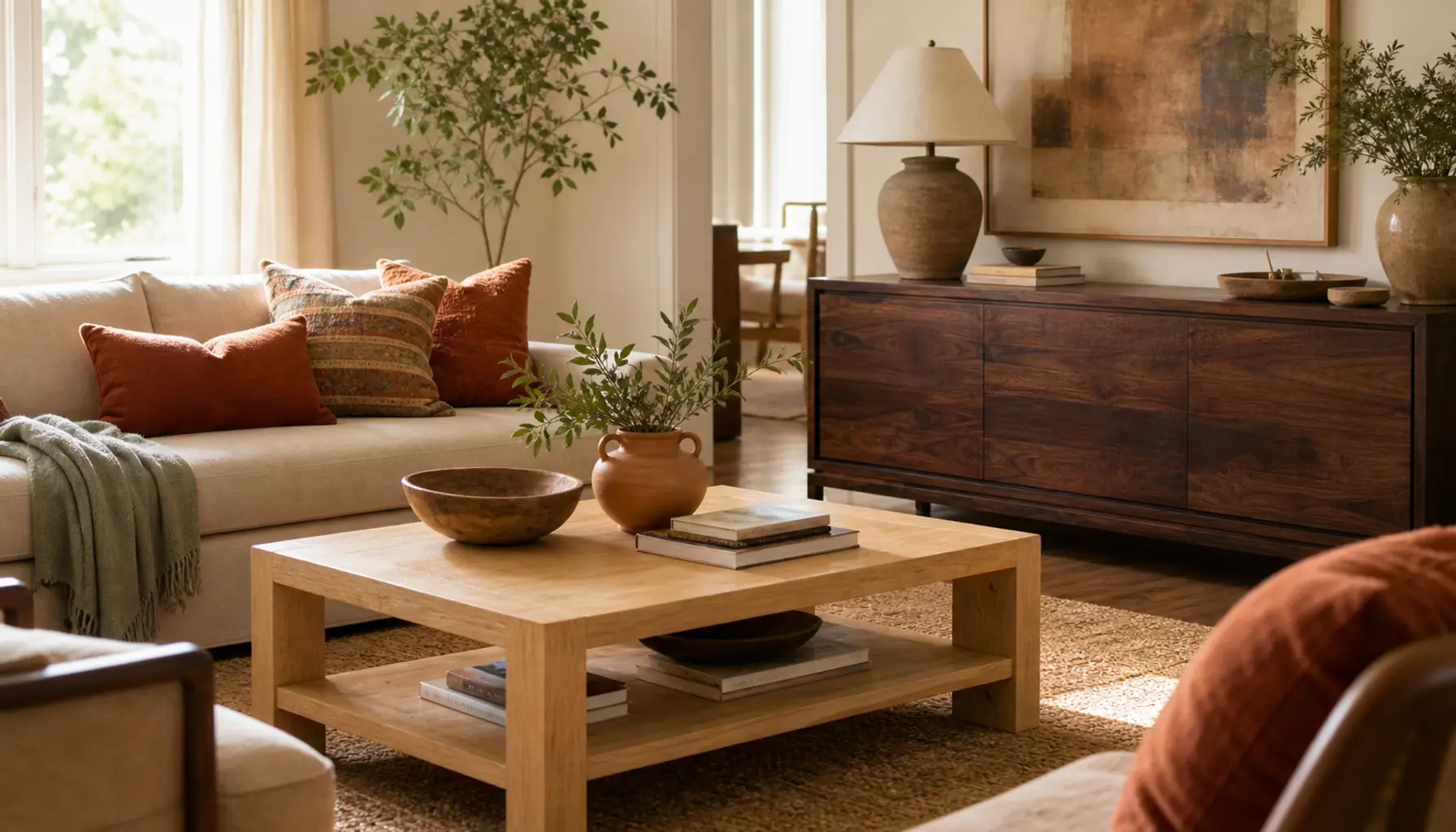
- The accent is the small pop that ties it together. Terracotta, mustard, rust, or deep green work beautifully in a warm home.
You'll see these roles again and again as we go. If you want help locking in a starting palette, our guide on how to choose a color palette for a small living room breaks down the same logic for tighter spaces.
How to Choose Your Three Bridge Colors
Start by pulling your three colors from the two couches you already own, then add one accent to link them. This keeps the work honest. You're building around real furniture, not a mood board.
Look at each sofa and name its true color. Not "brown," but "warm reddish brown." Not "gray," but "cool blue-gray." The undertone matters. A cool gray couch and a warm tan couch can clash even when both feel neutral, so you'll want an accent that bridges warm and cool.
Pull colors from what you have
- Name the dominant color of couch one.
- Name the dominant color of couch two.
- Find a third color that sits between them or flatters both.
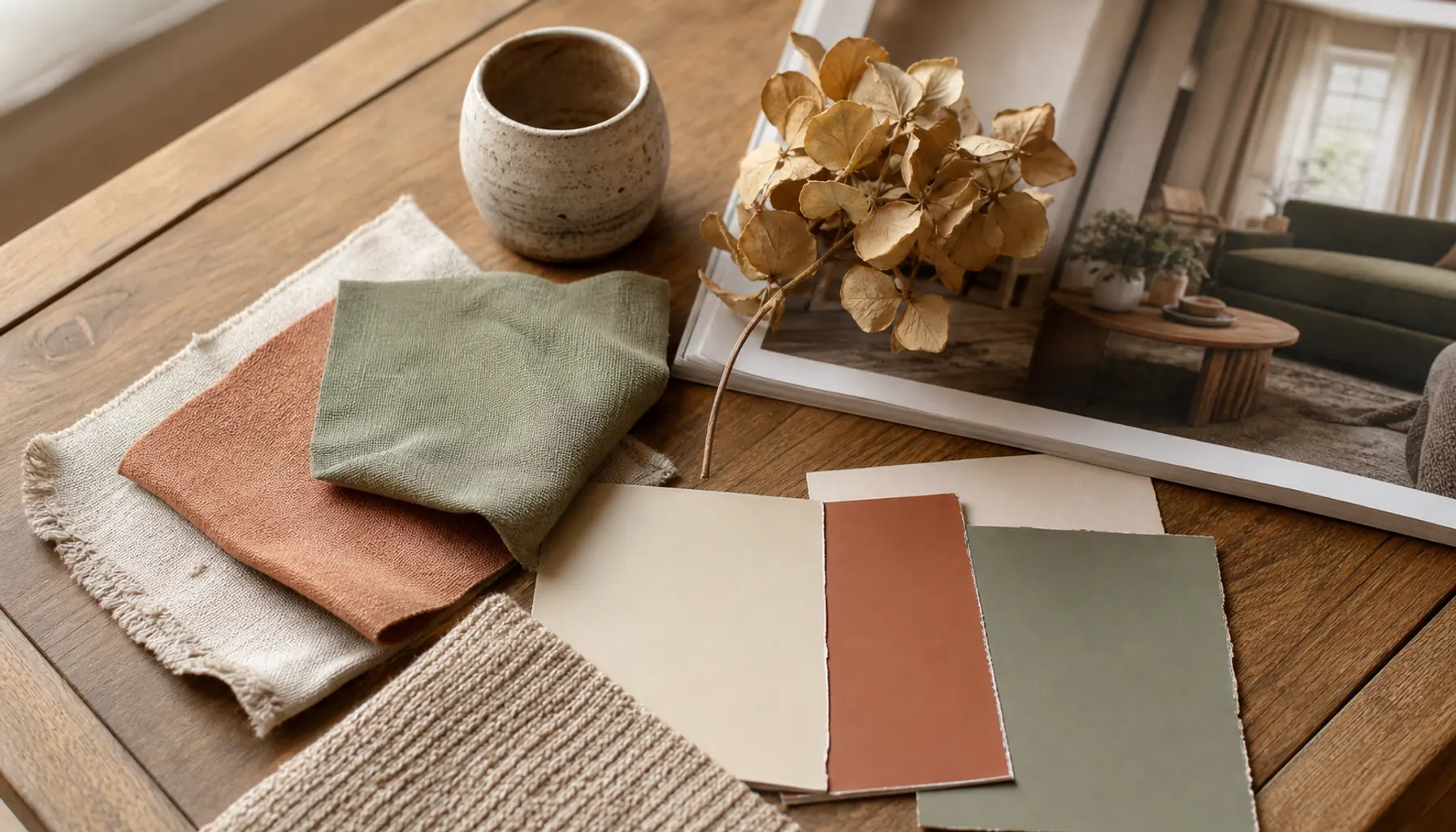
Say you've got a caramel leather sofa and a gray fabric one. Caramel is warm. Gray is cool. A sage green accent leans slightly warm and calms the gray, while terracotta picks up the caramel. Either could be your accent. Once you choose, that accent needs to appear at least twice on each side of the room.
Test before you commit
Grab pillows, a throw, or even fabric swatches in your candidate colors. Set them on both couches. Live with it for a day. Warm daylight and evening lamplight change how colors read, so check both. If your accent looks muddy at night, it's probably fighting your bulbs, and our post on 5 lighting mistakes that make rooms feel cold explains why. If you feel stuck on which direction suits you, the Style Finder tool can point you toward a palette that matches how you actually live.
A warm neutral base with terracotta and sage is one of the most forgiving combinations out there. I lean on it constantly, and I wrote about why in terracotta and neutrals: styling a warm home.
Arranging Two Mismatched Sofas
The best layout for two mismatched couches spreads your bridge colors evenly across the room, so no single sofa feels stranded. Placement and color work together here. A smart layout gives your three colors room to repeat on both sides.
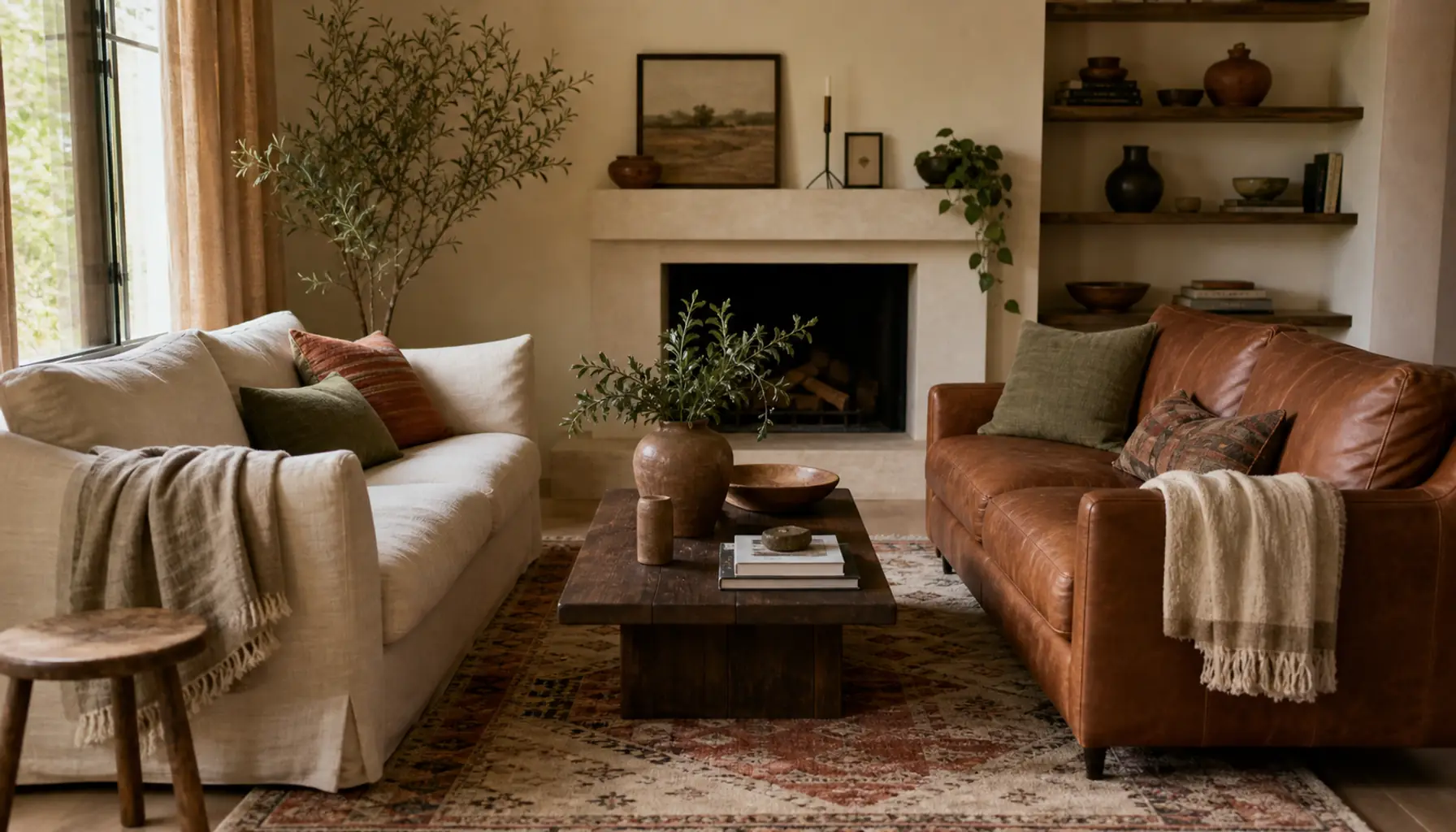
You've got three reliable arrangements. Each one has a sweet spot.
Facing each other
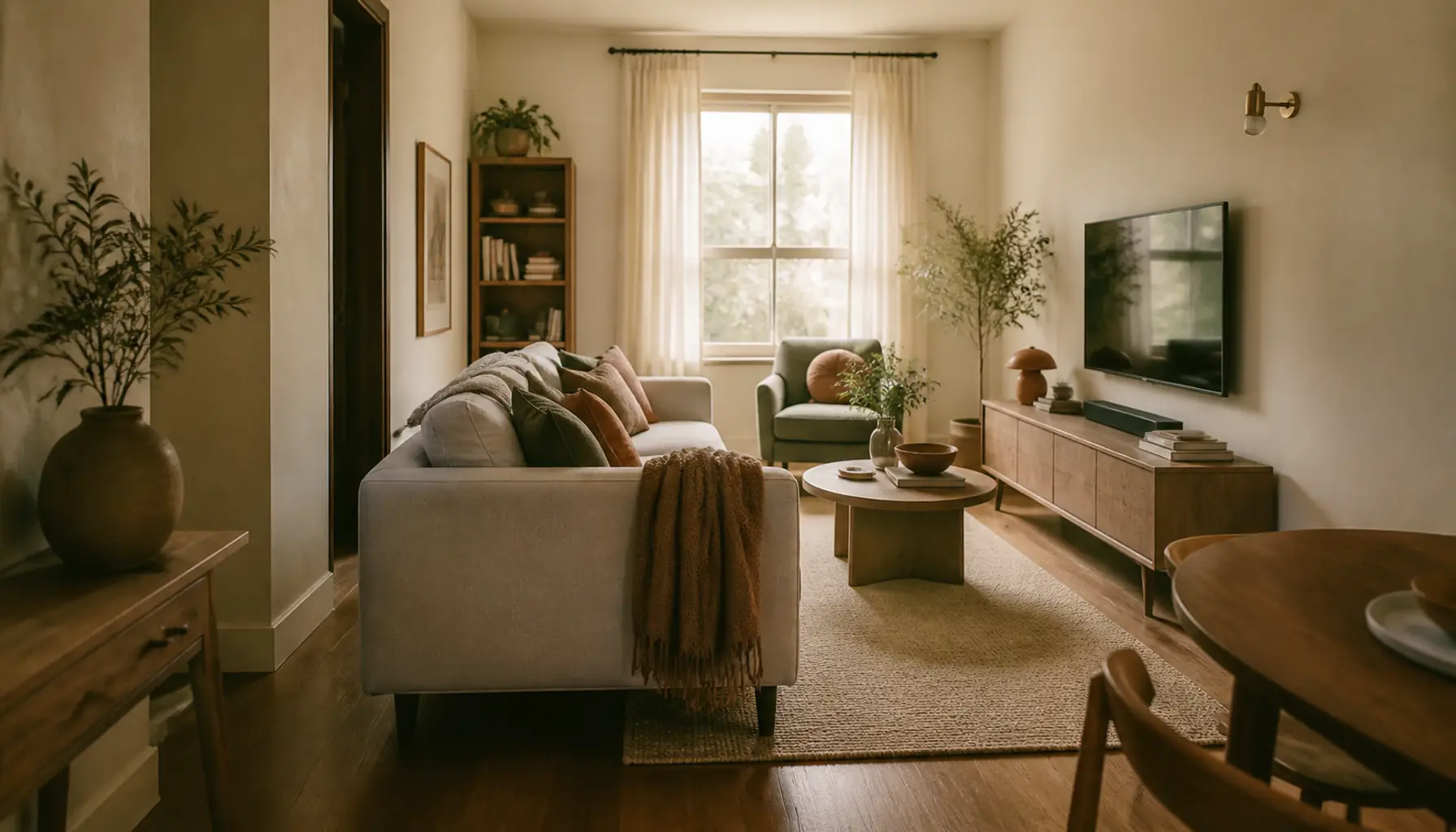
Two sofas facing across a coffee table is the classic move, and it's great for mismatched pieces. The symmetry of the layout does some of the unifying for you. Place a shared rug between them and matching pillows on each. Your eye bounces back and forth and reads them as a pair.
This works best when the couches are close in size. A tiny loveseat facing a huge sectional can look lopsided, so save that pairing for the next option.
L-shape in a corner
Setting the two sofas at a right angle tucks them into a corner and makes the size difference matter less. The couches share a corner instead of staring each other down. Anchor the inside corner with a small table or a stacked pair of plants. Run your accent color along both sofas where they meet.
Separate zones
In a bigger or open-plan room, give each couch its own job. One becomes the TV-watching spot. The other becomes a reading nook or conversation corner. The bridge colors are what keep two zones from feeling like two different rooms. Repeat the same throw color and a shared art color across both areas.
Separate zones only work if the colors carry across the gap. Without that thread, you've made two rooms, not one.
Unifying With a Rug and Pillows
A single large rug placed under both couches is the strongest unifying tool you have, because it physically ties the pieces to one surface. If you buy nothing else, buy the rug.
The rug should be big enough that at least the front legs of both sofas sit on it. When furniture floats off a too-small rug, the room feels chopped up. Getting the size right is the whole game, and our guide on how to choose and size a rug for any room walks through the measurements.
Let the rug hold two of your three colors
Pick a rug that already contains your main neutral plus one other bridge color. A cream and terracotta pattern, for example, does double duty. Now both couches sit on a surface that speaks their language.
Spread pillows like seeds
Pillows are cheap, easy to swap, and perfect for scattering your colors around. Here's a simple approach:
- Put your accent color on both couches, at least one pillow each.
- Add your supporting tone as a larger pillow behind the accent.
- Repeat a texture, not just a color, so the pillows feel related. Mixing weaves keeps them from looking flat, and mixing textures: a beginner's guide shows how.
A throw blanket draped over one arm of each sofa is another quiet way to repeat a color. Fold one over the cool-toned couch in a warm shade, and one over the warm couch in a cooler shade. Now they've traded colors, and the swap knits them together.
Matching Scale and Height
Two couches read as intentional when their proportions feel related, even if their styles don't. Color gets most of the attention, but scale is the quiet half of the job.
Look at three measurements on each sofa:
- Seat height from the floor to the cushion top.
- Back height from the floor to the top of the backrest.
- Seat depth from the front edge to the back cushion.
If one couch sits low and deep while the other is tall and shallow, they'll feel like strangers no matter how well the colors match. You can't change the frames, but you can close the gap.
Tricks to even out mismatched heights
- Add a firm seat cushion or a lumbar pillow to raise a low sofa's usable height.
- Place a taller piece, like a floor lamp or a plant, beside the shorter couch to lift that corner visually.
- Keep side tables at a similar height on both sides so the eye finds a consistent line.
A low arm on one and a high arm on the other is fine. What throws people off is a big difference in the seating plane. Bring those closer and the mismatch turns into character.
When to Reupholster or Slipcover Instead
Reupholster or slipcover a couch only when it has a solid frame and comfortable cushions but a color or fabric you truly can't bridge. This is the last resort, not the first move, because it costs real money and time.
Signs a couch is worth the effort
- The frame is sturdy and doesn't wobble or creak.
- The cushions still have life or can be refilled affordably.
- You love the shape but hate the fabric.
If all three are true, a professional reupholster job can run several hundred to a couple thousand USD depending on size and fabric. A ready-made or custom slipcover costs far less and is renter-friendly since it's reversible. Before you spend, run the numbers with our budget calculator, and read before you buy: when DIY beats new to weigh the effort honestly.
Slipcovers are a favorite renter trick because you can take them with you, along with the other ideas in renter-friendly upgrades you can take with you. And if you're still furniture hunting, a great flip can hand you a couch worth building around, which is exactly what I cover in thrift store furniture: how to spot pieces worth flipping.
How to Apply the 3-Color Bridge Rule Step by Step
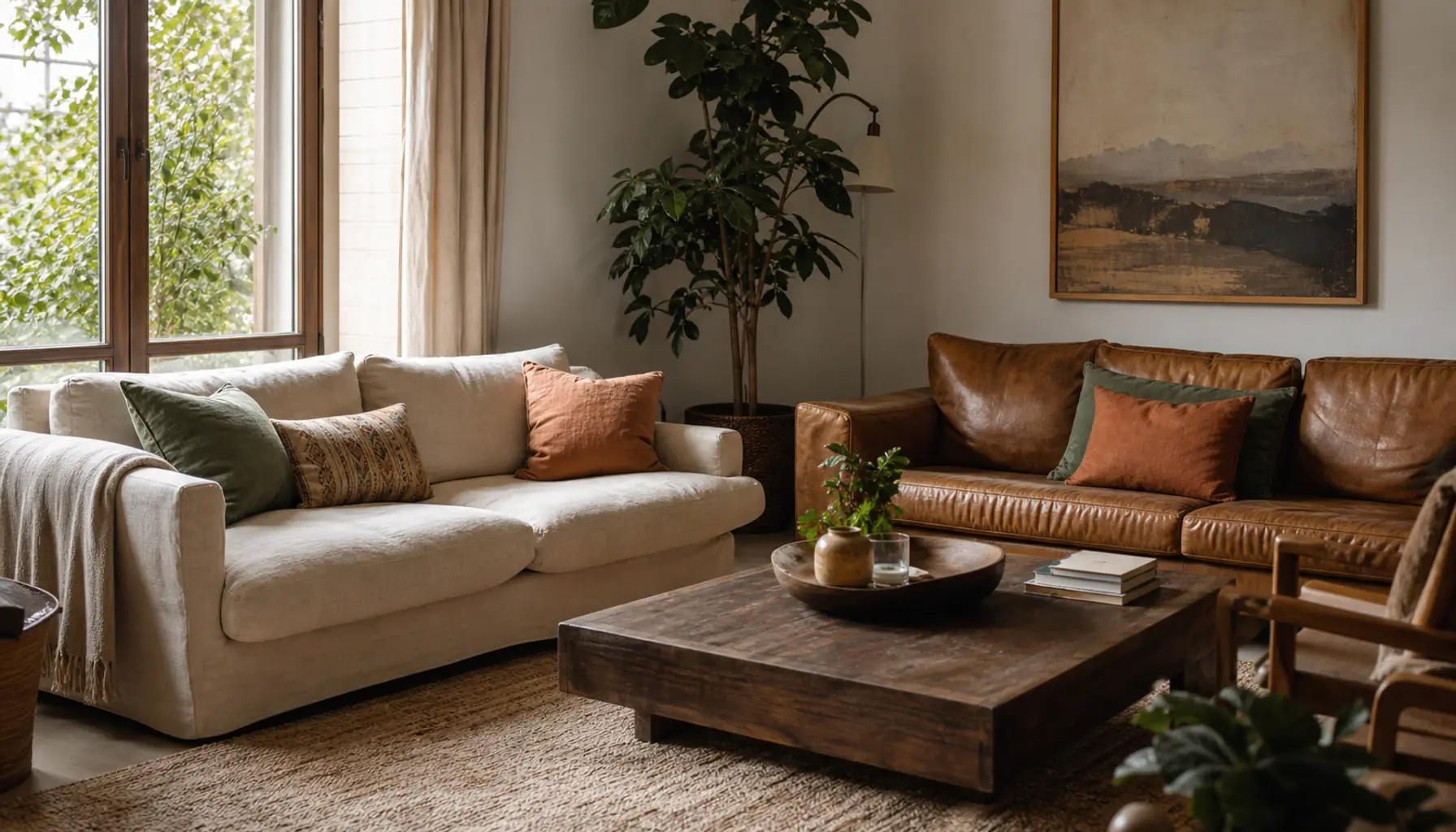
Here's the full process from bare room to finished look.
Step 1: Name your couch colors
Write down the true undertone of each sofa. Warm or cool, light or dark. Be specific.
Step 2: Choose your three bridge colors
Pick one main neutral, one supporting tone, and one accent. Make sure the accent flatters both couches, especially if their undertones clash.
Step 3: Buy or place the rug first
Choose a large rug holding your neutral plus one other color. Position it so both sofas touch it.
Step 4: Set your layout
Pick facing, L-shape, or separate zones based on your room size and the sofas' sizes.
Step 5: Spread the accent
Add accent pillows to both couches. Aim for at least two touches of the accent on each side of the room.
Step 6: Repeat the supporting tone
Use throws, a lampshade, a vase, or art to echo the supporting color across the space.
Step 7: Add one shared art color
Hang art that pulls in your accent or supporting tone. A small gallery wall between or above the couches locks the bridge in place.
Step 8: Step back and edit
Stand at the doorway. If your eye snags on one couch, that side needs more of a bridge color. Adjust until nothing feels stranded.
Common Mistakes
The biggest mistake is treating each couch as its own project instead of styling the room as one. Here are the traps I see most.
- Matching only one couch. Piling all the pretty pillows on your favorite sofa leaves the other looking neglected. Split them.
- Using too many colors. Five or six colors erase the calm the bridge creates. Hold the line at three.
- A rug that's too small. Furniture floating off the rug undoes all your color work.
- Ignoring undertones. A warm and a cool neutral can clash even without a bold color in sight.
- Skipping the accent. Two neutrals alone often feel flat and unfinished. The accent is what makes it look chosen.
- Forgetting scale. Perfect colors can't rescue a low, deep couch parked next to a tall, shallow one.
Expert Tips
Repeat your accent color exactly three times around the room, and the space will feel composed without you overthinking it.
- Use the rule of three for the accent. Three touches of terracotta, spread out, reads as a plan. One reads as an accident.
- Trade throws. Put a warm throw on the cool couch and a cool throw on the warm couch to swap their colors.
- Match your metals. Keep lamp bases, frames, and legs in one metal finish to add a second quiet layer of unity.
- Anchor with a shared coffee table. One table between the sofas gives them a common center of gravity.
- Test in real light. Colors shift from morning to night, so judge your palette at both times.
- Not sure of your taste? Working out your interior design style makes every color choice easier.
Frequently Asked Questions
Do my two couches need to be the same size?
No. They can be different sizes and shapes. What matters more is that their seat height and depth feel related, and that your three bridge colors appear on both. If one is much smaller, use an L-shape or separate zones instead of facing them, since facing layouts expose size gaps more than cornered ones do.
What if my couches have clashing undertones?
Pick an accent color that bridges warm and cool. Sage green and muted blue-greens lean neutral and calm a warring pair. Terracotta warms up a cool couch while flattering a warm one. Place that accent evenly on both sides. The shared color pulls the clashing undertones into one conversation.
How many pillows should I use per couch?
Two to three per couch usually looks full without looking crowded. Use one accent pillow and one in your supporting tone at minimum, then add a third for texture if the sofa is large. Keep the counts similar on both couches so neither looks bare next to the other.
Can I mix a leather couch with a fabric one?
Yes, and it's one of the best mismatches. Leather and fabric add natural texture contrast that looks intentional. Tie them together with a fabric throw on the leather piece and a leather or faux-leather pillow on the fabric one. Then run your three bridge colors across both, and the different materials feel like a choice.
Should both couches touch the same rug?
Ideally yes. A single rug large enough for the front legs of both sofas is the strongest unifying trick you have. If your room can't fit one big rug, keep the couches close and use a rug that at least sits between and slightly under both. Avoid two separate small rugs, which split the room.
Is it cheaper to slipcover than reupholster?
Almost always. A slipcover, whether ready-made or custom, costs far less than a full reupholster and you can remove or swap it. Reupholstering makes sense only for a couch with a great frame and a shape you love. For most mismatched-couch situations, slipcovers plus smart color styling solve the problem for a fraction of the cost.
How do I make two couches work in an open-plan room?
Give each couch its own zone, then bridge them with color. One area handles TV or lounging, the other reading or conversation. Repeat the same accent throw, a shared rug tone, and one common art color across both zones. The matching colors tell the eye these areas belong to the same room, even with space between them.
Bringing It All Together
Two mismatched couches aren't a problem to hide. They're a chance to build a room that looks collected over time instead of bought in one trip. The 3-Color Bridge Rule gives you a clear plan: three colors, repeated on both sofas and the space around them, tied down by one good rug and a handful of pillows. Match the scale where you can, save reupholstering for the pieces that truly earn it, and trust your eye when you step back from the doorway.
Start with the two colors your couches already give you, then choose one accent that loves them both. Place your rug, spread that accent three times, and watch the room click into place. When you're ready to pin down your palette, try the Style Finder and let it point you toward colors that fit the way you actually live.