14 Boho Living Room Ideas With Layered Natural Texture
Rattan, jute, macrame and low seating: 14 boho living room ideas showing how to layer natural texture without letting the whole room tip into clutter.

· 13 min read
Boho rooms look relaxed, but the good ones are not random. What holds them together is texture doing the work color usually does: open cane weave, coarse jute, knotted cotton, soft wool, unfinished wood. Get that layering right and a mostly neutral room reads warm and full without a single loud pattern. Get it wrong and you end up with a pile of baskets.
These 14 ideas run roughly in the order most people should tackle them: the furniture frame first, then floors, walls, and the small stuff. Each explains what the move does to the room, so you can adapt it to a rental or a narrow living room.
Key Takeaways
- Texture carries a boho room, not pattern. Aim for at least four different surfaces before you add a second print.
- Open weave keeps the room from feeling heavy. Cane and rattan let you add seating without blocking sight lines.
- Layer rugs instead of buying one perfect one. A jute base plus a smaller patterned rug is usually cheaper and looks more collected.
- Sage and terracotta work because they sit at similar saturation. Neither one shouts over the other.
- Vary height, not just material. Floor cushions, a low sofa, and one tall element give the eye somewhere to travel.
- Buy slowly. The gathered look comes from pieces that arrived at different times, and that is genuinely hard to fake in one shopping trip.
14 Boho Living Room Ideas Worth Trying
Idea 1: Build the Frame From Cane and Rattan Seating
Start with one piece of open-weave seating rather than a full set. A rattan armchair or a cane-backed lounge chair takes up floor space without taking up visual space, because you can see the wall and the floor straight through it. That matters most in small living rooms, where a second upholstered chair would close the room down.
Look for a frame with visible joinery and a warm honey or natural finish rather than a painted one, since the grain is half the point. Pair it with a real cushion, ideally in a nubby cotton or oatmeal linen. Bare rattan is beautiful and uncomfortable, and a chair nobody sits in stops looking casual and starts looking staged.
Idea 2: Put Cane Webbing on Storage, Not Just Chairs
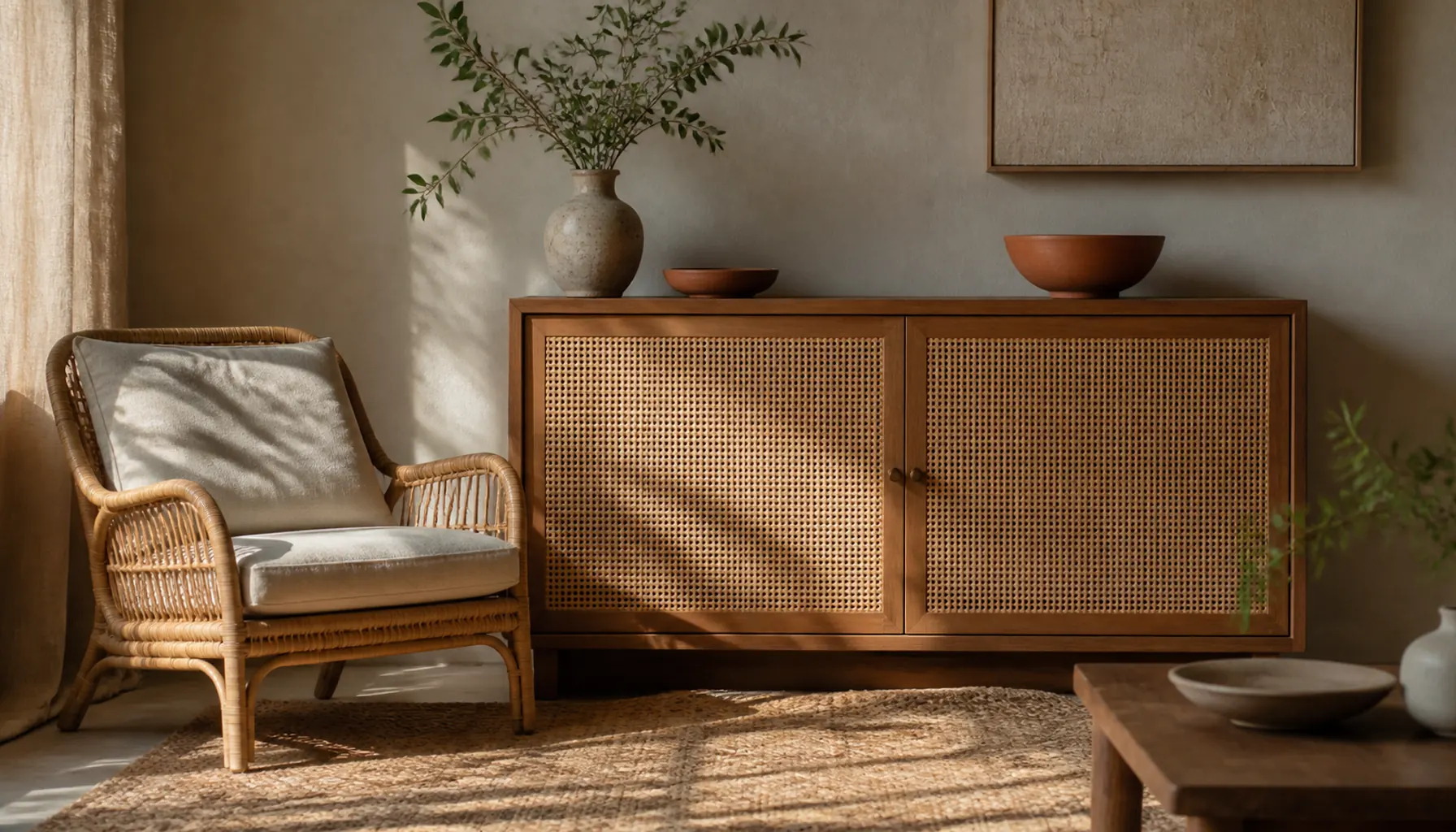
Cane does more for a room on a cabinet door than on a chair, because storage occupies the long low wall your eye lands on first. A sideboard or media unit with caned doors breaks up what would otherwise be a solid block of wood, and it hides cables and clutter while still reading as light.
It is also one of the few boho moves that is genuinely DIY-friendly. Pre-woven cane sheeting sold by the yard can be soaked, stretched, and glued into a routed groove, a natural fit if you already do furniture upcycling projects. Warm wood plus cane is the core pairing: solid and open, in one tonal family.
Idea 3: Layer a Jute Base Under a Softer Rug
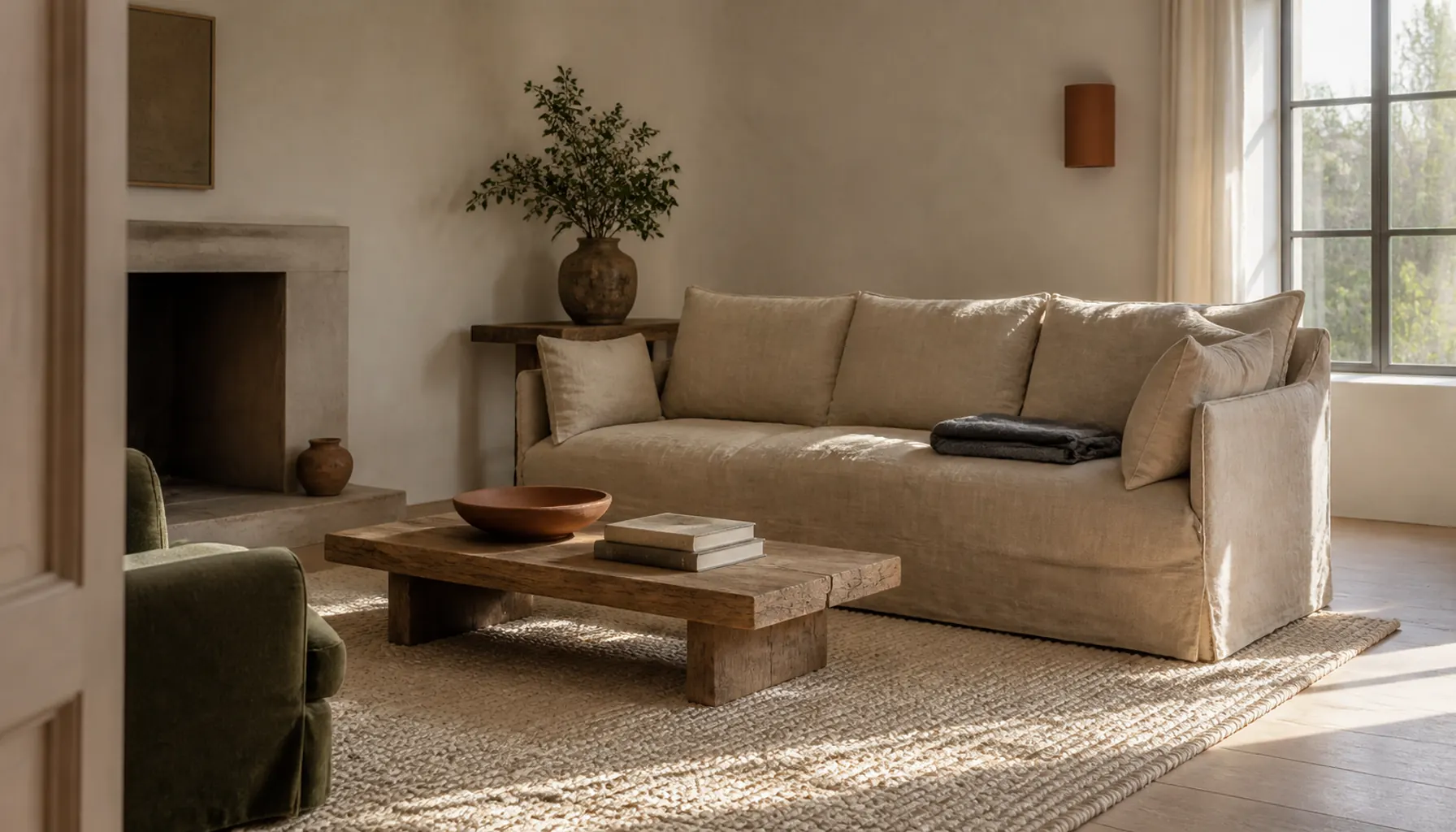
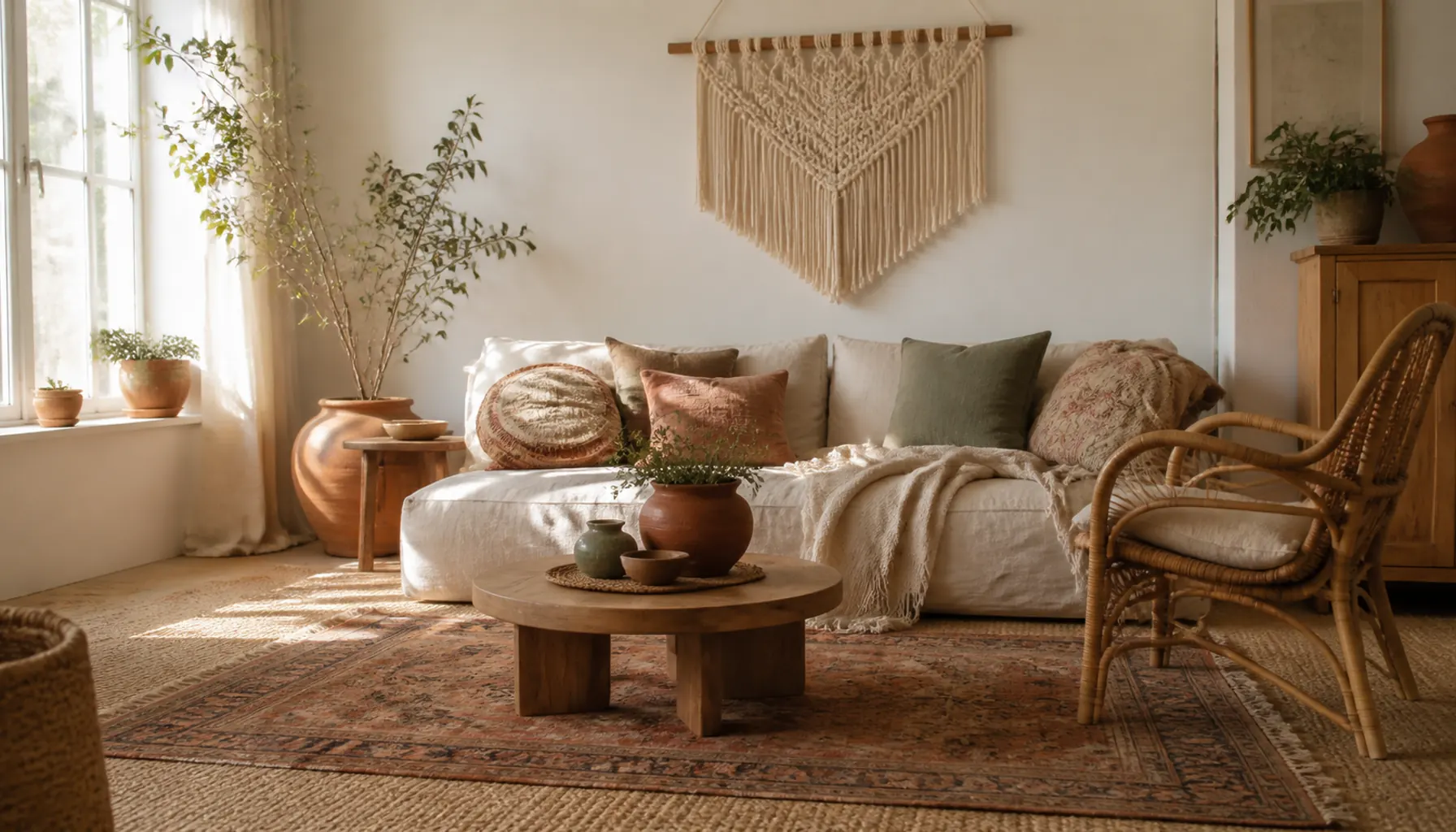
Two rugs beat one here, and not only for looks. Jute or sisal gives you the coarse, slightly scratchy floor texture the style depends on, at a size big enough to sit under the front legs of your seating so the furniture reads as one group. Then put a smaller wool, cotton flatweave, or vintage rug on top, angled or centered under the coffee table.
The top rug solves what jute cannot: it is soft underfoot, it brings in pattern, and it protects the traffic path. Size the base rug generously, since an undersized rug is the single most common reason a layered floor looks accidental. Our guide to choosing and sizing a rug covers the measurements.
Idea 4: Choose a Vintage or Overdyed Rug for Color With Age
An old rug does something a new one cannot: its color has already been walked on. Faded rust, muted indigo, soft brick, and washed-out cream sit quietly next to cream walls because age has knocked the saturation down. A brand-new rug in those same colors often reads too bright and pulls attention away from the textures around it.
Overdyed rugs, where a worn piece is redyed in a single tone, are a middle path when you want one color to dominate. Check the back for a hand-knotted structure and check the pile for thin spots before you commit, the same way you would when assessing thrifted furniture. Small holes near a border are usually repairable; a brittle, cracking foundation is not.
Idea 5: Drop the Seating Closer to the Floor
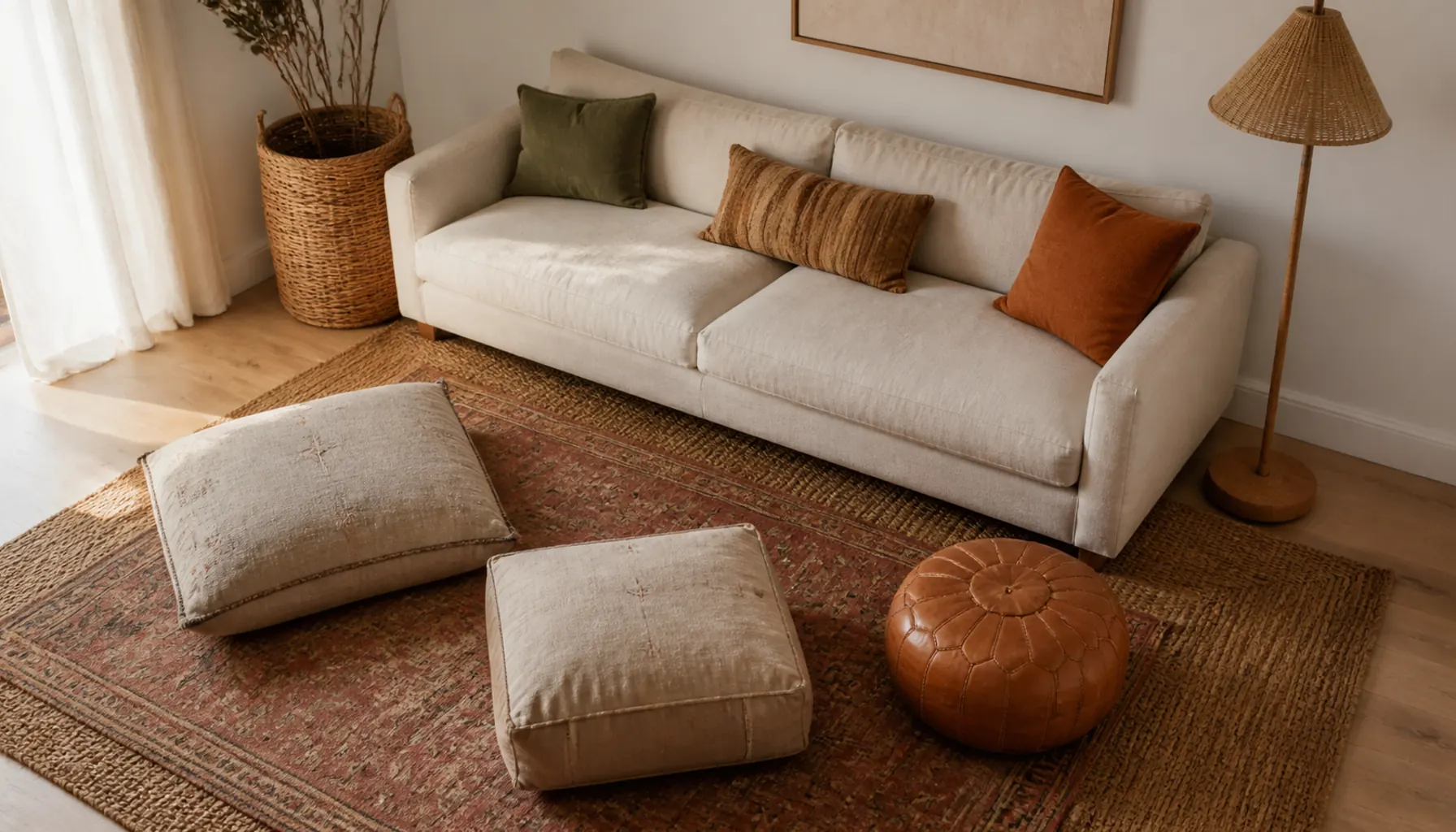
Lowering the seating changes the proportion of the whole room. A low-armed sofa, a floor cushion, and a leather pouf leave more empty wall above the furniture, which makes ceilings feel taller. It is why a boho space reads differently from a conventional living room before you even notice the materials.
You do not need new furniture. Two large floor cushions and a flat woven mat create a second sitting zone in a corner for very little money, which suits renters. One caution: floor seating only gets used if there is somewhere to set a cup, so a low stool or tray table has to come with it.
Small-Space Tip: In a narrow living room, keep the low seating on the long wall and leave the walkway completely clear. Floor cushions in a traffic path get kicked, and then they get put away permanently.
Idea 6: Mix Three Sitting Heights in One Group
Once things are low, vary them. A boho seating group works best with roughly three levels: something at floor height (a pouf or cushion), something at standard seat height (the sofa), and one taller vertical element nearby (a tall basket, a floor lamp, a plant, a leaning ladder shelf). The eye moves up and down instead of skating flat across a single horizontal line.
It is practical too: poufs double as footrests and extra seats, and a side table at armrest height beats a very low one for a drink. Where it goes wrong: three or four pieces at the same low height read as a waiting room, not a lounge.
Idea 7: Hang Something Woven Where Art Would Go
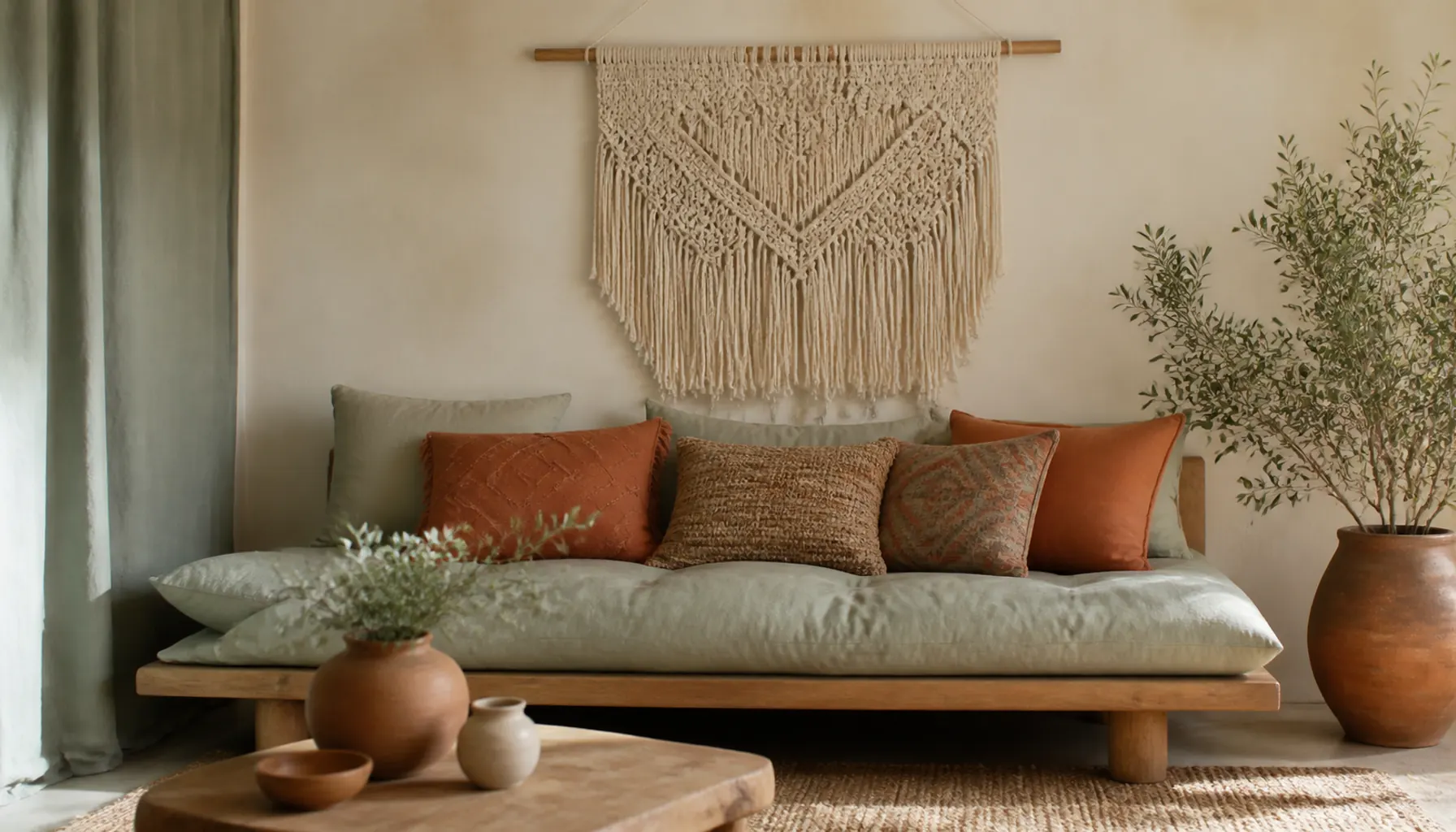
Above the sofa, a macrame hanging or a flat woven textile does two things framed art cannot. It absorbs sound instead of bouncing it, and it puts fiber texture at eye level where the room's other soft materials cannot reach. Knotted cotton in undyed cream is the safest starting point because it reads as shadow and shape rather than color.
Scale is where most people miss. The piece should span roughly two-thirds of the sofa width, or it looks like it wandered onto the wall. A small hanging on a big wall needs company: pair it with two or three flat baskets, and treat the whole cluster as one composition using the same logic as planning a gallery wall. Mount it on a wood dowel or branch, not a metal rod.
Idea 8: Let Fringe and Tassels Do the Detail Work
Edges are where boho quietly separates itself from plain natural-fiber decorating. Fringed throw ends, tasseled cushion corners, a pom-pom trim on a curtain tie, the loose selvedge of a flatweave rug: each one softens a hard line and catches light differently from the flat surface it sits on.
Keep it to two or three fringed items in the room. Because fringe reads as movement, more than that starts to look fussy, and it tangles. Practical note for anyone with a cat or a crawling toddler: put the fringe up high or on things that can be washed. A tasseled cushion survives; a long-fringed floor throw does not.
Idea 9: Mix Patterns by Changing the Scale, Not the Color
Pattern mixing fails when two prints are the same size, not when they clash. Pick one large-scale pattern (a rug medallion, a big block print), one mid-scale (a striped cushion, a woven check), and one small or barely-there (a subtle dobby weave, a fine stripe). Different sizes stop the patterns competing for the same attention.
Then hold them together with color. If every print pulls from the same three or four tones, say cream, rust, and soft olive, you can mix a geometric, a stripe, and a floral in one room without it turning noisy. Odd is easier than even: three patterns feel deliberate, two often look like a mistake, and six look like laundry.
Idea 10: Anchor the Palette in Sage and Terracotta
These two colors are the reason earth-tone boho rooms feel calm. Both are muted, both sit at similar saturation, and terracotta's warm clay reads even warmer beside sage's cool gray-green, so each one makes the other more noticeable without either winning. Against cream and sand walls, that is enough color for a whole room.
Use the smaller share for the warm tone: sage on something larger like a chair or curtain, terracotta in the ceramics, cushions, and a lamp base. Our post on terracotta and neutrals works through the proportions in more detail, and if you are starting from paint, the approach in choosing a palette for a small living room applies here too.
Idea 11: Soften the Rectangles With Arches and Curves
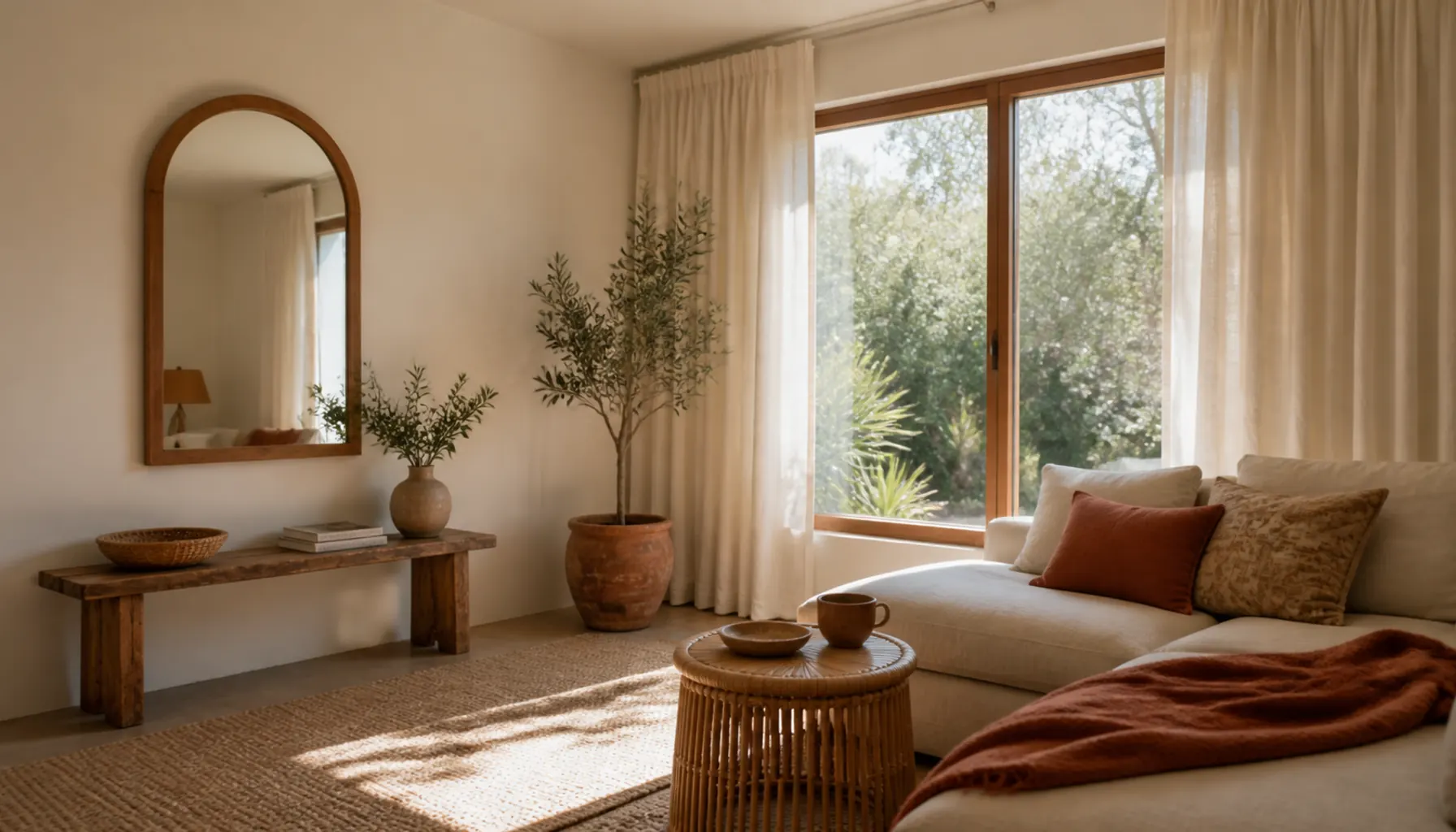
Look around a typical living room: sofa, rug, TV, windows, door, art. Almost everything is a rectangle. Adding a few curved shapes is what makes a boho space feel handmade rather than assembled, and it takes surprisingly little. An arched mirror, a round pedestal side table, a curved-back cane chair, or a bowl-shaped ceramic planter each break the grid.
An arched mirror on the wall opposite a window is the highest-value version, since it bounces daylight back into the room and lengthens the wall visually at the same time. Round coffee tables also earn their place in tight rooms and family spaces: no corners in the walkway, and easier to move around.
Idea 12: Style With Collected Objects, Not a Matching Set
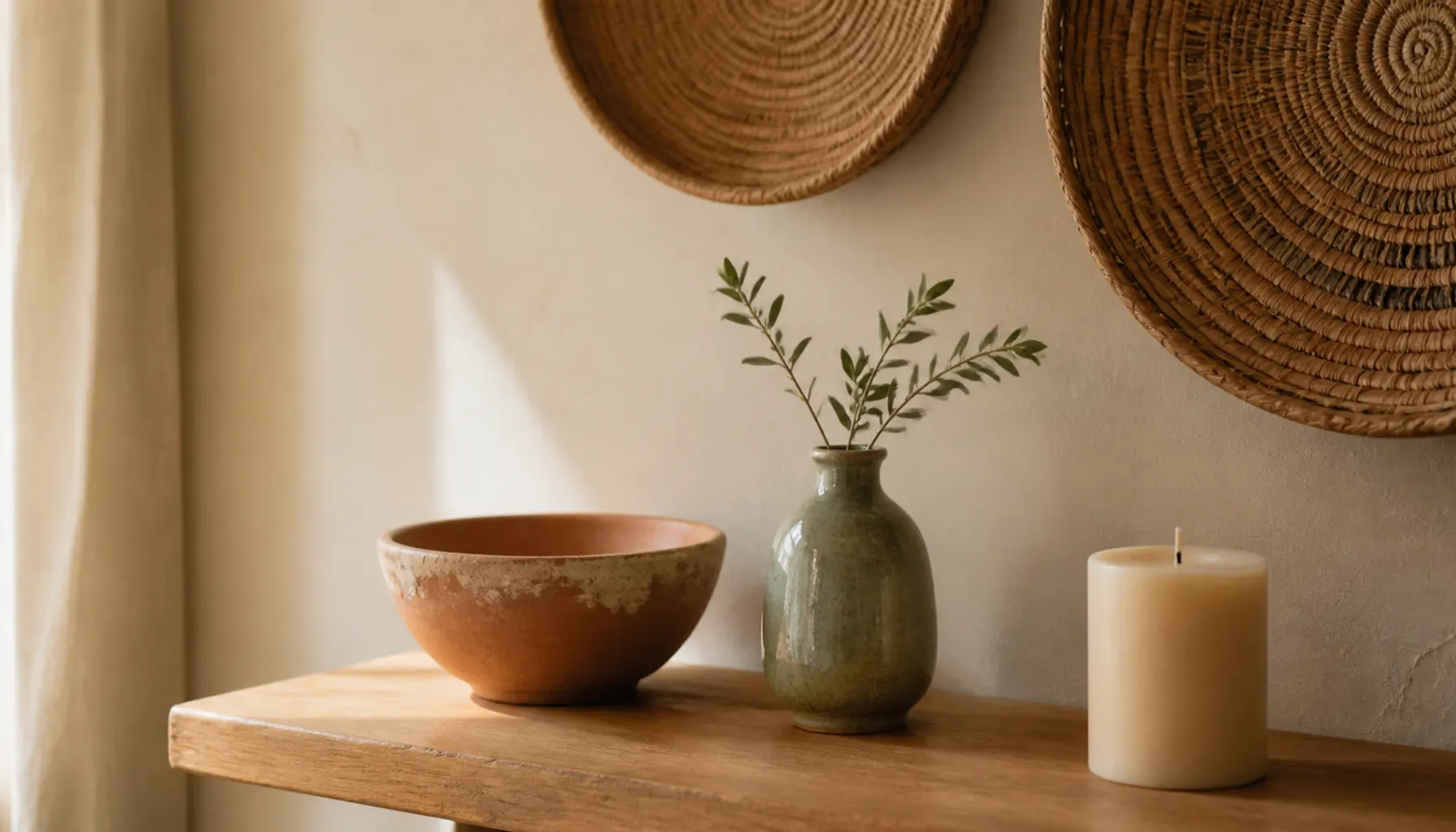
A boho room should look like it happened over a few years, because the layered version of this style genuinely does. A coordinated set of accessories bought in one afternoon does the opposite: same finish, same age, same shine. Aim for variation in origin as much as material, so a chipped market bowl sits next to a plain hardware-store candle and a piece of driftwood.
Group objects in threes at different heights on a tray or shelf, and leave real gaps between clusters. That breathing room is what keeps a collection from reading as clutter, the same discipline behind styling open shelves without the mess.
Budget Alternative: Before buying anything, empty one shelf completely and put back only what you actually like. Most rooms are not short of objects, only short of space between them.
Idea 13: Hang Unlined Natural Curtains High and Wide
Boho depends on soft, diffused daylight, and heavy blackout panels kill it. Unlined cotton, sheer linen, or a loose gauze weave scatters light across the room and lets it pick up the texture on your rug and cushions instead of dropping a hard-edged pool on the floor.
Mount the rod close to the ceiling and extend it past the window on both sides. The panels then stack outside the glass, the window looks taller, and you get more light rather than less. In cream or natural, the curtains read as wall rather than as a feature. Our window treatment guide covers hanging heights, and a blind behind the panels handles privacy.
Idea 14: Use Woven Shades to Cast Pattern, Not Just Glow
Lighting is the last layer, and in a boho room it should be doing something visible. A rattan, seagrass, or open-weave pendant projects its own pattern onto the ceiling and walls once the sun goes down, which turns a light fixture into the room's evening texture. A plain drum shade in the same spot just makes light.
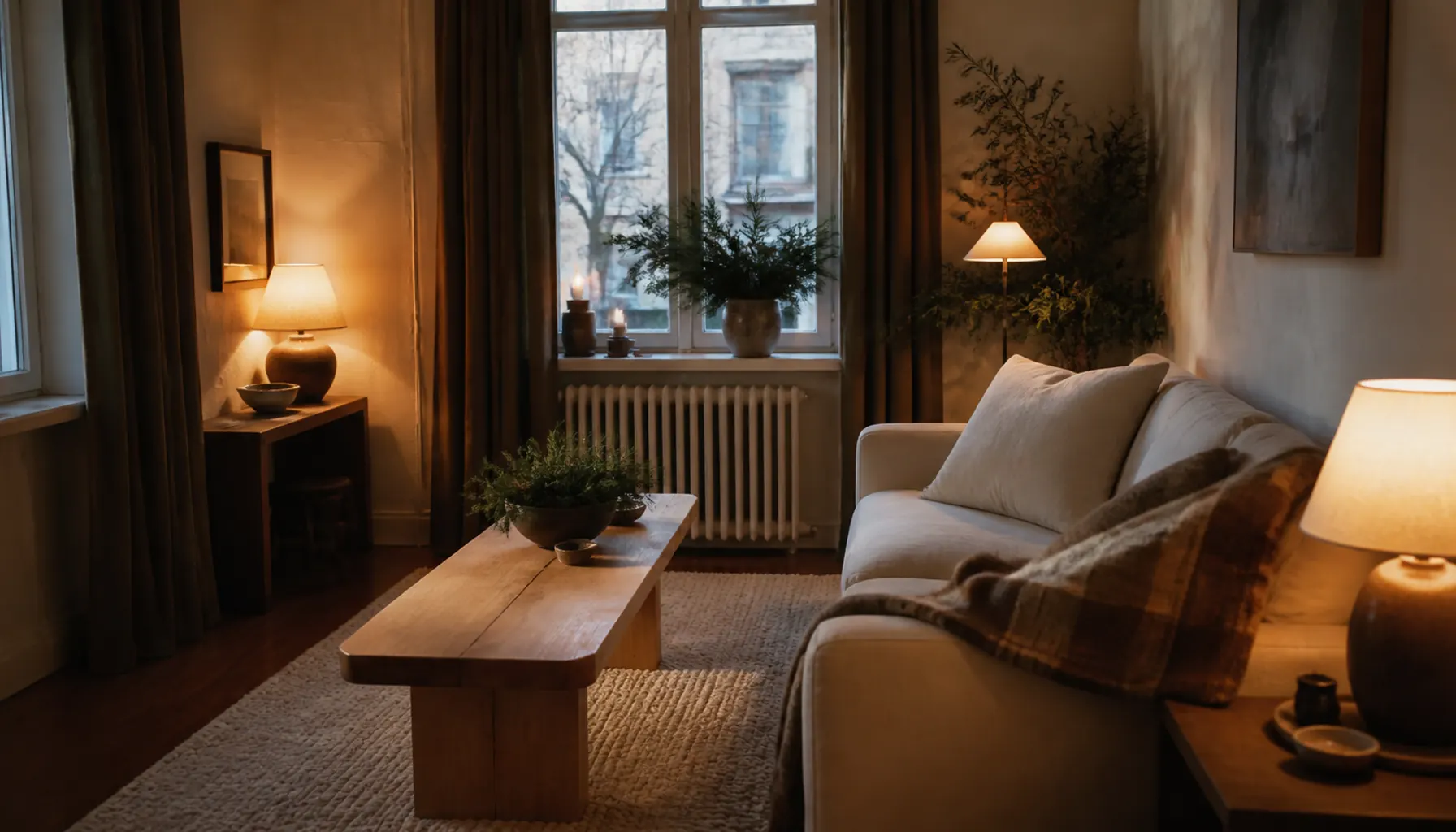
Back it up with two or three low sources: a table lamp on a side table, a floor lamp behind the reading chair, a small lamp on the shelf. Warm bulbs matter here, since cool white flattens clay and jute into gray. Cold lighting mistakes undo the warmth the rest of these ideas are building.
Expert Tips for Pulling the Look Together
- Repeat one fiber three times at different heights. Jute on the floor, a woven basket at knee height, a cane chair back at shoulder height. Repetition is what turns separate natural pieces into a scheme.
- Let one material dominate and the rest support it. If rattan is your lead, keep macrame and jute to accents. Rooms where four natural materials all claim equal space look busy rather than layered.
- Check that you have one smooth surface. A glass jar, a glazed ceramic, or a small brass tray gives the eye a break, and the rough textures look rougher next to it. The same balance appears in our guide to mixing textures.
- Do not match your woods. Honey rattan, mid-oak, and a darker walnut side table in one room read as gathered. A matched wood set reads as furniture-store boho, which is the effect you are trying to avoid.
Frequently Asked Questions
Does boho work in a small living room?
Yes, and often better than heavier styles, because so much of the furniture is visually open. Cane, rattan, and light wood frames let you see through and around them, so a room stays legible. The parts to control are quantity and pattern: fewer accessories, one large-scale print at most, and a rug big enough to unify the seating rather than several small ones.
How do I get the boho look without it feeling cluttered?
Space, edited groups, and a limit. Cluster objects in threes, keep clear surface around each cluster, and cap yourself at two or three fringed or heavily patterned items. It also helps to keep storage genuinely closed: baskets with lids, a caned cabinet, a lidded trunk. Visible texture is the point; visible mess is not.
What colors go with rattan furniture?
Cream, sand, oatmeal, and warm white are the easy backdrops, because they let rattan's honey tone read as a color rather than as beige-on-beige. For accents, muted sage, olive, terracotta, and rust all sit comfortably beside it. Avoid crisp cool grays and stark bright whites, which make natural rattan look slightly yellow and dull.
Is boho decorating renter friendly?
Mostly, yes. Rugs, floor cushions, textiles, woven wall hangings, lamps, and baskets all leave with you and need no wall damage beyond a couple of hooks. The moves that need permission are paint and permanent light fixtures. A plug-in pendant hooked over a ceiling anchor, or a tall floor lamp with a woven shade, covers the lighting layer without wiring.
Where to Start
If you are starting from an empty-feeling room, buy in this order: rug, one piece of open-weave seating, then textiles. The rug sets the size of the seating zone, the cane or rattan chair establishes the material language, and cushions and throws are the cheap part you will keep changing anyway.
Then stop for a few weeks and live with it. Boho rooms tend to get better as they get slower, because the pieces you add later are the ones you actually chose rather than the ones that filled a gap.